
Why Gardeners Are Putting Down Their Shovels: The Science of No-Dig Cultivation
By layering organic matter instead of tilling the earth, 'no-dig' gardening preserves delicate soil microbiomes and fungal networks. The regenerative technique promises fewer weeds, better moisture retention, and healthier plants with significantly less physical labor.
By Factlen Editorial Team
- Regenerative Advocates
- View soil as a living organism where mechanical tilling is a destructive event, prioritizing fungal networks and carbon sequestration.
- Practical Horticulturists
- Focus on the labor and yield benefits, noting that the upfront cost of compost pays off in long-term time savings from reduced weeding and watering.
- Soil Science Analysts
- Examine the biological mechanisms of the practice, tracking the transition from mechanical aeration to biological aeration via earthworms and root decay.
What's not represented
- · Traditional large-scale farmers who rely on tilling for weed control
- · Gardeners dealing with heavily compacted, lifeless urban clay that may require initial mechanical intervention
Why this matters
Traditional tilling degrades soil structure and releases stored carbon into the atmosphere. Adopting no-dig methods allows home gardeners to build drought-resilient, nutrient-dense soil while drastically reducing the time spent weeding and watering.
Key points
- No-dig gardening involves layering compost on the soil surface rather than turning or tilling the earth.
- Avoiding cultivation preserves delicate mycorrhizal fungal networks that help plants absorb nutrients.
- The method drastically reduces weeds by keeping dormant seeds buried in the dark.
- Undisturbed soil covered in mulch retains moisture significantly better than tilled soil.
- Gardeners can build new beds directly over grass using 'sheet mulching' with cardboard and compost.
- While it requires a large volume of compost upfront, no-dig saves vast amounts of labor over time.
For generations, the arrival of spring in the garden was heralded by the rhythmic thrust of a spade or the mechanical roar of a rototiller. Turning the earth was considered an essential chore, a way to loosen compacted dirt, mix in fertilizers, and prepare a clean slate for new seeds. However, a growing consensus among horticulturists and soil scientists suggests that this annual ritual might be doing more harm than good. The alternative gaining widespread traction is "no-dig" gardening, a regenerative approach that asks growers to put down their shovels and leave the subterranean world undisturbed.[6]
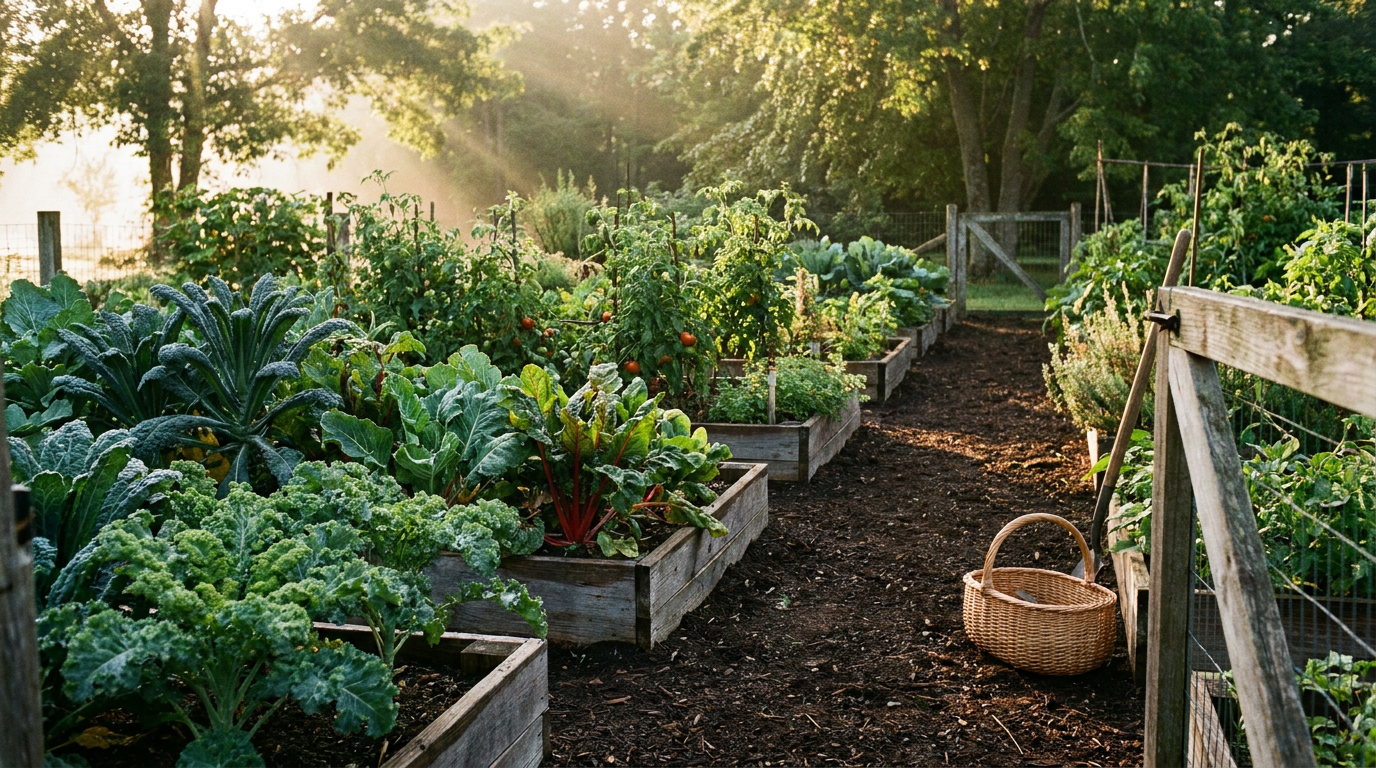
At its core, no-dig gardening—sometimes referred to as no-till—is exactly what it sounds like. Instead of breaking up, lifting, or turning the soil, gardeners simply cover the ground with a thick layer of organic matter, such as garden compost, and plant directly into it. This method mimics the natural processes of a forest floor, where fallen leaves and organic debris slowly decompose on the surface, naturally integrating into the earth below without mechanical intervention.[1][2]
The shift away from cultivation is driven by a deeper understanding of the soil microbiome. Traditional digging physically shatters the delicate architecture of the soil. When a spade slices through the earth, it severs the microscopic, thread-like networks of mycorrhizal fungi. These fungi form symbiotic relationships with plant roots, effectively acting as secondary root systems that reach into tiny soil cavities to extract moisture and nutrients that the plants could not access on their own.[2][4]
By leaving the soil undisturbed, the no-dig method preserves these vital fungal networks and allows beneficial bacterial populations to flourish. The undisturbed soil maintains its natural porosity, which is essential for oxygen flow and root growth. According to the Royal Horticultural Society, scientific evidence now clearly shows that cultivation disrupts these natural processes, making minimal disturbance the superior choice for overall soil health.[1][2]

If the gardener isn't turning the soil to aerate it and mix in nutrients, who is? In a no-dig system, that labor is outsourced to earthworms and other macro-organisms. As the thick layer of surface mulch slowly breaks down, earthworms rise to feed on the decaying matter, pulling it down into the lower soil profiles. Their constant tunneling creates natural drainage channels and air pockets, effectively tilling the soil from the inside out without destroying its structural integrity.[1][2]
Beyond preserving the microbiome, one of the most celebrated benefits of no-dig gardening is a dramatic reduction in weeds. Traditional digging inadvertently acts as a weed-propagation system. Millions of dormant weed seeds lie buried in the soil; when the earth is turned, these seeds are brought to the surface, exposed to light, and triggered to germinate.[5]
By contrast, applying a thick layer of compost or mulch—at least 5 centimeters (2 inches) deep—smothers existing weeds and keeps dormant seeds buried in the dark. The few weed seeds that do blow in on the wind and sprout in the loose surface compost are easily pulled out by hand, as their roots cannot anchor deeply into the undisturbed earth below. For many home gardeners, this reduction in back-breaking labor is the primary draw of the system.[2][4][6]
Water conservation is another critical advantage, particularly as gardeners face increasingly hot and dry summers. The decomposed organic matter on the surface acts like a sponge, absorbing rainfall and shielding the soil below from the evaporating effects of the sun and wind. Because fresh soil is not repeatedly exposed to dry air through cultivation, the ground retains moisture far longer, significantly reducing the need for supplemental irrigation.[2][4]

Water conservation is another critical advantage, particularly as gardeners face increasingly hot and dry summers.
For those starting a new garden bed over an existing lawn or weed patch, the no-dig philosophy employs a technique known as "sheet mulching" or "lasagna gardening." This involves building a garden bed directly on top of the grass by layering materials, much like assembling a lasagna. The process begins with a weed barrier, typically plain, non-shiny cardboard or thick layers of newspaper, laid directly over the vegetation.[3][5]
The cardboard base must be overlapped by 4 to 6 inches to ensure that aggressive weeds cannot find a route to the surface. This layer effectively blocks sunlight, depriving the grass and weeds beneath of the energy they need to survive, eventually causing them to die back and decompose into the soil. The cardboard itself provides a dark, moist environment that immediately attracts earthworms.[3][5]
On top of the cardboard, gardeners alternate layers of carbon-rich "brown" materials—such as dried leaves, straw, or shredded paper—and nitrogen-rich "green" materials, like grass clippings, vegetable scraps, or well-rotted manure. This layered structure is essentially a cold compost pile built directly in place. Finally, the bed is topped with a thick layer of finished compost or mulch, giving it a tidy appearance and providing an immediate planting medium.[3][5]

While the benefits are well-documented, the transition to no-dig gardening is not without its challenges and uncertainties. The most significant hurdle for many is the sheer volume of organic material required. Establishing a new sheet-mulched bed, or adding the recommended annual top-dressing of compost to existing beds, demands access to bulk compost, manure, or leaf mold, which can be expensive or logistically difficult to source for urban gardeners.[3][6]
Furthermore, sheet mulching is a slow, cold-composting process. Unlike a hot compost pile, which heats up enough to kill pathogens and weed seeds, a lasagna garden breaks down slowly over time. It can take anywhere from six months to a year for the raw layers of a freshly built sheet mulch bed to fully decompose into indistinguishable, rich loam.[3]
Gardeners eager to plant immediately in a newly built sheet-mulched bed must employ workarounds. They can cut an "X" through the cardboard layer to plant large transplants directly into the native soil below, or they must add a significantly deeper layer of finished compost—up to a foot thick—on top of the cardboard to accommodate the root systems of new seedlings.[5]

There is also the reality of persistent perennial weeds. While cardboard and compost will easily smother standard turf grass and annual weeds, highly aggressive perennials with deep taproots or creeping rhizomes—such as bindweed or certain thistles—may eventually punch through the barrier. In these cases, gardeners must remain vigilant, continually pulling the invaders or adding thicker layers of mulch until the weed's energy reserves are fully exhausted.[2][6]
Despite these upfront logistical challenges, the long-term trajectory of a no-dig garden is one of increasing abundance and decreasing effort. As the years progress, the soil structure stabilizes, the microbiome diversifies, and the need for external fertilizers drops as nutrients naturally cycle through the decaying organic matter.[1]
The environmental implications extend beyond the backyard. By leaving the soil intact, no-dig gardening prevents the release of carbon that is otherwise oxidized and lost to the atmosphere during tilling. It transforms the home garden from a site of constant mechanical disruption into a quiet carbon sink, sequestering organic matter deep within the earth.[2][6]
Ultimately, the no-dig movement represents a fundamental paradigm shift in horticulture. It asks growers to stop viewing soil as an inert medium that must be forced into submission, and to start treating it as a living ecosystem that thrives when simply fed and left alone. For those willing to trade their spades for compost forks, the reward is a healthier garden that does much of the heavy lifting itself.[6]
How we got here
1970s
Esther Dean popularizes early 'no-dig' gardening concepts for building beds over heavy clay.
1980s-1990s
Permaculture designers adopt 'sheet mulching' as a core soil-building technique.
2000s-Present
Charles Dowding and other advocates popularize compost-mulch no-dig methods for high-yield market gardening.
Today
Scientific consensus increasingly backs minimal soil disturbance for optimal microbiome health and carbon sequestration.
Viewpoints in depth
Regenerative Advocates
Focus on the ecological imperative of treating soil as a living organism.
For regenerative advocates, tilling is viewed as a destructive, catastrophic event for the subterranean ecosystem. They emphasize that soil is not an inert medium, but a complex web of life. By prioritizing the preservation of mycorrhizal fungal networks and bacterial populations, this camp argues that plants become naturally more resilient to pests and disease. Furthermore, they highlight the critical role of undisturbed soil as a carbon sink, noting that mechanical cultivation oxidizes organic matter and releases stored carbon into the atmosphere.
Practical Horticulturists
Focus on the tangible labor and yield benefits of the system.
Practical horticulturists are often drawn to the no-dig method not just for its ecological benefits, but for its sheer efficiency. They point to the dramatic reduction in time spent weeding, watering, and wrestling with heavy machinery. While they acknowledge the logistical hurdle of sourcing large volumes of compost to establish the beds initially, they argue that this upfront investment pays massive dividends in long-term labor savings. For this group, the cleaner harvests—since crops aren't splashed with mud from exposed dirt—and earlier planting times in warmer, compost-insulated soil are the primary selling points.
Soil Science Analysts
Focus on the biological mechanisms that replace mechanical aeration.
Soil scientists analyzing the no-dig method focus on how biological processes replace mechanical ones. They track how the decomposition of surface mulch fuels a massive increase in earthworm populations. These macro-organisms effectively take over the job of the rototiller, pulling organic matter down into the soil profile and creating natural aeration tunnels. This camp studies the long-term stabilization of soil aggregates, noting that while a tilled bed may initially appear loose and fluffy, it quickly compacts after heavy rain, whereas an undisturbed, biologically active soil maintains its porous structure year-round.
What we don't know
- How quickly heavily degraded or chemically treated urban soils can recover their microbiome using only surface mulching without initial mechanical aeration.
- The exact long-term carbon sequestration rates of home-scale no-dig gardens compared to commercial no-till agriculture.
Key terms
- Mycorrhizal fungi
- Microscopic fungal threads in the soil that form a symbiotic relationship with plant roots, helping them absorb water and nutrients.
- Sheet mulching
- A no-dig gardening technique that involves layering cardboard and organic materials directly over grass or weeds to build new soil.
- Carbon-to-nitrogen ratio
- The balance of 'brown' materials (like dried leaves) and 'green' materials (like grass clippings) needed for organic matter to decompose effectively.
- Cold composting
- A slow decomposition process that does not generate high heat, meaning it preserves soil life but does not kill weed seeds or pathogens.
Frequently asked
Can I plant immediately in a new sheet-mulched bed?
Yes, but you must either cut a hole through the cardboard to reach the native soil below, or add a very thick layer (6-12 inches) of finished compost on top of the cardboard to support the roots.
Do I need to remove the grass before starting a no-dig garden?
No. The core principle of sheet mulching is laying cardboard directly over the existing grass to smother it, allowing the vegetation to decompose and feed the new bed.
What kind of cardboard is safe to use?
Use plain, non-shiny brown cardboard. Remove all plastic packing tape, staples, and glossy labels, as these will not decompose and can introduce toxins to the soil.
Sources
Source coverage
6 outlets
3 viewpoints surfaced






[1]Soil AssociationRegenerative Advocates
What is no-dig gardening?
Read on Soil Association →[2]Royal Horticultural SocietyPractical Horticulturists
No-dig gardening
Read on Royal Horticultural Society →[3]Cornell UniversityPractical Horticulturists
Lasagna Gardening
Read on Cornell University →[4]Charles DowdingRegenerative Advocates
The amazing benefits of no dig, no till
Read on Charles Dowding →[5]Chelsea Green PublishingPractical Horticulturists
9 Simple Steps to Sheet Mulching
Read on Chelsea Green Publishing →[6]Factlen Editorial TeamSoil Science Analysts
Synthesis by Factlen editorial team
Read on Factlen Editorial Team →
More in home
See all 14 stories →Mass Timber
How Engineered Wood is Replacing Steel and Concrete in the World's Newest Skyscrapers
0 sources

Home Energy
How Bidirectional Charging is Turning Electric Vehicles into Massive Home Batteries
0 sources

Heat Pumps
How Heat Pumps Conquered the Cold: The 2026 Guide to Home Heating
0 sources

Neuroaesthetics
Neuroaesthetics: How the Science of Interior Design Actively Shapes Brain Chemistry
0 sources
Every angle. Every day.
Get home stories with full source coverage and perspective breakdowns delivered to your inbox.