
Solid-State Batteries Hit the Road: How the Next Generation of EVs Actually Works
Automakers are officially testing solid-state batteries on public roads in 2026, promising 700-mile ranges and 10-minute charge times. Here is the science behind the breakthrough, the manufacturing hurdles that remain, and when the technology will reach mass-market vehicles.
By Factlen Editorial Team
- Automotive Manufacturers
- Focused on scaling the technology for premium vehicles to differentiate their EV lineups with superior range and safety.
- Battery Researchers
- Cautiously optimistic but heavily focused on solving interface resistance, dendrite formation, and long-term degradation.
- Industry Analysts
- Emphasizing the economic hurdles, noting that high production costs will restrict solid-state batteries to luxury segments until the 2030s.
What's not represented
- · Lithium mining communities
- · Independent repair shops
Why this matters
Solid-state batteries represent the holy grail of electric vehicle engineering. By replacing flammable liquid electrolytes with solid materials, automakers can drastically increase driving range, cut charging times to under 15 minutes, and eliminate battery fire risks—removing the final barriers to global EV adoption.
Key points
- Stellantis and Factorial Energy have begun testing solid-state batteries on North American roads in a Dodge Charger Daytona.
- By replacing liquid electrolytes with solid ceramics or polymers, the new batteries eliminate fire risks and drastically increase energy density.
- Factorial's cells have achieved 375 Wh/kg, enabling a Mercedes-Benz test vehicle to travel 745 miles on a single charge.
- Toyota and Nissan are building pilot production lines, targeting commercial-grade solid-state vehicles by 2027 and 2028.
- Significant engineering hurdles remain, including preventing microscopic dendrite growth and managing the electric double layer resistance.
- Industry analysts predict high initial manufacturing costs will restrict the technology to luxury vehicles until the 2030s.
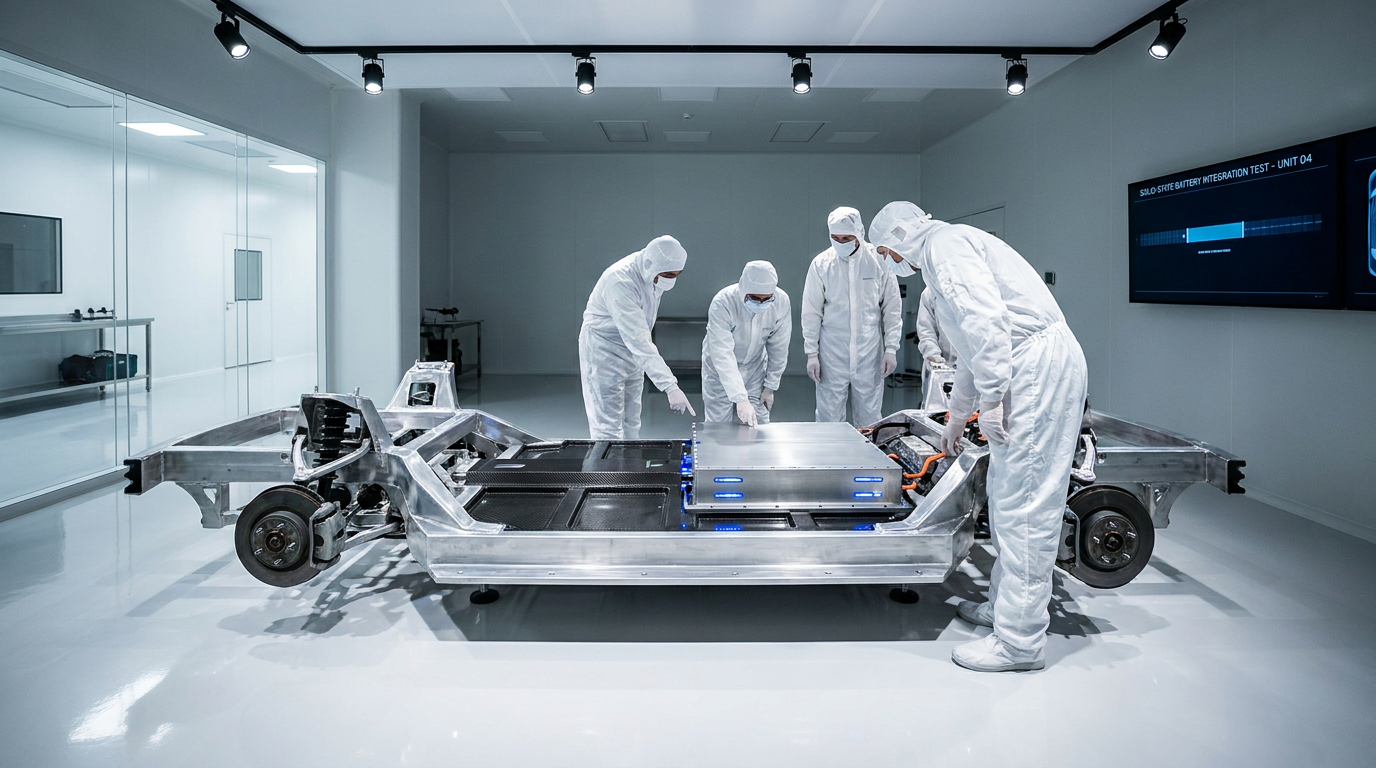
For years, solid-state batteries have been the automotive industry's most anticipated vaporware—a theoretical technology promising to solve every major complaint about electric vehicles. But in June 2026, the technology officially transitioned from laboratory cleanrooms to public roads. Stellantis and Massachusetts-based Factorial Energy have begun testing a Dodge Charger Daytona development vehicle equipped with advanced solid-state cells on North American highways.[1]
The road trials mark a critical milestone in a rapidly accelerating sector. Just days before the Stellantis announcement, Factorial Energy debuted on the Nasdaq, buoyed by real-world validation data. In a separate test, Mercedes-Benz drove a modified EQS sedan over 745 miles on a single charge using Factorial's solid-state cells.[1][7]
To understand why automakers are pouring billions into this specific chemistry, one must look at the physical limitations of current electric vehicles. Traditional lithium-ion batteries rely on a liquid electrolyte—a chemical soup that shuttles lithium ions back and forth between the battery's anode and cathode during charging and discharging.[6]
That liquid electrolyte is the source of the modern EV's biggest compromises. It is inherently volatile and flammable, requiring heavy, armored casing and complex thermal management systems to prevent fires in the event of a crash. Furthermore, the liquid limits how fast the battery can accept a charge before degrading, and it restricts the types of materials that can be used for the electrodes.[6]

Solid-state batteries, as the name implies, replace that liquid soup with a solid material. Engineers use advanced ceramics, sulfides, or solid polymers to create a rigid separator that still allows lithium ions to pass through. By eliminating the flammable liquid, the battery becomes intrinsically safe—it will not catch fire even if punctured or exposed to extreme heat.[6]
But safety is only a secondary benefit; the primary goal is energy density. In a traditional lithium-ion battery, the anode is made of graphite, a bulky and heavy material whose sole job is to host the lithium ions. Because a solid electrolyte is physically rigid, it allows engineers to completely remove the graphite anode and replace it with a microscopic layer of pure lithium metal.[6]
Removing the dead weight of graphite drastically shrinks the size of the battery. Factorial's FEST (Factorial Electrolyte System Technology) cells have achieved an energy density of 375 Watt-hours per kilogram (Wh/kg). For comparison, the best traditional lithium-ion cells hover around 250 to 260 Wh/kg. This leap allows automakers to either build a much lighter car with the same range, or keep the weight identical and push the range past 700 miles.[1][7]
The solid architecture also fundamentally changes the charging equation. Because the solid electrolyte is highly thermally stable, it can accept massive amounts of electrical current without overheating. Factorial's cells have demonstrated the ability to charge from 15 percent to 90 percent in just 18 minutes, maintaining performance in extreme temperatures ranging from negative 22 degrees to 113 degrees Fahrenheit.[1]

The solid architecture also fundamentally changes the charging equation.
The race to commercialize this mechanism is fiercely competitive. Toyota, working with petroleum refiner Idemitsu Kosan, is developing a sulfide-based solid-state battery that it claims will deliver 620 miles of range and a 10-minute fast charge. The Japanese automaker is targeting commercial-grade cell production between 2027 and 2028.[4]
Nissan is operating on a similar timeline, having recently opened a pilot production line at its Yokohama plant. Nissan is utilizing a dry electrode process to manufacture its cells, aiming to launch its first solid-state vehicles by 2028.[2][4]
While major automakers target the end of the decade for passenger cars, the technology is already trickling into smaller mobility sectors. Finnish electric propulsion company Donut Lab recently unveiled a production-ready solid-state battery for Verge Motorcycles. Slated for road use in early 2026, the two-wheeler packs promise nearly 600 kilometers of range from a 10-minute charge, proving the technology can be scaled down for lightweight applications.[3]
Despite these breakthroughs, the transition to mass production remains fraught with profound engineering challenges. Moving electrons through a solid ceramic is inherently more difficult than moving them through a liquid. One of the most stubborn hurdles is a phenomenon known as the electric double layer (EDL) effect.[4][5]

According to researchers at the Tokyo University of Science, the EDL effect occurs when charged ions gather at the exact boundary where the solid electrolyte meets the electrode. This microscopic traffic jam creates a layer of intense electrical resistance. If this interface resistance is not perfectly managed, it throttles the battery's power output and severely limits its ability to charge rapidly.[5]
Another persistent threat is the formation of dendrites. These are microscopic, branch-like structures of lithium that can grow inside the battery during rapid charging. In a liquid battery, dendrites can easily bridge the gap between the anode and cathode, causing a short circuit. While solid electrolytes are designed to physically block these growths, engineers have found that dendrites can still exploit microscopic cracks in the ceramic over thousands of charge cycles.[4][6]
Finally, there is the issue of mechanical stress. As lithium ions move in and out of the electrodes, the materials physically expand and contract. In a liquid battery, the fluid simply flows around this volume change. In a solid-state battery, this constant swelling and shrinking can cause the rigid ceramic electrolyte to crack, leading to mechanical failure and a dead cell.[6]
Solving these microscopic puzzles requires manufacturing precision that the automotive industry has never before attempted at scale. The cells must be assembled in ultra-dry, highly pressurized cleanrooms, utilizing entirely new supply chains for specialized cathode materials and solid separators.[2][4]

Because of these manufacturing complexities, industry analysts caution that solid-state batteries will not immediately democratize electric vehicles. Research firm Gartner predicts that due to high initial costs and limited production yields, the first waves of solid-state cells will be reserved exclusively for premium, high-margin luxury vehicles.[2]
Mass-market adoption—where solid-state batteries replace standard lithium-ion packs in affordable family sedans—is not expected until the early to mid-2030s. However, the fact that these batteries are now powering test vehicles on public highways confirms that the technology is no longer just a laboratory theory. The foundation for the next generation of electric mobility has officially been laid.[1][2][4]
How we got here
2022
Toyota announces a breakthrough in sulfide-based solid-state batteries, targeting commercialization by the late 2020s.
Nov 2023
QuantumScape and Toyota begin showcasing advanced prototype cells to major automotive partners.
Jan 2026
Nissan opens its first pilot line for all-solid-state EV batteries at its Yokohama plant.
Jun 2026
Stellantis and Factorial Energy begin testing solid-state batteries on public roads in North America.
Viewpoints in depth
The Automakers' View
A race to be first to market with a viable solid-state vehicle.
For legacy automakers like Toyota, Nissan, and Stellantis, solid-state batteries are a chance to leapfrog current EV market leaders. They view the technology as the ultimate differentiator. By offering vehicles that can charge in 10 minutes and travel over 600 miles, they believe they can win over consumers who are currently holding out due to range anxiety. Their primary focus is on securing supply chains, building pilot production lines, and proving the technology works outside the laboratory.
The Materials Scientists' View
A complex electrochemical puzzle that is only partially solved.
Researchers view the commercial timelines announced by automakers with a degree of skepticism. While lab results are promising, materials scientists point to the 'electric double layer' effect and the mechanical stress of volume expansion during charging as significant hurdles. They argue that maintaining the delicate interface between the solid electrolyte and the electrodes over thousands of charge cycles in extreme real-world temperatures remains a monumental engineering challenge.
The Market Analysts' View
A slow, premium-first rollout dictated by manufacturing costs.
Industry analysts emphasize that technological breakthroughs do not immediately translate to cheap consumer goods. Because solid-state batteries require entirely new manufacturing techniques and highly controlled environments, initial production yields will be low and costs will be high. Analysts predict that throughout the late 2020s, these batteries will be exclusive to high-end luxury vehicles and performance cars, with mass-market adoption only becoming economically viable well into the 2030s.
What we don't know
- Whether automakers can scale the highly sensitive cleanroom manufacturing process to produce millions of cells without high defect rates.
- How well the solid ceramic electrolytes will hold up to the mechanical stress of daily charging over a 10-to-15 year vehicle lifespan.
- Exactly how much of a price premium consumers will have to pay for the first generation of solid-state EVs.
Key terms
- Solid Electrolyte
- A solid material, typically a ceramic, sulfide, or polymer, that conducts ions between a battery's anode and cathode without using flammable liquids.
- Energy Density
- The amount of energy a battery can hold relative to its weight or volume, usually measured in Watt-hours per kilogram (Wh/kg).
- Dendrites
- Microscopic, branch-like lithium structures that can grow inside a battery during charging, potentially piercing the separator and causing a short circuit.
- Electric Double Layer (EDL)
- A phenomenon where charged ions gather at the interface between the solid electrolyte and the electrode, creating high electrical resistance that slows down charging.
- Lithium-Metal Anode
- An advanced battery component that replaces traditional bulky graphite with pure lithium metal, drastically reducing the battery's size and weight.
Frequently asked
When can I buy a car with a solid-state battery?
Initial low-volume production is expected between 2027 and 2028 for premium luxury vehicles. Mass-market availability is not anticipated until the early 2030s.
Are solid-state batteries safer than current EV batteries?
Yes. Because they replace the flammable liquid electrolyte found in traditional lithium-ion batteries with a stable solid material, they are highly resistant to catching fire, even if damaged.
Will this make electric vehicles cheaper?
Eventually, yes. While the first generation of solid-state batteries will be expensive to manufacture, their higher energy density means automakers can use fewer raw materials to achieve the same range, which should lower costs at scale.
Sources
Source coverage
7 outlets
3 viewpoints surfaced






[1]ElectrekAutomotive Manufacturers
Solid-state batteries are now powering EVs in the real world
Read on Electrek →[2]CleanTechnicaIndustry Analysts
Solid-State Battery Milestones Appear Encouraging For Near Future
Read on CleanTechnica →[3]CarExpertAutomotive Manufacturers
World-first solid-state EV battery to offer 600km of range from a 10-minute charge
Read on CarExpert →[4]SAE InternationalBattery Researchers
Can solid-state batteries commercialize by 2030?
Read on SAE International →[5]Tokyo University of ScienceBattery Researchers
Controlling electric double layer dynamics for next generation all-solid-state batteries
Read on Tokyo University of Science →[6]WikipediaBattery Researchers
Solid-state battery
Read on Wikipedia →Solid-state EV battery maker debuts on Nasdaq after 745+ mile range real-world test
Read on Electrek →

More in automotive
See all 12 stories →EV Market
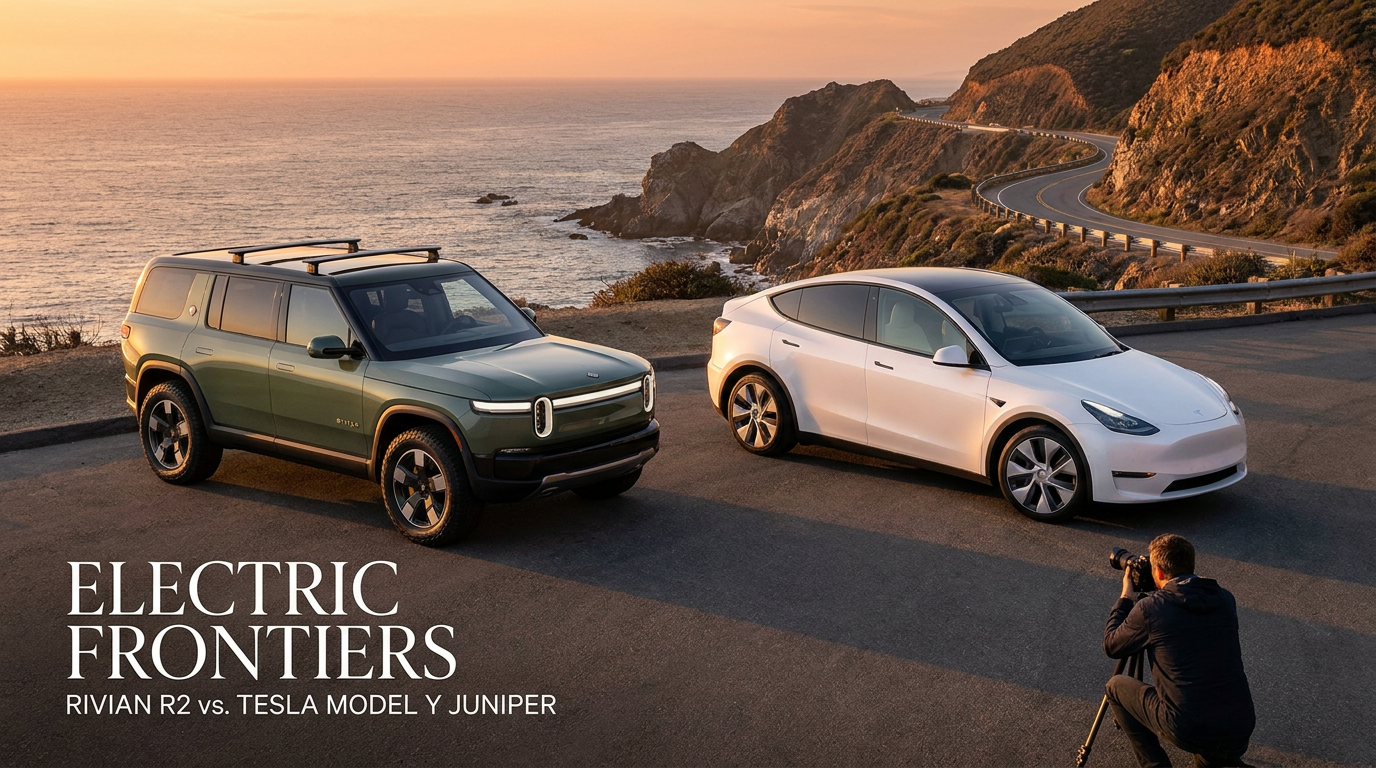
2026 Rivian R2 vs. Tesla Model Y: Choosing the Right Midsize Electric SUV
0 sources
Motorcycle Tech
How Radar and AI Are Making Motorcycles Safer Than Ever
0 sources

Battery Tech
How Solid-State Batteries Are Rewriting the Rules of Electric Vehicles
0 sources

Transit Tech
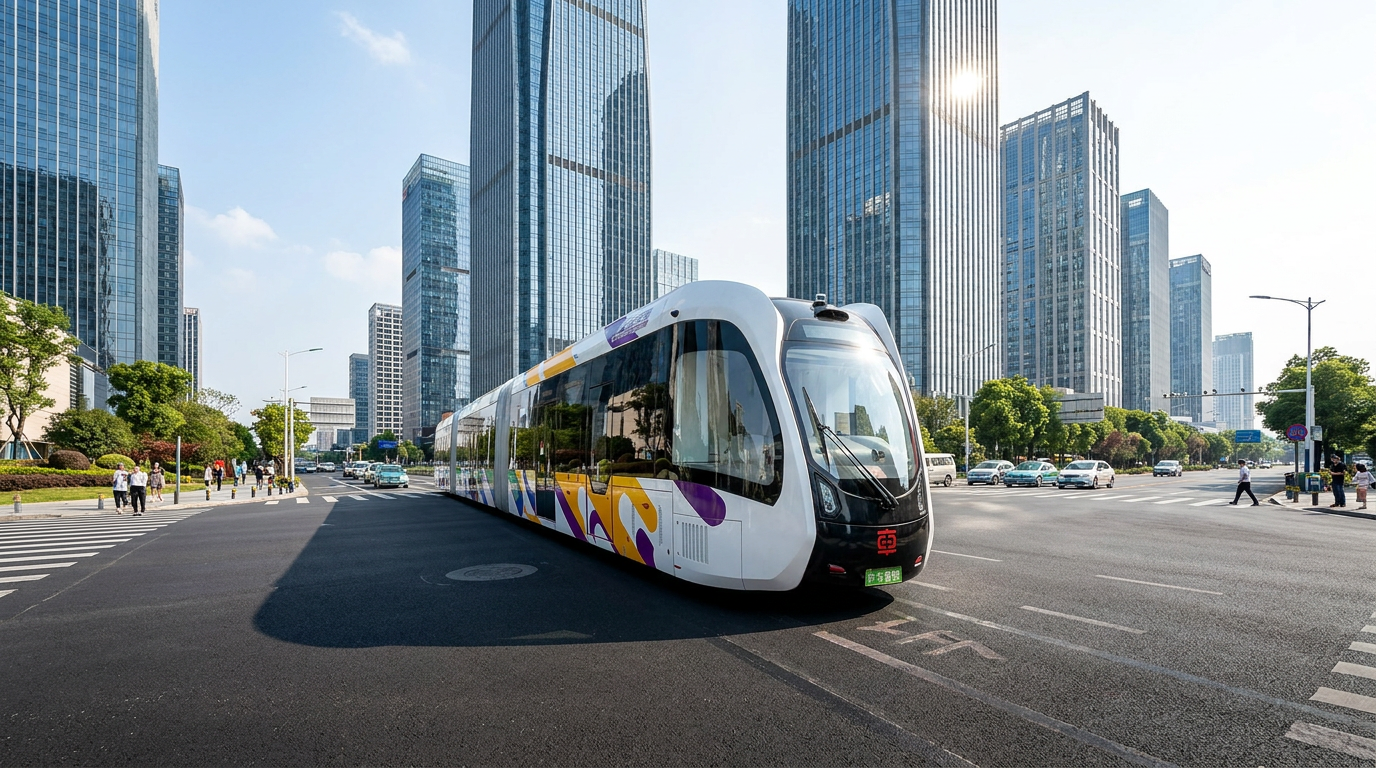
The Trackless Tram: Inside the Tech Promising to Revolutionize Public Transit
0 sources
Every angle. Every day.
Get automotive stories with full source coverage and perspective breakdowns delivered to your inbox.