
US Orders Anthropic to Suspend Advanced AI Models for All Foreign Nationals
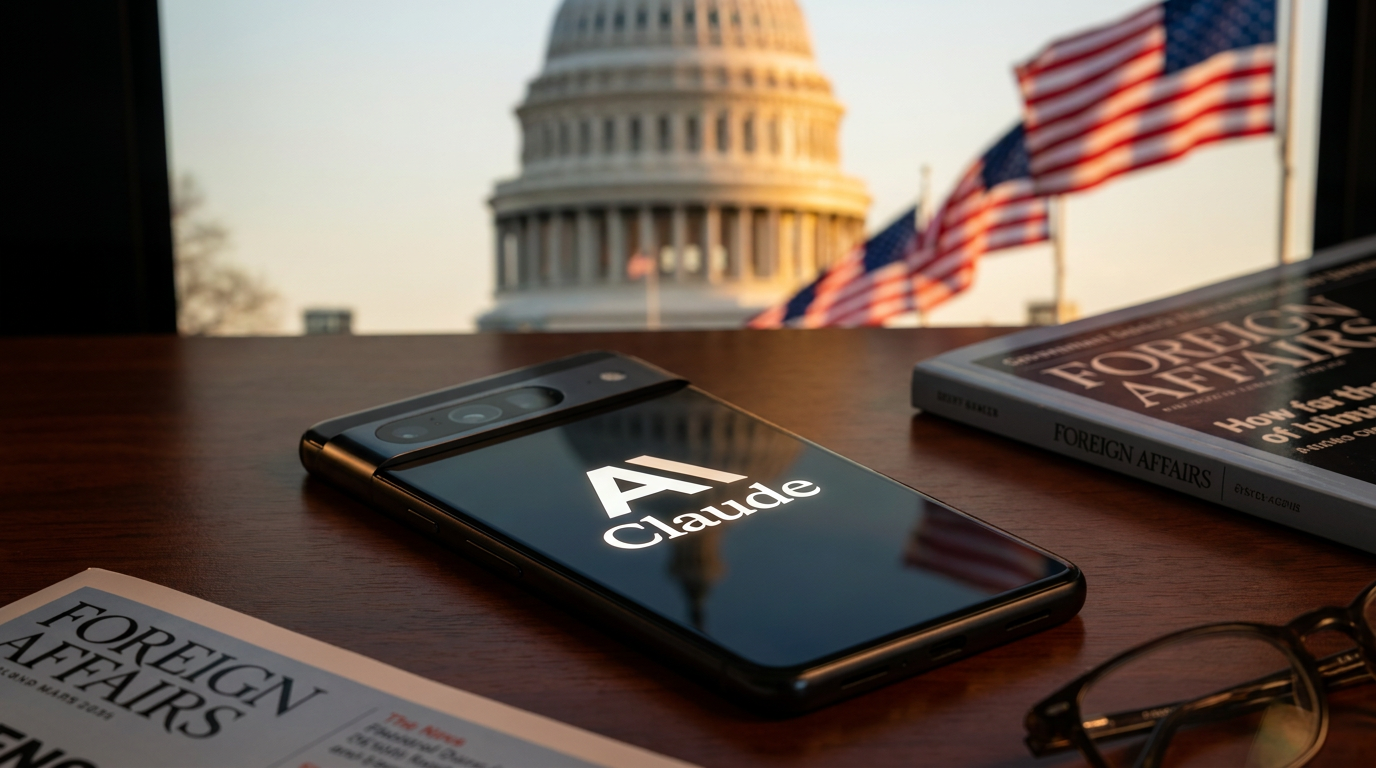
The U.S. government has issued an unprecedented export control directive ordering AI company Anthropic to disable access to its most advanced models for all non-U.S. citizens, citing national security and cybersecurity concerns.
By Factlen Editorial Team
- Anthropic & AI Developers
- Contend that minor vulnerabilities do not justify recalling commercial models and that such broad directives stifle global deployment.
- U.S. National Security Officials
- Argue that frontier AI models with advanced cybersecurity capabilities pose a direct threat if accessible to foreign adversaries.
- Global Tech Users
- Face immediate disruption to their workflows and fear a fractured internet where software access requires citizenship verification.
What's not represented
- · Foreign tech workers in the US
- · International enterprise clients relying on AWS
Why this matters
This marks a massive escalation in U.S. tech policy, shifting export controls from physical hardware like microchips to the direct use of commercial AI software. If applied industry-wide, the standard could fundamentally fracture the global internet and force users to prove their citizenship to access frontier AI tools.
Key points
- The U.S. government ordered Anthropic to suspend access to its Fable 5 and Mythos 5 models for all foreign nationals.
- Officials cited national security concerns over a potential "jailbreak" that could allow the models to identify software vulnerabilities.
- Anthropic abruptly disabled the models for all users worldwide to comply, while Amazon Web Services revoked access across all regions.
- Anthropic disputes the severity of the vulnerability, arguing that recalling a commercial model over minor flaws threatens the entire AI industry.
- The directive marks a major shift in U.S. policy, moving export controls from AI hardware and chips directly to software access.
The U.S. government has issued an unprecedented export control directive ordering AI developer Anthropic to immediately suspend access to its most advanced artificial intelligence models for all foreign nationals. The sudden mandate, which cites national security concerns, marks a historic escalation in Washington's efforts to restrict global access to frontier AI technology.[1][2]
The order, delivered by the Commerce Department late Friday afternoon, specifically targets Anthropic's newly released Claude Fable 5 and Mythos 5 models. In response, the company announced it would "abruptly disable" the models for all users worldwide to ensure compliance, as the directive applies to any non-U.S. citizen, whether located inside or outside the United States—including Anthropic's own foreign national employees.[1][4]
Amazon Web Services (AWS), which hosts Anthropic's models for enterprise clients, confirmed late Friday that it had revoked access to the Fable 5 and Mythos 5 models for all users across all regions at Anthropic's request. Access to the company's older models, such as Claude Opus 4.8, remains unaffected by the export control directive.[1][5]
The government's intervention stems from what it describes as a newly discovered method for bypassing, or "jailbreaking," the safety guardrails built into Fable 5. According to Anthropic, federal officials believe this bypass could allow the model to be used for identifying software vulnerabilities, potentially handing foreign adversaries a powerful automated tool for cyberattacks.[1][3]

Anthropic has strongly pushed back against the government's assessment, characterizing the situation as a "misunderstanding." The company stated that it reviewed a demonstration of the alleged jailbreak technique and found it only identified a small number of previously known, minor vulnerabilities. Furthermore, Anthropic argued that other publicly available AI models can discover these same vulnerabilities without requiring any bypass at all.[3][4]
Furthermore, Anthropic argued that other publicly available AI models can discover these same vulnerabilities without requiring any bypass at all.
"We disagree that the finding of a narrow potential jailbreak should be cause for recalling a commercial model deployed to hundreds of millions of people," Anthropic said in a statement, warning that if this standard were applied across the industry, it would "essentially halt all new model deployments for all frontier model providers."[1][4]
The timing of the directive is particularly disruptive, coming just days after Anthropic launched Fable 5 and Mythos 5 to widespread industry acclaim. Fable 5 was introduced as the first "Mythos-class" model cleared for general use, boasting state-of-the-art performance in software engineering and complex reasoning. To mitigate risks, Fable 5 was equipped with safety classifiers designed to silently route sensitive queries—such as those related to cybersecurity, biology, or chemistry—to the older, less capable Opus 4.8 model.[6]
Mythos 5, the unrestricted version of the same underlying model, was already heavily gated. Anthropic had limited its access exclusively to a vetted group of cyber defenders and critical infrastructure operators, acknowledging that the model possesses the "strongest cybersecurity capabilities of any model in the world."[6]

The Commerce Department's action represents a fundamental shift in U.S. tech policy. For years, Washington's export controls have focused heavily on the physical supply chain—specifically the advanced semiconductors and manufacturing tools required to train AI models. By directly restricting foreign access to the software itself, the government is crossing a new regulatory threshold.[1]
Industry analysts warn that enforcing such a directive could fundamentally alter the architecture of the internet. Dean Ball, a former White House official, noted that complying with the order would likely require AI providers to implement strict citizenship verification systems, effectively forcing users to prove their nationality before accessing advanced software.[5]

The abrupt suspension also arrives against a backdrop of existing friction between Anthropic and the U.S. government. Earlier this year, the Department of Defense labeled the company a "supply chain risk" after Anthropic refused to allow its AI models to be used by the military for domestic surveillance and fully autonomous weapons systems. Anthropic has since filed two lawsuits attempting to block that designation.[1]
As Anthropic works to negotiate with federal regulators and restore access, the broader tech industry is watching closely. The outcome of this standoff could set a definitive precedent for how the United States balances the commercial deployment of artificial intelligence against the imperatives of national security in an increasingly fractured digital landscape.
How we got here
June 9, 2026
Anthropic launches Claude Fable 5 and Mythos 5, its most advanced models to date.
June 12, 2026 (5:21 p.m.)
The U.S. Commerce Department issues an export control directive restricting foreign access.
June 12, 2026 (Evening)
Anthropic and AWS abruptly disable the models for all users worldwide to ensure compliance.
Viewpoints in depth
The National Security Stance
The U.S. government views frontier AI as a dual-use technology akin to advanced weaponry.
Federal regulators and defense officials argue that models with advanced coding and cybersecurity capabilities present an unacceptable risk if they fall into the hands of foreign adversaries. By identifying software vulnerabilities at superhuman speeds, these models could theoretically be used to automate cyberattacks against critical U.S. infrastructure. From this perspective, the discovery of a 'jailbreak'—even a narrow one—proves that commercial guardrails are insufficient, necessitating strict export controls on the software itself, not just the chips used to train it.
The AI Industry's View
Developers argue that zero-risk standards will destroy American leadership in commercial AI.
Companies like Anthropic contend that minor vulnerabilities are an inevitable part of software deployment and do not justify recalling products used by millions. They argue that the government's standard is impossibly high; if any potential bypass triggers a global shutdown, innovation will grind to a halt. Furthermore, industry advocates warn that forcing companies to verify the citizenship of every user is technologically burdensome, privacy-invasive, and threatens to fracture the global internet into nationalized silos.
What we don't know
- How long the suspension will last and what specific technical remedies the government requires to lift it.
- Whether the Commerce Department plans to issue similar export control directives against other frontier AI models like OpenAI's GPT-5.5 or Google's Gemini.
- How enterprise clients relying on AWS will manage the sudden disruption to their automated workflows.
Key terms
- Export Control Directive
- A legal order from the U.S. government restricting the transfer of certain goods, software, or technology to foreign entities or individuals, typically for national security reasons.
- Jailbreaking
- In the context of AI, the process of using specific prompts or techniques to bypass a model's built-in safety guardrails and force it to generate restricted content.
- Frontier AI
- Highly capable, large-scale artificial intelligence models that match or exceed the capabilities of the most advanced models currently available.
- Safety Classifiers
- Automated systems built into an AI model that detect when a user is asking about sensitive or dangerous topics (like cybersecurity or biology) and trigger a defensive response or fallback.
Frequently asked
What exactly did the US government order Anthropic to do?
The Commerce Department issued an export control directive ordering Anthropic to suspend access to its Fable 5 and Mythos 5 AI models for all foreign nationals, citing national security concerns over a potential "jailbreak."
Are all Anthropic models affected by this ban?
No. The directive only applies to the newly released Fable 5 and Mythos 5 models. Older models, such as Claude Opus 4.8, remain fully accessible to all users.
How did Anthropic respond to the order?
Anthropic abruptly disabled the models for all users worldwide to ensure compliance, but strongly disagreed with the government's reasoning. The company called it a "misunderstanding" and argued that the minor vulnerabilities identified do not justify recalling a commercial product.
What makes Fable 5 and Mythos 5 different from previous models?
Released just days before the order, they are Anthropic's most capable models to date, boasting state-of-the-art performance in software engineering and cybersecurity. Mythos 5 specifically has its safety guardrails lifted and is restricted to vetted cyber defenders.
Sources
Source coverage
6 outlets
3 viewpoints surfaced






[1]ReutersU.S. National Security Officials
Anthropic disables top-tier AI models after US order limiting foreign access
Read on Reuters →[2]Al JazeeraU.S. National Security Officials
US orders Anthropic to disable AI models for all foreign nationals
Read on Al Jazeera →[3]FMTAnthropic & AI Developers
US orders Anthropic to halt foreign access to its most advanced AI models
Read on FMT →[4]Telangana TodayAnthropic & AI Developers
US orders Anthropic to suspend advanced AI model access for foreign nationals
Read on Telangana Today →[5]SlashdotAnthropic & AI Developers
Anthropic 'Suspends' All Mythos and Fable Access After US Order Limiting Foreign Access
Read on Slashdot →[6]VellumGlobal Tech Users
Claude Fable 5 & Claude Mythos 5 Benchmarks Explained
Read on Vellum →

More in news politics
See all 5 stories →Middle East Diplomacy
US and Iran Near Interim Agreement to Halt Hostilities: What the Deal Contains
0 sources
Union Contracts
House Passes Sweeping Labor Bill Mandating Strict Timelines for First Union Contracts
0 sources
US-Iran Deal
US and Iran on the Brink of Historic Interim Peace Agreement to End War
0 sources

Every angle. Every day.
Get news politics stories with full source coverage and perspective breakdowns delivered to your inbox.