
Open-Source AI Reaches Frontier Parity as MiniMax M3 and Local Agents Break the Cloud Monopoly
A wave of powerful open-weight AI models and local execution frameworks released in June 2026 has decentralized artificial intelligence, allowing users to run frontier-grade autonomous agents entirely on their own hardware.
By Factlen Editorial Team
- Open-Source Advocates
- Believe decentralized AI is essential for privacy, innovation, and global equity.
- Global Researchers
- Focus on how localized AI can solve specific regional challenges without data sovereignty issues.
- Commercial Cloud Providers
- Argue that managed platforms offer superior security, reliability, and ease of use for enterprise customers.
What's not represented
- · Hardware manufacturers
- · Cybersecurity professionals
Why this matters
For the first time, users do not need to rely on expensive, privacy-invasive cloud subscriptions to access top-tier AI. This shift democratizes advanced computing, allowing small businesses, researchers, and individuals to deploy highly capable, private AI assistants that actually execute tasks on their behalf.
Key points
- MiniMax M3 launched with 428 billion parameters and a 1-million-token context window, matching proprietary models.
- The novel MiniMax Sparse Attention architecture reduces per-token compute costs to one-twentieth of previous baselines.
- OpenClaw, a self-hosted autonomous agent, has surged past 214,000 GitHub stars, allowing users to execute tasks via messaging apps.
- Local inference engines like Ollama and vLLM are enabling developers to run these massive models on consumer hardware.
The first weeks of June 2026 have marked a watershed moment in artificial intelligence, characterized by a massive migration toward open-weight models and localized execution networks. Rather than relying exclusively on closed-door tech giants and expensive cloud APIs, developers and consumers are increasingly deploying frontier-grade AI directly onto their own hardware.[1][2]
This shift is democratizing access to advanced computing, allowing users to build highly secure, context-aware systems that operate entirely within their own infrastructure. The centerpiece of this open-source boom is the release of MiniMax M3, a massive 428-billion parameter foundation model that has stunned the developer community.[1][4]
M3 is the first open-weight model to successfully combine frontier-level coding capabilities, native multimodality across text, image, and video, and a staggering 1-million-token context window. Benchmark evaluations indicate that the model is highly competitive with premium proprietary offerings, scoring 59.0% on SWE-Bench Pro and exceeding the performance of several closed-source APIs.[1][4][7]
Achieving this scale required a fundamental architectural breakthrough. MiniMax M3 abandons standard dense transformer configurations in favor of a novel architecture called MiniMax Sparse Attention (MSA). This high-performance operator dramatically reduces the compute and memory footprint required to process massive amounts of data.[1][4]

At a 1-million-token context, MSA delivers a 15-times speedup in decoding compared to previous generations, effectively reducing the per-token compute cost to one-twentieth of its former baseline. But powerful models are only half of the equation; the software frameworks required to run them autonomously have also reached maturity.[2][4]
But powerful models are only half of the equation; the software frameworks required to run them autonomously have also reached maturity.
The most prominent example is OpenClaw, a viral open-source autonomous AI agent created by Austrian developer Peter Steinberger. Originally launched in late 2025 under the name Warelay, OpenClaw has exploded in popularity, surpassing 214,000 GitHub stars by early 2026—a growth rate faster than foundational web technologies like React or Docker.[3][5]
Unlike standard chatbots that simply answer questions in a web interface, OpenClaw is a persistent background daemon that actually executes tasks. Users communicate with the agent through standard messaging apps like WhatsApp, Telegram, or Signal. From there, OpenClaw can autonomously run shell commands, control a built-in managed Chrome browser, read and write local files, and manage calendars.[3][5]

Because the gateway and memory live entirely on the user's machine, all data remains strictly private. The deployment of these complex systems has been vastly simplified by inference engines like vLLM and Ollama. Originally developed by researchers at UC Berkeley, vLLM's innovative memory management allows organizations to serve massive AI applications at scale without crippling infrastructure costs.[2][3]
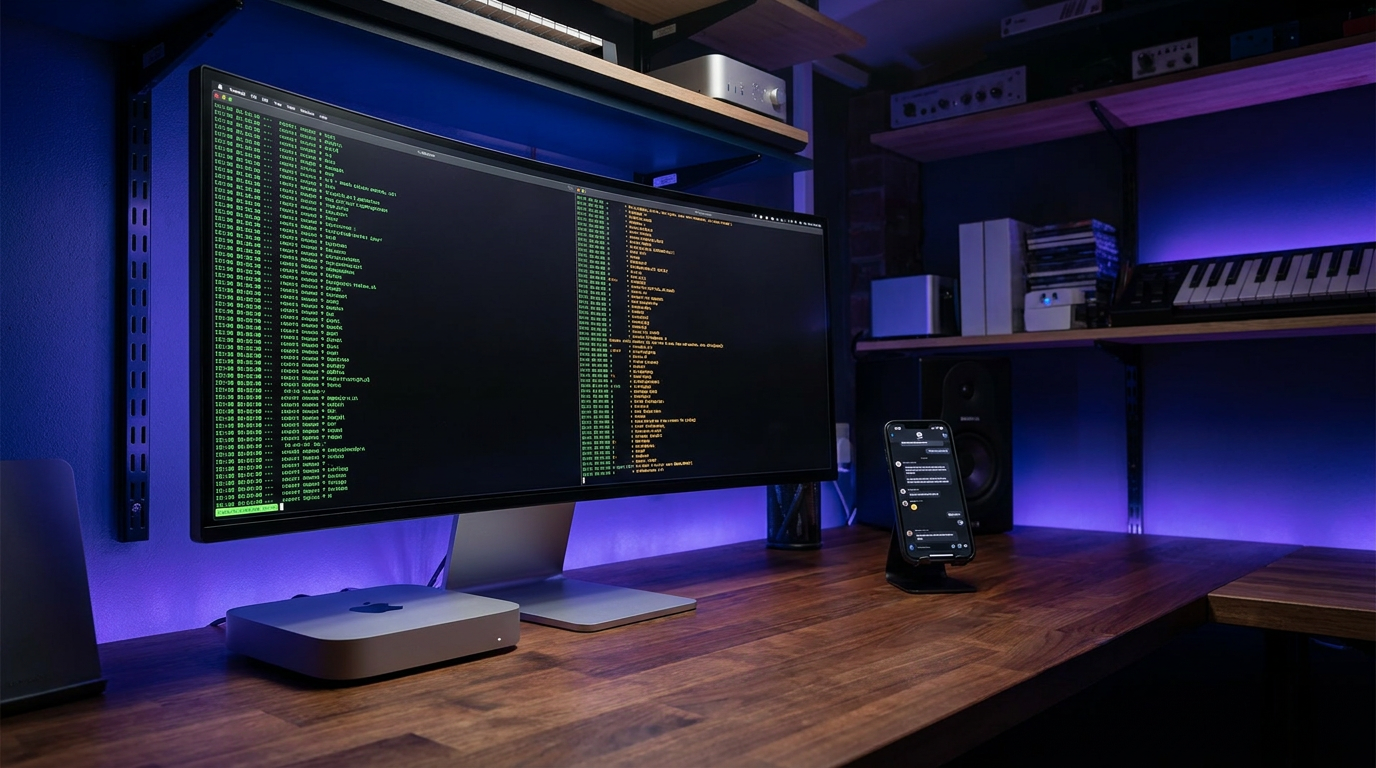
Meanwhile, Ollama has made local deployment remarkably straightforward, enabling hobbyists and businesses to run powerful models directly on personal computers like the Mac Mini, completely bypassing cloud dependencies. The hardware industry is rapidly adapting to support this localized AI ecosystem. The recent launch of dedicated desktop AI accelerators, such as NVIDIA's RTX Spark Superchip, brings unprecedented power to consumer devices.[1][2]
The global implications of this shift extend far beyond software engineering. A recent paper published in Nature Communications highlights how open-source AI is becoming a critical tool for tackling global challenges like climate change and food security. By utilizing open platforms, users in developing regions can upload locally relevant data and apply shared AI models to analyze context-specific challenges without running into data sovereignty issues or prohibitive cloud computing costs.[6]

Researchers emphasize that this localized approach enables more inclusive, evidence-based decision-making. It shifts sustainability governance away from top-down, centralized systems toward participatory approaches that bring local academia, civil society, and private sectors together. As the technology continues to mature, the combination of sparse-attention models and autonomous local agents promises to make artificial intelligence a truly decentralized, global utility.[1][6]
Ultimately, the June 2026 open-source AI landscape proves that the future of artificial intelligence does not belong solely to a handful of hyperscale tech corporations. With tools like OpenClaw orchestrating complex workflows and models like MiniMax M3 providing the raw cognitive horsepower, the barrier to entry for frontier AI has effectively vanished. For developers, researchers, and everyday users, the era of the personal, private, and fully autonomous AI agent has officially arrived.[1][2][3]
How we got here
Nov 2025
Austrian developer Peter Steinberger launches Warelay, the precursor to the OpenClaw autonomous agent.
Feb 2026
OpenClaw surpasses 214,000 GitHub stars, becoming one of the fastest-growing open-source projects in history.
May 2026
MiniMax M3 is released, bringing a 1-million-token context window and native multimodality to the open-source community.
Jun 2026
Researchers publish findings in Nature Communications detailing how open-source AI can accelerate global sustainable development.
Viewpoints in depth
Open-Source Advocates
Believe decentralized AI is essential for privacy, innovation, and global equity.
This camp argues that consolidating AI power within a few massive corporations creates single points of failure and massive privacy risks. By pushing frontier-grade models to the edge and running them on local hardware, users retain complete ownership of their data. They view tools like OpenClaw and Ollama not just as software products, but as necessary infrastructure to prevent a corporate monopoly on human-computer interaction.
Commercial Cloud Providers
Argue that managed platforms offer superior security, reliability, and ease of use for enterprise customers.
While acknowledging the impressive benchmarks of open-weight models, this perspective emphasizes the hidden costs of self-hosting. Managing local AI agents requires significant technical expertise, security patching, and hardware investment. For most Fortune 500 companies, paying a premium for managed, closed-source APIs is a worthwhile trade-off to ensure guaranteed uptime, enterprise-grade compliance, and dedicated customer support.
Global Researchers
Focus on how localized AI can solve specific regional challenges without data sovereignty issues.
Academics and sustainability experts highlight that open-source AI allows developing nations to build custom solutions without exporting sensitive local data to Western servers. By fine-tuning open-weight models on regional agricultural or climate data, local governments can deploy highly specific, culturally aware AI tools that directly address the UN's Sustainable Development Goals, bypassing the one-size-fits-all approach of commercial chatbots.
What we don't know
- How commercial cloud providers will adjust their pricing models in response to the availability of free, frontier-grade open-weight models.
- Whether regulatory bodies will attempt to restrict the distribution of highly capable autonomous agents like OpenClaw.
- The long-term security implications of millions of users running autonomous AI agents with direct access to their local file systems.
Key terms
- Open-weight model
- An AI model whose pre-trained parameters are publicly available, allowing users to run and modify it locally.
- Sparse Attention
- A neural network architecture that selectively focuses on relevant parts of data, drastically reducing the computing power needed to process long documents.
- Autonomous Agent
- An AI system designed to independently plan and execute a series of actions—like browsing the web or writing code—to achieve a user's goal.
- Context Window
- The maximum amount of text or data an AI model can hold in its short-term memory at one time, usually measured in tokens.
Frequently asked
What is an open-weight AI model?
An open-weight model is an AI system where the core mathematical parameters (weights) are publicly released, allowing anyone to download and run the model on their own hardware without paying for a cloud API.
How does OpenClaw differ from standard chatbots?
While standard chatbots only answer questions in a web browser, OpenClaw is an autonomous agent that runs in the background. It can execute shell commands, manage files, and browse the web to complete complex tasks.
Do I need a supercomputer to run these new models?
No. Thanks to architectural breakthroughs like Sparse Attention and efficient inference engines like Ollama, many of these models can now run on high-end consumer hardware, such as a Mac Mini or a modern workstation laptop.
Sources
Source coverage
7 outlets
3 viewpoints surfaced







[1]DevFlokersOpen-Source Advocates
Open-Source AI Projects, New Model Releases & Research Papers: June 2026 Roundup
Read on DevFlokers →[2]AI MagazineCommercial Cloud Providers
Top 10: Open Source AI Platforms
Read on AI Magazine →[3]MindStudioOpen-Source Advocates
The Open-Source AI Agent That Actually Does Things
Read on MindStudio →[4]Hugging FaceOpen-Source Advocates
MiniMax-M3 Model Card
Read on Hugging Face →[5]WikipediaGlobal Researchers
OpenClaw
Read on Wikipedia →[6]University of GroningenGlobal Researchers
Steering Open-Source AI to Accelerate the Sustainable Development Goals
Read on University of Groningen →[7]VercelCommercial Cloud Providers
MiniMax M3 on AI Gateway
Read on Vercel →

More in ai
See all 34 stories →Local AI
The Rise of Local AI: How to Run Powerful LLMs on Your Own Laptop
0 sources
Materials Science
How AI is Compressing Decades of Battery Research into Days
0 sources

AI in Medicine
UK Launches World's First AI Regulatory Sandbox to Transform Medicines Safety and Drug Development
0 sources

On-Device AI
How On-Device AI and Small Language Models Are Reshaping Tech
0 sources

Every angle. Every day.
Get ai stories with full source coverage and perspective breakdowns delivered to your inbox.