
U.S. and Iran Near Interim Agreement to Halt Regional Hostilities
The United States and Iran are reportedly finalizing an interim diplomatic agreement aimed at capping Tehran's nuclear enrichment and halting regional proxy conflicts in exchange for targeted sanctions relief.
By Factlen Editorial Team
- De-escalation Advocates
- Argue that an interim deal is the only viable diplomatic off-ramp to prevent a broader war and secure the release of detainees.
- Security Skeptics
- Warn that sanctions relief rewards hostile behavior and provides capital that will be redirected to regional proxy militias.
- Iranian Pragmatists & Hardliners
- Divided internally between those desperate for economic relief and factions viewing any compromise with the U.S. as capitulation.
What's not represented
- · Iraqi and Syrian civilians affected by proxy conflicts
- · European energy consumers reliant on Gulf oil
Why this matters
A formal interim agreement would de-escalate one of the world's most volatile geopolitical flashpoints, potentially stabilizing global energy markets and reducing the immediate threat of a broader Middle Eastern war. However, critics warn that unfreezing Iranian assets could inadvertently fund future proxy operations if compliance mechanisms fail.
Key points
- The U.S. and Iran are finalizing an interim agreement to halt regional hostilities and cap nuclear enrichment.
- Iran would cap uranium enrichment at 60% and rein in proxy militia attacks in Iraq and Syria.
- The U.S. would unfreeze approximately $15 billion in Iranian assets for restricted humanitarian use.
- The deal includes a prisoner exchange that would free three detained American citizens.
- Conservative U.S. lawmakers and Israeli officials strongly oppose the unfreezing of assets, citing security risks.
- Global energy markets have stabilized in response to the reduced risk of conflict in the Middle East.
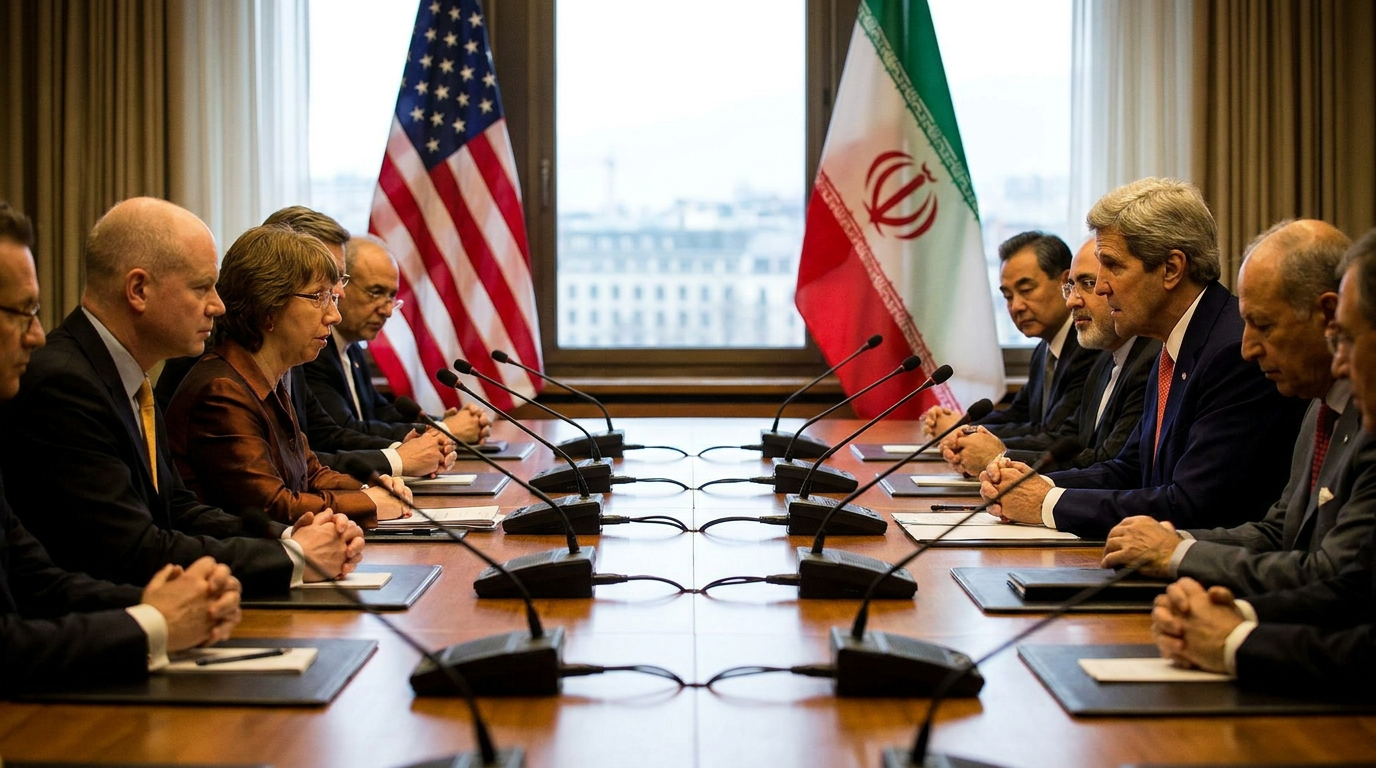
U.S. and Iranian negotiators are in the final stages of drafting an interim security and nuclear agreement, signaling a potential de-escalation after months of heightened regional hostilities. The indirect talks, facilitated by European intermediaries in Geneva, have reportedly produced a framework that addresses both nuclear proliferation and regional proxy warfare.[2][5]
Under the proposed terms, Tehran would agree to cap its uranium enrichment at 60% purity—halting its progression toward the 90% threshold required for weapons-grade material. Furthermore, Iran would commit to reining in proxy militia attacks against U.S. military personnel and allied assets in Iraq and Syria, a point of severe friction over the past year.[2][4]
In exchange for these concessions, Washington would authorize the release of approximately $15 billion in frozen Iranian assets currently held in allied nations. The agreement also includes a critical humanitarian component: a prisoner exchange that would secure the release of three American citizens currently detained in Iran.[2][3]

Inside Iran, the prospect of an agreement has generated deeply mixed reactions among the populace and political elite. Many citizens express hope that the targeted sanctions relief will alleviate severe economic pressures, stabilize the currency, and reduce rampant inflation that has crippled household purchasing power.[1]
Inside Iran, the prospect of an agreement has generated deeply mixed reactions among the populace and political elite.
However, Iranian hardline factions remain deeply skeptical of the negotiations. Conservative voices in Tehran argue that capping the nuclear program and curbing regional influence in exchange for limited, reversible financial relief represents a compromise of national sovereignty and a capitulation to Western pressure.[1][4]
In Washington, the Biden administration is facing immediate and fierce backlash from conservative lawmakers. Critics characterize the unfreezing of $15 billion as a dangerous concession, arguing that the funds—even if earmarked for humanitarian purposes—are fungible and will inevitably be redirected to finance regional militant groups and terrorism.[3]
Regional allies are watching the diplomatic developments with intense scrutiny and apprehension. Israeli officials have publicly expressed "deep concern" over the framework, maintaining their long-held position that any deal leaving Iran's core nuclear infrastructure intact poses an existential threat to the region.[6]
European diplomats, who have spent months shuttling between the American and Iranian delegations, view the interim pact as a necessary "freeze-for-freeze" measure. They argue that while the deal is imperfect, it is the only viable mechanism to prevent a full-scale regional war while a broader, comprehensive treaty is negotiated.[4][5]

Global energy markets responded immediately to the diplomatic signals, with Brent crude prices stabilizing as traders priced in a significantly reduced risk of supply disruptions in the Strait of Hormuz. Negotiators are expected to present the finalized draft to their respective capitals by the end of the week, with implementation depending heavily on verification mechanisms overseen by the International Atomic Energy Agency.[2][4]
How we got here
Early 2026
Indirect talks resume in Geneva via European intermediaries after a prolonged diplomatic freeze.
April 2026
Regional proxy attacks spike, threatening to derail the fragile negotiation process.
May 2026
The IAEA reports that Iran's enriched uranium stockpile is nearing weapons-grade levels, increasing urgency.
June 13, 2026
Negotiators signal that an interim 'freeze-for-freeze' agreement is imminent.
Viewpoints in depth
U.S. Administration's View
Views the deal as a necessary pragmatic step to prevent war and secure American hostages.
The Biden administration and its European allies argue that the interim agreement is a triumph of pragmatic diplomacy over inevitable conflict. By capping enrichment at 60%, the U.S. prevents Iran from crossing the nuclear threshold while avoiding a preemptive military strike that could ignite a catastrophic regional war. Officials emphasize that the unfrozen funds will be strictly monitored and restricted to humanitarian purchases, ensuring they do not directly finance terrorism.
Security Skeptics' View
Argues that financial concessions will inevitably fund terrorism and that the nuclear cap is insufficient.
Conservative lawmakers in Washington and allied officials in Israel view the agreement as a dangerous appeasement strategy. They argue that money is fungible; even if the $15 billion is spent on food and medicine, it frees up an equivalent amount of domestic Iranian revenue to be funneled to proxy militias across the Middle East. Furthermore, they contend that leaving Iran's nuclear infrastructure intact merely delays, rather than eliminates, the threat of a nuclear-armed Tehran.
Iranian Domestic View
Torn between the desperate need for economic relief and ideological resistance to Western demands.
Inside Iran, the narrative is deeply fractured. Pragmatists and everyday citizens, battered by years of crippling inflation and currency devaluation, see the sanctions relief as a vital lifeline for the domestic economy. Conversely, hardline factions within the political and military establishment view the concessions as a surrender, arguing that Iran is giving up significant geopolitical leverage for financial relief that the U.S. could revoke at any time.
What we don't know
- Whether the oversight mechanisms for the $15 billion in unfrozen assets will successfully prevent the funds from being redirected.
- How strictly Iran's proxy militias in Iraq and Syria will adhere to the cease-fire directives from Tehran.
- Whether this interim pact can successfully serve as a bridge to a permanent, comprehensive nuclear treaty.
Key terms
- Interim Agreement
- A temporary diplomatic pact designed to freeze a conflict or nuclear program while a comprehensive, long-term treaty is negotiated.
- 60% Enrichment
- Uranium enriched to 60% purity, which is highly enriched and considered a short technical step away from the 90% purity needed for nuclear weapons.
- Freeze-for-Freeze
- A diplomatic strategy where one side halts nuclear advancement in exchange for the other side halting new economic sanctions.
Frequently asked
Does this mean the U.S. and Iran are fully at peace?
No. This is an interim agreement meant to pause hostilities and cap nuclear advancement, not a comprehensive peace treaty.
What happens to the unfrozen assets?
The $15 billion will reportedly be held in restricted accounts, accessible only for humanitarian purchases like food and medicine, though critics dispute the enforceability of these restrictions.
Will Iran dismantle its nuclear facilities?
No. The draft agreement only caps enrichment at current levels; it does not require the dismantling of existing centrifuges or infrastructure.
Sources
Source coverage
6 outlets
3 viewpoints surfaced






[1]Al JazeeraIranian Pragmatists & Hardliners
Iranians divided on peace prospects after US-Iran say a deal is near
Read on Al Jazeera →[2]ReutersDe-escalation Advocates
US and Iran near interim agreement to halt regional hostilities, cap enrichment
Read on Reuters →[3]Fox NewsSecurity Skeptics
Conservatives blast Biden administration over 'dangerous' Iran interim deal
Read on Fox News →[4]BBC NewsDe-escalation Advocates
What the US-Iran interim agreement means for the Middle East
Read on BBC News →[5]The GuardianDe-escalation Advocates
A fragile hope: US-Iran interim deal signals shift in Middle East diplomacy
Read on The Guardian →[6]Jerusalem PostSecurity Skeptics
Israel expresses 'deep concern' as US-Iran near interim nuclear and security pact
Read on Jerusalem Post →


Every angle. Every day.
Get news politics stories with full source coverage and perspective breakdowns delivered to your inbox.