
Evidence Pack: Does 'Pre-Bunking' Actually Stop Political Misinformation?
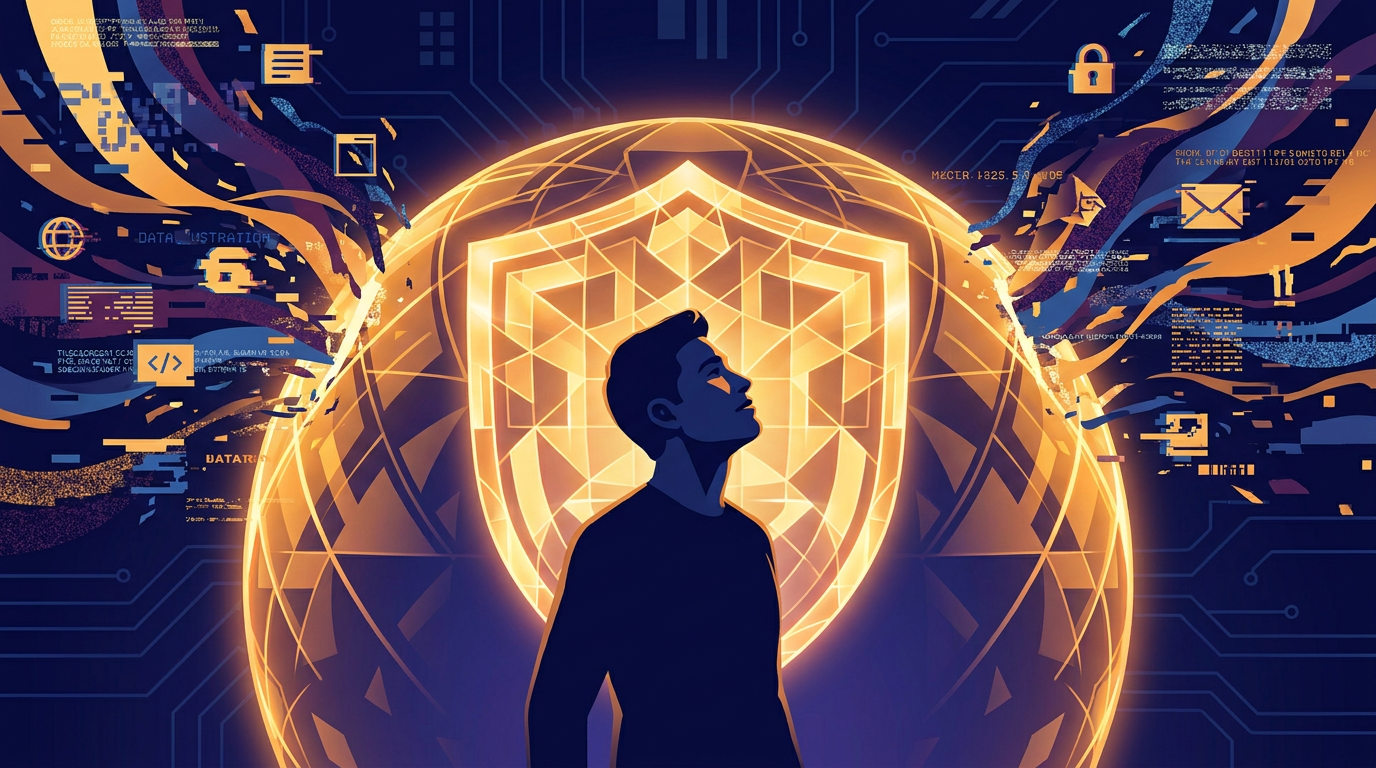
Cognitive psychologists and tech platforms are shifting from reactive fact-checking to proactive 'psychological inoculation.' Evidence shows that teaching voters to spot manipulation tactics before they encounter them significantly builds cognitive resilience.
By Factlen Editorial Team
- Cognitive Psychologists
- Focus on the empirical efficacy of building mental antibodies against manipulation.
- Tech Platforms & Implementers
- Focus on the scalability, low cost, and automated generation of pre-bunking campaigns.
- Civic Integrity Advocates
- Focus on protecting democratic processes while empowering voters rather than censoring speech.
- Skeptics & Ethicists
- Focus on the risk of institutional manipulation and the lack of cross-cultural validity.
What's not represented
- · Bad actors generating disinformation
- · Voters in non-Western democracies
Why this matters
As AI makes generating false political narratives cheaper and faster, traditional fact-checking cannot keep up. Pre-bunking offers a scalable way to empower voters, teaching them how to spot manipulation tactics rather than relying on platforms to censor content.
Key points
- Pre-bunking uses psychological inoculation to teach voters how to spot manipulation tactics before they encounter them.
- A foundational study of 30,000 YouTube users proved that short inoculation videos significantly improve the ability to identify false information.
- Recent data shows the cognitive protection from pre-bunking can last up to five months, making it highly effective for election cycles.
- While debunking is better for correcting entrenched beliefs, pre-bunking is vastly superior for preventing initial susceptibility at scale.
For years, fact-checkers and civic organizations have been trapped by a frustrating reality known as Brandolini's Law: the principle that refuting false information takes an order of magnitude more effort than creating it. By the time a viral falsehood about an election procedure or a public health crisis is thoroughly debunked by credible sources, the damage to public trust is already done. The lie travels halfway around the world while the truth is still lacing up its boots.[7]
In response to this structural disadvantage, cognitive psychologists and major technology platforms have increasingly turned to a proactive strategy known as "pre-bunking." Rooted in a decades-old psychological framework called inoculation theory, pre-bunking operates much like a medical vaccine. By introducing a weakened form of a manipulative tactic to the public, it aims to build cognitive antibodies, shielding the mind against future persuasion.[1][6]
As global elections in 2024 and 2025 tested the absolute limits of traditional reactive fact-checking, pre-bunking emerged as a highly scalable, empowering alternative. Rather than telling voters what specific facts to believe, the strategy teaches them how to spot the underlying mechanics of manipulation—such as highly emotional language, false dichotomies, and scapegoating—long before they encounter them in the wild.[6][7]
The foundational empirical evidence for pre-bunking's scalability comes from a massive field study conducted by the University of Cambridge in partnership with Google's Jigsaw unit. Researchers deployed 90-second animated videos as advertisements on YouTube, reaching nearly 30,000 participants in a real-world environment to test if cognitive resilience could be taught at scale.[1]

The results, published in the journal Science Advances, demonstrated that a single viewing of an inoculation video significantly improved a user's ability to identify manipulation methods. Crucially, this protective effect held true regardless of the user's education level, baseline personality traits, or political affiliation, proving that cognitive resilience can be taught universally.[1]
The cost-effectiveness of this approach is equally striking for civic organizations. A 2026 study published in the Harvard Kennedy School Misinformation Review tested a 19-second pre-bunking video on Instagram in the United Kingdom. The researchers achieved a cost-per-thousand impressions (CPM) of just $8.25, suggesting that millions of voters can be effectively inoculated for a tiny fraction of a typical political campaign's advertising budget.[2]
While early pre-bunking efforts focused heavily on general logical fallacies, recent interventions have successfully targeted specific political narratives. A comprehensive study tested pre-bunking against traditional credible-source debunking during highly polarized elections in the United States and Brazil, measuring which approach best protected electoral integrity.[3]
The researchers found that pre-bunking was highly effective at increasing electoral confidence and preemptively correcting misperceptions about systemic fraud. In the Brazilian context, pre-bunking actually outperformed traditional debunking, with the strongest positive effects seen among voters who were previously the most misinformed or predisposed to believe election fraud claims.[3]
The integration of artificial intelligence has further accelerated this preemptive capability. A preregistered study of over 4,200 U.S. registered voters demonstrated that Large Language Models (LLMs) could rapidly generate inoculation doses for emerging, highly specific election rumors. The AI-generated warnings significantly reduced belief in myths about voter rolls and voting machine hacking, with the protective effects remaining consistent across partisan lines.[4]
The integration of artificial intelligence has further accelerated this preemptive capability.
A major historical criticism of media literacy interventions is that their effects fade almost immediately after the user scrolls past the content. However, longitudinal tracking of modern pre-bunking campaigns suggests that these "mental antibodies" persist significantly longer than initially expected by skeptics.[7]

The LLM-assisted study confirmed that the reduction in belief in specific election myths persisted for at least one full week post-exposure, providing a crucial buffer during fast-moving news cycles. More impressively, the 2026 Harvard Instagram study found that the treatment effect of recognizing emotional manipulation remained stable at the group level for an astonishing five months.[2][4]
This durability is absolutely vital for modern election cycles, where voters are subjected to months of escalating rhetoric and targeted digital advertising. By deploying pre-bunking videos early in a campaign season, civic organizations and election boards can provide a baseline of cognitive protection that lasts all the way through Election Day.[7]
Despite the immense enthusiasm for inoculation theory among tech platforms, researchers caution that it is not a silver bullet. A comprehensive study led by the European Commission's Joint Research Centre (JRC) compared the two strategies directly, evaluating their impact on fallacious statements regarding climate change and public health.[5]
The JRC study confirmed that both approaches successfully reduce agreement with false claims and lower the likelihood of users sharing them. However, it found that traditional debunking actually maintained a slight edge in correcting deeply entrenched beliefs, as it refutes specific narratives with concrete, verifiable evidence rather than just pointing out structural flaws.[5]

Pre-bunking, by contrast, is vastly superior for prevention and reducing initial susceptibility, particularly among audiences with low prior knowledge of a topic. The consensus among researchers is that a hybrid approach—inoculating the broader public against common tactics while maintaining rigorous, targeted fact-checking for specific viral claims—offers the most robust framework for societal information resilience.[5][6]
While the empirical data strongly supports pre-bunking in Western democracies, its cross-cultural validity remains an open question. The types of manipulation tactics and the platforms used vary wildly across different regions, meaning a video that works perfectly in the U.S. or U.K. might fail entirely—or even cause confusion—in other global contexts.[2][6]
Furthermore, the heavy reliance on massive technology platforms to deliver these psychological inoculations raises profound ethical questions. Critics argue that allowing corporate entities to decide which narratives require "pre-bunking" gives them outsized, unchecked power over public discourse, even if the interventions are strictly logic-based rather than fact-based.[7]
There is also the persistent challenge of the "backfire effect" in highly polarized political environments. While controlled studies show pre-bunking works across partisan lines, some researchers warn that if an inoculation message is perceived by the public as condescending, paternalistic, or politically motivated, it could actually increase distrust in the institutions delivering it.[7]
Despite these valid challenges, the overarching shift toward psychological inoculation represents a profoundly optimistic development in the global fight against digital manipulation. Rather than treating the public as passive, gullible consumers who must be shielded from bad information by algorithmic censors, pre-bunking treats them as capable, intelligent citizens.[6][7]
By teaching the underlying mechanics of deception—fearmongering, false dichotomies, and scapegoating—these tools empower individuals to navigate the internet with critical confidence. In the ongoing, escalating arms race between factual information and digital disinformation, building a resilient human mind remains the ultimate, most sustainable defense.[1][7]

How we got here
1960s
Psychologist William McGuire first develops inoculation theory to explain how attitudes can be protected against persuasion.
2013
The concept of 'Brandolini's Law' is coined, highlighting the asymmetrical effort required to debunk false information.
Aug 2022
Cambridge University and Google's Jigsaw publish a foundational study showing pre-bunking works at scale on YouTube.
Oct 2024
Researchers demonstrate that LLMs can successfully generate rapid pre-bunking interventions for specific election myths.
Jan 2026
A Harvard study confirms that the cognitive protection from pre-bunking videos on Instagram can last up to five months.
Viewpoints in depth
Cognitive Psychologists
Focus on the empirical efficacy of building mental antibodies.
Researchers argue that the human brain is highly susceptible to emotional manipulation, making post-exposure fact-checking an uphill battle. By applying inoculation theory, they believe we can bypass partisan defenses and train the brain to recognize structural fallacies—like false dichotomies or scapegoating—regardless of the political context.
Tech Platforms & Implementers
Focus on scalability, low cost, and automated generation.
For platforms like Google and Meta, pre-bunking offers a scalable moderation tool that avoids the political landmines of outright censorship. Because the interventions focus on tactics rather than facts, platforms can deploy them widely at a low cost-per-impression, using AI to rapidly generate warnings for emerging trends without taking a stance on specific political claims.
Civic Integrity Advocates
Focus on protecting democratic processes while empowering voters.
Democracy watchdogs view pre-bunking as a vital tool for election integrity. Rather than relying on tech billionaires to arbitrate truth, this approach empowers the individual voter. Advocates emphasize that pre-bunking is most effective when delivered by trusted local institutions—such as election boards or community leaders—rather than faceless corporate algorithms.
Skeptics & Ethicists
Focus on the risk of manipulation and cultural blind spots.
Critics caution that pre-bunking is itself a form of psychological conditioning. They worry about who gets to decide which narratives require 'inoculation' and warn that poorly executed campaigns could backfire, increasing distrust. Furthermore, ethicists point out that manipulation tactics vary heavily by culture, meaning Western-designed interventions may fail or cause unintended harm in other regions.
What we don't know
- How effectively pre-bunking translates across non-Western cultures with different baseline levels of media literacy.
- Whether bad actors will adapt their disinformation tactics to specifically bypass or exploit pre-bunking warnings.
- The long-term impact on institutional trust if voters feel they are being constantly 'conditioned' by tech platforms.
Key terms
- Pre-bunking
- A proactive strategy that warns individuals about misinformation tactics before exposure, helping them build cognitive resistance.
- Inoculation Theory
- A psychological framework suggesting that exposing people to a weakened form of a manipulative argument helps them build defenses against future persuasion.
- Brandolini's Law
- The principle that it takes significantly more energy to refute a false claim than it does to create it.
- False Dichotomy
- A manipulative logical fallacy that presents only two extreme options, ignoring nuance or middle ground.
Frequently asked
What is the difference between pre-bunking and debunking?
Debunking corrects a false claim after a person has already seen it. Pre-bunking warns a person about a manipulation tactic before they encounter it, building cognitive resistance.
Does pre-bunking tell people who to vote for?
No. Effective pre-bunking is strictly nonpartisan. It focuses on teaching people how to spot logical fallacies and emotional manipulation, regardless of which political side is using them.
How long does the psychological protection last?
Recent studies indicate that the ability to recognize manipulation tactics can remain stable for up to five months after viewing a short pre-bunking video.
Can AI be used to generate pre-bunks?
Yes. Researchers have successfully used Large Language Models to rapidly generate inoculation messages tailored to emerging election rumors, proving highly effective in recent trials.
Sources
Source coverage
7 outlets
4 viewpoints surfaced







[1]University of CambridgeCognitive Psychologists
Psychological inoculation improves resilience against misinformation on social media
Read on University of Cambridge →[2]Harvard Kennedy School Misinformation ReviewCognitive Psychologists
Boosting psychological defences against misleading content online
Read on Harvard Kennedy School Misinformation Review →[3]Tech Policy PressCivic Integrity Advocates
Prebunking vs. Debunking: Experimental Evidence from US and Brazil Elections
Read on Tech Policy Press →[4]arXivSkeptics & Ethicists
LLM-assisted prebunking significantly reduced belief in specific election myths
Read on arXiv →[5]European CommissionCivic Integrity Advocates
JRC-led study confirms prebunking and debunking effectiveness
Read on European Commission →[6]Inoculation ScienceTech Platforms & Implementers
A Practical Guide to Prebunking Misinformation
Read on Inoculation Science →[7]Factlen Editorial TeamSkeptics & Ethicists
Synthesis by Factlen editorial team
Read on Factlen Editorial Team →

More in news politics
See all 5 stories →US-Iran Truce
US-Iran Peace Talks in Switzerland Postponed Amid Renewed Lebanon Clashes
10 sources
US-Iran Deal
US-Iran Talks in Switzerland Postponed as Trump's Peace Deal Faces Domestic and Regional Backlash
8 sources
US-Iran Deal
US-Iran Peace Talks Postponed as Regional Violence Flares and Hormuz Remains Mined
8 sources

Every angle. Every day.
Get news politics stories with full source coverage and perspective breakdowns delivered to your inbox.