
The Rise of Astrotourism: Why Travelers Are Chasing the Darkest Skies on Earth
As light pollution erases the stars for 80% of humanity, a booming astrotourism industry is turning pristine night skies into a multi-billion-dollar economic engine.
By Factlen Editorial Team
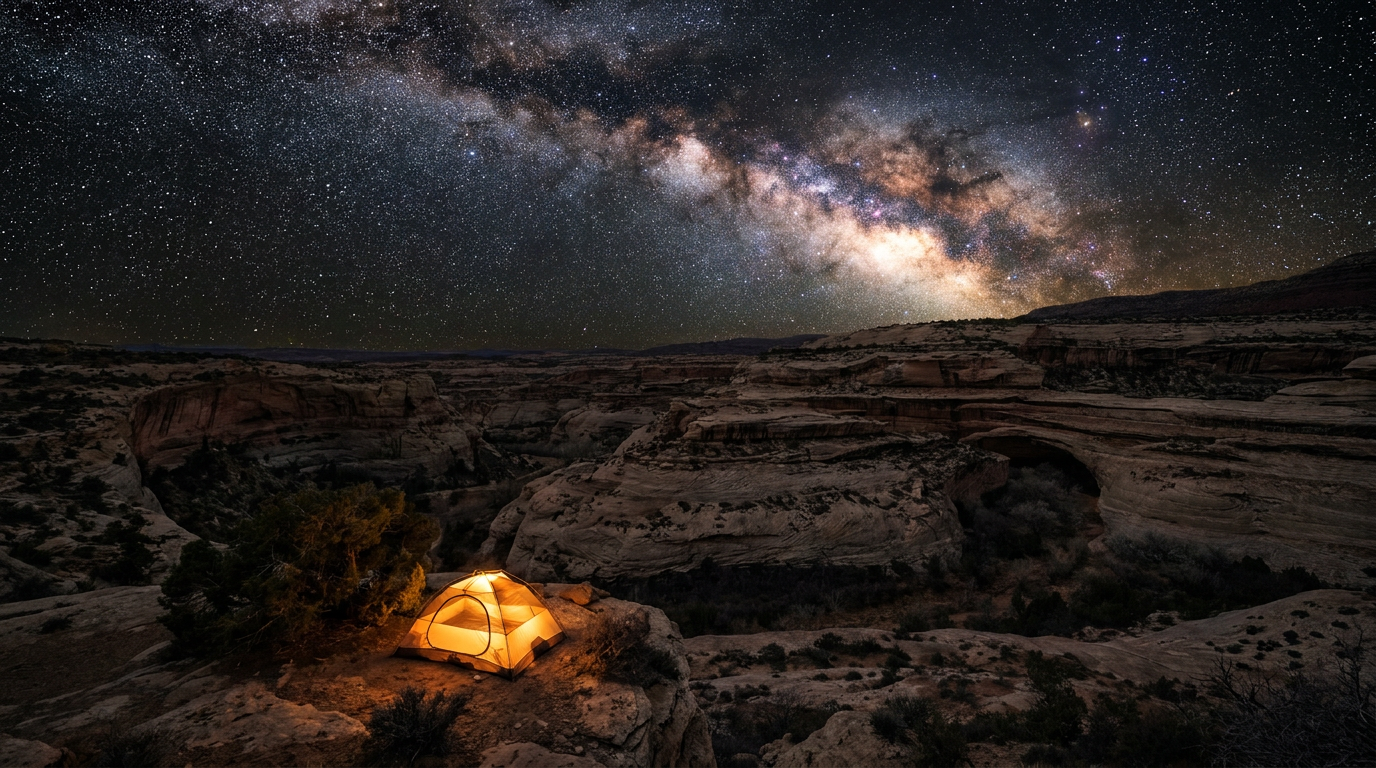
- Conservationists & Astronomers
- Argue that preserving the night sky is a moral and scientific imperative to protect wildlife and human health from light pollution.
- Rural Destination Managers
- Value astrotourism as a sustainable, year-round economic engine that revitalizes remote communities without requiring massive infrastructure.
- Mindful Travelers
- Seek out dark skies for mental wellness, awe, and a profound sense of disconnection from the hyper-illuminated modern world.
What's not represented
- · Lighting Manufacturers
- · Urban Planners
Why this matters
Astrotourism creates a direct financial incentive for communities to reduce light pollution. By turning darkness into a valuable commodity, this travel trend is inadvertently funding the restoration of natural ecosystems and human circadian health.
Key points
- Astrotourism has emerged as a major 2026 travel trend, with 62% of surveyed travelers planning trips to dark-sky destinations.
- Roughly 80% of the global population currently lives under light-polluted skies, driving demand for pristine nocturnal environments.
- DarkSky International certifies protected areas across five tiers, requiring strict lighting ordinances and sky quality measurements.
- The astrotourism industry is projected to generate billions of dollars in rural economic impact, particularly in regions like the American Southwest.
- The financial value of dark skies is creating powerful local incentives to retrofit lighting and reduce environmental light pollution.
The modern traveler is no longer just looking for sun-drenched beaches; they are looking for the dark. In 2026, "astrotourism" has evolved from a niche hobby for amateur astronomers into a mainstream travel juggernaut. Recent industry surveys indicate that over 60% of travelers are actively planning trips to dark-sky destinations. This surge is driven by a collective desire to disconnect from glowing screens and reconnect with a celestial heritage that is rapidly disappearing from our daily lives.[1][5]
The timing of this boom is not coincidental. The travel industry is currently riding the tailwinds of a solar maximum cycle that has produced spectacular, low-latitude aurora borealis displays over the past two years. Furthermore, the upcoming European Total Solar Eclipse on August 12, 2026—which perfectly aligns with the peak of the Perseid meteor shower—has triggered a booking frenzy across Spain, Iceland, and Greenland. Travelers are realizing that the sky itself is a destination.[1][5]
But the core driver of astrotourism is scarcity. We are living in an era defined by artificial illumination. According to recent environmental studies, roughly 80% of the global population lives under skies that have been artificially brightened. For most urbanites, the night sky is a blank, hazy canvas, stripped of the Milky Way and thousands of visible stars. This phenomenon is known as "skyglow," a byproduct of poorly designed streetlights, commercial signage, and residential lighting that scatters into the atmosphere.[4][5]
To quantify this loss, astronomers use the Bortle Scale, a nine-level numeric system that measures the night sky's brightness and astronomical observability. A Bortle Class 1 sky represents the pristine, inky blackness of a remote desert, where the Milky Way casts distinct shadows. Conversely, a Bortle Class 8 or 9 sky represents a typical modern metropolis, where only the moon and a handful of the brightest planets can pierce the glare. The vast majority of humanity now resides in Bortle 8 or 9 environments.[5]

This excess of Artificial Light At Night (ALAN) is not just an aesthetic loss; it is a recognized environmental pollutant. Academic research increasingly links ALAN to severe disruptions in human circadian rhythms, which can negatively impact sleep quality and overall health. Ecologically, light pollution devastates nocturnal wildlife, disrupting the migratory patterns of birds, the reproductive cycles of amphibians, and the foraging behaviors of insects.[4]
Enter the International Dark Sky Places (IDSP) program, a conservation initiative that has become the gold standard for astrotourism. Managed by DarkSky International, the program certifies communities, parks, and reserves that demonstrate exceptional dedication to preserving the nocturnal environment. The certification process is modeled after UNESCO World Heritage designations and requires years of rigorous data collection, community organizing, and infrastructure overhauls.[3][5]
The IDSP program categorizes protected areas into five distinct tiers. "International Dark Sky Sanctuaries" are the most remote and darkest places on Earth, often located in isolated deserts or islands where the conservation state is highly fragile. "International Dark Sky Reserves" feature a dark "core" zone surrounded by populated areas that enforce strict lighting policies to protect the core. "International Dark Sky Parks" are publicly or privately owned conservation areas that offer public nighttime access and educational programs.[3]

The IDSP program categorizes protected areas into five distinct tiers.
The remaining two tiers focus on populated areas. "International Dark Sky Communities" are towns or cities that have adopted comprehensive, legally binding lighting ordinances. Finally, "Urban Night Sky Places" are municipal parks within bright cities that actively promote dark-sky experiences and utilize responsible lighting, proving that even urban centers can mitigate their luminous footprint.[3]
Achieving certification is a formidable challenge. Applicants must conduct extensive Sky Quality Meter (SQM) readings to prove their baseline darkness. More importantly, they must implement a comprehensive lighting management plan. This involves retrofitting public and private infrastructure with fully shielded fixtures that direct light downward, and replacing harsh, blue-rich LEDs with warm-hued bulbs that emit a color temperature of 3000 Kelvin or lower.[3][5]
Recently, the movement expanded into the hospitality sector with the launch of the DarkSky Approved Lodging Program. This initiative certifies resorts, glamping sites, and lodges that adhere to strict lighting guidelines. For travelers, this certification guarantees an immersive stargazing experience right from their private decks, without the intrusion of glaring security lights or poorly placed pathway illumination.[3][5]
While the environmental benefits of dark-sky preservation are clear, the true catalyst for the astrotourism boom is economics. Darkness has become a highly lucrative commodity. When a region achieves Dark Sky certification, it effectively unlocks a new, year-round tourism demographic. Unlike traditional outdoor recreation, which often peaks in the summer, stargazing is frequently superior in the colder, drier months when the atmosphere is more stable and nights are longer.[2][5]
The financial impact is staggering. A comprehensive economic assessment by the National Park Service focused on the Colorado Plateau—a region spanning parts of Utah, Colorado, Arizona, and New Mexico that boasts the highest concentration of Dark Sky Parks in the world. The study projected that astrotourists will spend $5.8 billion in the region over a ten-year period.[2]

This influx of capital does more than just boost local tax revenues. The same National Park Service study estimated that astrotourism expenditures on the Colorado Plateau will generate $2.4 billion in higher wages and create over 10,000 additional jobs annually. Visitors attending evening astronomy programs require overnight lodging, evening meals, and local transportation, injecting money directly into rural gateway communities that might otherwise struggle economically.[2]
This economic reality creates a powerful feedback loop for conservation. When local governments and business owners realize that a pristine night sky is a primary driver of their livelihood, they become fierce advocates for light pollution mitigation. Tourism dollars provide the necessary political and financial capital to fund community-wide lighting retrofits, turning economic self-interest into an engine for ecological restoration.[2][4]
However, the rapid growth of astrotourism introduces a profound paradox: can a destination remain dark if millions of people travel to see it? The influx of tourists brings rental cars with bright LED headlights, increased demand for illuminated infrastructure, and the inevitable expansion of gateway towns. Managing this growth without destroying the very resource travelers come to experience is the central challenge facing the industry today.[4][5]

To mitigate these risks, destination management organizations are pioneering new strategies. Initiatives like Nevada's "Park to Park in the Dark" campaign aim to disperse visitors across broader geographic areas, reducing the strain on any single location. Furthermore, strict local ordinances are being enacted to ensure that new hotel developments and tourist facilities are built from the ground up with dark-sky compliance in mind.[2][5]
Ultimately, astrotourism represents a rare alignment of travel, economics, and environmentalism. By assigning a tangible financial value to the stars, the travel industry is helping to roll back a century of unchecked light pollution. For the modern traveler, looking up into a truly dark sky offers more than just a beautiful view; it offers a profound reminder of our place in the cosmos, and a blueprint for how we can responsibly inhabit the Earth.[4][5]
How we got here
2001
The International Dark-Sky Association (now DarkSky International) launches the International Dark Sky Places program.
2007
Natural Bridges National Monument in Utah becomes the world's first certified International Dark Sky Park.
2015
Aotea / Great Barrier Island in New Zealand is designated as the first International Dark Sky Sanctuary.
2024
The DarkSky Approved Lodging Program is launched, bringing certification directly to the hospitality sector.
August 2026
The highly anticipated European Total Solar Eclipse aligns with the Perseid meteor shower, driving record astrotourism bookings.
Viewpoints in depth
Conservationists & Astronomers
Focus on preserving the night sky as a critical ecological and scientific resource.
This camp argues that Artificial Light At Night (ALAN) is a severe environmental pollutant. They point to evidence that skyglow disrupts the migratory patterns of birds, the reproductive cycles of amphibians, and human circadian rhythms. For conservationists, astrotourism is a means to an end: a way to financially incentivize municipalities to adopt shielded, warm-hued lighting and legally protect the nocturnal ecosystem from urban encroachment.
Rural Destination Managers
View astrotourism as a highly lucrative, sustainable economic engine for remote communities.
Local tourism boards and rural municipalities emphasize the staggering financial benefits of dark skies. Because stargazing requires overnight stays and is often best during the colder, off-peak months, it provides a year-round economic lifeline to gateway towns. This perspective focuses on the billions of dollars in projected spending and job creation, arguing that dark skies are a natural resource that can be monetized without the need for heavy, destructive infrastructure.
Mindful Travelers
Seek out dark-sky destinations for awe, mental wellness, and disconnection.
For this demographic, the appeal of astrotourism is deeply personal and psychological. Escaping the hyper-illuminated, screen-dominated modern world to stand beneath a Bortle Class 1 sky offers a rare sense of scale and tranquility. This camp drives the demand for DarkSky Approved Lodging and remote sanctuaries, prioritizing transformational, quiet experiences over traditional, high-adrenaline adventure tourism.
What we don't know
- Whether the rapid influx of tourists to remote Dark Sky Sanctuaries will ultimately degrade the pristine environments they are coming to see.
- How quickly major urban centers can realistically retrofit their aging infrastructure to comply with modern dark-sky lighting standards.
Key terms
- Astrotourism
- A form of travel focused on visiting destinations with pristine, unpolluted night skies for stargazing and astronomical events.
- Skyglow
- The hazy, ambient illumination of the night sky over populated areas, caused by artificial light scattering in the atmosphere.
- ALAN (Artificial Light At Night)
- The scientific acronym for man-made light pollution that alters the natural nocturnal environment.
- Sky Quality Meter (SQM)
- A specialized scientific instrument used to objectively measure the luminance (brightness) of the night sky.
- Color Temperature (Kelvin)
- A measurement of the color appearance of light. Dark-sky compliant lighting requires 'warm' bulbs measuring 3000 Kelvin or lower, avoiding harsh blue light.
Frequently asked
What is the Bortle Scale?
The Bortle Scale is a nine-level numeric system used to measure the brightness of the night sky. Class 1 represents the darkest, most pristine skies, while Class 9 represents the heavily light-polluted skies of a major city.
How does a location become a certified Dark Sky Park?
Locations must undergo a rigorous, multi-year application process with DarkSky International. This includes taking regular sky quality measurements, implementing strict lighting management plans, and providing public education programs.
Why is artificial light considered a pollutant?
Artificial Light At Night (ALAN) disrupts the natural circadian rhythms of humans, leading to sleep and health issues. It also severely impacts nocturnal wildlife, disrupting migration, reproduction, and foraging behaviors.
What is the economic benefit of astrotourism?
Astrotourism brings visitors to remote areas, often during off-peak colder months. This generates significant revenue for local lodging, dining, and transportation sectors, with regions like the Colorado Plateau projecting billions in economic impact.
Sources
Source coverage
5 outlets
3 viewpoints surfaced





[1]VirtuosoMindful Travelers
From Safaris to Stargazing, These Are 2025's Biggest Adventure-Travel Trends
Read on Virtuoso →[2]National Park ServiceRural Destination Managers
Night Skies: An Economic Value
Read on National Park Service →[3]DarkSky InternationalConservationists & Astronomers
International Dark Sky Places
Read on DarkSky International →[4]MDPI SustainabilityConservationists & Astronomers
Astrotourism as a Driver of Social Innovation and Light Pollution Mitigation
Read on MDPI Sustainability →[5]Factlen Editorial TeamMindful Travelers
Synthesis by Factlen editorial team
Read on Factlen Editorial Team →
Every angle. Every day.
Get travel stories with full source coverage and perspective breakdowns delivered to your inbox.