
Memory Stocks Are Powering the AI Boom. Why Are They Trading Like Bargains?
Despite posting triple-digit earnings growth driven by artificial intelligence demand, the companies manufacturing essential memory chips are trading at single-digit valuations.
By Factlen Editorial Team
- Value Investors
- Focusing on the massive margin of safety provided by single-digit multiples.
- Cycle Skeptics
- Warning that the laws of semiconductor economics have not been repealed.
- AI Supercycle Bulls
- Believing that AI architecture has permanently altered memory demand.
What's not represented
- · Consumer electronics manufacturers facing higher standard memory costs
- · Retail investors heavily weighted toward AI software rather than hardware
Why this matters
While retail investors chase expensive, high-profile AI software stocks, understanding the memory hardware cycle reveals where the actual infrastructure profits are being made at steep discounts.
Key points
- Memory chip manufacturers are posting 500% to 750% earnings growth due to AI demand.
- Despite this growth, top memory stocks trade at single-digit forward P/E ratios.
- Investors remain wary of the historical boom-and-bust 'semiconductor cycle.'
- AI requires High-Bandwidth Memory (HBM), which is structurally harder to manufacture.
- Data centers now consume over 50% of the industry's total memory output.
- Only three companies—SK Hynix, Samsung, and Micron—produce HBM at scale.
The artificial intelligence boom has minted trillion-dollar valuations and transformed the technology landscape, but some of the sector's biggest earners are hiding in plain sight. While front-line AI software and processor stocks trade at sky-high premiums, the companies manufacturing the essential memory chips that make AI possible are trading at single-digit multiples.[1][6]
The disconnect between earnings and valuations is striking. Micron Technology recently posted 756% year-over-year growth in earnings per share, while South Korean giants Samsung Electronics and SK Hynix saw their earnings surge by roughly 500%.[1]
Despite these triple-digit gains, the shares of all three companies are trading at forward price-to-earnings ratios that look more like distressed value stocks than tech high-flyers. Micron trades at roughly 9 times projected earnings, while SK Hynix and Samsung hover around 6.5 times.[1]

To understand why Wall Street is assigning such low valuations to explosive growth, investors have to look at the historical "semiconductor memory cycle." For decades, memory chips like DRAM and NAND flash have behaved as highly cyclical commodities.[1][3]
The historical pattern is predictable and brutal: a surge in demand leads to a massive influx of capital expenditure, which eventually results in a flood of supply. Prices crash, margins evaporate, and investors who bought at the peak are left holding the bag.[1][3]
Because it takes 18 to 36 months to build a new fabrication plant and bring capacity online, the industry is constantly trying to meet daily demand fluctuations with multi-year supply responses. This structural lag has burned investors so many times that the market now reflexively prices in an inevitable crash whenever earnings peak.[3][6]
However, a growing chorus of analysts and industry insiders argue that the artificial intelligence revolution has fundamentally broken the old cycle. They point to a structural shift in how memory is consumed, driven by the unique architectural demands of large language models.[4][6]
AI models do not just require raw processing power; they require massive, instantaneous access to data. This has led to the rise of High-Bandwidth Memory (HBM), a specialized technology that has become the critical bottleneck for AI accelerator performance.[4][5]
AI models do not just require raw processing power; they require massive, instantaneous access to data.
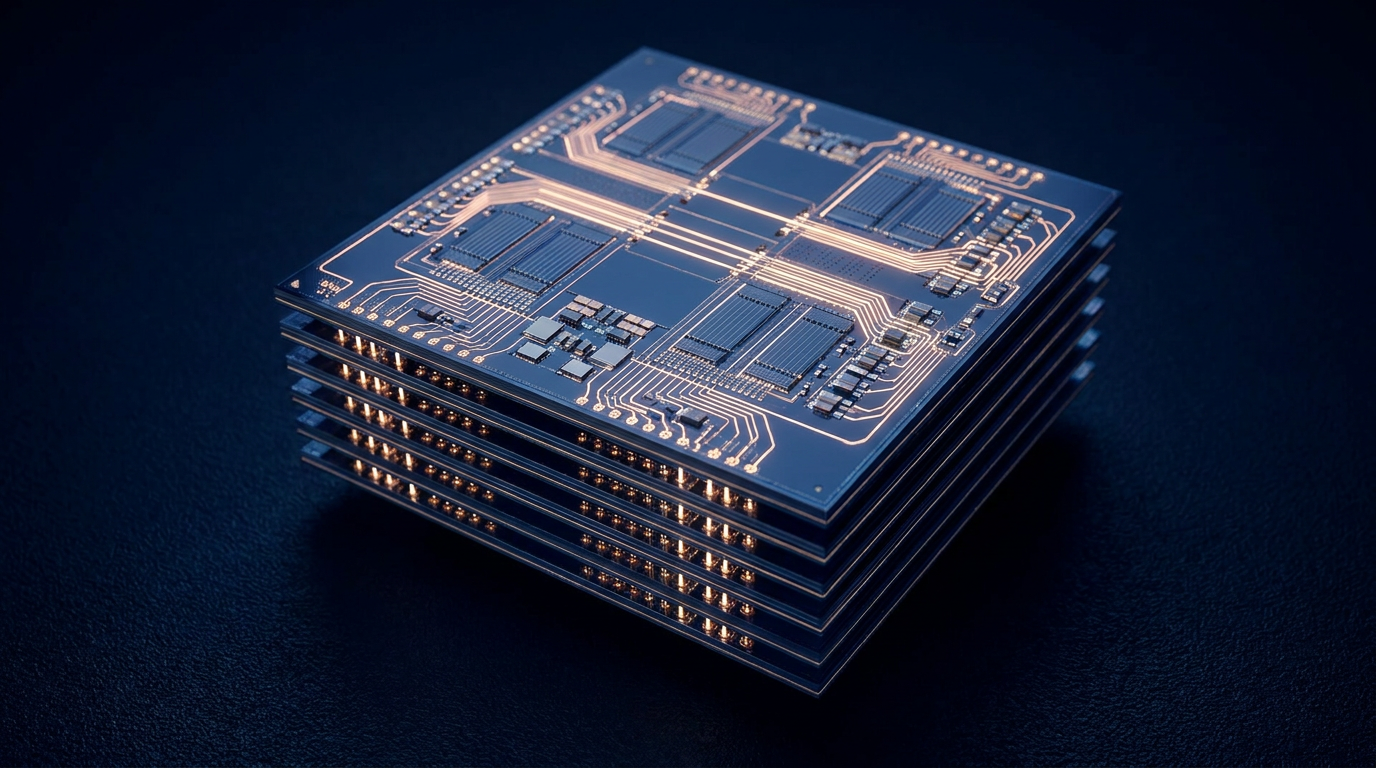
Unlike traditional memory chips that sit flat on a motherboard, HBM stacks multiple memory dies vertically. These layers are connected by microscopic vertical wires called through-silicon vias (TSVs), which drastically reduce the physical distance data must travel and exponentially increase transfer speeds.[5]

The demand for this technology is geometric, not linear. While older AI accelerators utilized 80 gigabytes of HBM, next-generation modules are targeting over 500 gigabytes per unit to handle increasingly complex inference workloads.[2][5]
As a result, data centers now consume over 50% of the industry's total DRAM and NAND output for the first time in history. This shift from consumer electronics to enterprise AI infrastructure provides a much stickier, less price-sensitive demand base.[2][6]
Supply constraints are also much tighter than in previous cycles. The complex 3D stacking process required for HBM results in lower manufacturing yields and longer production times.[5]

Furthermore, the market is an effective oligopoly. Only SK Hynix, Samsung, and Micron possess the technological capability to produce HBM at scale. SK Hynix currently commands a dominant 57% share of the global HBM market, having secured early qualification on major AI platforms.[2][4][5]
This concentration of supply, combined with insatiable demand, has given memory manufacturers unprecedented pricing power. HBM commands a massive premium over standard memory, and companies have already pre-sold their entire output through 2026 under binding contracts.[2][5]
The intense focus on producing high-margin HBM is also squeezing the supply of standard DRAM and NAND flash. By dedicating fabrication lines to AI memory, manufacturers are inadvertently creating shortages in the broader consumer electronics market, pushing prices up across the board.[2]

Despite these strong fundamentals, cycle skeptics remain cautious. They note that hyperscalers are currently engaged in an "AI gold rush," and any slowdown in data center capital expenditures could leave memory makers with excess capacity just as new fabrication plants come online.[3][6]
Yet for value investors, the current valuations offer a compelling margin of safety. Even if a cyclical correction eventually occurs, buying into the foundational infrastructure of the AI boom at 7 times earnings presents a stark contrast to the speculative premiums found elsewhere in the technology sector.[1][6]
Ultimately, the memory sector has transformed from a commoditized afterthought into a strategic geopolitical asset. Whether the historical boom-and-bust cycle reasserts itself or a new "supercycle" takes hold, the chips powering the AI revolution remain some of the most quietly lucrative assets in the modern economy.[2][6]
How we got here
2023
The semiconductor industry experiences a severe cyclical downturn, with memory sales dropping 31%.
2024
Generative AI demand accelerates, creating an immediate supply shortage for High-Bandwidth Memory.
2025
Data centers surpass 50% of total industry memory consumption for the first time.
Mid-2026
Memory manufacturers post triple-digit earnings growth while their stock valuations remain at historic lows.
Viewpoints in depth
Value Investors
Focusing on the massive margin of safety provided by single-digit multiples.
Value investors argue that the market is irrationally anchored to the past. While they acknowledge the historical cyclicality of semiconductor memory, they point out that buying companies with 500% earnings growth at 6 to 9 times forward earnings provides a massive margin of safety. Even if earnings contract slightly as new supply comes online, these stocks are priced for a catastrophic bust that may never materialize given the sticky, enterprise-level demand from hyperscalers.
Cycle Skeptics
Warning that the laws of semiconductor economics have not been repealed.
Veterans of the semiconductor industry have heard 'this time is different' before. They argue that the current massive capital expenditures by Samsung, SK Hynix, and Micron will inevitably lead to a supply glut in 2027. Because it takes up to three years to build a fabrication plant, capacity always arrives just as demand normalizes, leading to the brutal price crashes that have defined the memory market for decades.
AI Supercycle Bulls
Believing that AI architecture has permanently altered memory demand.
This camp argues that the transition to AI data centers represents a one-way structural shift, not a temporary cyclical boom. Because AI models require geometric increases in memory bandwidth to function, and because High-Bandwidth Memory is incredibly difficult to manufacture with high yields, they believe supply will remain structurally constrained for years, granting memory makers permanent pricing power.
What we don't know
- Whether the massive capital expenditures currently underway will eventually lead to a supply glut in 2027.
- How quickly competitors might develop alternative architectures that reduce the reliance on High-Bandwidth Memory.
Key terms
- High-Bandwidth Memory (HBM)
- A specialized type of computer memory that stacks chips vertically to drastically increase data transfer speeds, essential for AI processing.
- DRAM (Dynamic Random-Access Memory)
- The standard temporary memory used in computers and servers to store data that is actively being used.
- NAND Flash
- A type of non-volatile storage technology that retains data even without power, commonly used in solid-state drives.
- Through-Silicon Via (TSV)
- Microscopic vertical electrical connections that pass completely through a silicon wafer, used to connect stacked memory chips.
- Semiconductor Cycle
- The historical boom-and-bust pattern of the chip industry, driven by the multi-year lag between building factories and meeting fluctuating demand.
Frequently asked
Why are memory stocks considered cheap?
Despite posting massive earnings growth driven by AI demand, companies like Micron and SK Hynix trade at single-digit price-to-earnings ratios because investors fear a historical cyclical crash.
What makes High-Bandwidth Memory different?
HBM stacks memory chips vertically rather than laying them flat, allowing for exponentially faster data transfer speeds required by advanced AI models.
Will the memory market crash again?
Skeptics believe the historical boom-and-bust cycle will repeat once new factories open, while bulls argue AI's structural demand has permanently changed the industry.
Sources
Source coverage
6 outlets
3 viewpoints surfaced






[1]MarketWatchValue Investors
Memory stocks are having their best year ever. Why do they still look so cheap?
Read on MarketWatch →[2]TradingKeyAI Supercycle Bulls
Global memory market faces supply shortage
Read on TradingKey →[3]SemiAnalysisCycle Skeptics
Memory Cycle Part II: Key Features of a Cycle
Read on SemiAnalysis →[4]Fortune Business InsightsAI Supercycle Bulls
High Bandwidth Memory (HBM) Market Overview
Read on Fortune Business Insights →[5]PatSnap InsightsAI Supercycle Bulls
A Market Transformed by AI Demand
Read on PatSnap Insights →[6]Factlen Editorial TeamValue Investors
Synthesis by Factlen editorial team
Read on Factlen Editorial Team →


Every angle. Every day.
Get finance stories with full source coverage and perspective breakdowns delivered to your inbox.