
How 'Super Spikes' Rewrote the Track and Field Record Books
The integration of supercritical foams and rigid carbon fiber plates has revolutionized track footwear, offering athletes up to a 2% improvement in running economy. However, the technology demands elite biomechanics and raises new questions about injury risks and the future of the sport.
By Factlen Editorial Team
- Elite Athletes & Coaches
- Focuses on tangible speed gains, race-day confidence, and the necessity of adopting the tech to stay competitive.
- Biomechanics Researchers
- Focuses on the measurable metabolic efficiency and energy return of the shoe's components.
- Sports Physiotherapists
- Focuses on the increased risk of Achilles and plantar fascia injuries due to plate stiffness and altered mechanics.
- Footwear Engineers
- Focuses on material science, supercritical foams, and future innovations like dynamic stiffness.
What's not represented
- · Amateur high school athletes who cannot afford the $150–$250 price tag of premium super spikes.
- · Track surface engineers who must redesign synthetic tracks to withstand the increased forces generated by plated shoes.
Why this matters
Footwear technology has fundamentally shifted the baseline of human speed, meaning historical track records can no longer be directly compared to modern times. For everyday runners and amateur athletes, understanding this technology is crucial for making informed, injury-free decisions about highly expensive gear.
Key points
- Track and field records have fallen rapidly due to the introduction of 'super spikes.'
- The shoes utilize nitrogen-infused supercritical foam to absorb shock and return kinetic energy.
- A rigid carbon fiber plate acts as a lever, improving longitudinal bending stiffness and running economy by up to 2%.
- The extreme stiffness of the shoes requires elite biomechanics and can increase the risk of Achilles injuries in amateur runners.
- Recent studies suggest that for slower, long-distance events, foam-only spikes may be more efficient than carbon-plated models.
Over the past five years, the record books in track and field have been entirely rewritten. From the 100-meter dash to the 10,000-meter endurance tests, athletes are clocking times that were previously thought to be decades away. The catalyst for this sudden leap in human performance isn't a sudden mutation in genetics or a radical new training philosophy. It is a fundamental reimagining of the shoes on the athletes' feet. Enter the "super spike." Borrowing heavily from the advanced footwear technology that revolutionized the marathon world in 2017, these track shoes combine ultra-lightweight materials, hyper-responsive foams, and rigid internal plates to maximize energy return. By fundamentally altering how the foot interacts with the track, these shoes have transformed the sport from a pure test of biology into a synergy of human physiology and cutting-edge materials science.[1][2][3][7]
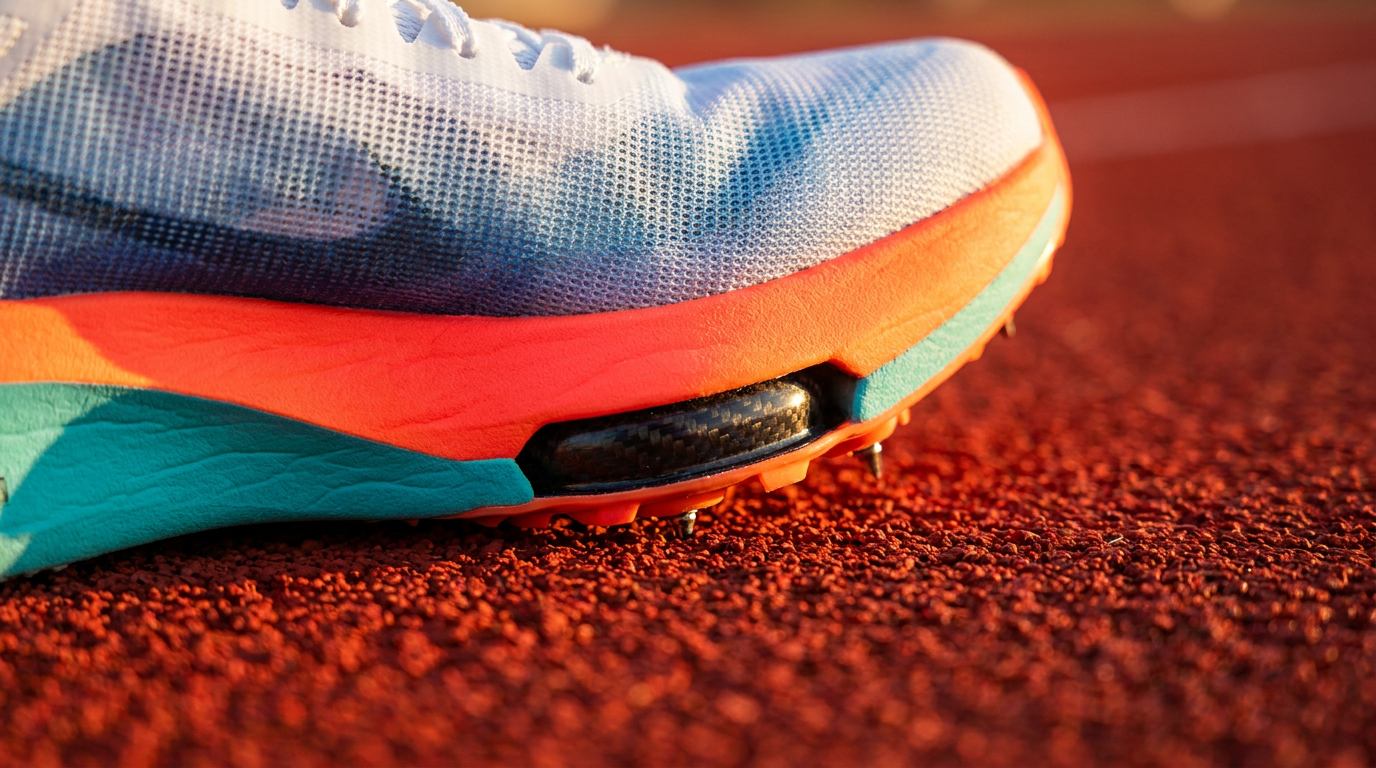
To understand how a super spike works, one must first look at the midsole. Traditional track spikes were minimalist by design, featuring a thin layer of hard plastic and metal pins to grip the track, prioritizing weight reduction and ground-feel above all else. Modern super spikes completely abandon that minimalism. They feature stack heights of up to 20 millimeters of "supercritical" foam—specialized compounds like Pebax that are infused with nitrogen gas to create a cellular structure that is both incredibly light and highly resilient. This thick layer of foam serves a crucial dual purpose. First, it compresses under the immense force of an athlete's footstrike, absorbing the violent shock that would normally travel up the shin and knee. Second, it rapidly expands back to its original shape, returning a significant percentage of that kinetic energy directly back into the athlete's forward stride, effectively slowing the onset of muscular fatigue.[1][4][5][6]

But highly resilient foam alone is far too unstable for the violent, high-torque forces of sprinting and middle-distance racing. That is where the second key ingredient comes into play: the carbon fiber plate. Embedded directly within the supercritical foam, this rigid plate acts as a structural lever. Biomechanists refer to this mechanism as increasing the shoe's "longitudinal bending stiffness." When a runner pushes off the ground, the plate resists bending under the weight and force of the stride. As the foot leaves the track, the plate snaps back into its original shape. While it doesn't act as a literal pogo-stick spring, it stabilizes the toe joint and fundamentally alters the mechanics of the ankle. This allows the calf muscles to operate at a more optimal length and velocity, reducing the metabolic cost of running at top speed.[1][2][4]
Not all super spikes are built identically; engineers meticulously tune the foam and plates for specific events. Sprint spikes, designed for the 100-meter and 200-meter dashes, feature the stiffest carbon plates and minimal foam in the heel, forcing the athlete onto their toes for maximum explosive power. These models often carry six to eight metal pins to ensure absolute traction during violent accelerations out of the starting blocks. Conversely, middle and long-distance spikes feature softer, more forgiving plates and thicker foam across the entire footbed to absorb the repetitive impact of thousands of strides. Distance models also reduce the pin count to just four, shedding unnecessary weight while still providing enough grip to navigate the curves of the track at high speeds.[4][6]

Not all super spikes are built identically; engineers meticulously tune the foam and plates for specific events.
Some manufacturers have taken this mechanical propulsion even further. Nike, for example, integrated compressed Air Zoom units beneath the forefoot of its Maxfly sprint spikes, adding an extra layer of pneumatic rebound to the carbon-and-foam sandwich. The results of these combined technologies are both measurable and profound. Independent biomechanical studies have consistently demonstrated that athletes running in super spikes can improve their running economy by 1.5% to 2.1% compared to those wearing traditional spikes. In practical terms, a 2% improvement in running economy translates to roughly one to two seconds shaved off an 800-meter race, or three to six seconds in a mile. At the elite level, where Olympic medals and world records are routinely decided by hundredths of a second, that margin of mechanical assistance is absolutely monumental.[1][2][3][6]
However, sports scientists are quick to point out that the technology is not a universal magic bullet. The benefits of a carbon plate depend heavily on the specific event distance and the individual athlete's ability to generate ground force. A recent sports medicine study revealed a surprising nuance: at submaximal speeds—such as those sustained during a grueling 10,000-meter race—a rigid carbon plate might actually increase an athlete's energy expenditure. Because the plate requires immense physical force to bend, runners who are fatiguing or running at slightly slower endurance paces may end up fighting the stiffness of the shoe rather than benefiting from its snap. For these longer events, researchers are finding that "foam-only" super spikes, which omit the carbon plate but keep the supercritical foam, are often more metabolically efficient than their plated counterparts.[1][3][4][7]

There is also a physical toll to consider when adopting this advanced footwear. The extreme stiffness of carbon-plated spikes places unique and concentrated stresses on the lower leg and foot. Sports physiotherapists and coaches have noted that athletes without elite-level running mechanics or sufficient ankle stiffness are at a significantly higher risk for Achilles tendonitis and plantar fascia issues when transitioning to super spikes. The shoes effectively magnify both a runner's biomechanical strengths and their underlying flaws. If an athlete's footstrike is slightly off-center, or if they lack the calf strength to control the rigid lever of the plate, the shoe can force the foot into unnatural angles, leading to acute injuries. Consequently, experts recommend a gradual transition period, allowing the body's tendons to adapt to the new mechanical loads.[5][6]
Despite these biomechanical hurdles and the steep learning curve, the technological arms race in track and field shows absolutely no signs of slowing down. Patent filings from major footwear brands suggest that the next generation of spikes may feature "dynamic stiffness." This theoretical technology involves using specialized fluids that harden instantly under a microscopic electric charge, allowing the shoe to remain comfortably flexible during a warmup and become ultra-rigid the exact moment the starting gun fires. As engineering and human biology continue to merge on the track, the definition of what is physically possible will keep shifting. The super spike era has proven that the right technology doesn't just protect the athlete from the harsh impact of the track—it actively propels them into the future, redefining the limits of human speed.[3][7]

How we got here
2017
Nike introduces the Vaporfly 4% road marathon shoe, debuting the combination of supercritical foam and carbon plates.
2020
The first generation of track 'super spikes' begins appearing in elite competitions, leading to a wave of shattered middle-distance records.
2021
The Tokyo Olympics serve as the global coming-out party for super spikes, with athletes across multiple brands utilizing the technology.
2024
Independent biomechanical studies confirm that super spikes provide a 1.5% to 2.1% improvement in running economy over traditional spikes.
2026
Next-generation designs begin exploring 'dynamic stiffness' and event-specific tuning, including foam-only models for 10,000-meter races.
Viewpoints in depth
The Biomechanist's View
Focuses on the measurable metabolic efficiency and energy return of the shoe's components.
Biomechanics researchers view super spikes purely through the lens of physics and metabolic cost. They emphasize that the carbon plate does not act as a magical spring that generates its own energy. Instead, it increases longitudinal bending stiffness, which acts as a lever to stabilize the metatarsophalangeal (toe) joint. By reducing the amount of energy lost when the toe bends, the shoe allows the calf muscles to operate more efficiently. However, researchers caution that this mechanical advantage is highly dependent on the runner's speed and applied force, noting that overly stiff shoes can actually harm the running economy of slower athletes.
The Physiotherapist's View
Highlights the physical toll and injury risks associated with highly rigid footwear.
Sports physiotherapists approach the super spike revolution with a degree of caution. While acknowledging the undeniable speed benefits, they point out that the extreme stiffness of carbon plates fundamentally alters a runner's natural biomechanics. This shift places unprecedented stress on the Achilles tendon, the calves, and the plantar fascia. Physiotherapists argue that these shoes act as amplifiers: they enhance elite, flawless mechanics, but they also brutally expose and exacerbate any underlying weaknesses or asymmetries in a runner's stride. Their primary recommendation is a highly structured, gradual phase-in period rather than immediate daily use.
The Footwear Engineer's View
Views the spike as an evolving aerospace-grade tool rather than a traditional shoe.
For the engineers designing these shoes, the track spike has moved away from traditional cobbling and into the realm of aerospace engineering and material science. They are focused on the microscopic cellular structure of supercritical foams, balancing the exact ratio of nitrogen infusion to maximize energy return while minimizing weight. Engineers are already looking past static carbon plates, filing patents for 'dynamic stiffness' technologies that use electromagnetically reactive fluids. Their goal is to create a responsive, smart tool that adapts its physical properties in real-time to the specific phase of an athlete's race.
What we don't know
- Whether the long-term use of highly rigid carbon plates will lead to chronic lower-leg injuries in younger, developing athletes.
- Exactly how much of the performance gain comes from the carbon plate acting as a lever versus the supercritical foam acting as a cushion.
- How regulatory bodies like World Athletics will adapt their rules if 'dynamic stiffness' or smart-fluid technologies are introduced to competition.
Key terms
- Supercritical Foam
- A specialized plastic foam, often infused with nitrogen gas, that is exceptionally lightweight and returns a high percentage of kinetic energy when compressed.
- Longitudinal Bending Stiffness
- The resistance of a shoe to bending from heel to toe, usually increased by adding a rigid carbon fiber plate to act as a lever.
- Running Economy
- A measure of how much oxygen and metabolic energy a runner uses to maintain a given speed; a better economy means running faster with less effort.
- Pebax
- A high-performance thermoplastic elastomer used in super spike midsoles and plates, known for its extreme lightness and energy return.
- Stack Height
- The total thickness of the shoe's material between the bottom of the athlete's foot and the ground.
Frequently asked
What makes a track spike a 'super spike'?
A super spike combines a thick layer of highly resilient, lightweight foam (like Pebax) with a rigid internal plate (usually carbon fiber) to maximize energy return and running efficiency.
Do super spikes actually make you faster?
Yes. Biomechanical studies show they improve running economy by 1.5% to 2.1%, which can shave 1 to 2 seconds off an 800-meter race for elite athletes.
Are super spikes safe for beginner runners?
Experts generally advise against beginners using carbon-plated spikes immediately. The extreme stiffness requires strong ankles and excellent running mechanics; without them, runners risk Achilles and plantar fascia injuries.
Why do some distance spikes not have carbon plates?
At slower endurance speeds, a rigid carbon plate can actually require more energy to bend, making the runner less efficient. Therefore, some long-distance spikes rely solely on super-foam for cushioning and energy return.
Sources
Source coverage
7 outlets
4 viewpoints surfaced







[1]National Institutes of HealthBiomechanics Researchers
The Biomechanics of Advanced Footwear Technology in Track Spikes
Read on National Institutes of Health →[2]Running WritingsBiomechanics Researchers
The Biomechanics of Super Spikes: Foam, Plates, and Speed
Read on Running Writings →[3]TrackSpikes.coFootwear Engineers
The Era of the Super-Spike: What's Next for Track Tech
Read on TrackSpikes.co →[4]Running WarehouseFootwear Engineers
What Are Super Spikes? A Guide to Track and Field's Fastest Shoes
Read on Running Warehouse →[5]Athletics WeeklySports Physiotherapists
Carbon Plate Track Spikes: The Benefits and the Downsides
Read on Athletics Weekly →[6]Outside MagazineElite Athletes & Coaches
Are Super Spikes Worth the Price?
Read on Outside Magazine →[7]Factlen Editorial TeamElite Athletes & Coaches
Synthesis by Factlen editorial team
Read on Factlen Editorial Team →



Every angle. Every day.
Get sports stories with full source coverage and perspective breakdowns delivered to your inbox.