
How Fungi Are Replacing Plastic in the Future of Furniture
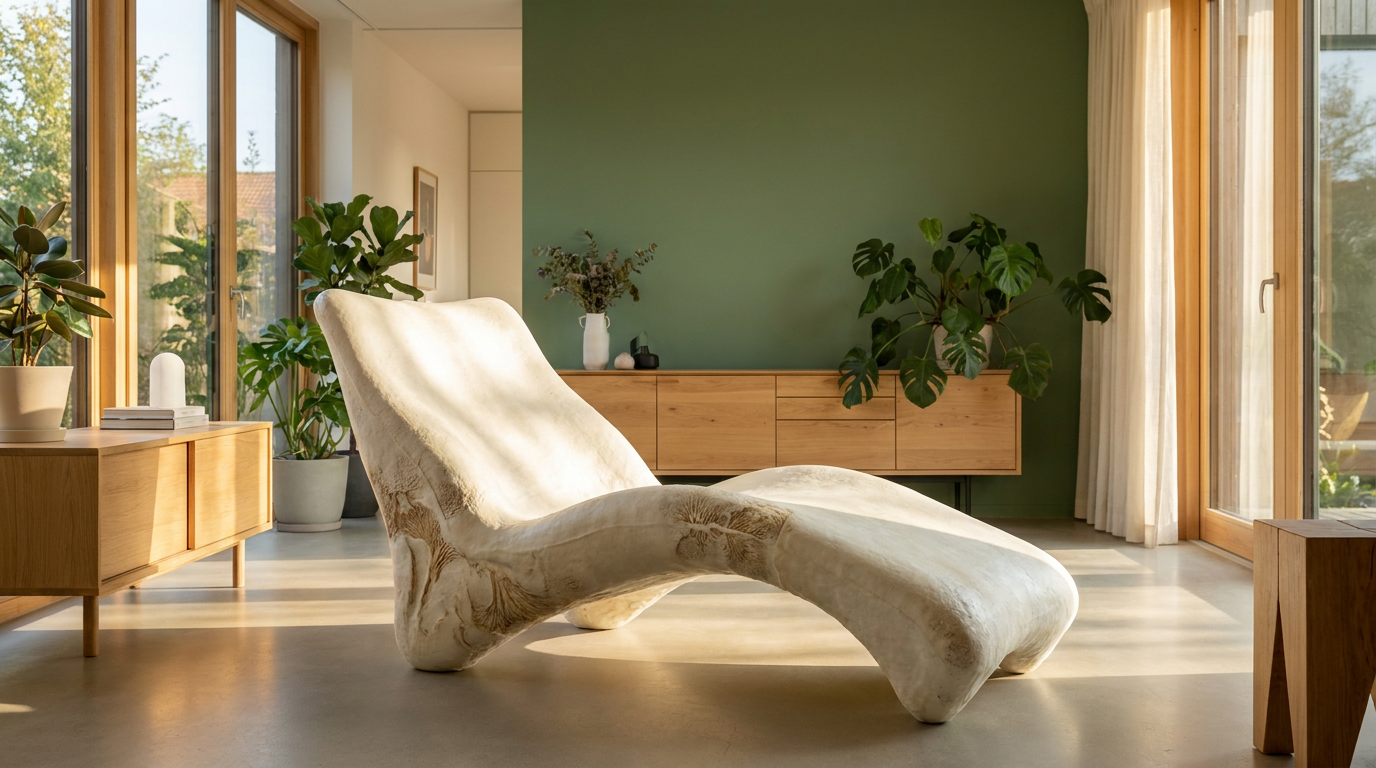
Bio-fabricated furniture grown from mushroom roots is moving from experimental art to industrial scale. By replacing toxic glues and synthetic foams with living mycelium, designers are creating carbon-negative pieces that rival traditional materials in durability.
By Factlen Editorial Team
- Bio-Designers & Innovators
- Focused on pushing the aesthetic boundaries and scaling production to replace plastics in the luxury and commercial markets.
- Material Scientists
- Focused on the structural integrity, biological mechanisms, and future applications like self-healing architecture.
- Circular Economy Advocates
- Focused on the macro-level environmental benefits, carbon sequestration, and the elimination of landfill waste.
What's not represented
- · Pest Control Experts
- · Mass-Market Furniture Retailers
Why this matters
The global furniture industry is a massive contributor to landfill waste and indoor air pollution. Transitioning to bio-fabricated materials means consumers can furnish their homes with zero-toxin, carbon-negative pieces that safely compost at the end of their lifecycle.
Key points
- Mycelium acts as a natural binder, replacing toxic formaldehyde glues and synthetic foams.
- The manufacturing process utilizes agricultural waste and is entirely carbon-negative.
- New semi-industrial facilities are proving that bio-fabricated furniture can be mass-produced.
- Mycelium composites are VOC-neutral and naturally absorb high-frequency sound waves.
- Researchers are exploring dormant spores to create self-healing architectural materials.
The modern living room is quietly facing a metabolic crisis. For decades, the global furniture industry has relied heavily on synthetic polymers, polyurethane foams, and formaldehyde-based glues to mass-produce cheap, lightweight decor. While these materials have democratized interior design, they come with a steep physiological and environmental cost. They continuously off-gas volatile organic compounds (VOCs) into indoor air, contributing to respiratory issues and cognitive fatigue. Furthermore, when their brief functional lives end, these synthetic pieces sit in landfills for centuries, unable to break down.[7]
But a quiet revolution is currently taking root in the world of interior design and architecture, shifting the fundamental paradigm from traditional manufacturing to biological cultivation. Designers, engineers, and material scientists are actively replacing toxic synthetics with bio-fabricated furniture grown entirely from fungi. By treating the interior environment as a biological entity rather than a sterile, static box, this movement aims to turn the home into a regenerative sanctuary. This approach harmonizes with human health while respecting planetary boundaries, offering a viable exit from the fast-furniture cycle.[5][7]
At the heart of this bio-fabrication movement is mycelium—the vegetative, root-like network of fungi consisting of millions of microscopic, branching threads known as hyphae. In nature, mycelium acts as the earth's ultimate recycling system, breaking down organic matter and redistributing nutrients through the soil. However, when cultivated in a controlled laboratory or factory setting, it functions as a powerful, self-assembling biological binder. It can weave disparate particles together with incredible tensile strength, forming a natural composite that rivals synthetic plastics.[4][5]
The mechanism of growing a piece of furniture begins not with raw timber or petroleum extraction, but with abundant agricultural waste. Manufacturers take low-value, localized byproducts—such as hemp hurds, sawdust, flax, or coffee husks—and inoculate them with specific strains of fungal spores. This organic mixture is then packed tightly into a custom 3D-printed or vacuum-formed mold that dictates the final shape of the chair, table, or acoustic panel. By utilizing waste streams that would otherwise be burned or left to rot, the process immediately establishes a carbon-negative footprint.[4][6]
Over the course of several days in a dark, climate-controlled environment, the mycelium awakens and begins to feed on the agricultural waste. As it digests the organic substrate, the microscopic hyphae rapidly multiply and weave a dense, intricate web. This biological network acts as a natural adhesive, binding the loose particles together into a solid, cohesive mass. The organism effectively grows into the exact dimensions of the mold, filling every crevice without the need for external energy, heat, or mechanical compression.[4]

Once the mycelium has fully colonized the mold and achieved the desired structural density, the growth process must be permanently halted. The newly formed piece is carefully removed from its casing and subjected to a curing phase, typically involving baking or severe dehydration. This heat treatment kills the living organism, rendering the material completely inert, stable, and safe for indoor use. The final product is a lightweight, highly durable composite that will never sprout mushrooms or release spores into the living room.[3][5]
Until very recently, mycelium furniture was largely confined to experimental art galleries, speculative design exhibitions, and bespoke, one-off commissions. Critics often dismissed bio-fabricated pieces as fascinating but ultimately impractical for everyday consumers, citing slow production times, high costs, and inconsistent material properties. However, the industry is now crossing a critical threshold into scalable, semi-industrial production. By standardizing the cultivation process and optimizing the biological yield, pioneering design brands are proving that biological materials can meet the rigorous demands of the commercial furniture market without sacrificing their ecological benefits.[1][7]
At the 3 Days of Design festival in Copenhagen, Dutch manufacturer Aifunghi debuted a collection that definitively proved bio-fabricated furniture can be mass-produced. Founded by former product developers from the renowned design house Moooi, the company opened a dedicated cultivation facility in the Netherlands capable of growing up to 1,200 pieces annually. This semi-industrial scale marks a pivotal shift toward commercial viability, making sustainable, bio-based design accessible to a much broader audience. The founders explicitly stated their mission was to make sustainable furniture "sexy" and attainable for contract buyers.[1]
At the 3 Days of Design festival in Copenhagen, Dutch manufacturer Aifunghi debuted a collection that definitively proved bio-fabricated furniture can be mass-produced.
Crucially, these bio-fabricated pieces are not fragile prototypes meant only for gentle display. Aifunghi’s flagship mycelium dining chair recently passed the rigorous EN16139 Level 1 certification, a stringent European testing standard that guarantees the structural integrity required to withstand 30 years of daily commercial use. By combining the solid mycelium composite core with seaweed-based bio-foam padding and plastic-free faux fur woven from nettle and hemp fibers, the brand demonstrated that uncompromising durability and high-end comfort can be achieved entirely without petroleum derivatives.[1]
Beyond rigid structural frames and solid tables, mycelium is also revolutionizing the world of upholstery and flexible textiles. At Milan Design Week, the Stockholm-based Studio TOOJ unveiled the highly anticipated "DUK" collection, which utilized a groundbreaking mycelium-derived material called Reishi. Developed by the biotechnology company MycoWorks, Reishi is cultivated in dense, interlocking sheets that closely mimic the tactile qualities, tensile strength, and natural drape of premium animal leather. This innovation offers a cruelty-free and entirely plastic-free alternative for luxury interiors, challenging the dominance of synthetic pleather.[2]
In Studio TOOJ’s collection, the flexible mycelium material was masterfully draped over solid geometric bases to create the surreal illusion of soft, immovable cloth. The interplay between Reishi’s leathery tactility and the visual suggestion of a draped textile creates a compelling tension that elevates the material beyond mere sustainability. It proves that bio-fabricated materials can achieve high-end, luxury aesthetics that captivate the design world, moving mycelium from a purely ecological choice to a highly desirable artistic medium. The material’s natural patterns, likened to the veins in marble, give every single piece a unique personality.[2]

The environmental mathematics of these mycelium composites are staggering when compared to traditional manufacturing. Because the fungi actively sequester carbon as they grow and utilize agricultural waste streams that would otherwise decompose and release greenhouse gases, the resulting furniture is often entirely carbon-negative. Instead of extracting finite resources and expending massive amounts of fossil-fuel energy to forge steel or mold plastic, bio-fabrication relies on the quiet, low-energy biology of natural growth. This represents a fundamental shift toward a true circular economy, where the production of goods actively heals the environment rather than degrading it.[4][5]
Furthermore, the material is entirely circular at the end of its lifecycle. A pure mycelium chair contains no plastics, synthetic resins, or toxic chemical treatments. When it eventually reaches the end of its usefulness, it does not need to be sent to a landfill or an energy-intensive recycling plant. Instead, it can be broken into pieces and thrown directly into a garden compost bin, where it will safely biodegrade into nutrient-rich soil within a matter of months, feeding the next generation of plant life.[4][5]
The benefits of bio-fabricated furniture extend directly to the occupant's physiological health and neuro-wellness. Because mycelium acts as a self-binding agent, it completely eliminates the need for the formaldehyde-based adhesives that plague conventional particleboard and MDF. The resulting furniture is entirely VOC-neutral, preserving pristine indoor air quality and preventing the slow accumulation of toxins that characterize modern, heavily insulated buildings. For the modern inhabitant, choosing a mycelium chair becomes a physiological intervention as much as an aesthetic one.[6]
Mycelium also possesses unique physical properties that actively enhance the sensory experience of indoor environments. Its highly porous, cellular structure acts as a natural acoustic attenuator, absorbing high-frequency sound waves much like a sonic sponge. This significantly lowers the ambient decibel level in a room, reducing the cognitive fatigue commonly associated with echo-prone, open-plan living spaces. Additionally, mycelium maintains a neutral thermal inertia, meaning it does not feel jarringly cold to the touch like metal or plastic, promoting a more stable and calming parasympathetic state.[6]

Looking ahead, researchers are already exploring the next frontier of bio-fabrication: "active" biological architecture. At Newcastle University’s Hub for Biotechnology in the Built Environment, scientists are developing "BioKnit," an innovative system that combines 3D-knitted wool scaffolds with mycelium composites. By suspending these knitted structures and allowing the mycelium to grow through the fabric formwork, the team is able to cultivate complex, room-sized architectural elements with incredible structural integrity, entirely without the use of chemical resins. This technique allows for bespoke, organically curved walls and interior linings that offer fantastic insulation and breathability.[3]
The Newcastle team is even experimenting with alternative curing methods, such as severe dehydration rather than heat-killing. By safely dehydrating the structure, the fungal spores are left dormant rather than dead. This opens up the astonishing possibility of self-healing materials in the near future. If a bio-fabricated structure cracks or sustains damage, it could theoretically be rehydrated, allowing the dormant mycelium to awaken, resume its growth, and naturally "bio-weld" the fracture with a bond stronger than the original material.[3]
Despite the immense promise and recent breakthroughs, significant challenges remain before mycelium furniture can completely dethrone traditional manufacturing. Bio-composites are naturally susceptible to moisture degradation and termite infestation if they are left untreated or exposed to harsh outdoor elements. While they perform exceptionally well in controlled indoor environments, scaling these materials for global distribution requires careful consideration of climate variations, protective natural coatings, and overcoming the lingering consumer perception that fungal products might be unclean or fragile.[4][7]
Yet, as production capacities scale and the aesthetic possibilities continue to expand, bio-fabricated furniture represents a profound and necessary shift in how we build our world. By partnering with biological intelligence rather than fighting against it, designers are proving that sustainability does not require a compromise on beauty or durability. We are entering an era where we no longer just manufacture the objects that fill our homes—we cultivate them, growing a future that is fundamentally intertwined with the natural world.[3][7]
How we got here
2014
Ecovative Design's mushroom mycelium bricks are used in an award-winning compostable tower at MoMA, bringing early attention to the material.
2020
Major global brands commit to replacing polystyrene with mycelium-based packaging, validating the material's commercial viability.
2024
Newcastle University researchers unveil BioKnit, demonstrating room-scale architectural structures grown from mycelium.
2025
Designers debut semi-industrial mycelium furniture factories and luxury Reishi leather alternatives at major European design festivals.
Viewpoints in depth
Bio-Designers & Innovators
Focused on pushing the aesthetic boundaries and scaling production to replace plastics in the luxury and commercial markets.
For the design community, mycelium represents a rare opportunity to align high-end aesthetics with uncompromising ecological principles. Innovators argue that sustainability has historically suffered from a branding problem, often appearing drab or overly utilitarian. By developing materials like Reishi that mimic premium leather, and by scaling production to semi-industrial levels, these designers are proving that bio-fabricated furniture can be highly desirable. They view biology not just as a material substitute, but as a superior manufacturing technology that can outcompete plastics on both form and function.
Material Scientists
Focused on the structural integrity, biological mechanisms, and future applications like self-healing architecture.
Researchers and material scientists are primarily concerned with the underlying physics and biology of mycelium composites. They emphasize the material's impressive tensile strength, thermal inertia, and acoustic attenuation properties. While they acknowledge the current limitations regarding moisture and termite susceptibility, their focus is on the next generation of bio-fabrication. By experimenting with dormant spores and 3D-knitted scaffolds, scientists envision a future where buildings and furniture are not static objects, but active biological systems capable of self-repairing fractures and regulating indoor climates.
Circular Economy Advocates
Focused on the macro-level environmental benefits, carbon sequestration, and the elimination of landfill waste.
From a macroeconomic perspective, advocates argue that the traditional furniture industry's linear model—extract, manufacture, discard—is fundamentally broken. They champion mycelium because it perfectly embodies the circular economy. By utilizing localized agricultural waste streams, the production process sequesters carbon rather than emitting it. Furthermore, because the final product is 100% compostable, it completely eliminates end-of-life landfill waste. For these advocates, bio-fabrication is essential for decoupling economic growth from environmental degradation.
What we don't know
- How well mycelium furniture will hold up in highly humid or tropical climates without synthetic protective coatings.
- Whether mass-market consumers will overcome the psychological barrier of purchasing furniture grown from fungi.
- The long-term viability and cost-effectiveness of 'self-healing' dormant spore technology outside of a laboratory setting.
Key terms
- Mycelium
- The vegetative, root-like network of a fungus, consisting of millions of branching, thread-like structures.
- Bio-fabrication
- The process of producing complex products and materials by utilizing living organisms, such as fungi or bacteria, as the primary manufacturing engine.
- Hyphae
- The microscopic, branching filaments that make up the mycelium network and act as a natural adhesive by weaving through organic matter.
- Substrate
- The base material, often agricultural waste like hemp or sawdust, on which the mycelium grows and feeds during the fabrication process.
- Volatile Organic Compounds (VOCs)
- Harmful chemicals commonly emitted as gases from traditional furniture glues and synthetic foams, which can degrade indoor air quality.
Frequently asked
Is mycelium furniture alive?
No. Before the furniture is sold, it undergoes a curing process involving heat or severe dehydration. This kills or permanently halts the organism, rendering the material completely inert.
Will it sprout mushrooms in my house?
No. Because the mycelium is cured and dried at the end of the manufacturing process, it cannot produce fruiting bodies or release spores in a normal indoor environment.
How durable is bio-fabricated furniture?
When properly compressed and cured, mycelium composites can rival medium-density fiberboard (MDF). Recent commercial pieces have passed European testing standards guaranteeing 30 years of daily use.
What happens when I throw it away?
Unlike plastic foams, pure mycelium furniture is 100% compostable. If broken down and placed in soil, it will naturally biodegrade into nutrient-rich compost within a few months.
Sources
Source coverage
7 outlets
3 viewpoints surfaced







[1]DezeenBio-Designers & Innovators
Aifunghi debuts "sexy" semi-industrial mycelium furniture at 3 Days of Design
Read on Dezeen →[2]HypebeastBio-Designers & Innovators
Studio TOOJ and MycoWorks Unveil Reishi Mycelium Furniture at Milan Design Week
Read on Hypebeast →[3]Newcastle UniversityMaterial Scientists
BioKnit: Combining 3D knitted wool with Mycocrete
Read on Newcastle University →[4]National Institutes of HealthMaterial Scientists
Fungal mycelium for the production of various sustainable materials
Read on National Institutes of Health →[5]World Economic ForumCircular Economy Advocates
What is Mycelium? Understanding mushroom mycelium
Read on World Economic Forum →[6]Nuvira SpaceBio-Designers & Innovators
The Bio-Fabricated Interior: Why Mycelium Furniture is the Silent Architect of Neuro-Wellness
Read on Nuvira Space →[7]Factlen Editorial TeamCircular Economy Advocates
Synthesis by Factlen editorial team
Read on Factlen Editorial Team →
Every angle. Every day.
Get home stories with full source coverage and perspective breakdowns delivered to your inbox.