
How Data Center REITs Are Powering the 2026 AI Infrastructure Boom
As tech giants pour billions into artificial intelligence, specialized real estate investment trusts are providing the physical foundation—and the massive power requirements—needed to keep the digital economy running.
By Factlen Editorial Team
- Infrastructure Investors
- Viewing data centers as a high-yield, stable vehicle for passive income tied to tech growth.
- Data Center Operators
- Focused on aggressive expansion, securing power, and meeting hyperscaler demand.
- Energy & Grid Analysts
- Warning about the structural strain AI infrastructure places on regional power grids.
- Technology Strategists
- Analyzing the shift from cloud to AI infrastructure and its physical requirements.
What's not represented
- · Local communities facing grid strain and rising utility costs
- · Environmental advocates concerned about the carbon footprint of massive AI power consumption
Why this matters
For everyday investors, data center REITs offer a unique, dividend-paying backdoor into the AI revolution, allowing them to profit from the physical infrastructure of the internet without betting on volatile software stocks.
Key points
- Data center REITs own the physical buildings, cooling, and power infrastructure that house the servers powering the global digital economy.
- The 'big five' tech hyperscalers are projected to spend over $450 billion on AI infrastructure in 2026, driving massive demand for data center space.
- Unlike traditional cloud facilities, new AI data centers require 100 to 500 megawatts of continuous power, making electricity the primary bottleneck for expansion.
- By law, REITs must distribute at least 90% of their taxable income as dividends, offering investors a passive income stream tied to tech growth.
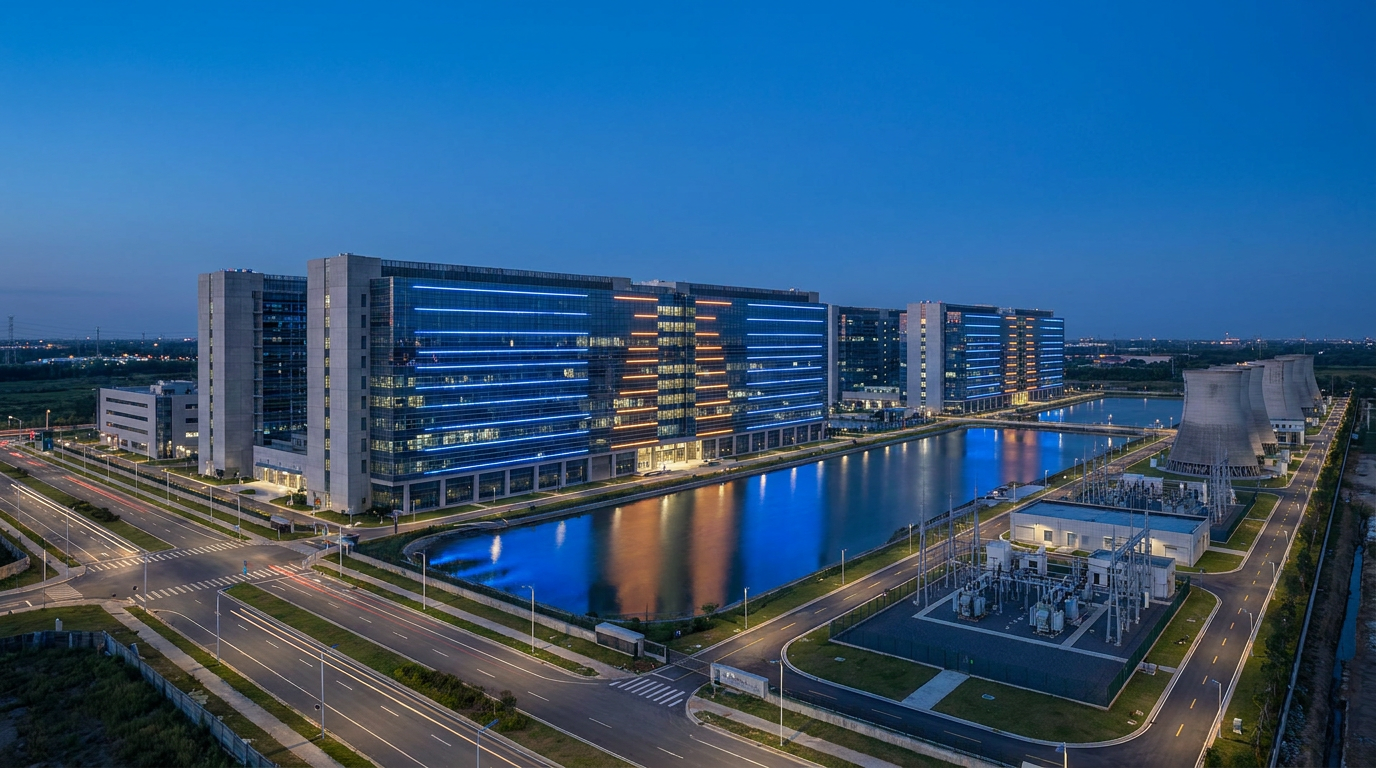
Artificial intelligence is often described in ethereal terms—the cloud, neural networks, virtual agents. But the reality of the AI boom is intensely physical. Every generative prompt, video rendering, and algorithmic training run requires concrete, steel, specialized cooling, and massive amounts of electricity. As technology giants race to build the infrastructure required for the next generation of computing, a specific class of real estate has become the foundational layer of the digital economy: the data center Real Estate Investment Trust (REIT).[1][2]
Data center REITs are effectively the landlords of the digital age. Rather than owning office buildings or shopping malls, these companies own, operate, and manage the highly specialized facilities that house servers and networking equipment. They do not typically own the computers themselves; instead, they provide the "powered shell"—the secure physical space, the industrial-grade cooling systems, and the massive power connections required to keep enterprise hardware running without interruption.[5][8]
For investors, the appeal of the REIT structure lies in its legal requirements and tax advantages. Created by Congress in 1960 to democratize real estate investment, REITs are mandated by law to distribute at least 90% of their taxable income directly to shareholders in the form of dividends. This structure transforms the capital-intensive business of building internet infrastructure into a vehicle for steady, passive income, allowing retail investors to participate in the tech boom without betting on individual software startups.[2][5]
In 2026, the sector is experiencing an unprecedented supercycle driven by the sheer scale of AI investment. The "big five" hyperscalers—Amazon, Meta, Alphabet, Oracle, and Microsoft—are projected to allocate more than $450 billion in capital expenditures toward AI infrastructure this year alone. A significant portion of that capital is flowing directly into long-term leases with data center operators, securing the physical footprint necessary to deploy millions of advanced GPUs.[1][7]

The unit economics of the AI era are proving significantly more attractive for REITs than the previous cloud computing boom. Because AI workloads require specialized environments, rental rates per megawatt have increased substantially. Furthermore, hyperscalers are signing longer lease terms to guarantee their capacity, which improves tenant credit quality and provides REITs with highly predictable, long-term cash flows.[7]
Industry giants like Equinix and Digital Realty are aggressively scaling to meet this demand. Equinix, which operates over 300 data centers globally and facilitates more than 500,000 interconnections, has committed to investing $4 billion to $5 billion annually through 2029 to double its capacity. Digital Realty has similarly expanded its footprint, growing its total assets to nearly $49 billion as it develops mega-campuses across the Americas, Europe, and Asia.[3][4][6]
Industry giants like Equinix and Digital Realty are aggressively scaling to meet this demand.
However, the bottleneck for this expansion has fundamentally shifted. In previous decades, the primary challenge for a data center REIT was acquiring prime real estate near major fiber-optic networks. Today, the constraint is electricity. A modern data center REIT that builds a state-of-the-art facility but cannot secure a massive, reliable power supply has merely built an expensive, empty warehouse.[7]
The power requirements for AI are staggering. While traditional cloud facilities were relatively efficient, a single AI training data center can require 100 to 500 megawatts of continuous power—roughly equivalent to the electricity demand of a small city. This aggregate impact has shifted U.S. electrical demand from a slow, marginal increase to a structural acceleration that regional grids were not originally designed to support.[7]

Consequently, the ultimate competitive moat for a data center REIT in 2026 is its relationship with utility providers. Operators who have already secured multi-year power supply agreements in supply-constrained markets possess a distinct advantage. Because new entrants cannot easily secure the gigawatts required to compete, established REITs with powered facilities can command premium pricing and near-perfect occupancy rates.[7]
Wall Street has taken notice of this dynamic, leading to the rapid financialization of digital infrastructure. There has been a sharp expansion in structured financing for data centers, with Asset-Backed Securities (ABS) and Commercial Mortgage-Backed Securities (CMBS) issuance volumes soaring. In 2025 and early 2026, ABS volumes for data centers hovered around $11 billion to $14 billion, signaling deep capital market acceptance of these facilities as premier, financeable assets.[6]
Despite the overwhelming momentum, the sector is not without risks. The most significant long-term vulnerability is the pace of AI monetization. The hyperscalers' massive capital commitments provide the demand signal that supports the entire REIT investment thesis. If enterprise adoption of AI tools or end-user willingness to pay does not scale as quickly as the infrastructure buildout implies, tech giants could revise their spending downward, leading to potential oversupply in the data center market.[6][7]

Additionally, as capital-intensive businesses, data center REITs are sensitive to macroeconomic factors like interest rates. Higher borrowing costs can compress profit margins on new developments and make dividend yields less attractive compared to risk-free government bonds. Grid reliability constraints also pose a threat; if utility providers cannot upgrade transmission lines fast enough, facility openings could face severe delays.[2][7]
Ultimately, data center REITs represent the convergence of real estate and next-generation technology. By bridging the gap between the digital ambitions of the world's largest tech companies and the physical realities of power and space, these operators have positioned themselves at the very center of the 2026 economy. For investors and technologists alike, they offer a tangible way to anchor the AI revolution in concrete and steel.[1][8][9]
How we got here
1960
The U.S. Congress creates the Real Estate Investment Trust (REIT) structure to democratize commercial real estate investing.
Late 1990s
The first specialized data center REITs emerge to support the early internet and dot-com boom.
2010s
The rise of cloud computing drives massive expansion in data center real estate, establishing operators like Equinix and Digital Realty as industry giants.
2023–2024
Generative AI triggers a sudden, massive spike in demand for specialized, high-density computing facilities.
2025
Data center REITs see unprecedented capital inflows, with ABS and CMBS financing volumes reaching record highs.
2026
Hyperscalers commit over $450 billion to AI infrastructure, cementing data center REITs as the foundational layer of the digital economy.
Viewpoints in depth
Infrastructure Investors
Viewing data centers as a high-yield, stable vehicle for passive income.
For retail and institutional investors, data center REITs offer a unique value proposition: exposure to the explosive growth of artificial intelligence without the volatility of picking individual tech stocks. Because REITs are legally required to distribute 90% of their taxable income as dividends, they transform capital-intensive tech infrastructure into steady cash flow. Investors in this camp closely monitor tenant credit quality, favoring REITs that secure long-term leases with investment-grade hyperscalers, ensuring reliable returns even during broader market fluctuations.
Data Center Operators
Focused on aggressive expansion and securing the physical resources needed for AI.
From the perspective of the companies actually building these facilities, the 2026 landscape is a race for scale and resources. Operators like Equinix and Digital Realty are deploying billions in capital expenditures to double their capacity by the end of the decade. Their primary operational focus has shifted from merely acquiring prime real estate to securing massive, multi-year power agreements with local utilities. For these operators, the ability to guarantee 100 to 500 megawatts of uninterrupted power is the ultimate competitive moat in a supply-constrained market.
Energy & Grid Analysts
Warning about the structural strain AI infrastructure places on regional power grids.
Energy analysts view the AI boom through the lens of electrical consumption, and their outlook is cautious. A single modern AI training facility can draw as much continuous power as a small city, shifting U.S. electrical demand from a slow, predictable curve to a sudden, structural acceleration. Analysts in this camp warn that regional grids were not designed for this load, raising concerns about grid reliability, the necessity of massive utility upgrades, and the risk that power shortages could ultimately bottleneck the entire AI revolution.
What we don't know
- Whether enterprise adoption of AI will generate enough revenue to justify the hyperscalers' massive infrastructure spending.
- How quickly regional utility grids can upgrade transmission lines to meet the unprecedented power demands of new data centers.
- The long-term impact of potential regulatory interventions regarding AI energy consumption and data sovereignty.
Key terms
- Data Center REIT
- A specialized real estate investment trust that owns, operates, and leases the physical facilities housing servers and network equipment.
- Hyperscaler
- Massive cloud and technology companies (like Amazon, Google, and Microsoft) that require vast amounts of computing infrastructure.
- Colocation
- The practice of renting space, power, and cooling in a third-party data center for a company's own servers.
- Megawatt (MW)
- A unit of electrical power used to measure the capacity and energy consumption of data centers.
Frequently asked
Do data center REITs own the servers?
No. They typically own the physical building, cooling systems, and power infrastructure, while tenants provide their own servers and networking gear.
Why are AI data centers different from older cloud facilities?
AI workloads require significantly more power and specialized cooling systems, with a single facility often drawing 100 to 500 megawatts of continuous electricity.
How do investors make money from REITs?
By law, REITs must distribute at least 90% of their taxable income to shareholders as dividends, providing a steady stream of passive income alongside potential stock appreciation.
Sources
Source coverage
9 outlets
4 viewpoints surfaced









[1]ForbesInfrastructure Investors
Data Center Stocks As Long-Term Investments
Read on Forbes →[2]The Motley FoolInfrastructure Investors
Best Data Center REITs for 2026 and How to Invest
Read on The Motley Fool →[3]S&P GlobalTechnology Strategists
Digital Realty, Equinix ramp up datacenters as AI drives demand
Read on S&P Global →[4]EquinixData Center Operators
Equinix Reports Fourth Quarter and Full Year 2025 Results
Read on Equinix →[5]Data Center KnowledgeTechnology Strategists
What Is a Data Center REIT?
Read on Data Center Knowledge →[6]Commercial SearchData Center Operators
Data centers become an increasingly financeable asset class
Read on Commercial Search →[7]VaasBlockEnergy & Grid Analysts
The AI Data Center Buildout Has Become a Power Grid Problem
Read on VaasBlock →[8]Data Center Real EstateData Center Operators
Strategic Role of Data Center REITs in 2025 and Beyond
Read on Data Center Real Estate →[9]Simply Wall StInfrastructure Investors
Equinix (EQIX) Stock Could Be 8.8% Undervalued After New AI Infrastructure Partnerships
Read on Simply Wall St →
Every angle. Every day.
Get real estate stories with full source coverage and perspective breakdowns delivered to your inbox.