
The Chemistry of Grilling: How the Maillard Reaction and Reverse Searing Transform Meat
Mastering the grill is less about intuition and more about chemistry. Understanding the science behind the Maillard reaction, enzymatic tenderization, and smoke rings can fundamentally change how you cook outdoors.
By Factlen Editorial Team
- Culinary Scientists
- Focus on the molecular reactions, thermal dynamics, and debunking traditional grilling myths.
- Modern Pitmasters
- Embrace new techniques like the reverse sear and precision temperature control to guarantee consistent results.
- Traditional Barbecue Purists
- Value the complex flavor profiles of live-fire charcoal and wood cooking over the convenience of modern pellet grills.
What's not represented
- · Vegetarian and vegan grilling advocates, who apply similar Maillard reaction principles to plant-based proteins and vegetables.
- · Appliance manufacturers, who design grills to optimize specific airflow and combustion dynamics.
Why this matters
Understanding the chemistry of the grill eliminates the guesswork from outdoor cooking. By mastering thermal dynamics and molecular reactions, backyard cooks can consistently achieve restaurant-quality results and avoid common pitfalls like dry, overcooked meat.
Key points
- The Maillard reaction, responsible for the savory crust on grilled meat, requires surface dehydration and temperatures above 300°F to occur rapidly.
- Traditional searing often results in a gray band of overcooked meat because the intense heat penetrates before the center is fully cooked.
- The 'reverse sear' method cooks meat slowly at a low temperature to dry the surface and activate tenderizing enzymes, finishing with a brief, high-heat sear.
- The coveted barbecue 'smoke ring' does not add flavor; it is a visual chemical reaction between myoglobin and combustion gases like carbon monoxide.
- Charcoal and wood chunks produce a denser, more complex smoke flavor compared to the highly efficient, clean burn of modern pellet grills.
Summer grilling is often treated as an art form passed down through generations, but at its core, it is an exercise in applied chemistry. From the sizzle of a steak hitting a hot grate to the coveted pink ring on a smoked brisket, every transformation on the grill is governed by strict scientific principles. By understanding the molecular changes happening over the coals, backyard cooks can abandon guesswork and consistently produce restaurant-quality results.[8]
The most fundamental chemical process in grilling is the Maillard reaction. Named after French chemist Louis-Camille Maillard, this non-enzymatic browning occurs when amino acids and reducing sugars are subjected to high heat. As the molecules break down and recombine, they form hundreds of new, highly complex flavor compounds, including pyrazines and thiophenes, which give roasted meat its signature savory, meaty aroma.[2]
However, the Maillard reaction has a strict prerequisite: surface dehydration. Meat is largely composed of water, which acts as a thermal buffer. When a steak hits the grill, the iconic sizzling sound is actually the rapid evaporation of surface moisture. Because water cannot exceed 212 degrees Fahrenheit before turning to steam, the surface of the meat cannot reach the temperatures required for rapid browning until that moisture is gone.[1]
According to food scientists at NC State University, the Maillard reaction becomes highly efficient only when the surface temperature of the meat climbs past 300 degrees Fahrenheit. If the meat is cooked at too low a temperature, or if the surface is too wet, the proteins will simply steam, resulting in a gray, unappetizing exterior. Conversely, pushing the heat too high for too long pushes the reaction past browning and into pyrolysis—charring the food into bitter carbon.[1]

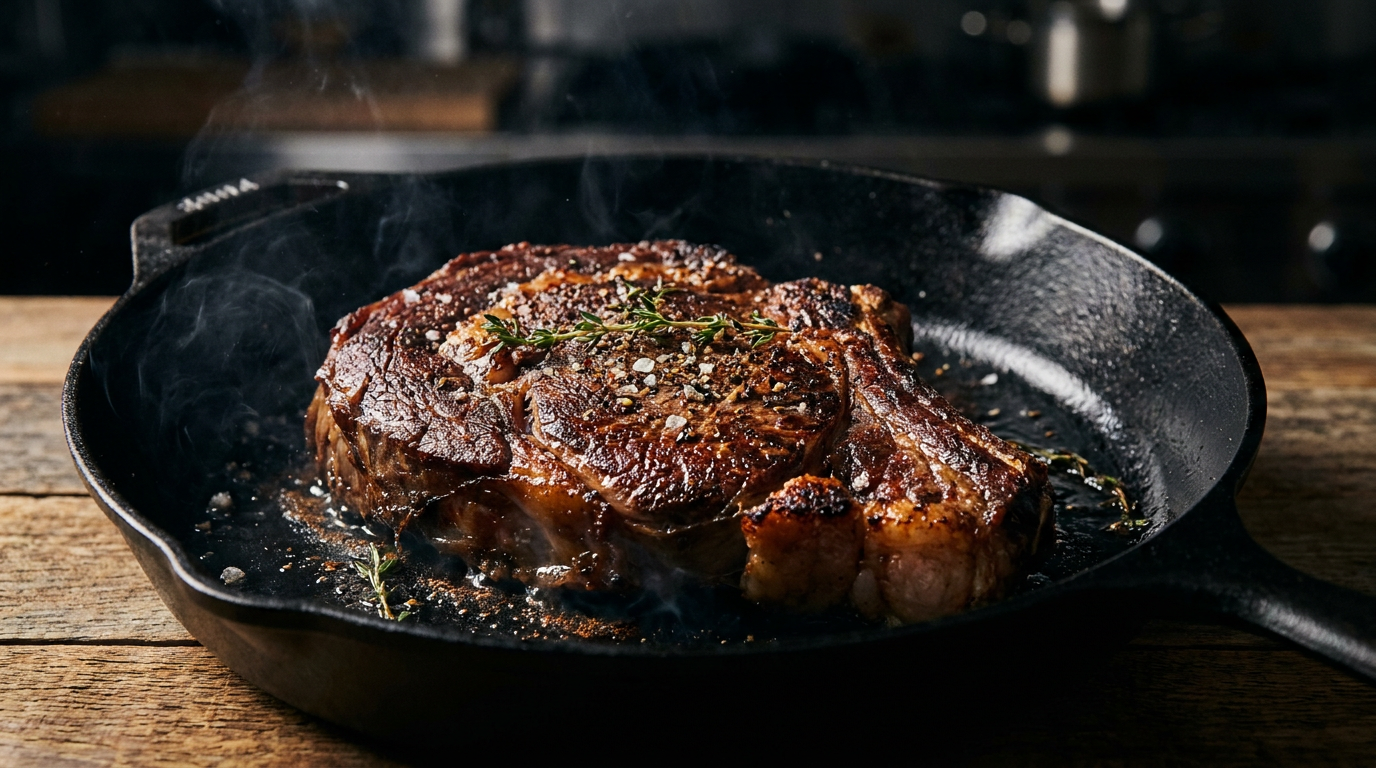
This delicate balance of temperature and moisture is what makes traditional searing so difficult to perfect. The conventional method involves searing a cold steak over blistering heat to develop a crust, then moving it to a cooler zone to finish cooking. While this creates a crust, the intense initial heat often overcooks the outer layers of the meat before the center reaches the desired temperature, creating a thick band of dry, gray meat just beneath the surface. Furthermore, the myth that searing "locks in juices" has been thoroughly debunked by food scientists; searing is purely about flavor development, not moisture retention.[3]
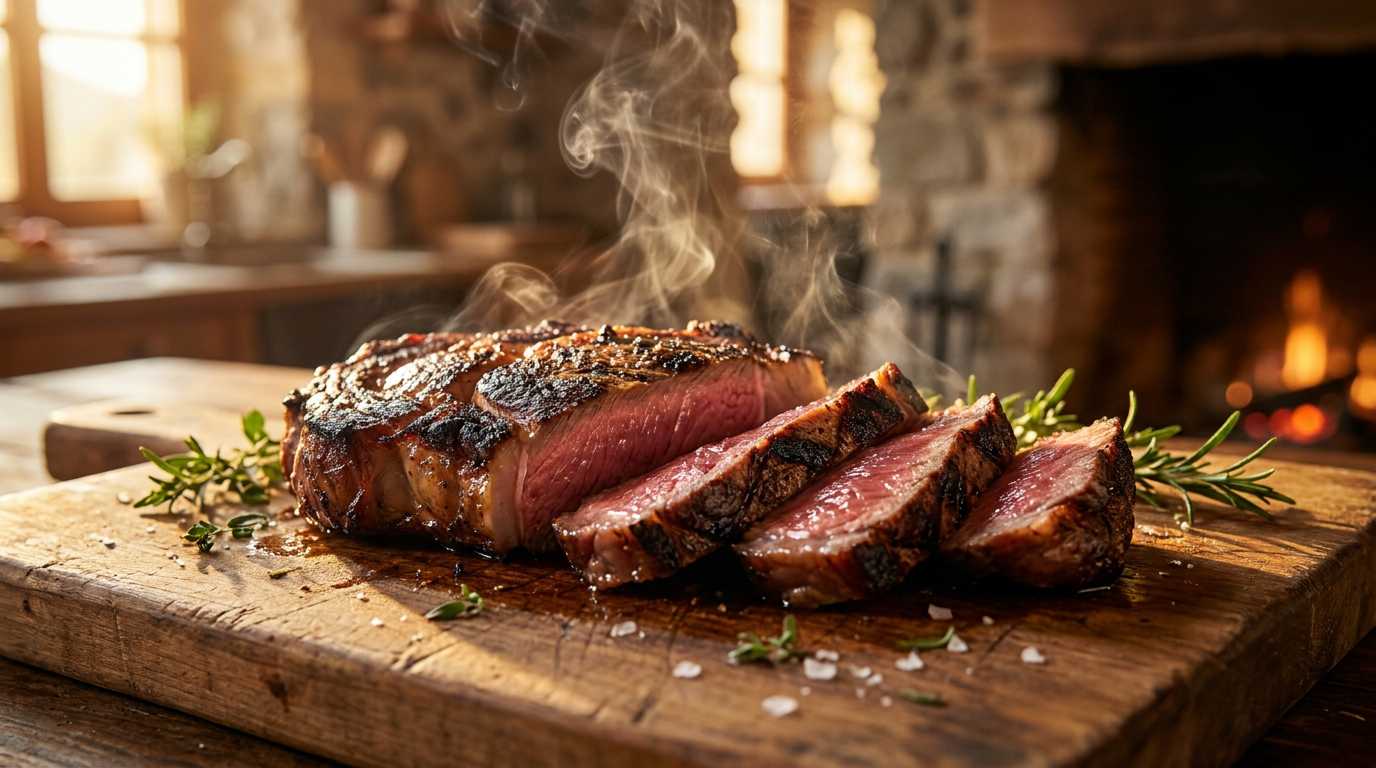
Enter the "reverse sear," a technique that flips the traditional script and leverages thermal dynamics to achieve a perfect edge-to-edge cook. In a reverse sear, the meat is first cooked at a very low temperature—typically between 225 and 275 degrees Fahrenheit—until the internal temperature is just shy of the target doneness. Only then is the meat subjected to a brief, intense blast of heat to create the crust.[3]
The reverse sear works brilliantly for three distinct scientific reasons. First, the low-and-slow initial phase gently raises the internal temperature, preventing the harsh temperature gradients that cause the gray band of overcooked meat. Second, the prolonged exposure to warm, dry air in the grill or oven thoroughly dehydrates the surface of the meat. By the time the steak is ready for its final sear, the surface moisture is entirely gone, allowing the Maillard reaction to occur almost instantly when it hits the hot grate.[3][4]
The reverse sear works brilliantly for three distinct scientific reasons.
The third and most fascinating benefit of the reverse sear involves enzymatic tenderization. Meat contains naturally occurring enzymes called cathepsins, which break down tough muscle proteins and tenderize the tissue. These enzymes become highly active as the meat warms up, but they permanently denature and stop working once the meat reaches 122 degrees Fahrenheit. By slowly bringing the meat up to temperature, the reverse sear maximizes the amount of time the cathepsins spend in their active zone, resulting in a noticeably more tender steak.[4]

Beyond the steak, the science of low-and-slow barbecue introduces another chemical phenomenon: the smoke ring. A prized hallmark of authentic barbecue, the smoke ring is a distinct pink or reddish band that sits just beneath the dark crust, or "bark," of smoked meats like brisket and pork shoulder. For decades, pitmasters believed this pink layer was the physical manifestation of smoke penetrating the meat, and its presence is still heavily scrutinized in barbecue competitions.[5]
In reality, the smoke ring has nothing to do with the flavor of smoke. It is the result of a chemical reaction between myoglobin—the iron-rich protein that gives raw meat its red color—and the invisible gases produced by burning wood or charcoal. When wood combusts, it releases nitric oxide and carbon monoxide. As these gases envelop the meat, they diffuse into the surface layers and bind tightly to the iron atoms in the myoglobin.[5][7]
Normally, as meat cooks and reaches temperatures around 160 degrees Fahrenheit, the myoglobin denatures and turns a dull brown or gray. However, when nitric oxide and carbon monoxide bind to the myoglobin, they stabilize the molecule, permanently locking in a bright pink color that remains even after the meat is fully cooked. Because these gases can only penetrate a fraction of an inch into the meat before the interior proteins denature, the pink color is confined to a distinct ring around the edge.[5][7]

Despite its visual appeal, food scientists and barbecue experts agree that the smoke ring contributes absolutely nothing to the flavor or tenderness of the meat. It is purely an aesthetic chemical reaction. In fact, a smoke ring can be artificially created in a kitchen oven without any wood smoke at all, simply by applying a curing salt containing sodium nitrite to the surface of the meat.[5][7]
The type of fuel used also plays a critical role in the chemical makeup of the final dish. The ongoing debate between traditional charcoal smokers and modern pellet grills ultimately comes down to combustion efficiency. Pellet grills use forced air and highly compressed wood pellets to create a very clean, efficient burn. This produces a lighter, more subtle smoke profile, as the efficient combustion destroys many of the heavier, more pungent volatile organic compounds before they can reach the meat.[6]
Charcoal and traditional offset wood smokers, by contrast, rely on a more complex and often less efficient combustion process. The combination of smoldering charcoal and chunks of raw hardwood produces a denser smoke rich in complex phenols, syringols, and other volatile compounds. This results in the deep, robust, and slightly aggressive flavor profile that purists associate with traditional barbecue.[6]

Ultimately, mastering the grill requires a shift in perspective. By viewing the grill not just as a source of fire, but as a laboratory for thermal transfer and chemical reactions, cooks can manipulate variables like surface moisture, enzymatic activity, and combustion gases to their advantage. Whether executing a flawless reverse sear or chasing the perfect smoke ring, the secret to great barbecue is simply letting the science do the heavy lifting.[8]
Viewpoints in depth
The Culinary Science view
Grilling is an exercise in applied chemistry and thermal dynamics.
Food scientists approach the grill as a laboratory. From their perspective, traditional advice like 'searing locks in juices' is a myth that actively harms the cooking process. Instead, they focus on manipulating variables like surface moisture to optimize the Maillard reaction, and controlling internal temperature curves to maximize the activity of tenderizing enzymes like cathepsins. For this camp, the perfect steak is a predictable outcome of molecular chemistry, not a mystical art form.
The Modern Pitmaster view
Technique and precision equipment trump tradition.
Modern barbecue enthusiasts have widely adopted the reverse sear and pellet grills because they prioritize consistency and edge-to-edge perfection. By separating the cooking process into a low-temperature baking phase and a high-temperature searing phase, they eliminate the guesswork of traditional live-fire grilling. This camp values the ability to hit exact internal temperatures and produce a flawless crust without the risk of the dreaded gray band of overcooked meat.
The Traditionalist view
Authentic flavor requires the complex combustion of real wood and charcoal.
While traditionalists acknowledge the science of the smoke ring and the Maillard reaction, they argue that modern conveniences like pellet grills sacrifice depth of flavor. Because pellet grills burn highly compressed wood with extreme efficiency, they produce a lighter, cleaner smoke. Traditionalists prefer the slightly inefficient, smoldering combustion of charcoal and raw wood chunks, which releases a denser array of volatile organic compounds, creating the robust, aggressive flavor profile that defines classic barbecue.
What we don't know
- While the Maillard reaction is well understood, the exact combination of the hundreds of flavor compounds it produces varies wildly depending on the specific amino acids and sugars present in different cuts of meat.
- The debate over whether pellet grills or traditional offset smokers produce 'better' barbecue remains highly subjective, as it depends entirely on an individual's preference for clean versus heavy smoke profiles.
Key terms
- Maillard reaction
- A chemical reaction between amino acids and reducing sugars that gives browned food its distinctive flavor.
- Reverse sear
- A cooking method where meat is cooked slowly at a low temperature before being finished with a brief, high-heat sear.
- Myoglobin
- An iron-rich protein found in muscle tissue that gives raw meat its red color and reacts with gases to form a smoke ring.
- Cathepsins
- Naturally occurring enzymes in meat that break down muscle proteins and tenderize the tissue when gently heated.
- Pyrolysis
- The thermal decomposition of materials at elevated temperatures, which in grilling leads to bitter, charred carbon.
Frequently asked
Does searing a steak lock in the juices?
No. Searing does not create a waterproof barrier. It is done entirely to trigger the Maillard reaction and develop complex flavor compounds on the crust.
Does a smoke ring mean the meat has more smoke flavor?
No. The smoke ring is purely an aesthetic chemical reaction between myoglobin and combustion gases. It does not affect the taste or tenderness of the meat.
Why is my steak gray on the outside when I cook it?
A gray exterior usually means there was too much surface moisture on the meat, causing it to steam rather than sear. Patting the meat dry before cooking prevents this.
Can you reverse sear a thin steak?
It is not recommended. Thin steaks cook through so quickly that the low-and-slow phase will likely overcook them before they can be seared. The reverse sear is best for cuts at least 1.5 inches thick.
Sources
Source coverage
8 outlets
3 viewpoints surfaced








[1]NC State UniversityCulinary Scientists
The Science of Sizzle
Read on NC State University →[2]Harvard UniversityCulinary Scientists
Science of BBQ
Read on Harvard University →[3]Jess PrylesModern Pitmasters
How to Reverse Sear a Steak
Read on Jess Pryles →[4]Salt Sear SavorModern Pitmasters
The 3 Reasons Why the Reverse Sear Works
Read on Salt Sear Savor →[5]Destination BBQTraditional Barbecue Purists
The Enduring Legacy of the Smoke Ring
Read on Destination BBQ →[6]Smoke Tested BBQTraditional Barbecue Purists
Pellet Grill vs Charcoal Flavor
Read on Smoke Tested BBQ →[7]Genuine IdeasCulinary Scientists
Carbon Monoxide Smoke Ring
Read on Genuine Ideas →[8]Factlen Editorial TeamCulinary Scientists
Synthesis by Factlen editorial team
Read on Factlen Editorial Team →
Every angle. Every day.
Get food drink stories with full source coverage and perspective breakdowns delivered to your inbox.