
The Science of 'Prebunking': How Cognitive Vaccines Are Defeating Misinformation
Cognitive scientists are shifting from reactive fact-checking to psychological inoculation, using 'prebunking' to build mental resistance against manipulation techniques before they spread.
By Factlen Editorial Team
- Cognitive & Behavioral Scientists
- Researchers focused on the empirical measurement of cognitive immunity, signal detection, and memory decay.
- Applied Media Researchers
- Specialists focused on designing and implementing practical interventions to improve public media literacy.
What's not represented
- · Free speech advocates concerned about institutional bias in defining manipulation
- · Social media platform engineers tasked with implementing these interventions at scale
Why this matters
As AI accelerates the production of convincing falsehoods, traditional fact-checking is no longer fast enough. Understanding how to 'inoculate' your own mind against manipulation techniques is becoming a vital survival skill for navigating the modern internet.
Key points
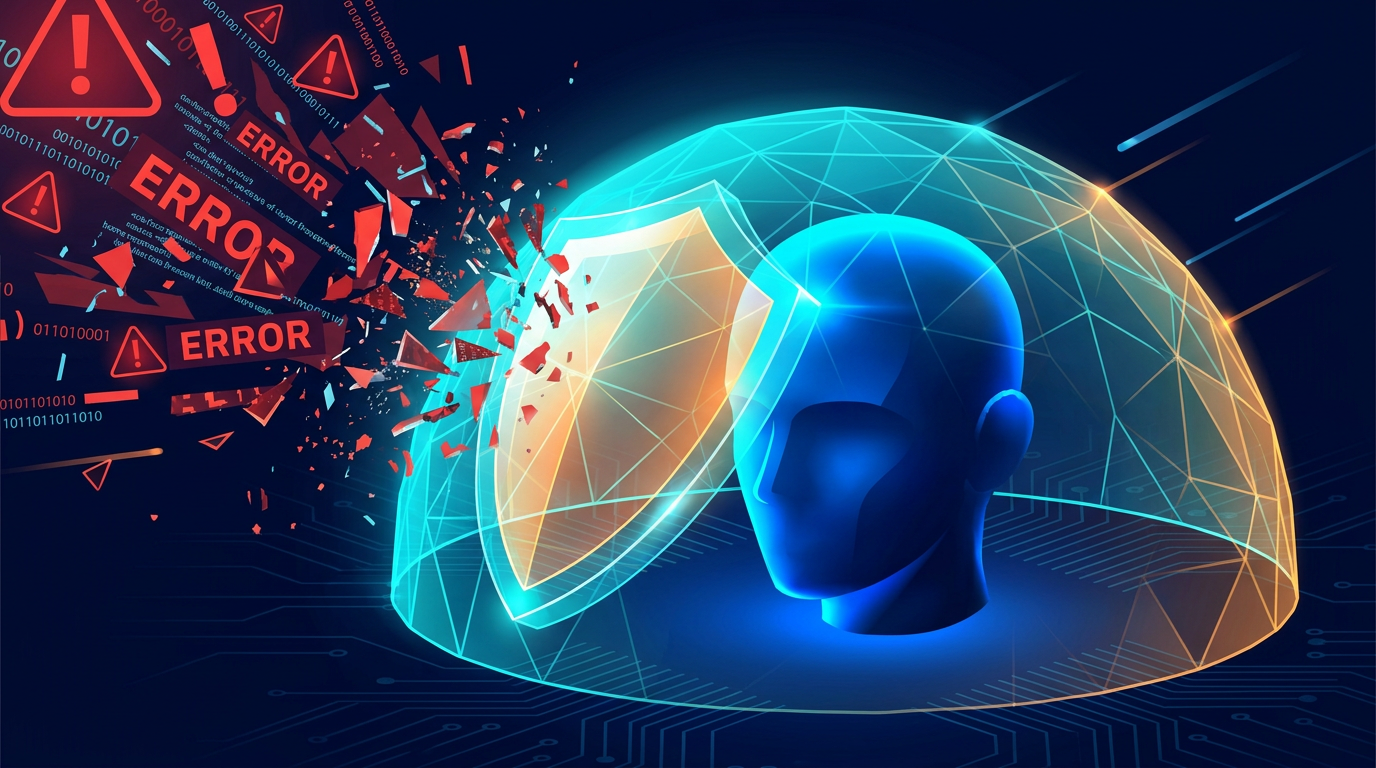
- Traditional fact-checking is being supplemented by 'prebunking,' a preventative strategy based on psychological inoculation.
- Prebunking exposes users to a weakened manipulation technique and a refutation, building cognitive resistance before they encounter actual misinformation.
- Large-scale 2026 meta-analyses confirm that these interventions significantly improve a user's ability to discern false news without increasing generalized cynicism.
- The protective effects of cognitive inoculation naturally decay over time, requiring periodic 'booster shots' to maintain long-term efficacy.
For years, the fight against digital falsehoods has relied on a reactive game of whack-a-mole. Traditional fact-checking—often referred to as 'debunking'—attempts to correct the public record after a false claim has already gone viral, frequently struggling to reach the exact same audience that absorbed the original lie.[6]
But in 2026, cognitive scientists and technology platforms are increasingly shifting their focus toward a preventative model. Instead of chasing falsehoods after they spread, researchers are deploying 'prebunking,' a strategy designed to build psychological resistance before a user ever encounters manipulative content.[5]
The approach is grounded in inoculation theory, a concept borrowed directly from epidemiology. Just as a biological vaccine exposes the immune system to a weakened pathogen to stimulate the production of antibodies, psychological inoculation exposes the human mind to a weakened dose of a manipulation technique.[5][6]
A standard prebunking intervention consists of two core components: a clear warning that the user might be targeted by misleading information, followed immediately by a preemptive refutation that explains exactly how the manipulation works.[4]

Rather than focusing on specific false facts—which are infinite and constantly evolving—prebunking targets the underlying structural techniques of misinformation, such as the use of highly emotional language, false dichotomies, or scapegoating.[5]
A massive wave of recent meta-analyses has quantified the real-world impact of this approach, transforming it from a laboratory theory into a highly scalable public defense system.[6]
A 2026 systematic review analyzing 40 independent studies and over 85,000 participants found that prebunking interventions yield significant short-term effects. The aggregated data showed measurable drops in both the perceived credibility of misleading content and the self-reported willingness of users to share it.[3]
One of the primary concerns among media researchers was that warning people about manipulation might induce a state of generalized cynicism, causing them to distrust accurate reporting alongside the fake news.[2]
However, a comprehensive re-analysis published in the February 2026 issue of Current Opinion in Psychology largely put those fears to rest. Using Signal Detection Theory to evaluate 33 experiments involving 37,000 participants, researchers found that prebunking improved actual discernment.[2]

However, a comprehensive re-analysis published in the February 2026 issue of Current Opinion in Psychology largely put those fears to rest.
The study concluded that gamified and video-based interventions helped users distinguish between reliable and unreliable news without increasing their overall response bias. In other words, participants did not become uniformly skeptical of everything they read; their 'immune response' was accurately targeted.[2]
The specific format of the inoculation also dictates its success. Research from the Countercons project, funded by the Italian Ministry of University and Research, found that 'counterfactual prebunking' is particularly effective.[4]
This method asks users to actively evaluate hypothetical scenarios rather than passively reading a warning. By prompting analytical reasoning and deeper engagement, counterfactual prebunking proved significantly more successful at building cognitive resistance than simply presenting factual corrections.[4]
Despite these highly promising results, psychological inoculation shares a critical vulnerability with its biological counterpart: the protective effects naturally wane over time.[1]
A landmark set of five longitudinal experiments published in Nature Communications, tracking nearly 12,000 participants, investigated exactly how quickly this cognitive immunity decays.[1]
The researchers found that while text-based and video-based inoculation interventions remained effective for about a month, game-based interventions decayed more rapidly. Once the initial vigilance faded, participants gradually became susceptible to manipulation techniques once again.[1]

To combat this decay, the study's authors proposed an integrated memory-motivation model, suggesting that platforms must deploy periodic 'booster shots.' These short, memory-enhancing reminders are necessary to maintain long-term resistance against misinformation at scale.[1]
The strategy is also not without edge cases. The Countercons project documented a 'backlash effect' among a specific subset of users who already exhibited high levels of conspiracy mentality or scientific populism.[4]
For these highly distrustful individuals, prebunking interventions sometimes backfired, inadvertently increasing their skepticism toward true news and official narratives.[4]
Addressing this entrenched distrust remains a frontier challenge for cognitive scientists, highlighting that no single intervention can entirely repair a fractured information ecosystem.[6]
How we got here
1964
Psychologist William McGuire first proposes inoculation theory, suggesting attitudes can be protected by pre-exposure to weakened persuasive arguments.
2020
Researchers launch early gamified prebunking interventions, such as the 'Bad News' game, to test digital inoculation.
2024
Tech platforms begin experimenting with short prebunking video ads in real-world social media feeds.
Early 2026
A wave of large-scale meta-analyses confirms that prebunking significantly improves misinformation discernment without destroying trust in real news.
Viewpoints in depth
Cognitive Scientists
Focus on the empirical evidence, signal detection theory, and the necessity of memory booster shots.
For researchers studying the mechanics of the human mind, the success of prebunking validates decades of inoculation theory. Their primary focus has shifted from proving that the concept works to measuring its precise boundaries using tools like Signal Detection Theory. By demonstrating that interventions improve actual discernment rather than just inducing blind skepticism, cognitive scientists argue that psychological vaccines are safe for public deployment. However, they caution that the rapid decay of cognitive immunity means platforms must engineer systemic 'booster shots' to maintain long-term protection.
Media Literacy Advocates
Argue for integrating prebunking into school curricula and social media onboarding.
Advocates for public education view prebunking as a structural alternative to the endless cycle of fact-checking. Rather than relying on third-party organizations to police every false claim, they argue for equipping citizens with the tools to identify manipulation techniques themselves. This camp pushes for counterfactual prebunking exercises to be integrated into middle-school curricula and for social media platforms to embed inoculation videos directly into their user onboarding processes, shifting the burden of truth from reactive moderation to proactive empowerment.
Free Expression Skeptics
Raise concerns about who designs the interventions and defines what constitutes manipulation.
While acknowledging the empirical success of the interventions, skeptics warn about the institutional power required to deploy them at scale. They raise questions about who gets to define a 'manipulation technique' and worry that state-backed or corporate-designed prebunking could subtly enforce ideological orthodoxies. Furthermore, the documented 'backlash effect' among highly distrustful populations suggests that top-down inoculation campaigns might inadvertently deepen societal fractures if they are perceived as paternalistic attempts at mind control.
What we don't know
- How to effectively scale 'booster shots' on social media platforms without causing user fatigue or annoyance.
- How to mitigate the 'backlash effect' where prebunking inadvertently increases skepticism toward true news among highly conspiratorial individuals.
Key terms
- Psychological Inoculation
- A cognitive strategy that builds resistance to persuasion by preemptively exposing individuals to a weakened version of a manipulative argument.
- Prebunking
- The practical application of psychological inoculation, usually involving a warning and an explanation of a specific misinformation technique.
- Signal Detection Theory
- A framework used by researchers to measure a person's ability to differentiate between actual patterns (true news) and background noise (fake news).
- Counterfactual Prebunking
- An intervention method that asks users to actively evaluate hypothetical scenarios to stimulate analytical reasoning.
Frequently asked
What is the difference between debunking and prebunking?
Debunking attempts to correct a false claim after someone has already seen it. Prebunking warns people about manipulation techniques before they encounter the falsehood, building preemptive resistance.
Does prebunking make people distrust all news?
No. Recent massive meta-analyses using Signal Detection Theory show that prebunking improves people's ability to distinguish between true and false information without increasing generalized cynicism.
How long does the 'cognitive vaccine' last?
Studies indicate that the protective effects of a single prebunking intervention last about one month before memory decay sets in, requiring periodic 'booster shots'.
Can prebunking backfire?
In rare cases, yes. Research shows a 'backlash effect' among individuals with highly entrenched conspiracy mentalities, where interventions can inadvertently increase their skepticism toward accurate reporting.
Sources
Source coverage
6 outlets
2 viewpoints surfaced






[1]Nature CommunicationsCognitive & Behavioral Scientists
Psychological booster shots targeting memory increase long-term resistance against misinformation
Read on Nature Communications →[2]Current Opinion in PsychologyCognitive & Behavioral Scientists
Psychological inoculation improves discrimination between reliable and unreliable news
Read on Current Opinion in Psychology →[3]OSF PreprintsCognitive & Behavioral Scientists
Effects of Prebunking Interventions on Misinformation: A Systematic Review and Meta-Analysis
Read on OSF Preprints →[4]360infoApplied Media Researchers
The power of prebunking: Equipping people to resist fake news
Read on 360info →[5]Harvard Kennedy School Misinformation ReviewCognitive & Behavioral Scientists
Evaluating the efficacy of psychological inoculation against misinformation
Read on Harvard Kennedy School Misinformation Review →[6]Factlen Editorial TeamApplied Media Researchers
Synthesis by Factlen editorial team
Read on Factlen Editorial Team →
More in news politics
See all 8 stories →Middle East Truce
Israel-Hezbollah Ceasefire Takes Effect as Fragile U.S.-Iran Truce Faces Immediate Tests
8 sources

U.S.-Iran Deal
Israel and Hezbollah Agree to Ceasefire as U.S.-Iran Swiss Talks Face Delays
8 sources
Middle East Diplomacy
U.S.-Iran Talks Stall as Israel-Hezbollah Ceasefire Faces Immediate Violations
8 sources
U.S.-Iran Deal
U.S. and Iran Sign 60-Day Truce to Reopen Strait of Hormuz, but Israel Defies Lebanon Ceasefire
7 sources

Every angle. Every day.
Get news politics stories with full source coverage and perspective breakdowns delivered to your inbox.