
The Concrete Behind the Cloud: How Data Center REITs Are Financing the AI Boom
As artificial intelligence demands unprecedented levels of power and cooling, specialized real estate investment trusts are stepping in to build the physical infrastructure that makes the AI revolution possible.
By Factlen Editorial Team
- Institutional Investors
- View data center REITs as a stable, dividend-paying vehicle to gain exposure to the AI boom without the volatility of pure tech stocks.
- Hyperscale Cloud Providers
- Rely on REITs to absorb the massive capital expenditure of physical real estate, allowing them to focus spending on GPUs and software.
- Infrastructure Operators
- Focus on the physical constraints of the AI boom, noting that power grid access and liquid cooling capabilities are the true bottlenecks.
- Market Skeptics
- Warn that the sector is highly sensitive to interest rates and faces risks of oversupply if AI monetization timelines stretch longer than expected.
What's not represented
- · Local Communities Near Data Centers
- · Environmental Advocates Monitoring Grid Strain
Why this matters
While software and silicon capture the headlines, the AI revolution is fundamentally constrained by physical infrastructure. Understanding how data center REITs operate reveals how the massive costs of the AI boom are being funded, and offers a window into the physical limits of our digital future.
Key points
- Data Center REITs own the physical buildings, power, and cooling systems that house AI servers.
- AI workloads require up to 5x more power per rack than traditional cloud computing, necessitating new facilities.
- Air cooling is insufficient for AI chips, driving a mandatory industry shift toward direct liquid cooling.
- Hyperscalers are projected to spend $700 billion on AI infrastructure in 2026, relying on REITs to shoulder the real estate costs.
- Access to the electrical grid has become the primary bottleneck and competitive moat for data center operators.
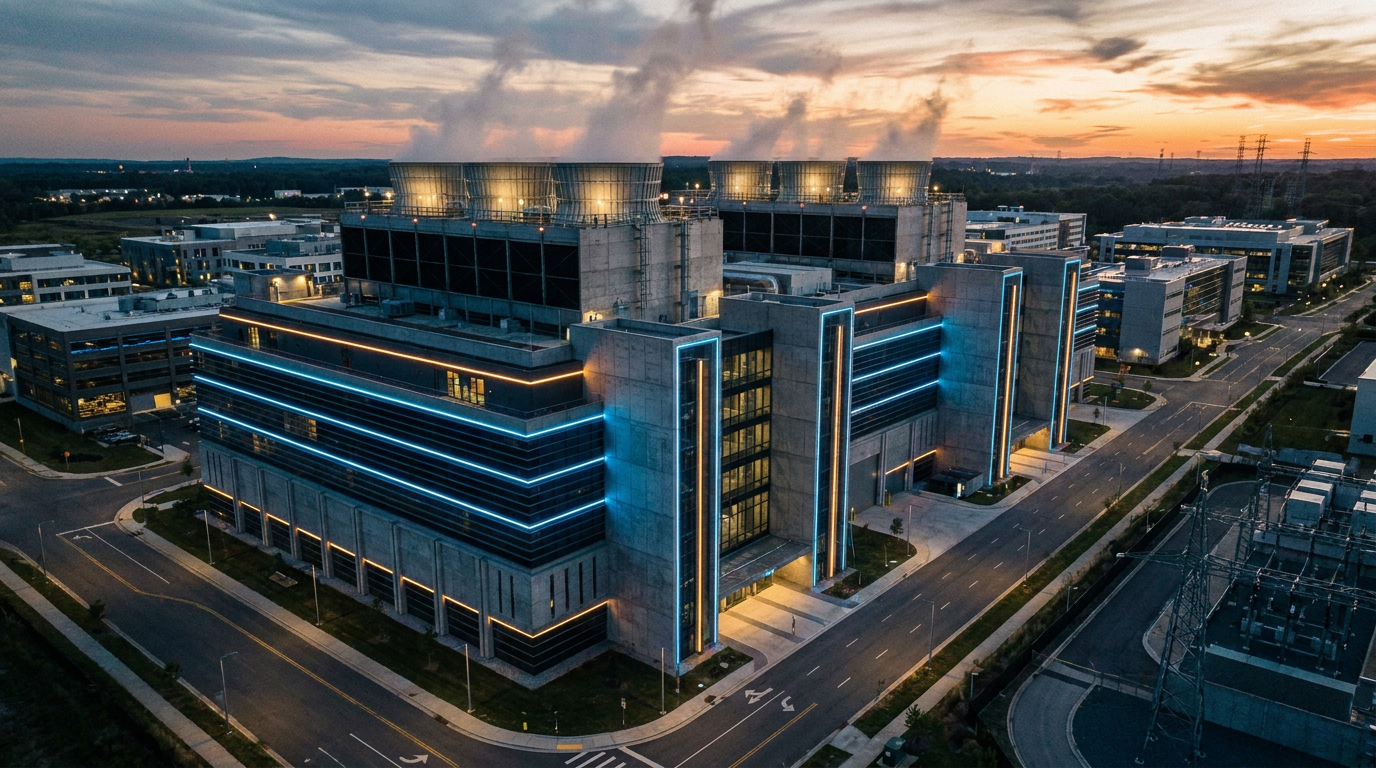
When we think of artificial intelligence, we picture lines of code, neural networks, and generative chatbots. But the reality of AI is profoundly physical. It is built of concrete, steel, industrial cooling pipes, and massive electrical substations. Before a single large language model can be trained, someone must pour the foundation for the building that will house the servers. In 2026, the entities pouring those foundations are increasingly Data Center Real Estate Investment Trusts (REITs).[6]
A Real Estate Investment Trust is a corporate structure created in the 1960s to allow everyday investors to pool their money and buy shares in commercial real estate portfolios. By law, a REIT must distribute at least 90% of its taxable income to shareholders as dividends. While traditional REITs own shopping malls, apartment buildings, or office towers, Data Center REITs own the highly specialized, mission-critical facilities that house the internet.[2][6]
The business model is straightforward but capital-intensive. Data Center REITs typically do not own the servers, the data, or the software. Instead, they own the "powered shell"—the physical building, the security systems, the backup generators, the cooling infrastructure, and the massive connections to the local power grid. They lease this highly engineered space to tenants ranging from enterprise businesses to "hyperscalers" like Amazon Web Services, Microsoft Azure, and Google Cloud.[1][2]

For years, this model provided steady, predictable growth as the world transitioned to cloud computing. But the arrival of generative AI fundamentally broke the existing math of data center infrastructure. Training frontier AI models requires gigawatt-scale campuses packed with specialized silicon, and the physical demands of these chips are unlike anything the industry has seen before.[3][4]
The core of the challenge is power density. A standard cloud-computing server rack in 2020 might have consumed between 8 and 15 kilowatts of electricity. Today, a single rack packed with advanced AI graphics processing units (GPUs) draws between 40 and 100 kilowatts—and some next-generation clusters are pushing 150 kilowatts per rack. This represents a 300% to 500% increase in power density within the exact same physical footprint.[4][6]

Where there is massive power draw, there is massive heat. Conventional data centers were designed to be cooled by air—massive industrial fans pushing chilled air across the servers. But at 50 kilowatts per rack, air cooling physically fails. The airflow velocity required would sound like a jet engine and consume a prohibitive amount of energy. Consequently, AI data centers require direct liquid cooling, where specialized fluids are piped directly to the chips to absorb the heat.[4]
This shift has created a "retrofit problem" across the industry. Older, cloud-era facilities cannot simply be upgraded to handle AI workloads; their power distribution and cooling architectures are fundamentally incompatible. As a result, the industry is racing to build entirely new, purpose-built AI campuses from the ground up. These new facilities integrate liquid cooling at the build stage and feature power distribution systems engineered for the dense, concentrated bursts of electricity that AI training demands.[4]

This shift has created a "retrofit problem" across the industry.
Building these mega-campuses requires staggering amounts of capital. According to industry projections, the six largest U.S. hyperscalers are expected to spend approximately $700 billion on AI capital expenditures in 2026 alone—nearly six times the levels seen in 2022. Even for the world's most valuable technology companies, carrying hundreds of billions of dollars of physical real estate on their balance sheets is inefficient.[3][6]
This capital gap is where Data Center REITs have found their ultimate leverage. By acting as the landlords of the AI boom, REITs allow tech giants to preserve their capital for purchasing expensive GPUs and hiring engineering talent, while the REITs handle the real estate. The hyperscalers sign 10-to-15-year leases, providing the REITs with the guaranteed, long-term cash flow needed to secure construction financing.[2][3]
The scale of these financing vehicles is expanding rapidly. In March 2026, Digital Realty—one of the world's largest Data Center REITs—announced the final close of its inaugural U.S. hyperscale data center fund, raising $3.25 billion in equity commitments from pensions, sovereign wealth funds, and endowments. This private capital vehicle allows the REIT to scale its AI infrastructure development across major U.S. markets without overleveraging its own public balance sheet.[3]

The expansion is aggressively global. In April 2026, Digital Realty announced a targeted S$7 billion investment in Singapore, aiming to reinforce the city-state's role as a critical AI inference hub for the Asia-Pacific region. Meanwhile, competitor Equinix is investing between $4 billion and $5 billion annually through 2029 to double its global data center capacity, focusing heavily on interconnected, AI-ready facilities.[2][5]
For investors, the appeal of Data Center REITs lies in their position as a "pick-and-shovel" play on the AI gold rush. Rather than betting on which tech company will build the best AI model, investors can own the physical infrastructure that every model requires. This provides direct exposure to the secular tailwinds of AI and cloud computing, backed by highly visible, recurring revenue streams from blue-chip tenants.[1][6]
However, the sector's explosive growth is not without constraints. The primary bottleneck for AI expansion in 2026 is no longer capital or silicon, but electricity. Utilities are struggling to deliver new substation capacity fast enough to support 100-megawatt campuses. As a result, REITs that secured grid access and power purchase agreements years before the AI boom are now commanding premium valuations simply because they control scarce electrical capacity.[3][6]
There are also financial risks inherent to the model. Because REITs must distribute 90% of their income to shareholders, they cannot fund new construction entirely from their own cash flow. They must continually access the debt and equity markets to build new facilities. This makes them highly sensitive to interest rates; when borrowing costs rise, the economics of building a $2 billion data center campus become significantly tighter.[1][2]
Furthermore, the industry faces the long-term risk of tenant concentration. While hyperscalers are currently signing massive leases, a future economic downturn or a shift in AI architecture could lead these tech giants to pivot toward building and owning their own capacity, potentially leaving REITs with oversupplied markets.[1][6]
Despite these challenges, the financialization of digital infrastructure represents a critical maturation of the AI industry. By bridging the gap between institutional capital and the physical demands of advanced computing, Data Center REITs are ensuring that the infrastructure required for the next decade of technological progress is actually built. They have transformed the abstract promise of artificial intelligence into a tangible, investable asset class.[3][6]
How we got here
1960
The U.S. Congress creates the Real Estate Investment Trust (REIT) structure to democratize commercial real estate investing.
2010s
Data Center REITs experience steady, predictable growth driven by the global enterprise shift to cloud computing.
2023
The generative AI boom begins, revealing that existing cloud-era data centers lack the power density to support massive GPU clusters.
2024–2025
The industry pivots to liquid cooling and purpose-built AI mega-campuses, sparking a massive capital expenditure cycle.
March 2026
Digital Realty closes a $3.25 billion U.S. hyperscale fund, signaling the arrival of massive private institutional capital into AI real estate.
Viewpoints in depth
Institutional Investors
Viewing physical infrastructure as the safest bet in the AI gold rush.
For institutional capital—pensions, endowments, and sovereign wealth funds—picking the ultimate winner of the AI software race is highly speculative. Data Center REITs offer a "pick-and-shovel" alternative. By owning the physical infrastructure that every AI model requires, investors secure predictable, dividend-yielding returns backed by 10-to-15-year leases with the world's most creditworthy technology companies. This camp views the sector as a rare bridge between high-growth technology and defensive, income-producing real estate.
Hyperscale Cloud Providers
Offloading real estate to focus capital on silicon and software.
Companies like Amazon, Microsoft, and Google are engaged in an arms race to secure hundreds of thousands of advanced GPUs. Because a single AI data center campus can now cost upwards of $2 billion to construct, hyperscalers prefer not to tie up their balance sheets in concrete and steel. By partnering with REITs, they can rapidly scale their physical footprint while preserving their capital for the core technologies that differentiate their AI offerings.
Infrastructure Operators
Navigating the physical limits of power grids and thermal dynamics.
For the operators actually building these facilities, the AI boom is a logistical gauntlet. They argue that the market often fails to appreciate the sheer physical difficulty of delivering 100 megawatts of power to a single building. This camp emphasizes that the true competitive moat in 2026 is not real estate acumen, but secured utility partnerships and advanced liquid cooling engineering. Facilities that cannot meet these new physical specifications are rapidly becoming obsolete.
What we don't know
- Whether hyperscalers will eventually pivot to building and owning their own data centers if the cost of leasing becomes too high.
- How quickly local power grids can upgrade transmission lines to support the exponential electricity demands of new AI campuses.
- If future breakthroughs in AI chip efficiency might eventually reduce the extreme power and cooling requirements currently driving the market.
Key terms
- REIT (Real Estate Investment Trust)
- A corporate structure that allows investors to pool capital to buy and manage income-producing real estate, required by law to distribute 90% of taxable income as dividends.
- Hyperscaler
- Massive cloud service providers, such as Amazon Web Services, Microsoft Azure, and Google Cloud, that dominate the global computing market.
- Power Density
- The amount of electrical power consumed by a single server rack, usually measured in kilowatts (kW). AI racks have vastly higher power density than standard racks.
- Liquid Cooling
- A thermal management system that uses specialized fluids, rather than air, to absorb and remove the intense heat generated by high-performance AI chips.
- Powered Shell
- A commercial real estate lease where the landlord provides the physical building and robust electrical/cooling infrastructure, leaving the tenant to install their own computing hardware.
Frequently asked
What exactly does a Data Center REIT own?
They own the physical building, the connection to the power grid, the backup generators, the security systems, and the cooling infrastructure. They typically do not own the servers or the data inside them.
Why can't older data centers be used for AI?
AI servers draw significantly more power and generate much more heat than traditional cloud servers. Older facilities lack the electrical capacity and liquid cooling infrastructure required to keep AI chips from overheating.
Why don't tech companies just build their own data centers?
While they do build some, the total cost of AI infrastructure is too massive. By leasing from REITs, tech companies can spend their capital on expensive AI chips and software development rather than tying it up in real estate.
How do interest rates affect these companies?
Because REITs must pay out 90% of their income as dividends, they rely heavily on borrowing money to build new facilities. Higher interest rates make this borrowing more expensive, which can squeeze their profit margins.
Sources
Source coverage
6 outlets
4 viewpoints surfaced






[1]ForbesInstitutional Investors
Data Center Stocks: A Compelling Investment Amid Explosive Growth
Read on Forbes →[2]The Motley FoolInstitutional Investors
Best Data Center REITs for 2026 and How to Invest
Read on The Motley Fool →[3]The AI Consulting NetworkHyperscale Cloud Providers
AI Data Center Infrastructure Financing Explained
Read on The AI Consulting Network →[4]Global Data Center HubInfrastructure Operators
The Retrofit Problem: Why Cloud-Era Data Centers Fail at AI
Read on Global Data Center Hub →[5]Digital RealtyInfrastructure Operators
Digital Realty Targets S$7 Billion Investment in Singapore to Support AI Growth
Read on Digital Realty →[6]Factlen Editorial TeamMarket Skeptics
Synthesis by Factlen editorial team
Read on Factlen Editorial Team →


Every angle. Every day.
Get real estate stories with full source coverage and perspective breakdowns delivered to your inbox.