
The Rise of Local AI: How Small Language Models Are Bringing Privacy Back to Computing
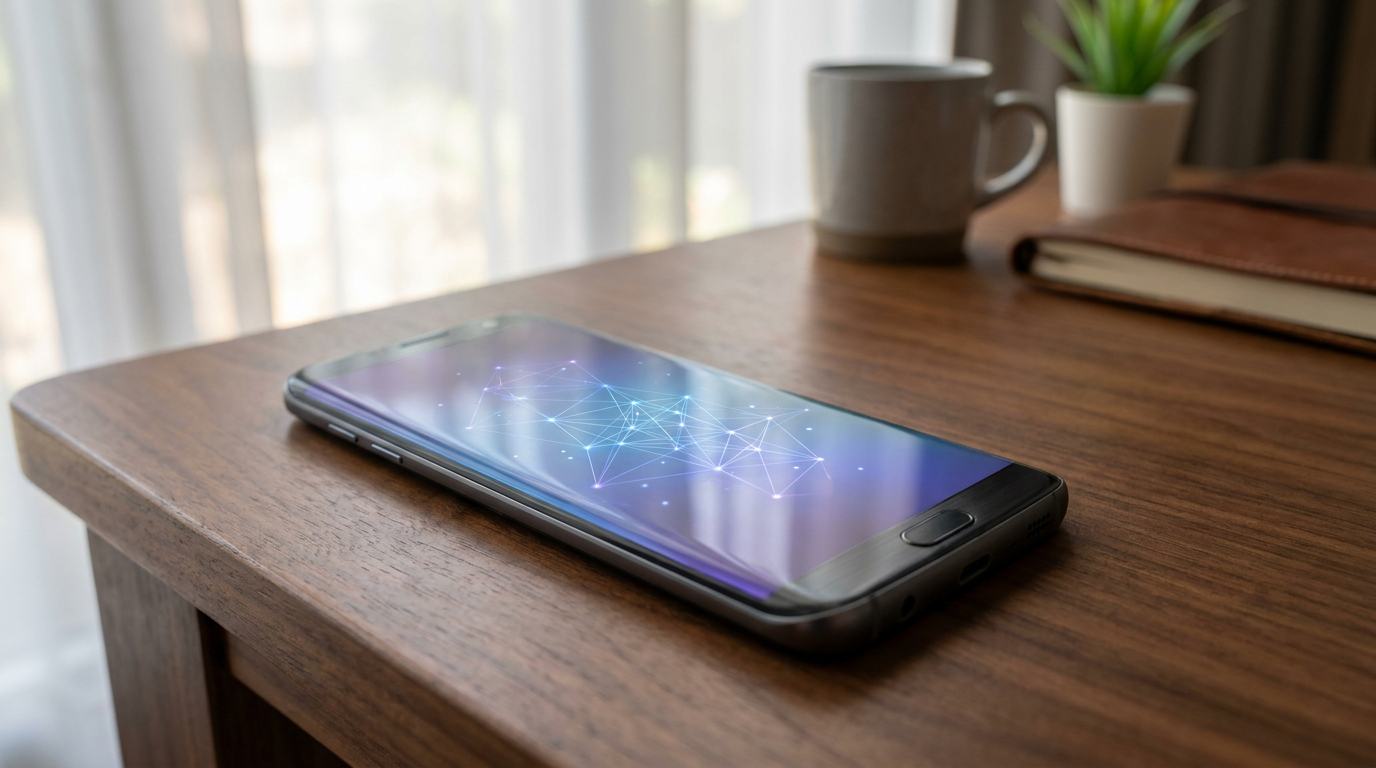
In 2026, the AI industry is shifting from massive cloud-based systems to highly efficient Small Language Models that run directly on phones and laptops. This on-device approach offers unprecedented privacy, zero subscription fees, and offline capabilities.
By Factlen Editorial Team
- Privacy Advocates
- Value data sovereignty and view local execution as the only secure way to interact with AI.
- Mobile Developers
- Focus on the practical benefits of zero latency, offline access, and reduced API costs.
- Enterprise IT
- Seek to balance the cost reductions of local AI with the need for hybrid cloud fallbacks.
- Hardware Manufacturers
- Push the adoption of local AI to drive sales of devices equipped with advanced NPUs.
What's not represented
- · Cloud Infrastructure Providers
- · Regulatory Agencies
Why this matters
Running AI locally means your sensitive data—from financial documents to private journals—never leaves your device, fundamentally changing the privacy and cost dynamics of using artificial intelligence.
Key points
- The AI industry is shifting toward on-device processing using Small Language Models (SLMs).
- Local AI ensures user prompts and data never leave the device, guaranteeing absolute privacy.
- Running models locally eliminates cloud API subscription costs and network latency.
- Apple and Google have integrated on-device AI deeply into iOS and Android operating systems.
- Open-source tools like Ollama and LM Studio have made local AI accessible to desktop users.
- The future of AI architecture is hybrid, using local models for routine tasks and the cloud for complex reasoning.
For the past three years, interacting with artificial intelligence meant striking a silent bargain: to get smart answers, you had to send your questions to a server farm hundreds of miles away. Every prompt, document, and brainstorm was transmitted over the internet, processed in the cloud, and sent back. While this architecture enabled the generative AI boom, it introduced significant privacy risks, recurring subscription costs, and a strict reliance on internet connectivity.[5][7]
In 2026, the paradigm is shifting dramatically. The technology industry is rapidly embracing "on-device AI"—a framework where artificial intelligence models run entirely on the user's smartphone, tablet, or laptop. By bringing the computation home, users are reclaiming their data sovereignty, eliminating network latency, and bypassing the monthly "cloud tax" that has defined the AI era thus far.[4][7]
The engine driving this transition is the Small Language Model (SLM). Unlike massive cloud models that boast hundreds of billions of parameters, SLMs are highly optimized, compact neural networks. Models like Google's Gemma 4, Meta's Llama 4, and Microsoft's Phi-4 mini are designed to punch above their weight, delivering sophisticated reasoning and text generation while fitting into the strict memory constraints of consumer hardware.[4][7]

This software breakthrough is paired with a hardware revolution. Modern consumer devices are now equipped with powerful Neural Processing Units (NPUs)—specialized silicon designed specifically to handle the mathematical heavy lifting of machine learning. Combined with a technique called "quantization," which compresses the model's size without drastically reducing its intelligence, NPUs allow smartphones and laptops to run AI locally without melting their batteries.[3][5]
The most profound implication of on-device AI is absolute privacy. When an AI model runs locally, the user's prompts and the generated responses never leave the device. For professionals handling sensitive patient data, proprietary code, or confidential financial strategies, this localized approach eliminates the risk of third-party data harvesting or accidental exposure.[5][7]
Apple has made this privacy-first architecture a cornerstone of its 2026 software ecosystem. Apple Intelligence integrates on-device processing deeply into iOS and macOS, ensuring that routine tasks—like summarizing emails or proofreading texts—are handled locally. Apple's approach minimizes exposure to surveillance and data breaches, positioning privacy as a non-negotiable architectural feature rather than a marketing slogan.[2][6]
For complex requests that exceed the capabilities of a smartphone's local hardware, Apple utilizes "Private Cloud Compute." This hybrid system sends encrypted data to specialized Apple Silicon servers that process the request ephemerally. The data is never stored, and independent experts can audit the server code to verify these privacy claims, creating a secure bridge between local and cloud intelligence.[2][6]

The data is never stored, and independent experts can audit the server code to verify these privacy claims, creating a secure bridge between local and cloud intelligence.
Google has adopted a similar philosophy for the Android ecosystem with Gemini Nano. Operating as a system-level service through Android's AICore, Gemini Nano allows developers to integrate generative AI features directly into their apps without requiring a network connection. With a footprint of roughly one gigabyte and latency under 100 milliseconds, Gemini Nano enables instant responses for tasks like smart replies and audio transcription.[1][3]
Beyond the mobile operating systems, a vibrant open-source ecosystem has democratized local AI for desktop users. Applications like LM Studio, Ollama, and Jan provide intuitive graphical interfaces that allow anyone to download and run open-weight models with a single click. These tools have transformed local AI from a niche developer hobby into a practical utility for everyday users.[4][7]
The financial benefits of this ecosystem are substantial. Cloud-based AI services typically operate on a pay-as-you-go or monthly subscription model, where heavy usage can quickly accumulate massive bills. By running models locally, users and small businesses can replace expensive SaaS subscriptions with free, unlimited inference, paying only the initial cost of their hardware and the electricity to run it.[4][5]

Furthermore, local AI severs the tether to the internet. Cloud models are inherently fragile, rendered useless by a dropped Wi-Fi signal or a server outage. On-device models function flawlessly on airplanes, in remote locations, or during network disruptions. For field workers, disaster response teams, and frequent travelers, this offline reliability is a critical operational requirement.[4][5]
Despite these advantages, on-device AI is not without its limitations. Running complex neural networks requires significant computational resources. While an entry-level laptop can handle basic text generation, running larger, more capable models like Gemma 4 12B requires at least 16 gigabytes of RAM and a capable GPU. On mobile devices, sustained AI inference can still lead to noticeable battery drain and thermal throttling.[3][5]
There is also a hard ceiling on reasoning capabilities. While SLMs are remarkably proficient at summarization, drafting, and basic coding, they cannot match the encyclopedic knowledge or multi-step logical reasoning of frontier cloud models. For highly complex, multi-agent tasks or obscure factual retrieval, massive data centers remain indispensable.[4][7]

Consequently, the future of computing is not strictly local, but hybrid. The smartest applications in 2026 route routine, privacy-sensitive tasks to on-device models, reserving cloud APIs for heavy-duty processing. This dynamic routing ensures that users get the best of both worlds: the speed and security of local execution, backed by the raw power of the cloud when necessary.[6][7]
Ultimately, the rise of Small Language Models represents a democratization of artificial intelligence. By untethering AI from centralized corporate servers and placing it directly into the hands of users, the technology industry is building a more resilient, private, and accessible digital infrastructure. The era of the personal AI has officially arrived.[5][7]
How we got here
Late 2022
Cloud-based LLMs dominate the industry, requiring constant internet connectivity.
2024
Early Small Language Models prove that compact models can perform sophisticated reasoning.
2025
Neural Processing Units (NPUs) become standard hardware in consumer laptops and smartphones.
2026
On-device AI goes mainstream with OS-level integrations like Apple Intelligence and Android AICore.
Viewpoints in depth
Privacy Advocates' view
Data sovereignty is the primary benefit of the local AI revolution.
Privacy advocates argue that the cloud-first AI era normalized unacceptable levels of data surveillance. By processing information locally, SLMs return control to the user. This camp emphasizes that for industries handling sensitive information—such as healthcare, law, and finance—on-device AI is not just a convenience, but a strict compliance necessity that protects against third-party breaches.
Mobile Developers' view
Local AI unlocks new app capabilities by eliminating latency and internet reliance.
For developers, the shift to on-device AI solves the persistent problems of network latency and API costs. Cloud round-trips introduce delays that ruin real-time features like voice translation or live text prediction. By leveraging local NPUs, developers can build faster, more responsive applications that function reliably even when the user is offline or in airplane mode.
Enterprise IT's view
A hybrid approach balances the cost savings of local AI with the power of the cloud.
Enterprise IT leaders view local AI as a powerful tool to reduce the exorbitant costs associated with cloud API billing. However, they recognize that SLMs cannot handle every complex enterprise task. This camp advocates for a hybrid architecture—routing everyday drafting and summarization tasks to local machines to save money, while reserving expensive cloud compute for massive data analysis and multi-agent reasoning.
What we don't know
- How quickly hardware manufacturers can scale NPU performance to handle even larger models natively.
- Whether cloud providers will lower their API prices in response to the rise of free local alternatives.
- The long-term impact of sustained local AI inference on smartphone battery degradation.
Key terms
- Small Language Model (SLM)
- A compact AI model designed to run efficiently on consumer hardware like phones and laptops, rather than massive data centers.
- Neural Processing Unit (NPU)
- A specialized hardware chip built into modern devices specifically to accelerate machine learning and AI tasks.
- Quantization
- A compression technique that reduces the memory footprint of an AI model, allowing it to run on devices with limited RAM.
- Inference
- The process of an AI model generating a response or prediction based on a user's prompt.
- Private Cloud Compute
- Apple's hybrid system that securely processes complex AI requests on encrypted servers without storing user data.
Frequently asked
Do I need an internet connection to use a local LLM?
No. Once the model is downloaded to your device, it runs entirely offline, making it ideal for travel or remote work.
What hardware do I need to run AI locally?
Basic models can run on 4GB of RAM, but a modern laptop with at least 16GB of RAM and a dedicated NPU or GPU is recommended for smooth performance.
Is local AI as smart as cloud-based ChatGPT?
For routine tasks like drafting emails, summarizing text, and basic coding, local models are highly capable. However, they cannot yet match the deep reasoning and vast knowledge base of massive cloud models.
Sources
Source coverage
7 outlets
4 viewpoints surfaced





[1]Android DevelopersMobile Developers
Gemini Nano and ML Kit GenAI APIs
Read on Android Developers →[2]Apple NewsroomHardware Manufacturers
Apple Intelligence brings powerful AI capabilities into everyday experiences
Read on Apple Newsroom →[3]Local AI MasterHardware Manufacturers
Gemini Nano Android: On-Device AI Guide (2026)
Read on Local AI Master →[4]Prompt QuorumMobile Developers
Power Local LLM — Build a Private AI Stack That Replaces Your SaaS Bills
Read on Prompt Quorum →[5]DataNorthPrivacy Advocates
Local LLM: Privacy, Security, and Control
Read on DataNorth →[6]MacDailyNewsEnterprise IT
Apple's on-device AI focus amplifies privacy advantage
Read on MacDailyNews →[7]Factlen Editorial TeamPrivacy Advocates
Synthesis by Factlen editorial team
Read on Factlen Editorial Team →


Every angle. Every day.
Get ai stories with full source coverage and perspective breakdowns delivered to your inbox.