
The 2026 Solid-State Battery Breakthrough: How EVs Are Solving Range and Fire Risks
After years of laboratory promises, solid-state batteries are entering real-world production in 2026, promising electric vehicles that can charge in minutes, travel over 600 miles, and eliminate the risk of battery fires.
By Factlen Editorial Team
- Legacy Automakers
- View solid-state as the ultimate differentiator for next-generation EVs, but emphasize a measured, phased rollout starting with premium models due to manufacturing complexities.
- Battery Innovators
- Argue that solid-state technology is ready for commercialization now, emphasizing breakthroughs in energy density and safety.
- Industry Analysts
- Caution that while the chemistry is proven, scaling production to gigawatt-hour levels while driving down costs remains a massive, multi-year engineering challenge.
What's not represented
- · Raw material mining sector
- · Independent repair shops
Why this matters
Solid-state batteries eliminate the two biggest hesitations consumers have about electric vehicles: range anxiety and the fear of battery fires. By doubling energy density and drastically cutting charge times, this technology paves the way for the complete phase-out of combustion engines.
Key points
- Solid-state batteries replace flammable liquid electrolytes with stable solid materials, eliminating the risk of thermal runaway fires.
- The technology allows for lithium-metal anodes, doubling energy density to 400-500 Wh/kg and extending EV range past 600 miles.
- Fast-charging times are expected to drop to 10-12 minutes, making EV charging comparable to filling a gas tank.
- Major players like QuantumScape, Honda, Toyota, and Greater Bay Technology have hit critical production milestones in 2026.
- Early commercial vehicles featuring the technology are expected to hit the market between 2027 and 2028, starting with luxury models.
For years, solid-state batteries were the "holy grail" of the electric vehicle industry—a miraculous technology that was perpetually five years away. But in 2026, the landscape has fundamentally shifted. The technology has officially crossed the chasm from laboratory aspiration to industrial reality, with major manufacturers locking in production timelines and rolling out their first physical cells.[4][5]
The stakes for this transition are monumental. While electric vehicles have gained massive market share, range anxiety, long charging stops, and rare but highly publicized battery fires have remained the final hurdles for mass consumer adoption. Solid-state technology directly targets all three of these pain points, promising a generational leap in how the world stores and deploys energy.[4]
To understand the breakthrough, one must look at the flaw in current designs. Traditional lithium-ion batteries rely on a liquid electrolyte—a lithium salt dissolved in an organic solvent—to shuttle ions back and forth between the cathode and anode. Under stress, such as severe overcharging, a manufacturing defect, or a high-speed crash, this liquid can ignite, triggering a dangerous chain reaction known as thermal runaway.[4]
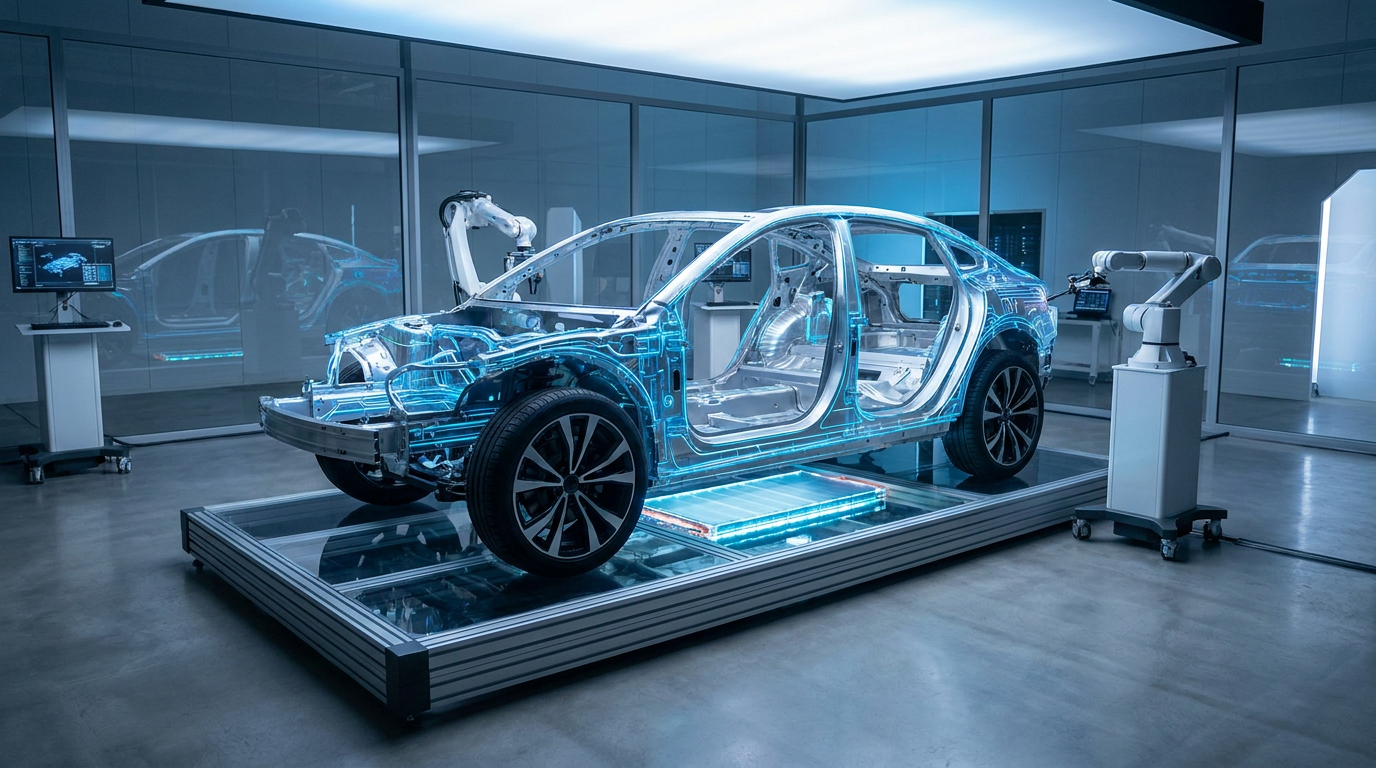
Solid-state batteries eliminate this vulnerability by replacing the flammable liquid with a stable, non-flammable solid material. Engineers are utilizing advanced ceramics, polymers, and sulfide-based glasses to act as the separator. This fundamental chemistry change means the battery can withstand extreme temperatures and physical damage without catching fire, drastically improving the safety profile of the vehicle.[4][5]

Crucially, this solid barrier unlocks a second, even more significant upgrade: the lithium-metal anode. In liquid batteries, using pure lithium metal causes the formation of "dendrites"—microscopic, needle-like metallic whiskers that pierce the separator and cause short circuits. The dense physical barrier of a solid electrolyte suppresses dendrite growth, allowing engineers to safely swap out the bulky graphite anodes used in today's EVs for pure lithium metal.[2][4]
The result is a massive increase in energy density. Today's best lithium-ion cells top out around 250 to 300 watt-hours per kilogram (Wh/kg). The new solid-state cells entering pilot production in 2026 are hitting targets of 400 to 500 Wh/kg, effectively doubling the amount of energy that can be stored in the exact same physical footprint.[4][6]
For the consumer, this translates to electric vehicles that can travel over 600 miles (1,000 kilometers) on a single charge. Furthermore, the robust nature of the solid electrolyte allows the battery to accept massive amounts of power without degrading. This capability drops fast-charge times from the current standard of 30 minutes down to roughly 10 to 12 minutes, making an EV pit stop comparable to filling a gas tank.[2][7]

The shift from prototype to production is happening globally. In April 2026, China's Greater Bay Technology (GBT), a battery manufacturer backed by the GAC Group, announced a major milestone: its A-sample all-solid-state cells had officially rolled off the production line.[1]
The shift from prototype to production is happening globally.
GBT's cells successfully passed extreme safety tests, including needle penetration, extrusion, and thermal shock, without any fires or explosions. The company is targeting mass-market vehicle integration by the end of the year, bolstered by the Chinese government's aggressive push to dominate the next-generation battery supply chain.[1][6]
Meanwhile, in the United States and Japan, major automakers are locking in their solid-state partnerships to ensure they remain competitive. In June 2026, QuantumScape, a prominent California-based battery developer, signed a multi-year joint research agreement with Honda to integrate its solid-state lithium-metal technology into future vehicles.[2][3]
QuantumScape's technology, which features an anodeless architecture and a proprietary ceramic separator, had already been rigorously validated by Volkswagen. In early 2026, the cells demonstrated a remarkable ability to retain over 95% of their capacity after 1,000 charging cycles—far exceeding the current industry standard of 80% capacity retention after 700 cycles.[2]
Toyota, which holds over 1,000 patents in solid-state technology, is also accelerating its timeline. Partnering with petroleum and materials giant Idemitsu Kosan, Toyota broke ground on a large-scale solid electrolyte pilot plant earlier in the year, aiming to secure the complex supply chain required for mass production.[7]

While viral rumors occasionally claim Toyota already has solid-state cars on the road, the automaker's official roadmap targets 2027 to 2028 for its first commercial release. These initial vehicles are expected to be high-performance luxury models under the Lexus brand, where premium pricing can absorb the early manufacturing costs.[6][7]
The manufacturing challenge remains the industry's final boss. Building a solid-state battery is notoriously difficult. Sulfide-based solid electrolytes, for example, are highly sensitive to moisture and air, requiring hermetically sealed manufacturing environments. Scaling these pristine lab conditions to gigawatt-hour factory lines is the primary reason the technology has taken so long to arrive.[6]
Because of these complex manufacturing requirements and novel materials, early solid-state batteries will carry a significant price premium. Industry analysts expect the technology to debut exclusively in flagship luxury vehicles and commercial trucking, where weight savings justify the cost, before trickling down to budget-friendly commuter cars in the 2030s.[6]
The impact of this technology will extend far beyond passenger cars. The lightweight, fireproof nature of solid-state batteries is unlocking new forms of transportation. Honda, for instance, plans to use the technology in its motorcycles and potentially in electric aircraft, where weight and safety are even more critical than on the road.[2][3]

The commercialization of solid-state batteries has sparked a fierce industrial sprint between China, Japan, and the United States. With China preparing to release its first national standard for solid-state EV batteries in July 2026, Western and Japanese automakers are racing to ensure they control the intellectual property of the next era of electrification.[1][4][6]
The arrival of solid-state batteries in 2026 marks a definitive turning point for the automotive industry. By solving the fundamental chemistry problems of liquid electrolytes, engineers are finally delivering the safe, fast-charging, and long-range electric future they have promised for a decade, signaling the beginning of the end for the internal combustion engine's last remaining advantages.[4][5]
How we got here
2010s
Solid-state batteries remain largely confined to university laboratories and small-scale electronics.
2020
Toyota demonstrates an early solid-state prototype vehicle, but high costs and short cycle life delay commercialization.
Early 2026
QuantumScape's cells retain 95% capacity after 1,000 cycles in Volkswagen tests; Toyota breaks ground on a solid electrolyte pilot plant.
April 2026
China's Greater Bay Technology announces its A-sample all-solid-state cells have rolled off the production line.
June 2026
Honda signs a multi-year joint research agreement to integrate QuantumScape's solid-state technology into future EVs.
Viewpoints in depth
Battery Innovators' view
Startups and specialized battery developers emphasize that the core chemistry problems have been solved.
Companies like QuantumScape and Greater Bay Technology argue that the fundamental scientific hurdles of solid-state batteries—such as dendrite growth and cycle life—are now firmly in the rearview mirror. By pointing to rigorous third-party testing that shows 95% capacity retention after 1,000 cycles, these innovators assert that the technology is ready for prime time. Their focus is now entirely on securing OEM partnerships and proving that their proprietary separators can be manufactured at scale without compromising the cells' remarkable energy density.
Legacy Automakers' view
Established car manufacturers view solid-state as a premium differentiator that requires a phased, cautious rollout.
For automotive giants like Toyota, Honda, and Volkswagen, solid-state batteries represent the ultimate weapon in the EV arms race, but they are acutely aware of the manufacturing realities. These companies emphasize that building a prototype cell is vastly different from producing millions of automotive-grade battery packs that must survive a decade of abuse on the road. Consequently, their strategy is to introduce the technology slowly, debuting it in high-margin luxury vehicles where buyers are willing to pay a premium for 600-mile ranges and 10-minute charge times.
Industry Analysts' view
Manufacturing experts caution that scaling production and lowering costs will take the remainder of the decade.
While analysts acknowledge the massive leap in performance, they remain focused on the economics of the transition. Sulfide-based solid electrolytes require hermetically sealed, moisture-free environments to manufacture, which drastically increases the capital expenditure required to build a battery plant. Analysts warn that until these highly sensitive manufacturing processes can be streamlined and scaled to gigawatt-hour levels, solid-state batteries will remain too expensive for the average consumer, likely delaying mass-market adoption until the early 2030s.
What we don't know
- Exactly how much of a price premium early solid-state vehicles will carry over traditional lithium-ion models.
- Which specific automaker will be the absolute first to deliver a consumer-ready solid-state passenger car to the global market.
- How quickly the highly sensitive manufacturing process can be scaled to produce millions of battery packs annually.
Key terms
- Solid-State Battery
- A battery that uses a solid electrolyte instead of a liquid or polymer gel to conduct ions between the cathode and anode.
- Electrolyte
- The medium that allows lithium ions to flow back and forth between the battery's positive and negative sides during charging and discharging.
- Dendrites
- Microscopic, needle-like metallic structures that can grow inside liquid batteries, potentially piercing the separator and causing a short circuit.
- Energy Density
- The amount of energy a battery can store relative to its weight or size, typically measured in watt-hours per kilogram (Wh/kg).
- Thermal Runaway
- A dangerous chain reaction in traditional batteries where overheating causes the liquid electrolyte to catch fire or explode.
Frequently asked
What makes a solid-state battery different?
It replaces the flammable liquid electrolyte found in traditional batteries with a stable solid material, which allows for a more energy-dense lithium-metal anode.
Will solid-state batteries catch fire?
They are vastly safer than traditional lithium-ion batteries because they lack the flammable liquid solvent that causes thermal runaway and battery fires.
When can I buy a car with a solid-state battery?
Early models are entering pilot production in 2026, with the first luxury consumer vehicles expected between 2027 and 2028. Mass-market affordability will likely take until the 2030s.
Sources
Source coverage
7 outlets
3 viewpoints surfaced







[1]ElectrekBattery Innovators
China ramps up solid-state EV battery production
Read on Electrek →[2]EV Infrastructure NewsBattery Innovators
QuantumScape and Honda enter solid-state battery tie-up
Read on EV Infrastructure News →[3]Manufacturing DigitalLegacy Automakers
Honda partners with QuantumScape for solid-state EV batteries
Read on Manufacturing Digital →[4]TO7 MotorIndustry Analysts
Solid-state batteries are no longer simply lab experiments
Read on TO7 Motor →[5]EleportIndustry Analysts
New battery technologies 2026 delivered
Read on Eleport →[6]The Battery Show AsiaIndustry Analysts
Japan's Long-Term Strategic Targets for Solid-State Batteries
Read on The Battery Show Asia →[7]EV WorldLegacy Automakers
Toyota's solid-state battery program is progressing steadily
Read on EV World →
Every angle. Every day.
Get automotive stories with full source coverage and perspective breakdowns delivered to your inbox.