
Supreme Court Rules Federal Education Funds Can Follow Students to Private Schools
In a landmark 6-3 decision, the Supreme Court ruled that federal Title I education funds must be allowed to follow students to private and religious schools in states with existing voucher programs, fundamentally reshaping American public education funding.
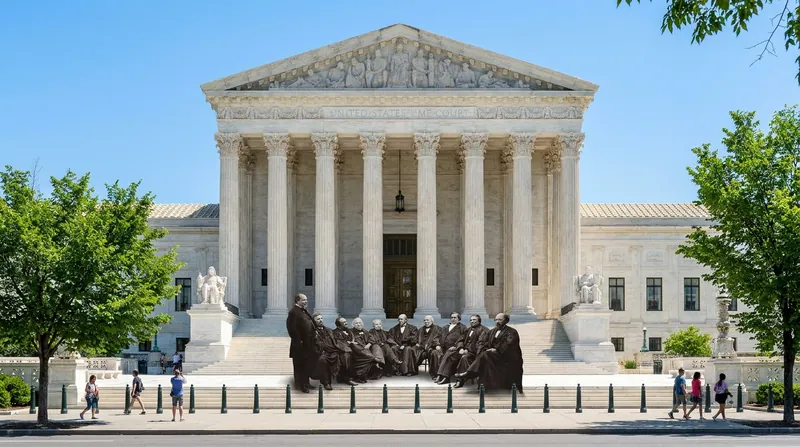
In a landmark 6-3 decision that fundamentally alters the landscape of American public education, the Supreme Court ruled on Friday that federal Title I education funds must be allowed to follow students to private and religious schools. The ruling in Department of Education v. State of Arizona strikes down decades-old federal administrative guidelines that restricted anti-poverty education grants exclusively to public school districts.
By mandating that states with existing school choice programs cannot be denied federal funds for utilizing a "money follows the child" model, the Court has effectively opened the door for a federally subsidized universal voucher system. The decision marks the culmination of a decades-long conservative legal strategy to dismantle barriers between public funding and private education, immediately impacting how billions of taxpayer dollars will be distributed ahead of the 2026-2027 academic year.[1][2][5]
At the center of the dispute is Title I of the Elementary and Secondary Education Act, a $19 billion annual federal program designed to support schools with high percentages of students from low-income families. Historically, these funds were disbursed directly to local educational agencies based on census poverty data.
However, under the new ruling, if a state operates a school choice or voucher program, the federal government cannot prohibit that state from converting its Title I allocation into portable grants. This means eligible families can now use federal dollars to offset tuition at private institutions, including parochial schools, provided the state facilitates the transfer.[4]
Writing for the conservative majority, Chief Justice John Roberts framed the issue as a matter of religious liberty and equal protection under the Free Exercise Clause. Roberts argued that once a state decides to subsidize private education through vouchers or tax-credit scholarships, the federal government cannot arbitrarily withhold Title I matching funds simply because some of those state-approved options are religious in nature.
"To deny families the ability to direct federal educational support to the school that best serves their child, solely because of its religious affiliation, is odious to our Constitution," Roberts wrote. The majority concluded that federal administrative rules cannot override state-level educational freedom initiatives.[2][6]
Justice Sonia Sotomayor delivered a blistering dissent, joined by Justices Elena Kagan and Ketanji Brown Jackson, warning that the decision effectively mandates the defunding of the American public school system. Sotomayor argued that the ruling perverts the original intent of Title I, which was explicitly designed by Congress in 1965 to build capacity in under-resourced public school districts, not to subsidize private tuition.
She further cautioned that the decision erodes the Establishment Clause by forcing federal taxpayers to directly fund religious instruction, noting that many of the private schools poised to receive these funds are not subject to federal anti-discrimination laws regarding admissions.[2][6]
The immediate impact of the ruling will be felt most acutely in the 14 states that have already passed universal school choice laws, including Florida, Arizona, Iowa, and Arkansas. These states are now legally cleared to integrate their share of federal Title I money into their existing education savings accounts (ESAs). State superintendents in these jurisdictions have indicated they will move swiftly to update their funding portals, allowing parents to apply federal dollars to private school tuition, homeschooling curricula, and private tutoring services as early as this fall.[3][4]
Public school administrators and teachers' unions have reacted with alarm, warning of catastrophic budget shortfalls. Because Title I funding makes up a significant portion of the operating budget for high-poverty districts, the sudden portability of these funds could lead to immediate staffing cuts, larger class sizes, and the elimination of specialized programs.
The National Education Association issued a statement calling the ruling a "death blow to equity," arguing that rural districts—where private school options are scarce—will suffer the most as state-level funding pools are drained to support students in wealthier, private-school-dense suburbs.[2]
Conversely, school choice advocates and conservative lawmakers are celebrating the decision as a historic civil rights victory. The Trump administration, which had filed an amicus brief in support of Arizona, praised the Court for "returning power to parents." Proponents argue that the public school monopoly has trapped low-income students in failing institutions for generations, and that injecting free-market competition into the education sector will force public schools to improve their outcomes to retain enrollment. They maintain that funding should fund the student, not the building.[3][5]
A major unresolved tension in the wake of the ruling is the application of federal civil rights laws to private institutions receiving these portable funds. While public schools are mandated to serve all students, including those with severe disabilities and English language learners, private schools generally retain the right to deny admission based on academic performance, behavioral history, or religious adherence. Civil rights organizations have already signaled their intent to file subsequent lawsuits challenging whether private schools accepting Title I vouchers can legally maintain exclusionary admissions policies.[4]
Private schools are also bracing for the logistical realities of the ruling. While many welcome the influx of federally backed tuition dollars, capacity constraints remain a significant hurdle. Elite private institutions in major metropolitan areas already boast long waitlists and are unlikely to expand their student bodies simply because more families have access to vouchers. Consequently, education analysts predict a rapid proliferation of new, lightly regulated "micro-schools" and religious academies aiming to capture the newly available federal funds, raising questions about future quality control and accreditation standards.[1][5]
The Department of Education now faces a compressed 90-day window to issue new compliance guidelines for the upcoming school year. Federal officials must establish a mechanism for tracking portable Title I funds to prevent fraud while adhering to the Court's mandate not to discriminate against religious institutions. As states scramble to adjust their budgets and parents begin navigating the expanded marketplace of educational options, the 2026 ruling guarantees that the financial and political battles over American education will only intensify in the years to come.[1][4]
Key points
- The Supreme Court ruled 6-3 that federal Title I funds can be used for private and religious school tuition.
- The decision prevents the federal government from blocking states that wish to convert Title I money into portable vouchers.
- Chief Justice Roberts cited religious liberty and equal protection in the majority opinion.
- Dissenting justices warned the ruling will defund public schools and violate the Establishment Clause.
Open questions
- Whether private schools accepting federal vouchers will be forced to comply with federal anti-discrimination and special education laws.
- How many low-income families will actually be able to utilize the vouchers, given that elite private school tuition often exceeds the voucher amount.
- The exact timeline for the Department of Education to issue its new compliance guidelines for states.
Timeline
June 2022
The Supreme Court rules in Carson v. Makin that Maine cannot exclude religious schools from a state tuition program.
April 2024
Several states, including Arizona and Florida, expand their school choice programs to universal eligibility.
October 2025
The Supreme Court agrees to hear Department of Education v. State of Arizona regarding federal Title I portability.
June 2026
The Court issues its 6-3 ruling, mandating that federal funds must be allowed to follow students in states with voucher programs.
- School Choice Advocates
- Argue the ruling empowers parents and rescues low-income students from failing public school districts by funding the child rather than the institution.
- Public Education Defenders
- Warn the decision will devastate public school budgets and subsidize private tuition for wealthy families without enforcing anti-discrimination protections.
- Constitutional Legal Scholars
- Focus on the ruling's profound shift in Establishment Clause jurisprudence and the rebalancing of federal versus state power in education.
Perspectives this story doesn't cover
- Rural school districts with no private school alternatives
- Special education students who rely on federal IDEA funding
Sources
Source coverage
6 outlets
3 viewpoints surfaced






- [1]ReutersConstitutional Legal Scholars
Supreme Court rules federal education funds can follow students to private schools
Read on Reuters → - [2]The New York TimesPublic Education Defenders
In 6-3 Ruling, Supreme Court Upends Public Education Funding
Read on The New York Times → - [3]Fox NewsSchool Choice Advocates
JONATHAN TURLEY: Supreme Court hands Trump a border victory liberals can't spin
Read on Fox News → - [4]PoliticoConstitutional Legal Scholars
What the SCOTUS school choice ruling means for the Department of Education
Read on Politico → - [5]The Wall Street JournalSchool Choice Advocates
The Supreme Court's Voucher Revolution
Read on The Wall Street Journal → - [6]SCOTUSblogConstitutional Legal Scholars
Opinion analysis: Court mandates equal access for religious schools in federal funding
Read on SCOTUSblog →
More in News & Politics
See all →Student Loans
Sweeping Federal Student Loan Overhaul Takes Effect July 1, Ending SAVE Plan and Capping Borrowing
3 sources
Student Privacy
Supreme Court Declines New Parental Notification Case, Leaving Schools in Legal Limbo Over Gender Identity
4 sources
Higher Education Finance
The Capacity Crunch: Why Abolishing University Tuition Excludes Working-Class Students
9 sources
Education Policy
The Age of Separation: How Early Educational Tracking Magnifies Wealth Gaps Without Raising National Scores
4 sources

Comments
Every angle. Every day.
Get News & Politics stories with full source coverage and perspective breakdowns, free every day.