
The 2026 Smartphone Shift: On-Device AI, Multi-Day Batteries, and the Right to Repair
Smartphones have fundamentally changed in 2026, shifting from incremental camera updates to massive leaps in battery chemistry, offline artificial intelligence, and mandated repairability.
By Factlen Editorial Team
- Edge AI Proponents
- Argue that on-device neural processing is the defining feature of the era, prioritizing privacy and offline capabilities over cloud dependency.
- Right to Repair Advocates
- View 2026 as a historic victory for consumer rights, arguing that mandated spare parts and software updates finally dismantle planned obsolescence.
- Digital Minimalists
- Reject the hyper-connected 'super-app' model in favor of intentional, single-purpose devices that protect mental bandwidth and reduce screen time.
What's not represented
- · Independent repair shop owners
- · Cloud computing providers losing market share to Edge AI
Why this matters
Smartphones are no longer two-year disposable gadgets; breakthroughs in battery chemistry, on-device AI, and new Right to Repair laws mean a phone bought in 2026 is designed to last securely into the 2030s. Understanding these shifts allows buyers to make long-term investments rather than falling for incremental marketing hype.
Key points
- On-device AI (Edge AI) now processes tasks locally, improving speed and protecting user privacy.
- Silicon-carbon batteries allow slim phones to house massive capacities, delivering multi-day battery life.
- The EU's Right to Repair directive mandates seven years of spare parts availability by July 2026.
- Major manufacturers now offer seven-year operating system update guarantees.
- A counter-movement of digital minimalism is driving sales of 'dumbphones' and retro cameras.
The 2026 smartphone market is no longer defined by incremental camera bumps or slightly thinner bezels. Instead, the industry is undergoing a foundational shift in how devices operate, how long they last, and how they respect user privacy. For consumers looking to upgrade, the calculus has completely changed from just a few years ago.[8]
The era of the two-year upgrade cycle is effectively dead. Consumers are holding onto their phones longer, and manufacturers are finally building hardware and software to support five-to-seven-year lifespans. This shift is being driven by a combination of consumer fatigue, environmental legislation, and genuine technological breakthroughs that make holding onto a single device a viable long-term strategy.[7]
The most significant internal change in 2026 flagships is the transition from cloud-based artificial intelligence to "on-device" or "edge" AI. For the past few years, AI features required an active internet connection to send voice commands, text prompts, or photos to massive server farms for remote processing.[1]
That paradigm has flipped thanks to the widespread adoption of Neural Processing Units, or NPUs. These specialized chips—such as Qualcomm's Snapdragon 8 Gen 5, Google's Tensor G5, and Apple's A19 Pro—are built directly into the phone's main processor to handle complex machine learning algorithms locally.[1][4]

Processing data on the edge offers two massive advantages: speed and privacy. Because the data never leaves the phone, users can utilize live call translation, instantly summarize long offline documents, and remove photobombers from images without handing their personal information over to a cloud server.[4][5]
This localized processing is paving the way for what industry analysts call "agentic super-apps." Rather than just answering trivia questions, these on-device assistants can securely access a user's local calendar, payment apps, and contacts to autonomously book flights or pay bills, functioning as a true digital concierge.[1]
However, running complex neural networks locally requires immense computational power, which historically would have drained a smartphone battery by lunchtime. This brings us to the second major revolution of 2026: a breakthrough in battery chemistry.[5]
For over a decade, the mobile industry relied on traditional lithium-ion batteries with graphite anodes, a technology that had largely plateaued. Now, silicon-carbon anode batteries have gone mainstream across both flagship and mid-range devices.[5]
For over a decade, the mobile industry relied on traditional lithium-ion batteries with graphite anodes, a technology that had largely plateaued.
Silicon-carbon cells pack significantly more energy density into the exact same physical footprint. This allows manufacturers to slip massive 5,500 to 6,000 mAh batteries into slim, lightweight chassis—something that was physically impossible just two years ago.[5]

The practical result is the end of "charge by 3 PM" anxiety. Modern smartphones are now reliably delivering two to three days of battery life under normal use, and can easily survive a full day of heavy GPS navigation and video calling without needing a mid-day top-up.[5]
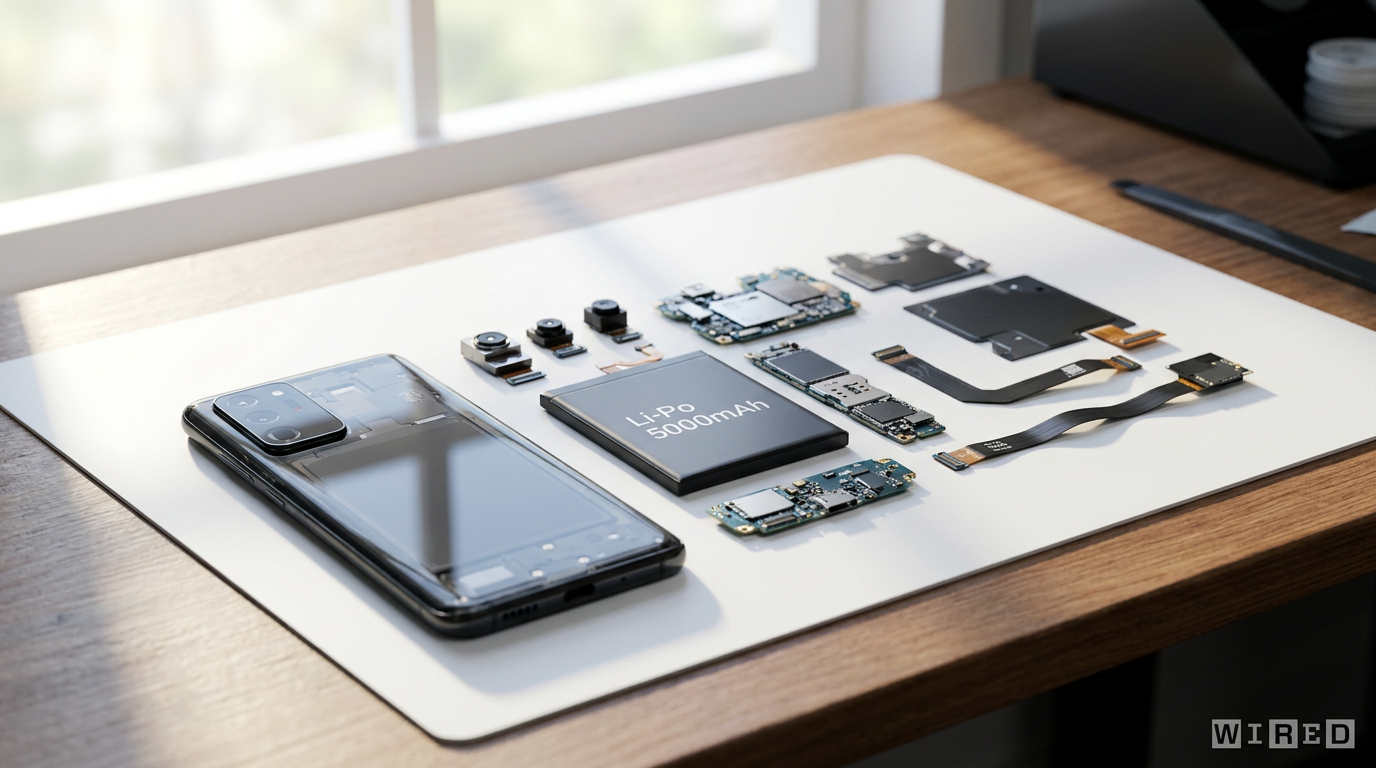
Beyond the internal silicon and chemistry, the legal landscape governing how we fix our devices is changing globally, spearheaded by aggressive legislation in the European Union.[2]
By July 31, 2026, the EU's Right to Repair directive becomes enforceable national law across all member states. This landmark legislation mandates that manufacturers provide access to spare parts at reasonable prices for at least seven years after a product is discontinued.[2][3]
The directive also explicitly prohibits companies from using software locks—often called "parts pairing"—to artificially block third-party repairs or degrade functionality when a user installs an aftermarket battery or screen.[2][3]
While this is technically European legislation, the realities of global supply chains mean these highly repairable, modular designs are shipping worldwide. Buyers in the United States and Asia are directly benefiting from the EU's stringent hardware requirements, as companies opt to build a single, compliant global chassis.[8]

Software support is finally matching this hardware longevity. Major players like Google and Samsung now offer unprecedented seven-year operating system update guarantees. A phone purchased in 2026 will remain secure and fully supported until 2033, fundamentally changing the return on investment for premium devices.[7]
Yet, as smartphones become these hyper-capable, long-lasting "super-apps," a fascinating counter-movement has gained unprecedented traction: digital minimalism.[6]
Driven largely by Gen Z and adults seeking digital detoxes, the market for "dumbphones" and retro digital cameras has surged. These users are actively rejecting the always-on nature of modern flagships in favor of intentional friction.[6]

Minimalist devices do one thing well—whether that is making a phone call or taking a grainy photograph—without the constant, exhausting pull of notifications, algorithmic feeds, and AI assistants. It represents a stark split in the 2026 market between those who want their phone to do everything, and those who want it to do almost nothing.[6]
Ultimately, buying a smartphone in 2026 requires a different mindset. It is no longer about chasing the flashiest gadget for a 24-month lease. Whether opting for an AI-powered powerhouse or a minimalist dumbphone, consumers are now investing in durable, repairable tools designed to evolve alongside them well into the next decade.[8]
How we got here
2023–2024
Cloud-based generative AI dominates, but proves too slow and privacy-invasive for seamless smartphone integration.
June 2024
The European Union officially adopts the Right to Repair directive.
Late 2025
Silicon-carbon batteries begin replacing traditional lithium-ion cells in flagship devices, drastically improving battery life.
July 2026
Deadline for EU member states to transpose the Right to Repair directive into enforceable national law.
Viewpoints in depth
Edge AI Proponents
Argue that the integration of NPUs is the most significant leap in mobile computing since the app store.
This camp emphasizes that keeping data on the device solves the privacy crisis created by cloud computing. By processing everything from voice transcripts to photo edits locally, users gain the benefits of 'agentic' apps that can manage daily tasks without surrendering personal data to tech giants' server farms.
Right to Repair Advocates
View 2026 as a historic victory for consumer rights and environmental sustainability.
Advocates argue that forcing manufacturers to provide seven years of spare parts and software updates finally dismantles the cycle of planned obsolescence. They point out that extending a phone's life from two years to seven drastically reduces e-waste and fundamentally changes the economics of buying premium hardware.
Digital Minimalists
Warn that making smartphones even more capable will only deepen societal screen addiction.
This perspective advocates for a return to single-purpose devices—like dedicated cameras and basic phones—to reclaim mental bandwidth. They argue that true luxury in 2026 is not an AI that can book your flights, but a device that allows you to disconnect entirely without fear of missing out.
What we don't know
- How strictly the EU will enforce the Right to Repair directive against manufacturers who use subtle software locks.
- Whether the long-term degradation of silicon-carbon batteries will match the reliability of older lithium-ion tech.
- If consumers will actually hold onto their phones for seven years, or if marketing will still drive premature upgrades.
Key terms
- Neural Processing Unit (NPU)
- A specialized chip designed specifically to accelerate artificial intelligence tasks directly on the device.
- Silicon-Carbon Battery
- A new battery chemistry that replaces traditional graphite anodes with silicon, allowing for significantly higher energy density in the same physical space.
- Edge AI
- Artificial intelligence algorithms that process data locally on a device rather than sending it to a remote cloud server.
- Planned Obsolescence
- The practice of designing products with a limited useful life so they will become obsolete and require replacement.
Frequently asked
Do I need a phone with an NPU?
While not strictly required for basic tasks, an NPU is essential for running modern on-device AI features like live translation and advanced photo editing without draining the battery or compromising privacy.
Will the EU Right to Repair laws affect phones sold in the US?
Yes. Because manufacturers generally design a single global hardware chassis, the modularity and repairability mandated in Europe are largely carrying over to devices sold worldwide.
Are silicon-carbon batteries safe?
Yes. They undergo the same rigorous safety testing as traditional lithium-ion batteries but offer higher energy density and better performance in extreme temperatures.
Why are people buying 'dumbphones' in 2026?
A growing segment of users is seeking digital minimalism to reduce screen time, avoid algorithmic feeds, and cultivate a more intentional relationship with technology.
Sources
Source coverage
8 outlets
3 viewpoints surfaced








[1]ForbesEdge AI Proponents
Smartphone Trends 2026: AI-Native Processors And Agentic Super-Apps
Read on Forbes →[2]CyberNewsRight to Repair Advocates
The EU Right to Repair directive: What it means for your next phone
Read on CyberNews →[3]European Consumer Centre GermanyRight to Repair Advocates
Repair, don't throw away: All you need to know about the right to repair
Read on European Consumer Centre Germany →[4]TechInDeepEdge AI Proponents
AI-Powered Smartphones 2026: Your Complete Guide to Choosing the Best High-End Phone
Read on TechInDeep →[5]ItegratorsEdge AI Proponents
Smartphone Trends of 2026: What to Expect in AI, Design, and Battery Life
Read on Itegrators →[6]Compare and RecycleDigital Minimalists
The Split Personality of Consumer Tech in 2026
Read on Compare and Recycle →[7]PendiumRight to Repair Advocates
2026 Best Smartphones for Long-Term Software Updates Buying Guide
Read on Pendium →[8]Factlen Editorial TeamRight to Repair Advocates
Synthesis by Factlen editorial team
Read on Factlen Editorial Team →

Every angle. Every day.
Get shopping stories with full source coverage and perspective breakdowns delivered to your inbox.