
How Agentic AI Workflows Are Rewiring the Enterprise in 2026
Organizations are moving beyond conversational chatbots to deploy autonomous AI agents capable of reasoning, planning, and executing complex business processes.
By Factlen Editorial Team
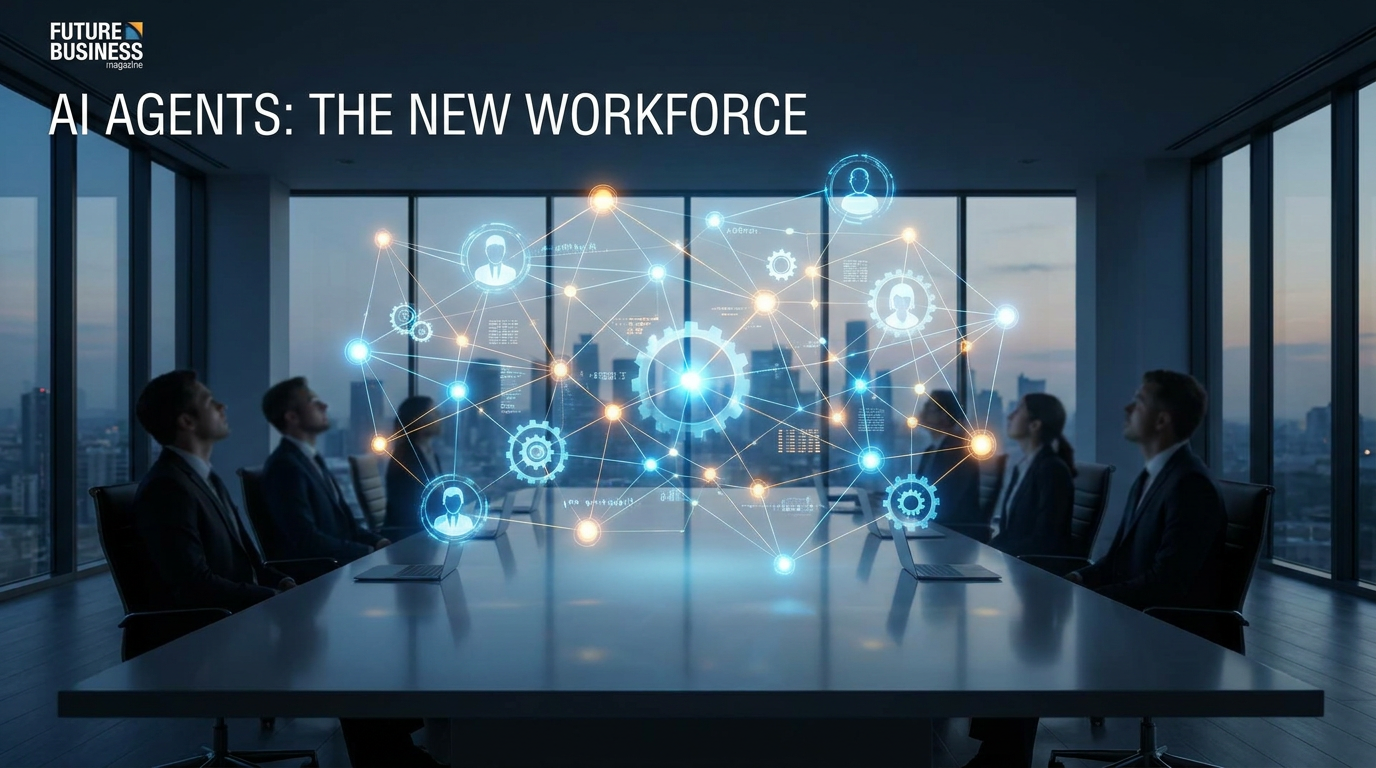
- Enterprise Adopters
- Focus on scaling operations, reducing costs, and achieving measurable ROI through automation.
- Governance & Risk Managers
- Focus on zero-trust security, compliance, and maintaining strict human oversight.
- AI Developers
- Focus on the technical frameworks, multi-agent collaboration, and system interoperability.
- Industry Analysts
- Focus on synthesizing market trends and projecting the long-term structural shifts in enterprise software.
What's not represented
- · Frontline Workers
- · Labor Unions
Why this matters
As AI shifts from generating text to executing multi-step tasks, businesses that adopt agentic workflows are seeing massive gains in productivity and cost reduction. Understanding this shift is critical for professionals looking to future-proof their careers as the nature of daily knowledge work evolves.
Key points
- Agentic workflows move AI beyond content generation, allowing systems to autonomously plan and execute multi-step business processes.
- By 2028, analysts project that 33% of enterprise software will feature native agentic capabilities.
- Modern architectures rely on an orchestrator-worker model, where a central agent delegates sub-tasks to specialized AI workers.
- Early adopters report significant efficiency gains, including up to a 50% reduction in customer service response times.
- Governance remains the biggest hurdle, with 40% of projects risking failure without strict access controls and human oversight.
For the past three years, the corporate world has been captivated by artificial intelligence that can talk. Chatbots drafted emails, summarized meetings, and generated code, fundamentally changing how knowledge workers interact with screens. But in 2026, the enterprise landscape is undergoing a structural shift. Organizations are moving beyond conversational interfaces and deploying "agentic workflows"—systems where AI does not just generate content, but actively makes decisions, orchestrates multi-step processes, and executes tasks autonomously across business applications.[3][4]
The distinction between a traditional AI assistant and an agentic workflow lies in intentionality and control. While a chatbot waits for a human prompt to perform a single action, an agentic system is given a high-level objective and left to figure out the steps. It maintains an internal representation of its goal, adapts its plan when it encounters errors, and interacts with external software tools—like customer relationship management (CRM) platforms or enterprise resource planning (ERP) databases—to read and write data without human intervention.[2][3][5]
This evolution marks the transition of AI from an advisory role to an execution engine. Analysts project that by 2028, approximately 33% of all enterprise software will feature native agentic capabilities, with 15% of everyday business decisions handled entirely by autonomous systems. The shift is being driven by a pressing need for hard return on investment (ROI) following years of heavy capital expenditure on AI infrastructure, pushing companies to find solutions that directly reduce operational bottlenecks.[2][3]

The architecture powering this shift relies heavily on multi-agent systems (MAS) and orchestration layers. Rather than relying on a single massive language model to do everything, modern agentic workflows employ an "orchestrator-worker" model. A primary orchestrator agent receives a complex objective, breaks it down into sub-tasks, and delegates those tasks to specialized worker agents. One agent might query a database, another might analyze the retrieved data, and a third might draft a compliance report based on the findings.[3][5]
To manage these complex interactions, a new ecosystem of orchestration platforms has emerged. Developers building custom workflows are leveraging frameworks like LangGraph and CrewAI for deep, code-level control over agent collaboration. Meanwhile, business operations teams are turning to low-code or managed platforms like Salesforce Agentforce, Microsoft Copilot Studio, and FloTorch, which provide the necessary infrastructure to deploy agents without requiring extensive software engineering resources.[3][5][6]
The operational impact of these systems is already measurable across multiple sectors. In customer service, early adopters of agent-based AI have reported reductions in response times of 30% to 50%, achieving measurable ROI in a matter of weeks. Instead of stalling at exception points or waiting for human approval to process a routine refund, an agentic workflow can gather missing information, verify internal policies, and progress the case autonomously.[1][3]

The operational impact of these systems is already measurable across multiple sectors.
In the manufacturing and logistics sectors, agentic workflows are moving beyond digital administration into physical operations. Companies like Siemens are utilizing AI agents to monitor production lines, predict equipment failures, and adjust workflows in real time. By analyzing vast amounts of sensor data and autonomously re-routing processes, these systems have demonstrated the capacity to reduce factory downtime by up to 30%, proving that agentic AI can optimize the physical supply chain just as effectively as digital data flows.[5]
The intellectual property and legal sectors are also experiencing a rapid transformation. In IP law, where missed deadlines can result in the catastrophic loss of patent rights, agentic workflows are being deployed to handle complex docketing and translation tasks. These systems act as a force multiplier, allowing highly skilled attorneys and paralegals to shift away from labor-intensive administrative work and focus their expertise on portfolio strategy, risk assessment, and direct client counseling.[7]
However, the transition to autonomous operations is not without significant friction. Industry data reveals that more than 40% of agentic AI projects risk failure due to unclear value propositions or inadequate risk controls. When an AI system is granted the authority to write data, send emails, or trigger financial transactions, the potential for cascading errors increases exponentially. Without proper orchestration and strict boundaries, autonomous agent behavior introduces severe operational risk to the enterprise.[1][2]

This reality has elevated governance and observability from secondary concerns to mandatory foundational layers. Successful enterprise deployments rely on zero-trust security architectures and strict role-based access controls, ensuring that agents only have permission to execute specific actions within defined parameters. Platforms are increasingly integrating real-time monitoring of model usage, latency, and cost to maintain compliance with stringent global regulations like the EU AI Act.[2][6]
Crucially, the rise of agentic workflows does not eliminate the need for human workers; rather, it fundamentally redefines their role. The paradigm is shifting from "human-as-doer" to "human-as-manager-of-agents." In high-stakes environments like legal compliance or financial auditing, the "human-in-the-loop" is not just a feature—it is a critical liability shield. Agents handle the data gathering and preliminary reasoning, but human experts remain the ultimate gatekeepers for final approval and strategic direction.[4][7]
For organizations looking to implement these systems, experts recommend a phased, 90-day roadmap. The process begins with identifying high-impact, low-risk workflows—such as internal IT ticketing or procurement routing—where automation can deliver immediate value without exposing the company to external customer risk. From there, teams must map their data readiness, establish clear governance policies, and run contained pilots before attempting to scale the technology across broader business units.[2][3][6]

As agentic workflows become more deeply embedded in corporate infrastructure, the traditional boundaries between software applications are beginning to blur. AI agents are increasingly serving as the connective tissue between disparate systems, coordinating integrated workflows across finance, human resources, and supply chain management. The enterprises that master this cross-domain orchestration will likely secure a significant competitive advantage in the coming decade.[4][8]
Ultimately, the agentic AI revolution is about moving beyond the novelty of machine-generated text and unlocking true operational autonomy. By combining adaptive reasoning with reliable, deterministic execution, these systems are tackling the kind of dynamic, judgment-heavy work that conventional automation could never manage. As 2026 unfolds, the interconnected, AI-first enterprise is rapidly shifting from a theoretical concept to a daily operational reality.[1][4][8]
How we got here
2023–2024
The Chatbot Era: Enterprises adopt Large Language Models primarily as conversational assistants for drafting and summarizing.
2025
Early Agentic Pilots: Organizations begin testing single-agent systems capable of basic tool use and API interactions.
2026
The Orchestration Boom: Multi-agent workflows are integrated into core enterprise software, shifting AI from an advisory role to an execution engine.
2028 (Projected)
Ubiquitous Autonomy: Analysts project that one-third of all enterprise software will feature native agentic capabilities.
Viewpoints in depth
Enterprise Adopters
Focus on scaling operations, reducing costs, and achieving measurable ROI.
For corporate leaders, the appeal of agentic AI lies in its ability to break through the productivity plateaus of traditional automation. They view these systems as a way to handle dynamic, long-running processes that previously required constant human hand-holding. The primary metric for this camp is ROI—specifically, how quickly an autonomous workflow can reduce cycle times in areas like customer service, procurement, and supply chain logistics.
AI Developers & Orchestrators
Focus on the technical frameworks, multi-agent collaboration, and system interoperability.
The engineering community is primarily concerned with how these agents are built and managed. They advocate for robust orchestration layers—whether open-source frameworks like LangGraph or enterprise gateways like FloTorch—that allow multiple specialized agents to collaborate. Their focus is on ensuring that agents can reliably use external tools, access databases, and recover from errors without entering infinite loops or hallucinating data.
Governance & Risk Managers
Focus on zero-trust security, compliance, and maintaining human oversight.
Risk officers and legal professionals emphasize the severe operational dangers of unchecked autonomy. When an AI system has the power to write data or execute transactions, a single hallucination can cause cascading enterprise damage. This camp advocates for strict 'human-in-the-loop' checkpoints, role-based access controls, and comprehensive audit logs to ensure compliance with regulations like the EU AI Act.
What we don't know
- How smaller, resource-constrained businesses will afford the infrastructure required to run secure, multi-agent orchestration platforms.
- The long-term legal implications of autonomous agents making errors that result in financial or compliance breaches.
- How quickly legacy enterprise systems can be modernized to support the API integrations necessary for agentic tool use.
Key terms
- Agentic Workflow
- A process where AI systems autonomously plan, reason, and execute multi-step tasks to achieve a specific goal, rather than just responding to single prompts.
- Orchestrator-Worker Model
- An AI architecture where a primary 'orchestrator' agent breaks down a complex goal into smaller tasks and delegates them to specialized 'worker' agents.
- Human-in-the-Loop (HITL)
- A system design where human experts are required to review, approve, or correct the actions of an AI before a final decision or transaction is executed.
- Multi-Agent System (MAS)
- A network of multiple interacting AI agents, each with specific capabilities, working together to solve problems that are too complex for a single AI model.
- Tool Use
- The ability of an AI agent to interact with external software, APIs, or databases to retrieve information or trigger actions.
Frequently asked
What is the difference between generative AI and agentic AI?
Generative AI primarily creates content (text, images) in response to a user prompt. Agentic AI goes further by understanding a high-level goal, planning the necessary steps, and autonomously using software tools to execute those steps without constant human input.
Will agentic workflows replace human jobs?
While they automate complex administrative and execution tasks, agentic workflows are designed to shift human workers from 'doers' to 'managers.' Humans remain essential for strategic oversight, exception handling, and final approval in high-stakes decisions.
What are the biggest risks of implementing AI agents?
The primary risks involve governance and security. If an autonomous agent hallucinates or makes a poor decision while having write-access to enterprise systems, it can cause operational damage. Strict role-based access and human-in-the-loop checkpoints are required to mitigate this.
How do companies measure the ROI of agentic AI?
ROI is typically measured through reduced cycle times for complex tasks, decreased operational costs, and improved accuracy. For example, early adopters track metrics like the 30% to 50% reduction in customer service resolution times.
Sources
Source coverage
8 outlets
4 viewpoints surfaced








[1]Automation AnywhereGovernance & Risk Managers
Agentic Workflows: How AI Agents Orchestrate Complex Tasks
Read on Automation Anywhere →[2]VirtidoGovernance & Risk Managers
Agentic Workflows: The Enterprise Guide to Autonomous AI Operations
Read on Virtido →[3]FractoEnterprise Adopters
A Practical Guide to Agentic AI for Enterprise Workflows in 2026
Read on Fracto →[4]IBMEnterprise Adopters
The essential guide to agentic AI
Read on IBM →[5]KanerikaEnterprise Adopters
Drive Business Growth and Efficiency with AI Agentic Workflows
Read on Kanerika →[6]FloTorchAI Developers
The Future of Enterprise Automation Is Agentic
Read on FloTorch →[7]AnaquaGovernance & Risk Managers
2026 AI Predictions: Agentic Workflows Will Define IP Management
Read on Anaqua →[8]Factlen Editorial TeamIndustry Analysts
Synthesis by Factlen editorial team
Read on Factlen Editorial Team →



Every angle. Every day.
Get business stories with full source coverage and perspective breakdowns delivered to your inbox.