
US-Iran Nuclear Talks in Switzerland Postponed Days After Historic 14-Point Agreement
Technical negotiations between the US and Iran have been abruptly delayed after Tehran refused to send its delegation amid ongoing Israeli airstrikes in Lebanon.
By Factlen Editorial Team
- The Trump Administration
- Views the MoU as a mechanism to force Iranian capitulation through maximum leverage, insisting no funds will be released during the 60-day window.
- The Iranian Government
- Demands immediate economic relief and refuses to separate the nuclear negotiations from the ongoing Israeli military campaign in Lebanon.
- Israeli Leadership
- Deeply skeptical of the diplomatic off-ramp, prioritizing military pressure over a negotiated settlement that eases sanctions on Tehran.
- US Congressional Skeptics
- Fears the agreement trades away the military victories of Operation Epic Fury for fragile promises that allow Iran to regroup.
What's not represented
- · European Union Mediators
- · Global Shipping Companies
Why this matters
The 14-point agreement temporarily halts the direct conflict between the US and Iran and reopens the Strait of Hormuz, instantly lowering global oil prices. However, the immediate collapse of the follow-up talks highlights how easily the fragile 60-day window could shatter, threatening to plunge the Middle East back into war and choke off 20% of the world's energy supply.
Key points
- The US and Iran signed a 14-point MoU establishing a 60-day window to negotiate a permanent nuclear settlement.
- Technical talks in Switzerland were indefinitely postponed after Iran refused to attend due to Israeli strikes in Lebanon.
- The White House abruptly canceled Vice President JD Vance's trip to lead the US delegation.
- The US lifted its naval blockade, reopening the Strait of Hormuz and causing global oil prices to drop.
- Iran has agreed to dilute its highly enriched uranium and invite IAEA inspectors to its nuclear sites.
- The agreement faces steep opposition from US Republican lawmakers and Israeli leadership.
The United States and Iran have signed a historic 14-point Memorandum of Understanding (MoU) aimed at ending their recent war, reopening the Strait of Hormuz, and freezing Tehran's nuclear escalation. The agreement, executed digitally by US President Donald Trump and Iranian President Masoud Pezeshkian, establishes a 60-day window to negotiate a permanent settlement.[4][7][8]
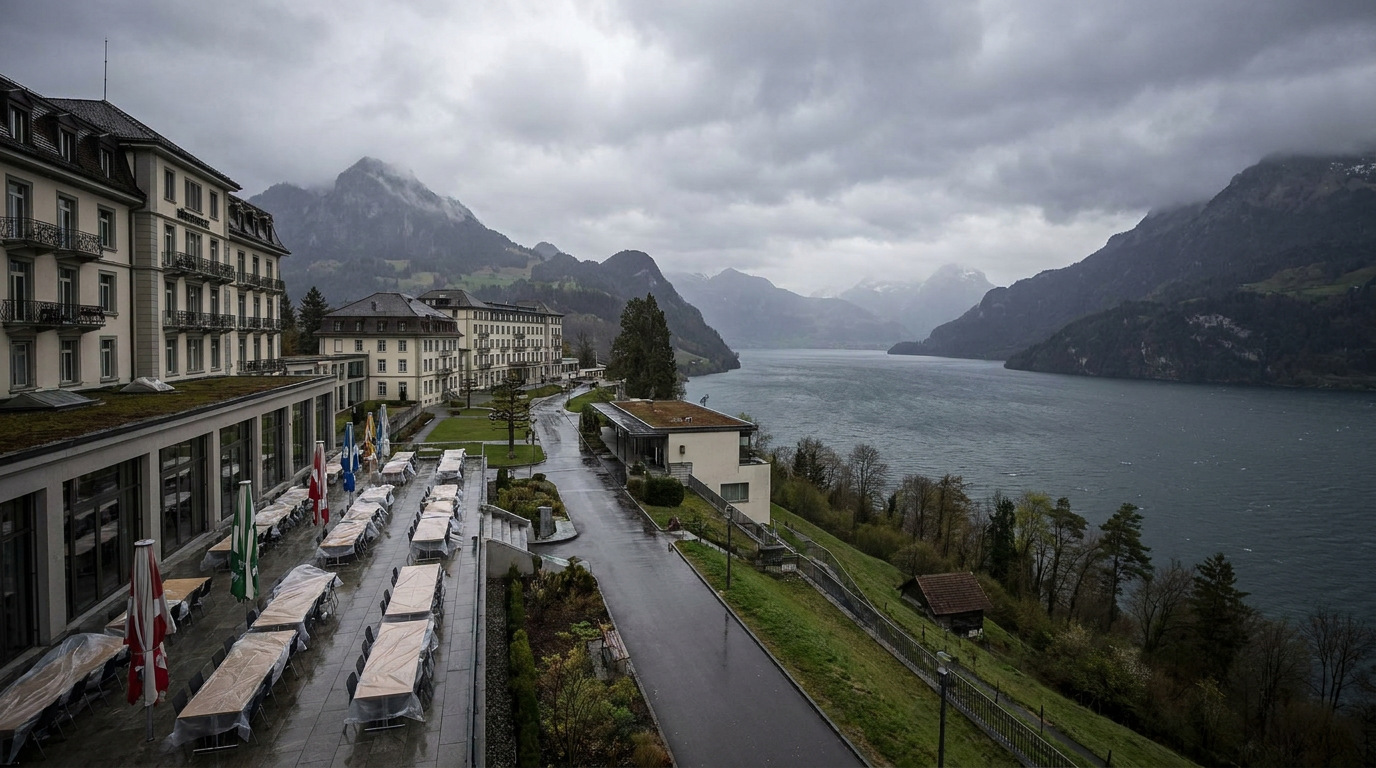
But the diplomatic breakthrough immediately collided with the volatile realities of the Middle East. Technical talks to implement the deal were scheduled to begin Friday at the Bürgenstock Resort in Switzerland, led by US Vice President JD Vance. Late Thursday, the White House abruptly canceled Vance's flight, citing "logistical issues," and the Swiss Foreign Ministry confirmed the talks were indefinitely postponed.[2][4][6][8]
The primary stumbling block is the ongoing violence in the Levant. Iranian officials refused to dispatch their delegation to the Alps, demanding an immediate halt to Israeli military strikes against the Iran-backed militant group Hezbollah in southern Lebanon.[2][3]
The timeline derailed after Hezbollah killed four Israeli soldiers, prompting a wave of Israeli retaliatory airstrikes that killed at least 18 people in Lebanon. While US officials report that a fragile ceasefire between Israel and Hezbollah has since been renewed, the cross-border violence successfully paralyzed the first step of the US-Iran diplomatic track.[2][3][5]
Despite the delay in Geneva, the mechanism of the 14-point MoU is already shifting the geopolitical landscape. An MoU is a formal framework that establishes shared principles for future negotiations—in this case, a two-month sprint to resolve the nuclear standoff.[4][8]

The core of the American demand centers on Iran's nuclear infrastructure, much of which was targeted during the recent US military campaign dubbed "Operation Epic Fury." According to closed-door briefings given to US lawmakers by envoy Steve Witkoff, Iran has agreed to dilute its stockpile of highly enriched uranium—fuel concentrated near weapons-grade levels—under international supervision.[3][6][7]
Witkoff detailed that Tehran will invite inspectors from the International Atomic Energy Agency (IAEA) to access its nuclear sites. Crucially, this includes allowing the UN watchdog to help identify and uncover enriched material believed to be buried under the rubble of facilities destroyed by US strikes last year.[3][7]
Witkoff detailed that Tehran will invite inspectors from the International Atomic Energy Agency (IAEA) to access its nuclear sites.
In exchange for these sweeping nuclear concessions, the United States agreed to immediate, tangible economic relief. On Thursday, the US military officially lifted its naval blockade on Iranian ports, allowing commercial shipping to resume, though American warships will remain stationed in the general area to monitor compliance.[2][8]
The most immediate global impact of the MoU is the reopening of the Strait of Hormuz. The narrow waterway between the Persian Gulf and the Gulf of Oman is a critical maritime chokepoint, handling roughly 20% of the world's oil supply. The agreement mandates that Iran ensure toll-free passage through the strait for at least the 60-day negotiation period.[2][8]
The economic mechanism worked almost instantly. Following the signing of the MoU, at least 10 commercial vessels successfully transited the strait, and global Brent crude oil prices dropped to their lowest levels since early March.[6][8]

However, the long-term financial incentives remain highly controversial. The framework outlines a potential $300 billion reconstruction and economic development fund for Iran, but only if a final, comprehensive nuclear deal is reached at the end of the 60 days.[2][5]
President Trump took to social media to project a hardline stance amid the diplomatic delay, assuring supporters that the US is not offering premature concessions. "We didn't meet out of desperation, Iran did," Trump wrote. "We'll play out the 60 days. They get no money, not ten cents!"[3][5]

That rhetoric is aimed at quelling fierce domestic opposition. In Washington, Republican defense hawks have expressed deep skepticism over the MoU. Lawmakers briefed on the deal worry that the administration is negotiating away the decisive leverage won during Operation Epic Fury, fearing Iran will use the 60-day window to regroup rather than permanently disarm.[6]
The diplomatic off-ramp faces equally stiff resistance from US allies. Israeli Prime Minister Benjamin Netanyahu and hardline cabinet ministers have forcefully criticized the agreement. Netanyahu insists that the Israeli military will not withdraw from its newly established security zone in southern Lebanon, complicating the broader regional de-escalation that the US-Iran MoU envisions.[5][6]
The uncertainty now rests on the 60-day clock. While Vice President Vance remained in Washington, other US envoys, including Jared Kushner and Steve Witkoff, are reportedly already in Switzerland attempting to salvage the logistics and reschedule the technical talks.[1][3]

If the negotiations collapse before they even begin, the consequences are stark. The US could rapidly reimpose the naval blockade, the Strait of Hormuz could once again be choked off, and the shadow war in the Middle East could reignite. For now, the world's most critical diplomatic breakthrough remains hostage to the volatile realities on the ground.
How we got here
Wednesday
President Trump and Iranian President Pezeshkian digitally sign the 14-point Memorandum of Understanding.
Thursday
The US military officially lifts its naval blockade, allowing commercial vessels to resume transit through the Strait of Hormuz.
Thursday Night
The White House abruptly cancels Vice President JD Vance's scheduled trip to Switzerland for technical talks.
Friday
The Swiss Foreign Ministry confirms the US-Iran talks are indefinitely postponed amid escalating violence in Lebanon.
Viewpoints in depth
The Trump Administration's View
Confident they hold maximum leverage, the administration views the MoU as a mechanism to force Iranian capitulation.
The White House is framing the 14-point agreement not as a concession, but as a rigid test of Iranian compliance under the threat of renewed military and economic strangulation. President Trump has publicly insisted that Tehran will receive "not ten cents" during the 60-day window, arguing that the US negotiated from a position of absolute strength following Operation Epic Fury. The administration believes the promise of a $300 billion reconstruction fund is sufficient bait to force Iran to permanently dismantle its nuclear infrastructure.
The Iranian Government's View
Tehran demands immediate tangible relief and refuses to compartmentalize the nuclear talks from the broader regional conflict.
For Iran, the lifting of the US naval blockade was a non-negotiable prerequisite for entering the 60-day window. However, the government refuses to separate its bilateral negotiations with Washington from the ongoing Israeli military campaign against its ally, Hezbollah, in Lebanon. By suspending its delegation's trip to Switzerland, Tehran is signaling that it will not proceed with technical nuclear concessions while its regional Axis of Resistance remains under active bombardment.
Israeli Leadership's View
Deeply skeptical of the diplomatic off-ramp, Israel prioritizes the physical dismantling of Iranian proxies over a negotiated settlement.
Prime Minister Benjamin Netanyahu and hardline members of his cabinet strongly oppose easing economic or military pressure on Tehran. Israeli leadership views the 60-day window as a dangerous pause that allows Iran and its proxies to regroup. Consequently, Israel has refused to withdraw its forces from the newly established security zone in southern Lebanon, maintaining military pressure on Hezbollah regardless of how it impacts the US-Iran diplomatic track.
US Congressional Skeptics
Defense hawks worry the agreement trades away decisive military victories for fragile promises.
Republican lawmakers briefed on the MoU have expressed profound concern that the administration is squandering the leverage gained during Operation Epic Fury. Skeptics fear that by lifting the naval blockade and allowing oil revenues to flow, the US is prematurely rewarding Iran before any permanent nuclear disarmament is verified. They argue that the 60-day window provides Tehran with critical breathing room to rebuild its economy without fundamentally altering its long-term strategic ambitions.
What we don't know
- Will Iran attempt to charge a toll for commercial vessels transiting the Strait of Hormuz after the 60-day window expires?
- Can the US and Iran successfully decouple their nuclear negotiations from the ongoing Israel-Hezbollah conflict?
- Will IAEA inspectors be able to fully account for enriched uranium that is believed to be buried under the rubble of destroyed facilities?
Key terms
- Memorandum of Understanding (MoU)
- A formal but generally non-binding agreement that establishes a framework and shared principles for future, finalized negotiations.
- Strait of Hormuz
- A critical maritime chokepoint between the Persian Gulf and the Gulf of Oman, handling roughly one-fifth of global oil consumption.
- Highly Enriched Uranium (HEU)
- Uranium that has been processed to increase the concentration of the U-235 isotope, bringing it closer to the threshold required for nuclear weapons.
- Operation Epic Fury
- The recent US military campaign conducted against Iranian targets, which resulted in the destruction of key nuclear sites and the imposition of a naval blockade.
- International Atomic Energy Agency (IAEA)
- The United Nations' nuclear watchdog organization responsible for inspecting and verifying that nuclear programs remain peaceful.
Frequently asked
Why were the Switzerland talks postponed?
Iran refused to send its delegation amid ongoing Israeli airstrikes against Hezbollah in Lebanon, prompting the White House to cancel Vice President JD Vance's trip.
What is in the 14-point MoU?
It establishes a 60-day window to negotiate a permanent nuclear deal, lifts the US naval blockade, reopens the Strait of Hormuz, and requires Iran to dilute its highly enriched uranium.
Will Iran receive $300 billion?
Not immediately. The $300 billion is a proposed reconstruction fund that would only be unlocked if a final, comprehensive nuclear agreement is reached after the 60-day window.
What happens to the Strait of Hormuz?
The US lifted its naval blockade, and Iran agreed to allow toll-free passage for commercial shipping, which has already caused global oil prices to drop.
Sources
Source coverage
8 outlets
4 viewpoints surfaced








[1]Axios
Trump envoy Witkoff heads to Switzerland ahead of potential Iran talks
Read on Axios →[2]The Guardian
US-Iran peace talks in Switzerland cancelled amid Israel-Hezbollah violence
Read on The Guardian →[3]Associated PressThe Trump Administration
US push to get Iran talks started hits an early bump
Read on Associated Press →[4]Al JazeeraThe Iranian Government
What we know so far about the US-Iran ceremony in Switzerland
Read on Al Jazeera →[5]Fox NewsThe Trump Administration
US-Iran talks postponed in Switzerland amid Israel-Hezbollah tensions; Hormuz remains a key issue
Read on Fox News →[6]CBS NewsIsraeli Leadership
Switzerland says U.S.-Iran talks postponed
Read on CBS News →[7]Washington PostUS Congressional Skeptics
Lawmakers told Iran will invite UN inspectors to its nuclear sites
Read on Washington Post →[8]ForbesThe Trump Administration
Vance’s Switzerland Trip Delayed, Pushing Back Start Of Technical Talks With Iran
Read on Forbes →

Every angle. Every day.
Get news politics stories with full source coverage and perspective breakdowns delivered to your inbox.