
U.S. and Iran Resume Indirect Nuclear Talks in Switzerland
U.S. envoy Steve Witkoff has arrived in Geneva for preliminary indirect negotiations with Iranian officials, marking a renewed diplomatic effort to address Tehran's advancing nuclear program and regional security.
By Factlen Editorial Team
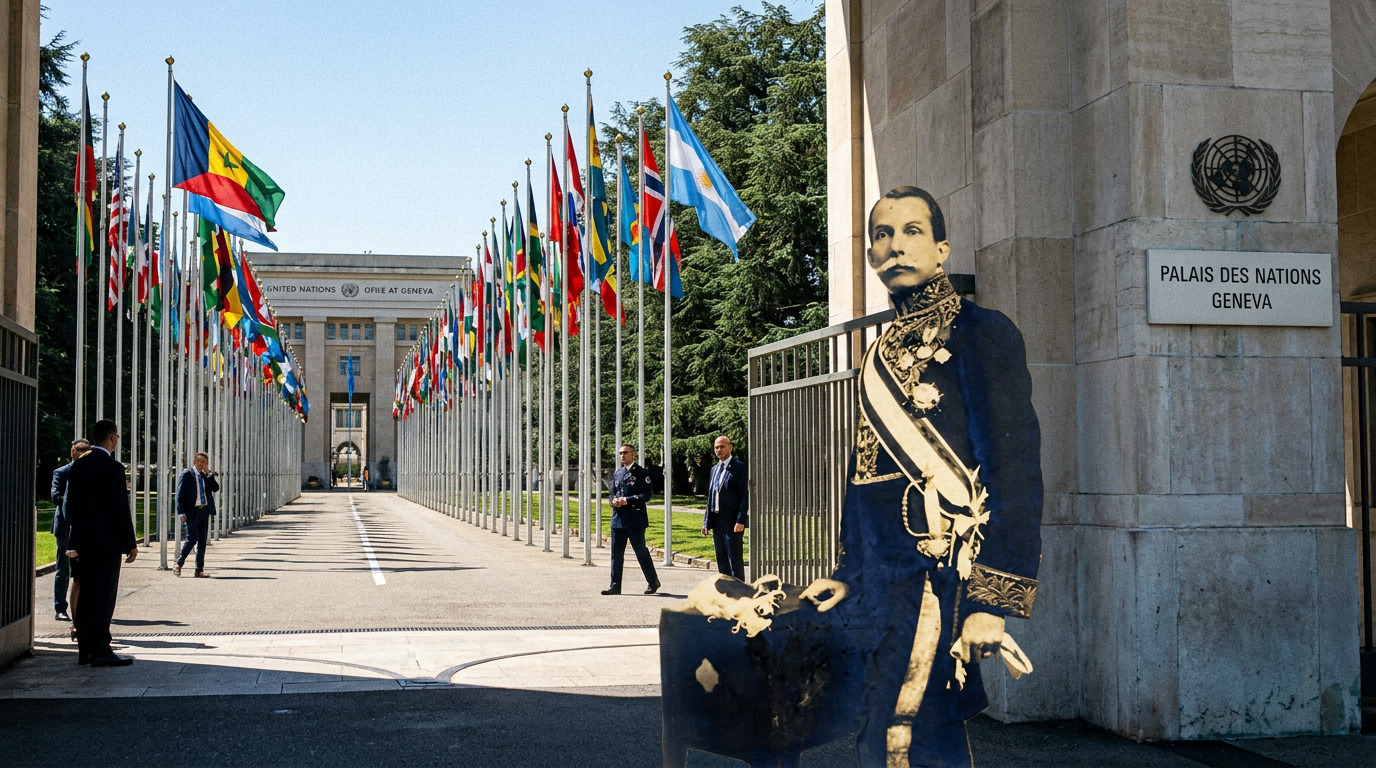
- U.S. Negotiators & Allies
- Focuses on halting Iran's 60 percent enrichment and restoring IAEA oversight through targeted, limited sanctions relief.
- Iranian Leadership
- Demands substantial, verifiable relief from U.S. economic sanctions and the unfreezing of assets before rolling back nuclear advancements.
- Israeli Security Establishment
- Views diplomatic engagement as a stalling tactic by Tehran and reserves the right to use military force to prevent a nuclear-armed Iran.
- Global Policy Analysts
- Emphasizes the technical realities of Iran's breakout time and the broader economic implications for global energy markets.
What's not represented
- · Iranian civilian population affected by economic sanctions
- · Lebanese and Syrian civilians living in proxy conflict zones
Why this matters
A successful diplomatic framework could de-escalate military tensions in the Middle East, stabilize global energy markets, and halt Iran's progression toward weapons-grade uranium enrichment. Conversely, a collapse in talks increases the likelihood of direct regional conflict and tighter economic sanctions.
Key points
- U.S. envoy Steve Witkoff is in Geneva for indirect nuclear talks with Iranian officials, mediated by Swiss diplomats.
- The talks aim to address Iran's uranium enrichment, which has reached 60 percent purity, bringing its 'breakout time' down to weeks.
- Washington is seeking a 'freeze-for-freeze' interim deal to halt nuclear advancements and restore IAEA inspector access.
- Tehran is demanding substantial relief from U.S. economic sanctions and the unfreezing of foreign-held assets.
- Israel is closely monitoring the negotiations and maintains it is not bound by any diplomatic agreement reached in Geneva.
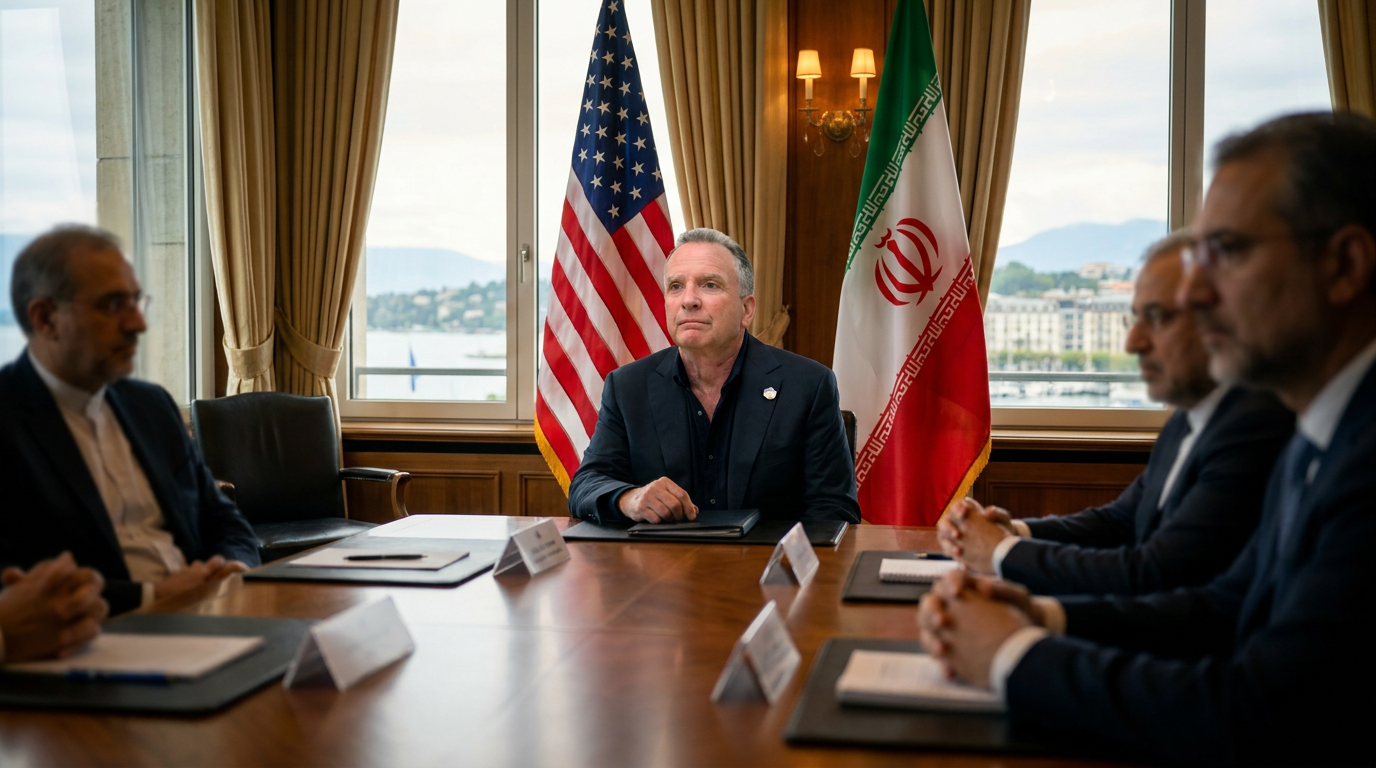
U.S. envoy Steve Witkoff has arrived in Switzerland to initiate a new round of indirect negotiations with Iranian officials, marking the first major diplomatic engagement between Washington and Tehran under the current U.S. administration. The talks, held in Geneva, are designed to explore the groundwork for a potential new nuclear agreement and address broader regional security concerns. The meetings represent a critical juncture in Middle Eastern diplomacy, coming after years of stalled communication and escalating proxy conflicts across the region.[1][2]
The diplomatic summit was originally scheduled to begin earlier in the week but was postponed due to intense fighting between Israel and Hezbollah. With a fragile pause in those hostilities, the White House authorized Witkoff's travel, signaling that Washington views the current window as a viable, albeit narrow, opportunity to engage Tehran. The resumption of talks underscores a recognition by both sides that the current trajectory of military escalation and nuclear advancement carries severe risks.[1]
Because the United States and Iran do not maintain formal diplomatic relations, the negotiations in Geneva will utilize an "indirect" format. Swiss diplomats, who have historically served as the U.S. protecting power in Iran, will shuttle messages between the American and Iranian delegations situated in separate rooms. This shuttle diplomacy allows both sides to negotiate substantive issues without the political optics of a direct bilateral meeting, a format that has been standard practice since the collapse of the original 2015 nuclear accord.[2][6]
The core technical issue driving the urgency of these talks is Iran's advancing nuclear program. According to international monitors, Tehran is currently enriching uranium to 60 percent purity—a technical step that is highly proximate to the 90 percent threshold required for weapons-grade material. Non-proliferation experts warn that Iran's "breakout time," the period required to produce enough fissile material for a single nuclear weapon, has shrunk from over a year under the 2015 agreement to roughly one to two weeks today.[5][6]

The primary objective for the U.S. delegation is to secure a verifiable freeze on Iran's 60 percent enrichment activities and to restore comprehensive access for inspectors from the International Atomic Energy Agency (IAEA). Washington is pursuing an interim framework—often described as a "freeze-for-freeze" or "less-for-less" deal—where Iran halts its most sensitive nuclear work in exchange for targeted, limited economic relief, rather than attempting to immediately negotiate a comprehensive grand bargain.[5][8]
For the Iranian government, the central demand is substantial relief from the architecture of U.S. economic sanctions. Iranian state media has emphasized that Tehran expects tangible economic benefits, specifically the unfreezing of billions of dollars in assets held abroad and the easing of restrictions on its oil exports. Iranian negotiators have signaled cautious optimism but maintain that any rollback of their nuclear program must be met with verifiable and lasting sanctions relief, reflecting deep skepticism about Washington's long-term commitments.[3][7]
The geopolitical backdrop of these negotiations is heavily influenced by the "Axis of Resistance," the network of regional militias aligned with Tehran, including Hezbollah in Lebanon, Hamas in Gaza, and the Houthis in Yemen. U.S. officials are expected to use the Geneva backchannel to pressure Iran into restraining these proxy groups, arguing that regional de-escalation is a prerequisite for any durable nuclear agreement. Iran, conversely, views its support for these groups as a vital component of its forward defense strategy.[3][5]
Iran, conversely, views its support for these groups as a vital component of its forward defense strategy.
Israel is monitoring the Geneva talks with intense scrutiny and deep skepticism. The Israeli security establishment has consistently argued that diplomatic engagement merely provides Tehran with time and financial resources to advance its nuclear ambitions and fund regional proxies. Israeli officials have reiterated that they are not bound by any agreement reached in Switzerland and reserve the right to take unilateral military action to prevent Iran from acquiring a nuclear weapon.[4]

The negotiations also face significant domestic political hurdles in the United States. The White House has deliberately tempered expectations regarding Witkoff's trip, aware that any concession to Tehran will face fierce opposition from foreign policy hawks in Washington. Critics argue that providing sanctions relief while Iran continues to support militant groups across the Middle East effectively subsidizes regional instability, making the political math of a deal highly complex for the administration.[8]
Similarly, the Iranian delegation must navigate a complex domestic landscape. While pragmatists within the Iranian government recognize the urgent need for economic relief to stabilize a struggling domestic economy, hardline factions view any compromise with the U.S. as a capitulation. The ultimate decision-making authority rests with Iran's Supreme Leader, who has historically authorized negotiations only when the economic pressure threatens domestic stability, while maintaining a deeply adversarial stance toward Washington.[3][7]
The IAEA's role remains a critical point of friction. Recent resolutions censuring Iran for failing to cooperate fully with international inspectors have heightened tensions. A key metric of success for the Geneva talks will be whether Iran agrees to reinstall monitoring equipment and provide answers regarding traces of undeclared nuclear material found at several sites—a step the U.S. considers non-negotiable for verifying any future agreement.[2][5]

Global economic markets are also reacting to the diplomatic developments. Energy analysts note that a successful interim deal could lead to the legitimate return of hundreds of thousands of barrels of Iranian crude to the global market, potentially stabilizing prices. Conversely, a breakdown in talks could lead to a tightening of sanctions enforcement and increased risks to shipping in the Strait of Hormuz, a vital choke point for global oil supplies.[9]
The structure of the "maximum pressure" sanctions currently in place means that unwinding them is legally and technically arduous. Many sanctions are tied not just to Iran's nuclear program, but also to its ballistic missile development and human rights record. This layered sanctions architecture makes it difficult for U.S. negotiators to offer the clean, sweeping economic relief that Tehran demands without triggering immediate congressional backlash.[6][8]
Diplomatic experts caution against expecting a breakthrough during this initial round in Geneva. The meetings are largely viewed as an exploratory exercise to establish baselines, test the authority of the respective envoys, and determine if a zone of possible agreement exists. If Witkoff and his Iranian counterparts can establish a working framework, it could pave the way for more sustained, lower-level technical negotiations in the coming months.[5][6]

Ultimately, the Geneva talks represent a high-stakes gamble for both nations. For the U.S., it is an attempt to put the Iranian nuclear program back in a "box" without resorting to military force. For Iran, it is a calculated effort to relieve crippling economic pressure while preserving the technical gains of its nuclear infrastructure. Whether the indirect format can bridge the vast deficit of trust between Washington and Tehran remains the central question of this renewed diplomatic push.[2][5][8]
How we got here
2015
The U.S., Iran, and world powers sign the JCPOA, limiting Iran's nuclear program in exchange for sanctions relief.
2018
The U.S. unilaterally withdraws from the JCPOA and reimposes a 'maximum pressure' sanctions campaign.
2019-2023
Iran gradually breaches the limits of the 2015 accord, eventually enriching uranium to 60 percent purity.
June 2026
U.S. and Iranian envoys arrive in Geneva to resume indirect diplomatic negotiations.
Viewpoints in depth
U.S. Administration's View
Washington seeks to cap Iran's nuclear progress through an interim agreement while avoiding military conflict.
U.S. policymakers view the current situation as a ticking clock. With Iran's breakout time reduced to weeks, the administration argues that diplomatic engagement is the only viable mechanism to halt Tehran's progress without triggering a regional war. The U.S. strategy focuses on securing a 'freeze-for-freeze' arrangement: offering limited, reversible sanctions relief in exchange for Iran capping enrichment at 60 percent and allowing IAEA inspectors back into key facilities. However, the administration faces intense domestic pressure from hawks who argue that any sanctions relief effectively funds Iran's network of regional proxies.
Iranian Government's View
Tehran views its nuclear advancements as leverage to force the removal of crippling U.S. economic sanctions.
For the Iranian leadership, the nuclear program serves as both a strategic deterrent and a bargaining chip. Iranian officials argue that because the U.S. unilaterally abandoned the 2015 agreement, Washington must take the first steps to rebuild trust by unfreezing billions in foreign-held assets and allowing Iran to sell its oil freely. While pragmatists within the government recognize the urgent need for economic relief to quell domestic unrest, hardliners insist that Iran should not surrender its technical nuclear gains without ironclad guarantees that the U.S. will not simply reimpose sanctions under a future administration.
Israeli Security Establishment
Israel views a nuclear-armed Iran as an existential threat and deeply distrusts the diplomatic process.
The Israeli government and its intelligence apparatus view the Geneva talks with profound skepticism. Israeli officials argue that diplomatic negotiations merely provide Tehran with international legitimacy, time to further harden its nuclear facilities against airstrikes, and financial resources to arm groups like Hezbollah and Hamas. Israel maintains a doctrine of strategic ambiguity regarding its own capabilities but has repeatedly stated it will not be bound by any agreement reached by the U.S. and reserves the right to launch preemptive military strikes to prevent Iran from crossing the nuclear threshold.
Non-Proliferation Analysts
Experts emphasize the technical dangers of Iran's current enrichment levels and the collapse of IAEA monitoring.
Nuclear watchdogs and non-proliferation experts focus heavily on the technical math of Iran's program. They warn that enriching uranium from 60 percent to the 90 percent weapons-grade threshold is a relatively short technical step compared to the initial enrichment process. Furthermore, analysts are deeply concerned by the 'blind spots' created after Iran removed IAEA surveillance cameras from several sites. They argue that even if a diplomatic agreement is reached, verifying Iran's past activities and ensuring no material has been diverted to secret military sites will be a monumental technical challenge.
What we don't know
- Whether Iran's Supreme Leader has authorized his delegation to make the necessary concessions for an interim deal.
- How much sanctions relief the U.S. administration is legally and politically capable of offering without triggering congressional intervention.
- If Israel will take unilateral military action if it perceives the talks are failing or moving too slowly.
Key terms
- Breakout Time
- The calculated amount of time it would take a state to enrich enough uranium to weapons-grade (90% purity) to build a single nuclear device.
- IAEA
- The International Atomic Energy Agency, the United Nations watchdog responsible for monitoring and verifying nuclear programs worldwide.
- Uranium Enrichment
- The process of increasing the concentration of the U-235 isotope in uranium. 3.67% is used for civilian power, 20% for medical research, and 90% for nuclear weapons.
- Protecting Power
- A country that represents the diplomatic interests of another state in a host country where the two lack formal diplomatic relations. Switzerland serves this role for the U.S. in Iran.
Frequently asked
Why are the talks 'indirect'?
The U.S. and Iran severed formal diplomatic ties in 1980. Because they refuse to meet face-to-face, Swiss diplomats act as intermediaries, shuttling messages between the two delegations who sit in separate rooms.
What is 'breakout time'?
Breakout time is the estimated period it would take a country to produce enough weapons-grade fissile material (90% enriched uranium) for one nuclear weapon. Experts estimate Iran's current breakout time is roughly one to two weeks.
What does the U.S. want from these talks?
Washington is seeking an interim agreement where Iran freezes its uranium enrichment at 60 percent and restores full access for international nuclear inspectors, in exchange for limited economic relief.
What does Iran want?
Tehran is demanding the removal of U.S. economic sanctions, the unfreezing of billions of dollars in assets held abroad, and the ability to freely export its oil on the global market.
Sources
Source coverage
9 outlets
4 viewpoints surfaced









[1]AxiosU.S. Negotiators & Allies
Trump envoy Witkoff heads to Switzerland ahead of potential Iran talks
Read on Axios →[2]ReutersU.S. Negotiators & Allies
US envoy arrives in Geneva for preliminary talks with Iranian officials
Read on Reuters →[3]Al JazeeraIranian Leadership
Iran signals cautious optimism as US envoy heads to Switzerland
Read on Al Jazeera →[4]The Times of IsraelIsraeli Security Establishment
Israel watches closely as US and Iran resume indirect talks in Geneva
Read on The Times of Israel →[5]Foreign AffairsGlobal Policy Analysts
The Stakes of the 2026 US-Iran Nuclear Dialogue
Read on Foreign Affairs →[6]BBC NewsGlobal Policy Analysts
What to expect from the renewed US-Iran nuclear diplomacy
Read on BBC News →[7]IRNAIranian Leadership
Tehran demands sanctions relief as prerequisite for Geneva talks
Read on IRNA →[8]PoliticoU.S. Negotiators & Allies
White House tempers expectations on Witkoff's Switzerland trip
Read on Politico →[9]Financial TimesGlobal Policy Analysts
Oil markets brace as US-Iran nuclear talks resume in Geneva
Read on Financial Times →

Every angle. Every day.
Get news politics stories with full source coverage and perspective breakdowns delivered to your inbox.