
Israel and Hezbollah Agree to Renewed Ceasefire in Lebanon, Salvaging U.S.-Iran Peace Talks
A fragile ceasefire between Israel and Hezbollah took effect late Friday, halting a deadly 24-hour escalation that had temporarily derailed the implementation of a historic peace agreement between the United States and Iran.
By Factlen Editorial Team
- US Administration & Mediators
- Focused on preserving the broader U.S.-Iran agreement and stabilizing the region to advance the 60-day diplomatic window.
- Israeli Government & Military
- Focused on maintaining a security buffer in southern Lebanon and responding forcefully to Hezbollah attacks.
- Iran & Hezbollah
- Demanding an end to Israeli military operations in Lebanon as a strict precondition for broader regional agreements.
- Lebanese Civilians & Officials
- Focused on the devastating civilian toll of the airstrikes and expressing deep skepticism about the durability of the truce.
What's not represented
- · European Union diplomats observing the delayed Swiss talks
- · Global energy market analysts monitoring the Strait of Hormuz
Why this matters
The stability of the entire Middle East—and the fate of global energy markets—currently hinges on this fragile localized truce. If the Lebanon ceasefire holds, it paves the way for a historic U.S.-Iran nuclear and economic agreement; if it fails, the region risks plunging back into a devastating, multi-front war.
Key points
- A renewed ceasefire between Israel and Hezbollah took effect at 4:00 p.m. local time on Friday.
- The truce halted a 24-hour escalation that killed four Israeli soldiers and at least 47 people in Lebanon.
- The violence caused Iran to postpone technical talks with the U.S. in Switzerland regarding their new Memorandum of Understanding.
- Israel maintains it will keep troops in a southern Lebanon buffer zone, while Hezbollah reserves the right to defend its territory.
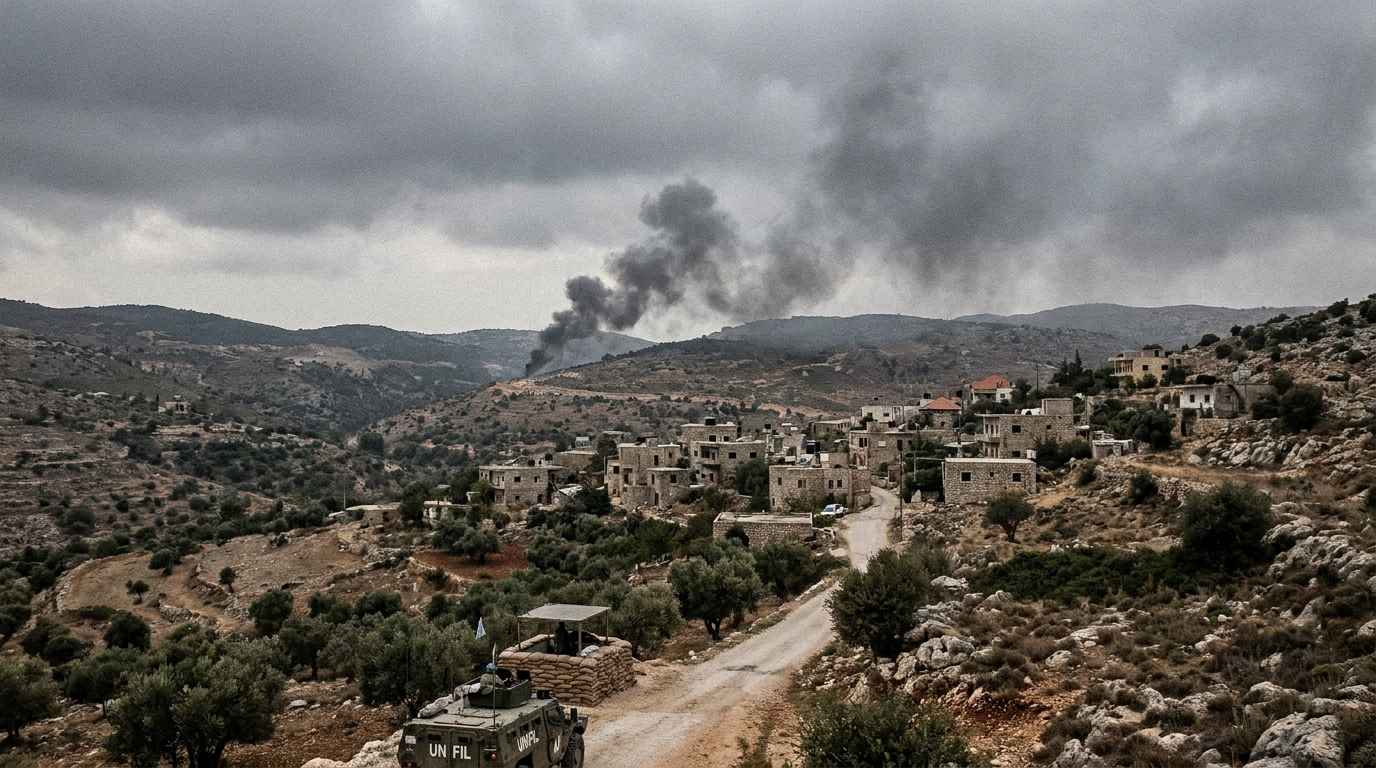
A fragile ceasefire between Israel and Hezbollah officially took effect late Friday afternoon, halting a deadly 24-hour military escalation that threatened to completely collapse a newly signed, high-stakes peace agreement between the United States and Iran. The truce, which was brokered through frantic, last-minute mediation by the U.S., Qatar, and Iran, went into force at exactly 4:00 p.m. local time. The sudden cessation of hostilities momentarily freezes a localized conflict that has devastated southern Lebanon, displaced millions of civilians across both sides of the border, and consistently acted as a volatile flashpoint capable of igniting a broader regional war. For international diplomats, the immediate priority was stopping the bloodshed before it could permanently derail the broader geopolitical realignment currently underway.[1][2]
The urgent implementation of the ceasefire followed one of the deadliest single days in the region since the broader war began. The immediate crisis was triggered overnight when Hezbollah fighters executed a coordinated ambush on an Israeli tank operating in the Lebanese village of Kfar Tebnit. The attack resulted in the deaths of four Israeli soldiers, including a senior battalion commander, marking a significant tactical loss for the Israel Defense Forces (IDF). In swift response, the IDF launched a massive, sustained wave of retaliatory airstrikes targeting what it identified as Hezbollah command centers, launch sites, and subterranean infrastructure across southern Lebanon and deep into the Bekaa Valley.[1][3]
The human toll of the rapid escalation was severe and immediate. The Lebanese Health Ministry reported that the intense Israeli bombardment killed at least 47 people and wounded nearly 100 others within a matter of hours, overwhelming local medical facilities that were already struggling under the weight of the prolonged conflict. The sudden spike in violence immediately tested the durability of the region's shifting diplomatic architecture, sending shockwaves through corridors of power in Washington, Tehran, and Jerusalem just days after a historic bilateral breakthrough had seemingly charted a path toward de-escalation.[3][4]

The broader context for Friday's frantic diplomacy is the 14-point Memorandum of Understanding (MOU) signed earlier in the week by U.S. President Donald Trump and Iranian officials. Designed to end the direct military confrontation between the United States and Iran, the sweeping framework established a strict 60-day window to negotiate a permanent, comprehensive agreement regarding Iran's nuclear program. Furthermore, the MOU mandated the immediate reopening of the highly strategic Strait of Hormuz to commercial shipping, promised the unfreezing of Iranian financial assets, and outlined a controversial $300 billion international reconstruction plan for the Islamic Republic, contingent upon final compliance.[7][8]
Crucially, the very first point of the U.S.-Iran MOU explicitly called for the "immediate and permanent termination of military operations on all fronts, including in Lebanon." However, neither the Israeli government nor Hezbollah leadership were direct signatories to the Washington-Tehran pact. This glaring omission left the implementation of the Lebanon clause dangerously ambiguous, effectively outsourcing the stability of the entire U.S.-Iran agreement to the tactical decisions of two bitter adversaries locked in a decades-long cycle of violence and retribution. Diplomats had hoped the overarching agreement would force regional proxies to stand down, but the reality on the ground quickly proved that local grievances and security imperatives could not be easily overridden by signatures in distant capitals.[4][8]
As the violence in Lebanon spiraled out of control on Friday morning, the diplomatic fallout was swift and severe. Iran's delegation abruptly postponed its scheduled travel to Switzerland, where the highly anticipated first round of technical talks with the U.S. to implement the MOU was set to begin. Tehran reportedly demanded concrete, verifiable guarantees that Israel would permanently halt its military operations in Lebanon before Iranian negotiators would proceed with the broader, complex discussions surrounding nuclear enrichment limits and the mechanics of international sanctions relief. The Iranian stance highlighted the deep interconnectedness of the conflict, signaling that Tehran would not compartmentalize the survival of its primary regional ally from its own bilateral negotiations with Washington.[5][6]

As the violence in Lebanon spiraled out of control on Friday morning, the diplomatic fallout was swift and severe.
Following Iran's withdrawal from the immediate schedule, the White House subsequently announced that U.S. Vice President JD Vance would delay his planned trip to Europe to lead the American delegation. A spokesperson acknowledged that the logistics of the technical negotiations had been severely disrupted by the flare-up. The sudden cancellation of the Swiss summit underscored a stark reality for the international community: the fate of global energy markets, maritime security in the Persian Gulf, and international nuclear non-proliferation efforts are currently tethered to the day-to-day tactical decisions of Hezbollah commanders and IDF generals operating along the Blue Line.[4][5]
Facing the imminent, highly public collapse of his administration's signature foreign policy achievement, President Trump directly intervened in the crisis. Taking to social media and engaging in direct phone diplomacy, the President publicly demanded a "complete ceasefire on all fronts, including Lebanon, Hezbollah, and Israel," while U.S. envoys reportedly applied immense pressure on Israeli leadership to accept a halt in the fighting. By mid-afternoon, this intense multilateral pressure—coordinated alongside Qatari and Iranian mediators—yielded a critical breakthrough, with both Israeli officials and Hezbollah sources quietly confirming to international intermediaries that they would implement the truce. The rapid de-escalation demonstrated the immense leverage Washington still wields, even as it attempts to extricate itself from direct military involvement in the region.[2][4]
Despite the formal agreement to halt hostilities, the situation on the ground remains highly volatile and fraught with mutual suspicion. An Israeli official officially confirmed the ceasefire to reporters but emphasized a critical caveat: IDF troops would remain forward-deployed within a self-declared security buffer zone extending roughly six miles into southern Lebanese territory. "We are in a ceasefire, if Hezbollah does not attack us, then we are not in wartime," the official stated, delivering a stark warning that any perceived Hezbollah aggression or attempt to reoccupy border positions would be met with immediate, overwhelming military retaliation. This continued military presence inside Lebanon remains a deeply contentious issue, serving as a constant flashpoint that could easily reignite the conflict at a moment's notice.[2][3]

On the other side of the conflict, Hezbollah—which has long demanded a complete and unconditional Israeli withdrawal from all Lebanese territory—indicated through backchannels that it had applied the truce on its end, ceasing rocket and drone launches into northern Israel. However, the militant group explicitly reserved the right to defend Lebanese land against what it views as an illegal occupation. Hezbollah leadership has consistently accused Israel of violating previous ceasefire agreements, while Israel maintains that its buffer zone is an absolutely necessary defensive measure to shield its northern civilian communities from the group's vast, Iranian-supplied munitions arsenal. This fundamental disagreement over the definition of sovereignty and security ensures that the current truce is, at best, a temporary tactical pause rather than a permanent resolution.[1][2]
For the exhausted residents of southern Lebanon, the high-level diplomatic maneuvering in Washington and Switzerland offers very little immediate comfort or security. Many civilians, having witnessed multiple failed truces over the past year, remain deeply skeptical that the overarching U.S.-Iran agreement will translate into lasting, meaningful calm in their devastated towns and villages. The United Nations and various international humanitarian organizations continue to warn of a dire, compounding crisis in the region, pointing to the staggering civilian death toll, the mass displacement of families, and the systematic destruction of essential civilian infrastructure that will take decades to rebuild. Local leaders emphasize that without a comprehensive political settlement that addresses the root causes of the border dispute, the civilian population will remain trapped in an endless cycle of violence and precarious ceasefires.[6][7]
With the immediate bleeding stopped, the diplomatic focus now shifts urgently to Washington, D.C., where a new, high-stakes round of bilateral talks between the United States and Lebanon is scheduled to take place from June 23 to June 25. Following a detailed phone call with Lebanese President Joseph Aoun, U.S. Secretary of State Marco Rubio emphasized that these upcoming negotiations represent the only viable, long-term path toward economic recovery, national reconstruction, and the crucial re-establishment of sovereign Lebanese state control over its southern territory, free from the influence of non-state militias. American diplomats are expected to push heavily for the deployment of the Lebanese Armed Forces to the border, a move they view as essential to satisfying Israel's security demands and marginalizing Hezbollah's military wing.[1][4]
Meanwhile, international mediators are working frantically behind the scenes to resolve the lingering impasse over the postponed U.S.-Iran technical talks. If the fragile Lebanon ceasefire manages to hold through the weekend without major violations, diplomats are optimistic that they can quickly reschedule the critical summit in Switzerland. Restarting the 60-day negotiation clock is viewed as absolutely essential to finalizing the historic, yet highly precarious, realignment of the Middle East before domestic political pressures in either Washington or Tehran can scuttle the unprecedented diplomatic opening. The coming days will serve as a definitive stress test for the new regional order, revealing whether the promise of economic relief and nuclear diplomacy can truly outweigh decades of entrenched sectarian and geopolitical hostility.[5][8]
How we got here
June 17, 2026
The U.S. and Iran sign a 14-point Memorandum of Understanding to end direct hostilities and begin nuclear negotiations.
June 18, 2026
Hezbollah ambushes an Israeli tank in southern Lebanon, killing four IDF soldiers.
June 18-19, 2026
Israel launches retaliatory airstrikes across Lebanon, killing at least 47 people.
June 19, 2026 (Morning)
Iran postpones technical talks with the U.S. in Switzerland, demanding a halt to the fighting in Lebanon.
June 19, 2026 (4:00 PM)
A renewed ceasefire between Israel and Hezbollah officially takes effect following intense U.S. and Qatari mediation.
Viewpoints in depth
The U.S. and Mediators' View
Focus on preserving the broader U.S.-Iran MOU and stabilizing the region to advance the 60-day diplomatic window.
For Washington and international mediators like Qatar, the immediate priority is preventing the Lebanon conflict from collapsing the historic U.S.-Iran Memorandum of Understanding. U.S. officials view the 60-day negotiation window as a critical, fragile opportunity to secure a permanent nuclear deal and stabilize global energy markets. They argue that local flare-ups must be contained through intense diplomatic pressure, emphasizing that the broader U.S.-Iran pact is the ultimate key to regional stability.
Israel's Security Imperative
Focus on maintaining a security buffer in southern Lebanon and responding forcefully to Hezbollah attacks.
Israeli officials maintain deep skepticism regarding the U.S.-Iran deal, particularly because Israel was excluded from the negotiations. The Israeli government insists that any ceasefire in Lebanon must allow the IDF to maintain its self-declared security buffer zone to protect northern Israeli communities from Hezbollah's rocket and drone arsenals. From this perspective, retaliatory strikes are a necessary deterrent, and the military reserves the right to respond to any perceived violations of the truce.
Iran and Hezbollah's Stance
Demanding an end to Israeli operations in Lebanon as a precondition for broader agreements.
Tehran and Hezbollah view the cessation of Israeli military operations in Lebanon as a non-negotiable component of the broader peace framework. Iran leveraged its participation in the upcoming Swiss technical talks to force a halt to the IDF's strikes, demanding guarantees that the U.S. would restrain its ally. Hezbollah, meanwhile, frames its actions as legitimate resistance against an occupying force, insisting that true peace requires a complete Israeli withdrawal from Lebanese territory.
What we don't know
- Whether Hezbollah will accept the continued presence of Israeli troops in the southern Lebanon buffer zone during the ceasefire.
- When the postponed U.S.-Iran technical talks in Switzerland will be officially rescheduled.
- How the proposed $300 billion reconstruction plan for Iran will be funded and implemented if a final deal is reached.
Key terms
- Memorandum of Understanding (MOU)
- A formal agreement outlining the terms and details of a mutual understanding, serving as a framework for a future, more comprehensive treaty.
- Buffer Zone
- A neutral or demilitarized area established to separate hostile forces and prevent direct confrontation.
- Strait of Hormuz
- A highly strategic waterway between the Persian Gulf and the Gulf of Oman, through which a significant portion of the world's oil supply passes.
Frequently asked
Why were the U.S.-Iran talks in Switzerland postponed?
The talks were delayed because Iran demanded guarantees that Israel would halt its military operations in Lebanon against Hezbollah before proceeding with broader negotiations.
What is in the U.S.-Iran Memorandum of Understanding?
The 14-point agreement includes a 60-day ceasefire, the reopening of the Strait of Hormuz, the unfreezing of Iranian assets, and a proposed $300 billion reconstruction plan for Iran.
Did Israel agree to withdraw from Lebanon?
No. While Israel agreed to the ceasefire, officials stated that Israeli troops would remain in a self-declared security buffer zone in southern Lebanon.
Sources
Source coverage
8 outlets
4 viewpoints surfaced








[1]The Washington PostIsraeli Government & Military
After 4 Israeli soldiers' deaths, Israel and Hezbollah agree to renew ceasefire
Read on The Washington Post →[2]CNAIsraeli Government & Military
Israel, Hezbollah agree to ceasefire starting on Friday: US official
Read on CNA →[3]The GuardianLebanese Civilians & Officials
Israel and Hezbollah agree to renew ceasefire after flareup of violence
Read on The Guardian →[4]TIMEUS Administration & Mediators
Israel and Hezbollah Agree to Cease-Fire, U.S. Official Says
Read on TIME →[5]The Times of IsraelIsraeli Government & Military
Opening round of US-Iran talks canceled as Tehran said to demand halt to Lebanon fighting
Read on The Times of Israel →[6]Al JazeeraLebanese Civilians & Officials
Southern Lebanon residents doubt US-Iran agreement will bring lasting calm
Read on Al Jazeera →[7]PBS NewsUS Administration & Mediators
What's in the agreement to end the U.S. war in Iran, according to a U.S. official
Read on PBS News →[8]Military TimesIran & Hezbollah
Read the 14-point memorandum of understanding between the United States and Iran
Read on Military Times →
More in news politics
See all 5 stories →US-Iran Diplomacy
U.S. and Iran Postpone High-Stakes Nuclear Talks in Switzerland Amid Regional Tensions
7 sources
Iran Nuclear Deal
U.S. and Iran Sign Memorandum of Understanding to End War and Reopen Strait of Hormuz
7 sources
Islamabad Memorandum
US and Iran Sign 'Islamabad Memorandum' to End 110-Day War, Triggering Lebanon Ceasefire
7 sources
Every angle. Every day.
Get news politics stories with full source coverage and perspective breakdowns delivered to your inbox.