
Stem Cell Transplant Achieves 15-Year Remission in Severe Autoimmune Disease
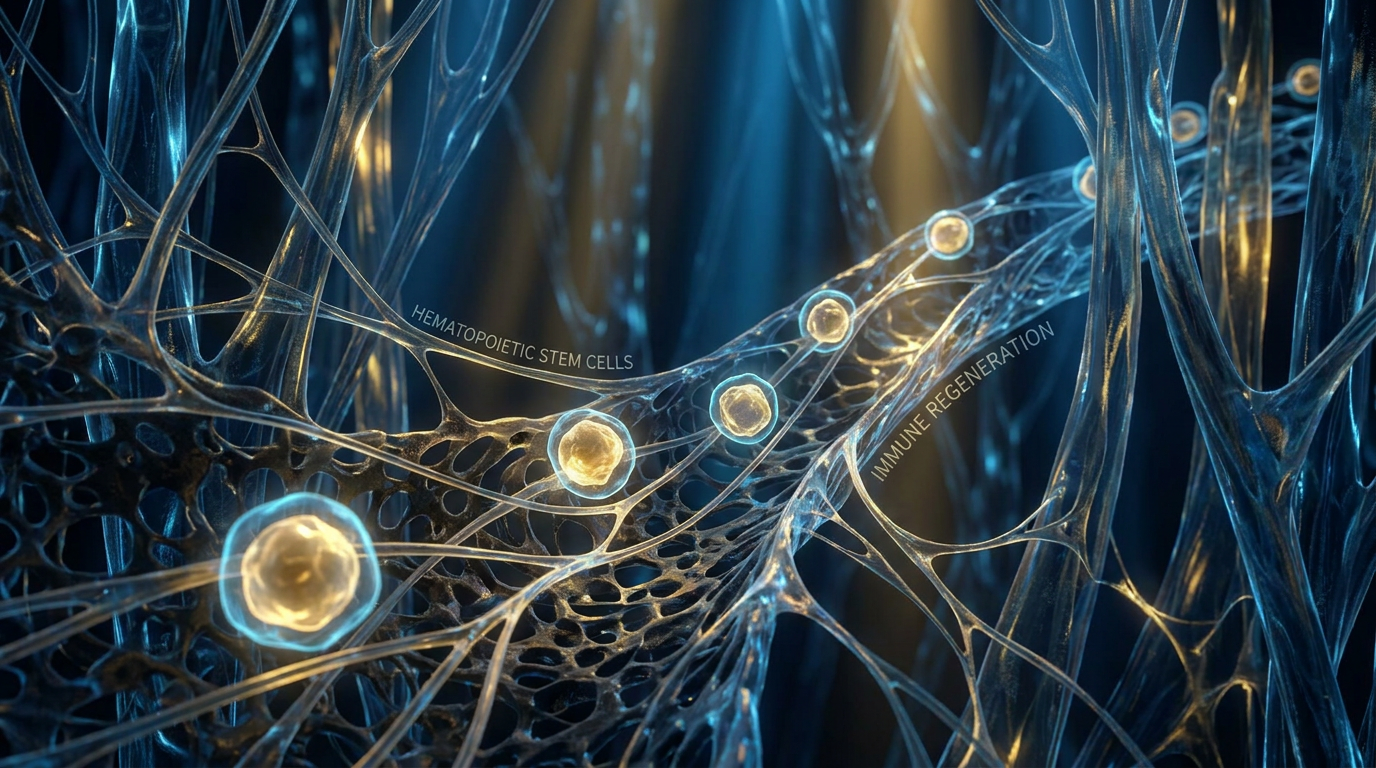
Two patients with a devastating autoimmune condition have remained symptom-free for over 15 years after receiving an experimental allogeneic stem-cell transplant. The procedure completely reset their immune systems, allowing them to discontinue all immunosuppressive medications.
By Factlen Editorial Team
- Clinical Researchers
- Focus on the unprecedented durability of the remission and the potential for a functional cure.
- Transplant Specialists
- Highlight the severe risks of allogeneic transplants and argue for strict patient selection.
- Patient Advocates
- Emphasize the dramatic quality-of-life improvements while acknowledging the intense risks.
What's not represented
- · Patients who experienced severe complications or graft-versus-host disease from similar experimental transplants
- · Health economists analyzing the cost and accessibility of allogeneic transplants
Why this matters
This breakthrough provides the strongest evidence yet that replacing a faulty immune system can offer a functional, drug-free cure for severe autoimmune diseases. It opens the door for larger clinical trials that could eventually transform the treatment landscape for patients who have exhausted all conventional options.
Key points
- Two patients with a severe autoimmune disease affecting the central nervous system have achieved a 15-year remission.
- The patients received an allogeneic hematopoietic stem-cell transplant, replacing their immune systems with donor cells.
- Both individuals have remained entirely symptom-free without the need for ongoing immunosuppressive medications.
- While highly effective, the procedure carries severe risks like graft-versus-host disease and is reserved for refractory cases.
For individuals suffering from severe, refractory autoimmune diseases, the immune system transforms from a vital defender into a relentless aggressor, leaving patients to face a steady accumulation of irreversible neurological damage when standard therapies fail. [1] Now, a landmark long-term follow-up has provided unprecedented evidence of a functional cure for one of these intractable conditions. Two patients suffering from a devastating autoimmune disorder that specifically attacks the central nervous system have remained in complete, drug-free remission for more than 15 years after receiving an experimental stem-cell transplant. [1][2] The results, recently published in the medical journal Med, represent a profound paradigm shift in how specialists view the ceiling of autoimmune treatment. By completely resetting the patients' immune systems, the experimental procedure allowed them to discontinue all immunosuppressive medications and resume normal, active lives without the constant shadow of impending relapses. [1][3][1][2][3]
The two individuals suffered from a rare and highly aggressive disorder in which the body mistakenly produces autoantibodies that specifically target the spinal cord and the optic nerves. [1][8] In conditions such as Neuromyelitis Optica Spectrum Disorder (NMOSD), these targeted immune attacks lead to unpredictable, devastating relapses that can cause progressive paralysis, severe chronic pain, and permanent blindness. [8] Conventional medical management relies heavily on chronic immunosuppression to dampen the rogue immune response and prevent further nerve damage. However, these standard drugs often fail to halt the disease entirely, leaving patients highly vulnerable to breakthrough attacks while simultaneously exposing them to the long-term, compounding side effects of living with a permanently suppressed immune system. [5][1][5][8]
Treating autoimmune diseases that target the central nervous system presents unique physiological challenges. The blood-brain barrier, which normally protects the brain and spinal cord from circulating toxins, also restricts the entry of many large-molecule biologic drugs designed to suppress immune activity. [8] When autoreactive cells manage to cross this barrier and establish a foothold in the central nervous system, they can cause localized inflammation and demyelination that is incredibly difficult to clear with systemic medications. [5] This biological sanctuary effect is a primary reason why conditions affecting the optic nerve and spinal cord are so notoriously resistant to standard pharmacological interventions, forcing doctors to seek more systemic resets. [8][5][8]

To break this destructive cycle, clinical researchers turned to a radical intervention: allogeneic hematopoietic stem-cell transplantation (HSCT). While autologous transplants—which harvest and use the patient's own stem cells—have been increasingly utilized in recent years for conditions like multiple sclerosis and severe scleroderma, this specific trial utilized healthy donor cells. [2][6] The clinical distinction between the two approaches is crucial for long-term outcomes. Autologous transplants attempt to reboot the patient's existing immune system, but they inherently carry a risk of reintroducing the genetic or cellular memory of the autoimmune disease, potentially leading to a relapse years later. [6] In contrast, allogeneic transplants aim to replace the patient's immune system entirely with a healthy donor's cells, theoretically eliminating the autoreactive memory once and for all. [2][2][6]
To break this destructive cycle, clinical researchers turned to a radical intervention: allogeneic hematopoietic stem-cell transplantation (HSCT).
The allogeneic treatment protocol is exceptionally intense and carries substantial, life-threatening risks. Before receiving the healthy donor cells, the patients had to undergo a rigorous and highly toxic "conditioning regimen." This critical phase involved the administration of powerful chemotherapies and targeted agents—specifically fludarabine, treosulfan, and B-cell depleting antibodies—to systematically eradicate their existing, malfunctioning immune cells and clear space in the bone marrow. [2][4] Once the autoreactive immune system was effectively wiped out, the patients received the intravenous infusion of donor hematopoietic stem cells. Over the following weeks, these progenitor cells migrated to the bone marrow and began the slow, delicate process of engraftment, eventually generating a completely new, healthy immune system that lacked the destructive programming of its predecessor. [5][6][2][4][5][6]

The clinical outcomes observed over the subsequent decade and a half have been nothing short of remarkable, fundamentally altering the trajectory of the patients' lives. The male patient experienced significant, sustained improvements in his neurological function, successfully returned to a normal working life, and went on to have two children—milestones that seemed impossible during the height of his illness. [1][4] Similarly, the female patient regained substantial motor function, using her arms much more effectively than she could prior to the grueling transplant procedure, allowing her to reclaim a significant degree of personal independence. [1][1][4]
Crucially, both individuals achieved these massive quality-of-life milestones without the need for any ongoing disease-modifying therapies or daily immunosuppressive drugs, which are typically required for life. [1][3] "I don't think we can say it's a cure, but then again, it has addressed the problem the disease has caused over this very long period of time," noted Jiao Jiao Li, a biomedical engineer reviewing the broader implications of the study. [4] The complete absence of symptoms for 15 years strongly suggests the autoreactive cascade has been permanently halted, offering a functional cure in practice if not in name, and freeing the patients from the constant anxiety of an impending relapse. [1][1][3][4]

Despite the profound and uplifting success of these two cases, transplant specialists strongly urge caution regarding the widespread application of this therapy. Allogeneic HSCT remains a high-stakes, highly toxic medical intervention that is not suitable for the vast majority of autoimmune patients. [6][7] The complete ablation of the immune system during the conditioning phase leaves patients temporarily defenseless against opportunistic infections, which can easily become fatal. [5] Furthermore, introducing donor immune cells carries the inherent and severe risk of graft-versus-host disease (GVHD), a potentially lethal complication where the newly engrafted immune system recognizes the patient's own body tissues as foreign and launches a systemic attack. [6] Because of these severe, life-threatening risks, allogeneic transplantation is currently reserved strictly for patients with highly active, treatment-resistant disease who face severe, irreversible disability or death. [5][7][5][6][7]
Nevertheless, reaching the 15-year milestone provides vital, undeniable biological proof-of-concept for the field of immunology. It clearly demonstrates that a complete immunological replacement can achieve a durable, drug-free remission in a neurological disease that was previously considered entirely incurable. [2][7] These findings are expected to catalyze larger, carefully controlled clinical trials designed to refine the toxic conditioning regimens, minimize transplant-related mortality, and precisely identify the specific patient profiles most likely to benefit from this radical intervention. [1][3] For the broader fields of neurology and immunology, this long-term success offers a powerful, evidence-backed blueprint for treating the most intractable autoimmune conditions, providing a genuine beacon of hope for patients who have exhausted all other medical options. [7][1][2][3][7]

How we got here
Pre-transplant
Patients suffered from severe, refractory autoimmune attacks on their spinal cord and optic nerves, failing standard therapies.
Day 0
Patients underwent a rigorous conditioning regimen followed by an infusion of donor hematopoietic stem cells.
Months 1-12
The donor stem cells engrafted, successfully rebuilding a new, healthy immune system without autoreactive memory.
Year 15
Both patients reached the 15-year milestone of complete remission without the need for any immunosuppressive medications.
Viewpoints in depth
Clinical Researchers
Focus on the unprecedented durability of the remission and the potential for a functional cure.
Researchers emphasize that achieving 15 years without disease-modifying therapies represents a paradigm shift in autoimmune treatment. They argue that while the sample size is small, the complete cessation of symptoms provides powerful biological proof-of-concept that replacing a faulty immune system can permanently halt autoreactive cascades that were previously thought to be unstoppable.
Patient Advocates
Emphasize the dramatic quality-of-life improvements while acknowledging the intense risks.
Advocacy groups highlight the human element of the trial—patients returning to work, regaining motor function, and starting families. They view the treatment as a beacon of hope for those with refractory conditions, though they stress the need for transparent counseling about the grueling conditioning regimen and the risk of mortality associated with the procedure.
Transplant Specialists
Highlight the severe risks of allogeneic transplants and argue for strict patient selection.
Hematologists and transplant experts caution against viewing this as a scalable, first-line therapy. They point to the profound risks of graft-versus-host disease (GVHD) and opportunistic infections during the immunocompromised phase. They argue the procedure must remain restricted to patients who have exhausted all other options and face severe, irreversible disability.
What we don't know
- Whether this specific conditioning regimen and transplant protocol can be safely scaled to a larger, more diverse patient population.
- The exact biological markers that could predict which autoimmune patients are most likely to achieve long-term remission from allogeneic transplants.
- How the long-term immune reconstitution from donor cells might affect the patients' susceptibility to other, unrelated diseases in their later decades.
Key terms
- Allogeneic transplant
- A medical procedure where a patient receives stem cells from a genetically matched donor rather than using their own cells.
- Hematopoietic stem cells
- Immature progenitor cells that can develop into all types of blood cells, including the white blood cells that make up the immune system.
- Conditioning regimen
- The intensive chemotherapy and antibody treatment given before a transplant to wipe out the patient's existing, faulty immune system.
- Graft-versus-host disease (GVHD)
- A severe complication of allogeneic transplants where the newly transplanted donor immune cells recognize the patient's body as foreign and attack it.
- Autoantibodies
- Antibodies mistakenly produced by the immune system that target and damage the body's own healthy tissues.
Frequently asked
What is an allogeneic stem cell transplant?
A medical procedure where a patient's faulty immune system is wiped out using chemotherapy or targeted antibodies, and then replaced with healthy blood-forming stem cells from a matched donor.
How is this different from an autologous transplant?
Autologous transplants use the patient's own stem cells, which carries a risk of reintroducing the autoimmune disease. Allogeneic transplants use a healthy donor's cells to build a completely new immune system without autoreactive memory.
Is this a cure for all autoimmune diseases?
No. Because the procedure carries severe, life-threatening risks, including fatal infections and graft-versus-host disease, it is currently only considered for the most severe, treatment-resistant cases.
What specific disease did the patients have?
They suffered from a rare, severe autoimmune condition where the immune system produces antibodies that attack the spinal cord and optic nerves, leading to paralysis and blindness.
Sources
Source coverage
8 outlets
3 viewpoints surfaced








[1]NatureClinical Researchers
Stem cells banish severe autoimmune disease for 15 years
Read on Nature →[2]MedClinical Researchers
Long-term remission of severe autoimmune disease of the central nervous system after allogeneic hematopoietic stem-cell transplantation
Read on Med →[3]Positron TodayPatient Advocates
Stem cells banish severe autoimmune disease for 15 years
Read on Positron Today →[4]News Up FirstPatient Advocates
Stem cells banish severe autoimmune disease for 15 years
Read on News Up First →[5]National Institutes of HealthTransplant Specialists
Hematopoietic stem cell transplantation for severe autoimmune diseases
Read on National Institutes of Health →[6]Frontiers in ImmunologyTransplant Specialists
Autologous and Allogeneic Stem Cell Transplantation in Autoimmune Diseases
Read on Frontiers in Immunology →[7]Factlen Editorial TeamClinical Researchers
Synthesis by Factlen editorial team
Read on Factlen Editorial Team →[8]MS-SelfieTransplant Specialists
Understanding Autoimmune Diseases of the Central Nervous System
Read on MS-Selfie →



Every angle. Every day.
Get science stories with full source coverage and perspective breakdowns delivered to your inbox.