
The 2026 Streaming Reset: Mid-Tier Platforms Surge as the Industry Pivots to Unified Discovery
As Disney+ and Apple TV+ close the gap with legacy streaming giants, the industry is shifting its focus from sheer content volume to unified discovery and high-quality ad-supported models.
By Factlen Editorial Team
- Mid-Tier & Premium Streamers
- Focused on justifying subscription costs through high-quality original programming and strategic bundling.
- Industry Analysts & Aggregators
- Focused on solving the visibility crisis through unified discovery and cross-platform operating systems.
- Free & Ad-Supported Platforms
- Focused on capturing top-of-funnel attention and replacing traditional broadcast television with optimized, free channels.
What's not represented
- · Independent Filmmakers
- · Traditional Cable Providers
Why this matters
For viewers exhausted by app-hopping and endless scrolling, 2026 marks a turning point where streaming platforms are finally prioritizing cross-app search, better interfaces, and curated free channels over overwhelming content dumps.
Key points
- Mid-tier streaming platforms like Disney+ and Apple TV+ are rapidly closing the market share gap with legacy giants like Netflix and Prime Video.
- YouTube has cemented its position as the 'new television,' holding a massive 12.5% share of all TV usage in the United States.
- The Free Ad-Supported Streaming TV (FAST) sector is optimizing its offerings, sunsetting underperforming channels to focus on premium viewing experiences.
- Nearly 40% of industry leaders identify 'unified discovery'—the ability to search across all apps from one menu—as the future of streaming interfaces.
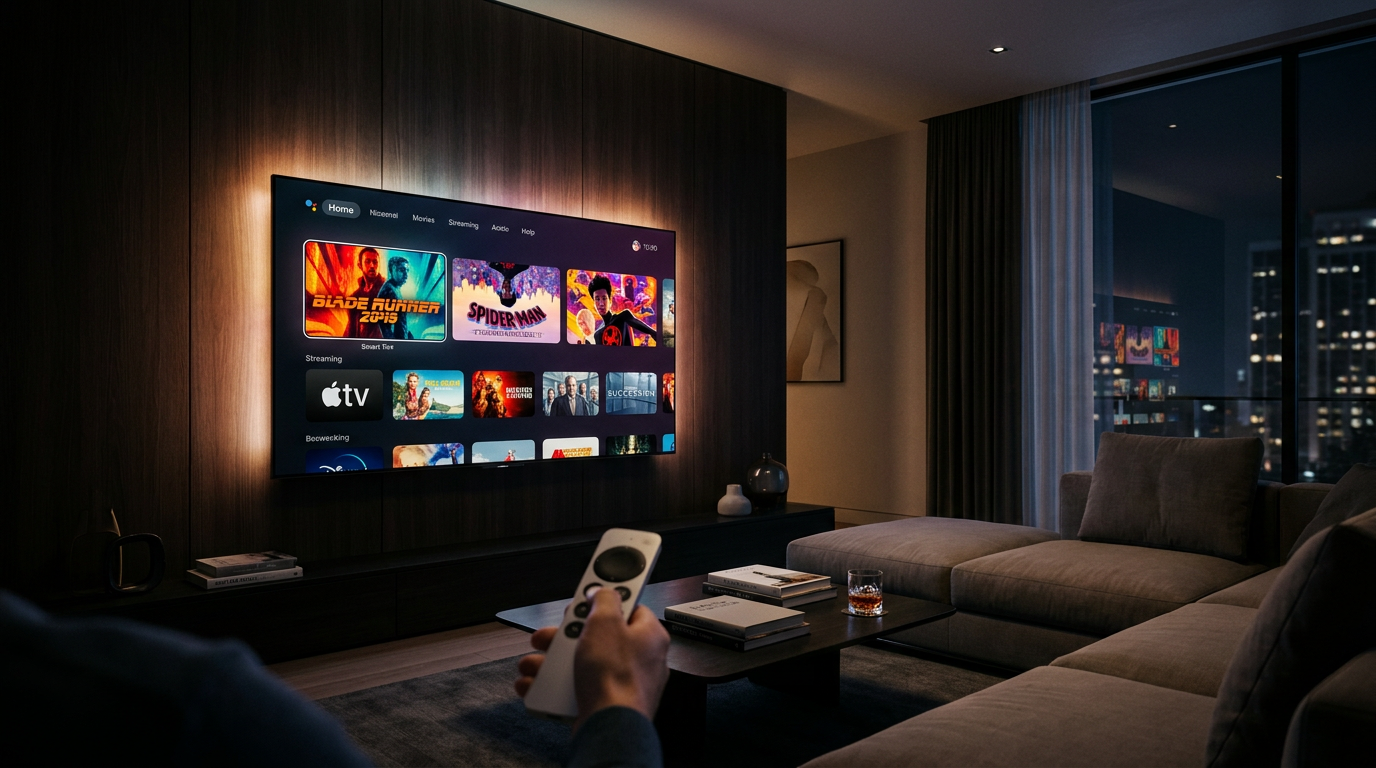
The era of the "streaming wars" defined by sheer content volume and aggressive subscriber acquisition is officially giving way to a more mature, consumer-friendly "reset phase" in 2026. For years, audiences have navigated a fragmented landscape of isolated apps, endless scrolling, and overwhelming content dumps. Now, as the market stabilizes, the industry's focus has shifted toward improving the actual viewing experience. Major platforms are prioritizing unified discovery, strategic bundling, and high-quality ad-supported tiers over the chaotic land-grabs of the early 2020s. This pivot comes as longtime market leaders face unprecedented pressure from surging mid-tier platforms and the relentless growth of free, creator-driven networks, forcing a fundamental rethink of how television is packaged and delivered to the modern living room.[2][3]
The shifting balance of power is most evident in the first quarter of 2026, which saw mid-tier platforms aggressively close the gap with legacy incumbents. According to global streaming data, platforms like Disney+ and Apple TV+ are surging across North America and Europe. In the United States, Netflix maintains a narrow lead at 19% market share, closely followed by Prime Video at 17% and Disney+ at 16%. The margins have never been tighter, reflecting a market where consumers are increasingly willing to rotate subscriptions based on quality rather than default loyalty. The most dramatic shift occurred in Mexico, where Disney+ officially overtook Netflix to become the country's most popular streaming platform, driven by a solid five-percentage-point annual growth.[1][5]

Apple TV+ has emerged as one of the most formidable growth forces of 2026, successfully carving out a dominant position through a strict "quality over quantity" mandate. The platform jumped from a 7% to 9% share in Canada, reached 13% in Mexico, and is now locked in a rare dead heat with HBO Max for the number four spot in the United States, with both holding a 12% market share. Industry reviewers note that while Apple TV+ lacks the massive back-catalog of licensed content found on legacy networks, its relatively affordable ad-free tier and pipeline of critically acclaimed, big-budget originals have made it an essential staple for cord-cutters. This focused approach has allowed mid-tier providers to thrive in an increasingly fragmented market without engaging in the unsustainable spending wars of the past.[1][4]
While premium subscription services battle for incremental market share, the most disruptive force in the 2026 living room is entirely free. YouTube has officially cemented its status as the "new television," with TV screens overtaking mobile devices as the primary medium for YouTube viewing in the United States. Holding a massive 12.5% of all TV use, YouTube commands the highest share of television viewership for any single streamer to date. The platform's success is driven by its unique blend of interactive formats, live streams, podcasts, and high-production creator content that sits right alongside traditional sports and sitcoms. For millions of younger viewers, the distinction between "internet video" and "television" has completely dissolved, positioning YouTube as the epicenter of modern living room culture.[3][6]

While premium subscription services battle for incremental market share, the most disruptive force in the 2026 living room is entirely free.
Following YouTube's lead, the broader ecosystem of Free Ad-Supported Streaming TV (FAST) is undergoing a significant evolution in 2026. After years of explosive, somewhat chaotic expansion where platforms boasted about offering hundreds of channels, the FAST sector has entered a phase of "disciplined optimization." The success metric is no longer the sheer volume of channels launched, but the efficiency with which platforms can monetize viewer attention and deliver a premium experience. Industry forecasts indicate that channel lineups are actually slimming down, with underperforming networks quietly sunsetting while stronger brands receive better promotion and placement. This curation effort is transforming FAST from a dumping ground for legacy reruns into a highly optimized, top-of-funnel engine that rivals traditional broadcast television in both quality and reliability.[2]
Despite the rise of free alternatives, American households remain heavily invested in premium subscriptions, subscribing to an average of six different SVOD (Subscription Video on Demand) services in 2026. This slight increase from previous years is largely driven by the proliferation of strategic bundling and discounted promotional rates offered by telecom providers and tech giants. However, as streaming becomes even more entrenched in daily life, platforms have felt emboldened to implement consistent price hikes. With standard ad-free plans now routinely approaching or exceeding the $20 mark, consumers are demanding more value, better interfaces, and less friction from their monthly investments. The tolerance for clunky apps and buried content has reached its absolute limit.[2][8]
This consumer exhaustion has elevated "visibility" to the single most critical challenge facing the entertainment industry in 2026. As one industry CEO noted, the primary hurdle is no longer producing enough content, but ensuring that audiences can actually find it. With discovery rapidly shifting away from individual apps and toward overarching TV operating systems and AI-driven voice assistants, even the biggest streamers are being forced to work much harder to secure placement on the home screen. The walled gardens that defined the early streaming era are slowly breaking down, as platforms realize that hiding their content behind isolated search bars actively harms their viewership in a hyper-competitive market.[2][7]

The ultimate beneficiary of this visibility crisis is the viewer, as the industry races toward the holy grail of "unified discovery." Nearly 40% of industry leaders now point to unified search—the ability to browse, discover, and launch content across multiple streaming services and live channels from a single, centralized interface—as the primary driver for the next generation of television operating systems. As smart TV manufacturers and tech giants integrate these unified interfaces, the burden of app-hopping is finally being lifted. The 2026 streaming landscape is ultimately defined by this convergence: a world where high-quality mid-tier platforms, optimized free channels, and seamless cross-platform search combine to create the frictionless television experience consumers were promised a decade ago.[2][7]
How we got here
December 2022
The streaming market hits peak saturation, leading to widespread subscriber fatigue and the beginning of industry-wide cost-cutting.
Mid 2024
Major platforms begin aggressively rolling out ad-supported tiers and cracking down on password sharing to boost profitability.
February 2025
YouTube officially declares that TV screens have overtaken mobile devices as the primary medium for viewing its content in the US.
January 2026
The FAST ecosystem enters a 'disciplined optimization' phase, prioritizing channel quality and user experience over sheer volume.
March 2026
Disney+ officially overtakes Netflix as the most popular streaming platform in Mexico, signaling the surging power of mid-tier platforms.
Viewpoints in depth
Mid-Tier & Premium Streamers
Focused on justifying subscription costs through high-quality original programming and strategic bundling.
Platforms like Apple TV+ and Disney+ argue that the era of "content for content's sake" is over. Instead of trying to match the sheer volume of legacy giants, these platforms are investing heavily in critically acclaimed originals and major franchise tentpoles. They believe that consumers are willing to pay premium prices—or tolerate ad-supported tiers—if the hit rate of the content is exceptionally high. This camp also heavily favors bundling partnerships with telecom providers to reduce churn and lock in long-term subscribers.
Free & Ad-Supported Platforms
Focused on capturing top-of-funnel attention and replacing traditional broadcast television with optimized, free channels.
The FAST (Free Ad-Supported Streaming TV) and creator-driven ecosystem, led by YouTube, views the subscription fatigue of modern consumers as their greatest opportunity. This camp argues that viewers still crave the "lean-back" experience of traditional television, but with modern personalization. By sunsetting underperforming channels and optimizing their interfaces, these platforms are positioning themselves not just as supplements to paid streaming, but as the primary anchor of the living room. They emphasize that removing the friction of a paywall is the ultimate competitive advantage.
Industry Analysts & Aggregators
Focused on solving the visibility crisis through unified discovery and cross-platform operating systems.
Tech analysts and UI developers argue that the biggest threat to the streaming industry isn't a lack of content, but a broken user experience. This camp believes the future belongs to the aggregators—smart TV operating systems and AI voice assistants that can break down the walled gardens of individual apps. They point out that forcing users to remember which show lives on which app actively suppresses viewership. Their goal is to create a seamless, unified home screen where content from Netflix, Apple TV+, and FAST channels sits side-by-side, entirely removing the friction of app-hopping.
What we don't know
- How legacy giants like Netflix will adjust their user interfaces to accommodate the industry push toward unified, cross-platform discovery.
- Whether the optimization of FAST channels will eventually lead to the reintroduction of cable-like bundle fees for premium ad-supported networks.
- How AI voice assistants will alter the algorithmic recommendation models that individual streaming apps currently rely on to keep viewers engaged.
Key terms
- SVOD
- Subscription Video on Demand. A service that gives users unlimited access to a wide range of programs for a monthly flat rate (e.g., Netflix, Disney+).
- FAST
- Free Ad-Supported Streaming TV. Services that offer linear channels and on-demand content for free, funded entirely by commercial breaks (e.g., Pluto TV, Tubi).
- Unified Discovery
- A user interface feature that aggregates content from multiple different streaming applications into a single, searchable home screen.
- Churn Rate
- The percentage of subscribers who cancel their streaming service subscription within a given time period.
- Top-of-Funnel
- In media, content or platforms designed to capture the broadest possible audience attention before directing them to more specialized or premium offerings.
Frequently asked
What is unified discovery in streaming?
Unified discovery refers to a centralized interface—often built into a smart TV or streaming device—that allows users to search, browse, and launch content across multiple different streaming apps from one single menu, eliminating the need to open individual apps.
Why are streaming platforms raising prices in 2026?
Platforms are raising prices to achieve profitability after years of operating at a loss to acquire subscribers. To justify these hikes, services are focusing on higher-quality original programming and offering cheaper, ad-supported tiers as an alternative.
What are FAST channels?
FAST stands for Free Ad-Supported Streaming TV. These are linear, scheduled channels that stream over the internet for free, similar to traditional broadcast or cable television, but are funded entirely by targeted digital advertisements.
Is YouTube considered a streaming service?
Yes. In 2026, YouTube is widely recognized as a dominant player in the streaming television market, holding the highest share of TV usage of any single platform as viewers increasingly watch creator content, live streams, and podcasts on their living room screens.
Sources
Source coverage
8 outlets
3 viewpoints surfaced








[1]TVBIZZ MagazineMid-Tier & Premium Streamers
The Q1 2026 Global Streaming Landscape: Disney+ and Apple TV+ Surge Amid Narrowing Gaps
Read on TVBIZZ Magazine →[2]Media Play NewsIndustry Analysts & Aggregators
Home Entertainment Forecast 2026: Streaming Flexes Its Muscle
Read on Media Play News →[3]Streaming MediaFree & Ad-Supported Platforms
Streaming Year in Review 2026
Read on Streaming Media →[4]Business InsiderMid-Tier & Premium Streamers
Best Streaming Services (2026)
Read on Business Insider →[5]JustWatchIndustry Analysts & Aggregators
Q1 2026 Global Streaming Market Share Report
Read on JustWatch →[6]NielsenIndustry Analysts & Aggregators
The Gauge: TV Usage and Streaming Trends 2026
Read on Nielsen →[7]Looper InsightsIndustry Analysts & Aggregators
2026 Streaming Visibility and UI Survey
Read on Looper Insights →[8]Parks AssociatesIndustry Analysts & Aggregators
U.S. SVOD Household Adoption Forecast 2026
Read on Parks Associates →
More in entertainment
See all 5 stories →Gaming Accessibility
Sony Unveils Shape-Shifting Controller Tech as Industry Pushes for Universal Accessibility Standards
7 sources

Box Office
Pixar's 'Toy Story 5' shatters box office records as summer movie season roars back
7 sources

Hollywood Tech
How AI and Virtual Production Are Resurrecting the Mid-Budget Movie
7 sources

Every angle. Every day.
Get entertainment stories with full source coverage and perspective breakdowns delivered to your inbox.