
Teamsters and DOJ Jointly Move to End 40-Year Federal Oversight
Following the re-election of General President Sean O'Brien, the Teamsters and the Justice Department have asked a federal judge to terminate the anti-corruption monitorship established in 1989.
The U.S. Department of Justice and the International Brotherhood of Teamsters have jointly filed a motion in federal court to terminate the government's nearly 40-year oversight of the union. The filing, submitted to the Southern District of New York, asks a judge to dissolve the remaining independent investigative and disciplinary offices that have monitored the 1.3-million-member organization since 1989.[1][2]
The historic motion arrives just one day after Sean O'Brien was re-elected unopposed as the union's General President at the Teamsters' convention in Las Vegas. O'Brien, who first won the presidency in 2021 on a platform of aggressive organizing and contract enforcement, secured another five-year term alongside General Secretary-Treasurer Fred Zuckerman.[4]
The federal monitorship traces its origins to a landmark civil racketeering lawsuit brought by then-U.S. Attorney Rudy Giuliani. In the 1980s, federal prosecutors alleged that organized crime families had deeply infiltrated the union's leadership, utilizing its massive pension funds for illicit activities and maintaining control through a "campaign of fear."[2]
To avoid a devastating trial, the Teamsters agreed to a sweeping consent decree in 1989. The settlement established a powerful framework of court-appointed independent officers who were granted broad authority to investigate corruption, expel members with mafia ties, and oversee the union's internal elections.[2][3][4]
For decades, the monitorship fundamentally shaped the union's internal politics, leading to the expulsion of hundreds of officials and the implementation of direct rank-and-file voting for top leadership positions. However, union leaders have long argued that the oversight, while initially necessary, eventually became an expensive and unwarranted intrusion into a reformed organization.[1][3]
The process of unwinding the government's control officially began in 2015, when the DOJ and the Teamsters reached a "Final Agreement" to gradually phase out the strict consent decree. That agreement transitioned the oversight duties to an Independent Investigations Officer (IIO) and an Independent Review Officer (IRO), with a mandate to eventually return full autonomy to the union once specific benchmarks were met.[2]
In Wednesday's joint filing, both the government and the union asserted that the Teamsters have successfully met those benchmarks. The motion states that the union has "demonstrated its ability to conduct effective internal investigations and audits," justifying the complete elimination of the IIO and IRO roles.[1][4]
If the federal judge approves the motion, the Teamsters will regain absolute control over their internal disciplinary and electoral functions for the first time in a generation. Legal experts anticipate that the court will grant the request, given that the Justice Department itself is co-sponsoring the dissolution.[2][3]
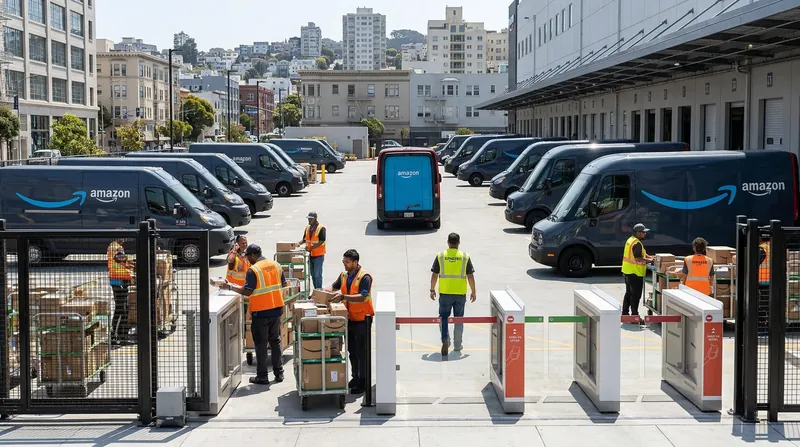
The push for full autonomy aligns with O'Brien's broader strategy to project strength and independence as the union gears up for massive organizing campaigns. Following a high-profile contract victory at UPS, the Teamsters have increasingly focused their resources on unionizing Amazon facilities and other non-union logistics giants.[2][4]
Despite his unopposed re-election, O'Brien's tenure has not been entirely without internal friction. Some rank-and-file members and progressive factions within the union have criticized his recent political maneuvering, particularly his decision to speak at the 2024 Republican National Convention and his alliances with certain GOP lawmakers.[4]
Addressing these tensions during his post-election speech in Las Vegas, O'Brien called for absolute solidarity among the membership. "The noise online must come to an end," O'Brien told the convention delegates, arguing that internal divisions only serve to benefit the massive corporations sitting across the bargaining table.[1]
Viewpoints in depth
Teamsters Leadership
The union argues it has fully reformed and no longer needs costly government oversight.
For years, Teamsters leadership has maintained that the 1989 consent decree, while historically necessary to root out organized crime, had become an obsolete and expensive burden. Under Sean O'Brien's administration, the union emphasizes that it has institutionalized rigorous internal audits, independent disciplinary procedures, and democratic election standards. By jointly filing to end the monitorship, the leadership signals to both its members and corporate adversaries that the Teamsters are a fully autonomous, modern labor organization capable of policing itself.
Justice Department
Prosecutors agree the union has met the legal benchmarks required to end the monitorship.
The Department of Justice's willingness to co-sign the motion indicates that federal regulators are satisfied with the union's internal reforms. The 2015 'Final Agreement' laid out specific milestones the union needed to hit regarding internal investigations and the handling of corruption allegations. By moving to dissolve the Independent Investigations Officer and Independent Review Officer roles, the DOJ is formally acknowledging that the systemic mafia influence that prompted the 1989 RICO lawsuit has been successfully eradicated.
Labor Watchdogs & Rank-and-File
Observers note the historic milestone but point to ongoing debates over the union's political direction.
While the end of federal oversight is widely celebrated across the labor movement as a victory for union independence, labor historians and internal watchdogs are closely monitoring how Sean O'Brien wields this consolidated power. O'Brien ran unopposed for his second term, but his recent bipartisan outreach—including speaking at the 2024 Republican National Convention—has sparked debate among progressive factions. With the federal backstop removed, internal democratic mechanisms will be the sole check on leadership as the union navigates highly polarized political waters.
Key points
- The Teamsters and the DOJ filed a joint motion to end the federal monitorship that has overseen the union since 1989.
- The filing occurred one day after Sean O'Brien was re-elected unopposed as the union's General President.
- The original 1989 consent decree was established to root out organized crime influence and corruption within the union's leadership.
- If approved by a federal judge, the union will regain full control over its internal disciplinary and electoral processes.
What we don’t know
- Exactly when the federal judge in the Southern District of New York will rule on the joint motion.
- How the complete removal of federal oversight will impact internal union politics and future leadership challenges.
How we got here
1989
The U.S. government files a RICO lawsuit against the Teamsters, resulting in a consent decree that establishes federal oversight to root out mafia influence.
2015
The DOJ and the Teamsters agree to a 'Final Agreement' that begins a gradual phase-out of the strict federal monitorship.
2021
Sean O'Brien is elected General President, promising a more militant approach to organizing and contract negotiations.
June 16, 2026
Sean O'Brien is re-elected unopposed for a second five-year term at the union's convention in Las Vegas.
June 17, 2026
The Teamsters and the DOJ jointly file a motion to completely end the remaining federal oversight.
- Union Leadership
- Argues the union has successfully eradicated corruption, built rigorous internal checks, and deserves full autonomy.
- Federal Regulators
- Acknowledge that the union has met the requirements of the 2015 phase-out agreement and no longer requires external monitors.
- Labor Analysts
- Note the historic significance of closing the 1989 chapter while observing O'Brien's consolidation of power and recent political maneuvering.
Perspectives this story doesn't cover
- Rank-and-file dissidents
- Amazon and UPS management
Sources
Source coverage
4 outlets
3 viewpoints surfaced




- [1]ReutersUnion Leadership
Teamsters, US Justice Dept seek to end decades of federal oversight
Read on Reuters → - [2]The New York TimesLabor Analysts
With O'Brien Re-Elected, Teamsters and D.O.J. Ask Judge to End Mafia-Era Oversight
Read on The New York Times → - [3]The Wall Street JournalFederal Regulators
Teamsters Seek Full Autonomy as DOJ Agrees to Lift 1989 Consent Decree
Read on The Wall Street Journal → - [4]Fox NewsUnion Leadership
99-year-old WWII veteran awarded Purple Heart after waiting more than 80 years
Read on Fox News →
More in News & Politics
See all →Labor Law
NLRB Rules Whole Foods Legally Banned Black Lives Matter Displays, Narrowing Protected Activity
3 sources

Administrative State
Supreme Court Grants President Power to Fire Agency Heads, Upending Federal Labor and Regulatory Law
5 sources
PECO Strike
Philadelphia Utility Workers Announce July 4 Strike, Threatening Power Grid for 1.7 Million Ratepayers
4 sources
Labor Law
NLRB Judge Orders Amazon to Bargain with Teamsters, Setting Up Showdown Over Key Labor Precedent
4 sources
Comments
Every angle. Every day.
Get News & Politics stories with full source coverage and perspective breakdowns, free every day.