
US-Iran Diplomatic Talks Stall as Regional Clashes Disrupt Switzerland Summit
A highly anticipated meeting between US and Iranian officials in Switzerland was canceled following renewed violence between Israel and Hezbollah. The diplomatic setback threatens a broader Middle East peace agreement and has triggered a sharp spike in global energy prices.
By Factlen Editorial Team
- US Administration
- Argues that a negotiated settlement with Iran is essential for long-term regional stability and that military action alone cannot solve security issues.
- Iranian Government
- Conditions further diplomacy on the US using its leverage to halt Israeli military operations against its regional allies, particularly Hezbollah.
- Israeli Security Establishment
- Prioritizes immediate military deterrence against Hezbollah in Lebanon and remains deeply skeptical of any US-Iran deal that might enrich Tehran.
What's not represented
- · Lebanese Civilians
- · European Energy Importers
Why this matters
The suspension of direct US-Iran diplomacy increases the risk of a wider regional conflict that could disrupt global oil supplies and draw the US military into a deeper Middle East engagement. For consumers, the immediate impact is a spike in energy prices driven by market fears of a prolonged standoff.
Key points
- A planned US-Iran diplomatic summit in Switzerland was canceled due to violence in Lebanon.
- Iran demanded the US ensure Israel ends its attacks on Hezbollah before diplomacy can proceed.
- Vice President JD Vance's trip was grounded, prompting him to defend the diplomatic approach to Israeli critics.
- Israel and Hezbollah have since agreed to renew their temporary ceasefire.
- The diplomatic breakdown caused a sharp spike in global energy prices.
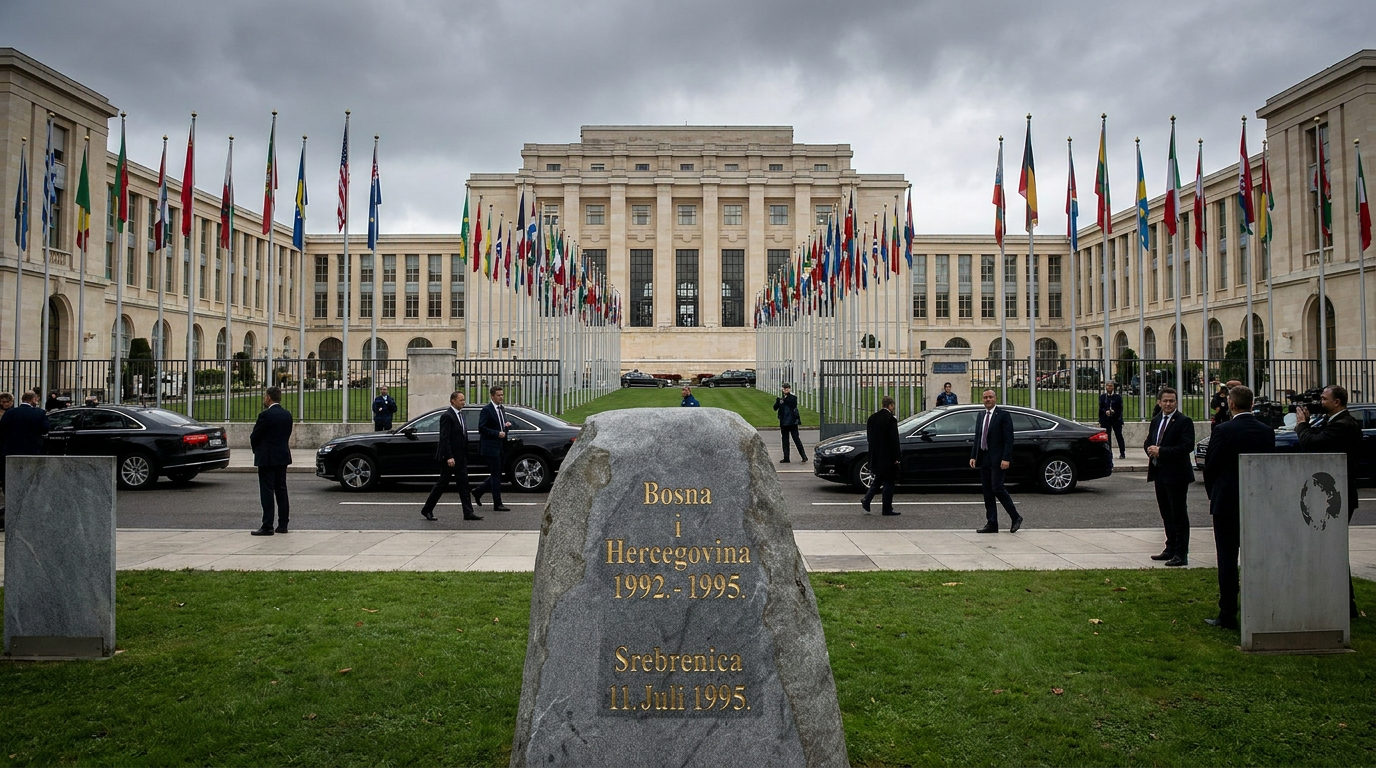
The highly anticipated diplomatic summit between the United States and Iran, scheduled to take place in Switzerland, has been abruptly canceled. The collapse of the meeting follows a sudden escalation of violence between Israel and Hezbollah along the Lebanese border, which derailed weeks of delicate back-channel negotiations.[1]
The diplomatic back-and-forth between Washington and Tehran was aimed at hammering out the details of a comprehensive Middle East peace plan. Instead, the breakdown has sent global energy prices soaring and raised fears of broader economic instability as the region braces for potential further conflict.[1][4]
The immediate trigger for the cancellation was the renewed fighting in Lebanon. Iranian officials made it clear that they would not proceed with direct talks while their regional ally, Hezbollah, was under active military engagement from Israel.[3]
Tehran’s position was articulated by the Iranian deputy foreign minister, who stated that while Iran remains "ready to move forward" on diplomacy with the United States, the war must end on all fronts before a broader agreement can be signed.[3]

Specifically, Iran has demanded that the US administration use its leverage to ensure Israel ceases its military operations in Lebanon. This condition effectively links the success of the US-Iran bilateral talks to the volatile security situation on the Israel-Lebanon border, turning a local proxy conflict into a veto on global diplomacy.[3]
The cancellation grounded a planned diplomatic trip by US Vice President JD Vance, who was heavily involved in the negotiations. The grounding of his flight underscores the suddenness of the diplomatic collapse and the fragility of the peace framework Washington has been trying to build.[1]
In response to the breakdown, Vice President Vance delivered a stark message to Israeli critics of the proposed Iran deal. Addressing the security concerns raised by the Israeli establishment, Vance argued that military action alone cannot resolve the region's deep-rooted conflicts.[2]
In response to the breakdown, Vice President Vance delivered a stark message to Israeli critics of the proposed Iran deal.
"You can't kill your way out of national security problems," Vance stated, defending the administration's push for a negotiated settlement with Tehran. His comments highlight a growing friction between Washington's diplomatic strategy and Israel's reliance on military deterrence.[2]
For the Israeli security establishment, the primary focus remains neutralizing the immediate threat posed by Hezbollah's rocket arsenal in southern Lebanon. Many in Israel view the proposed US-Iran deal with deep skepticism, fearing it would enrich Tehran without sufficiently curbing its support for proxy militias.[5]
Despite the collapse of the Switzerland summit, there was a minor de-escalation on the ground shortly after the cancellation. Following intense international pressure, Israel and Hezbollah agreed to renew their temporary ceasefire, pausing the immediate cross-border exchanges.[1][5]
However, diplomatic analysts caution that a temporary ceasefire in Lebanon may not be enough to immediately salvage the US-Iran talks. The trust deficit between Washington and Tehran has widened, and the logistical window for a high-level summit is narrow.[4][6]
The uncertainty surrounding the peace plan has immediately spilled over into global financial markets. Energy traders, fearing that a prolonged diplomatic stalemate could lead to disruptions in the Strait of Hormuz, aggressively bid up the price of crude oil.[1][6]

Brent crude, the international benchmark for oil prices, saw a sharp intraday spike as news of the canceled summit broke. The market reaction underscores how deeply intertwined Middle Eastern geopolitics are with global inflation and consumer energy costs.[4][6]

How we got here
Early June 2026
The US and Iran make progress in back-channel talks, agreeing to a formal summit in Switzerland.
Mid-June 2026
Clashes erupt between Israel and Hezbollah along the southern Lebanese border.
June 19, 2026
The Switzerland meeting is officially canceled, and Vice President JD Vance's trip is grounded.
June 20, 2026
Following international pressure, Israel and Hezbollah agree to renew their temporary ceasefire.
Viewpoints in depth
US Administration's View
Diplomacy is the only viable path to long-term stability in the Middle East.
The US administration, represented by figures like Vice President JD Vance, argues that military deterrence has its limits. They believe that a comprehensive agreement with Iran is necessary to prevent a wider regional war and to stabilize global energy markets. Vance's assertion that "you can't kill your way out of national security problems" reflects a strategic pivot toward negotiation, even when dealing with adversarial nations, to avoid the economic and human costs of perpetual conflict.
Iranian Government's View
Diplomacy cannot proceed while regional allies are under attack.
Tehran views its network of regional allies, including Hezbollah in Lebanon, as a critical component of its national defense strategy. Iranian officials insist that the US cannot expect to compartmentalize diplomacy; if Washington wants a broader peace deal, it must use its influence to restrain Israeli military operations. By conditioning the Switzerland talks on a ceasefire in Lebanon, Iran is testing the limits of US leverage over Israel.
Israeli Security Establishment's View
Military deterrence against immediate threats must take precedence over flawed diplomatic deals.
Israeli defense officials are deeply skeptical of the US-led diplomatic push, fearing that any agreement will ultimately enrich Iran without dismantling the immediate threats on Israel's borders. For Israel, the rocket arsenal held by Hezbollah in southern Lebanon is an existential security issue that requires active military management. They view the US pressure to halt operations in Lebanon as a dangerous concession that prioritizes a theoretical peace deal over tangible security.
What we don't know
- Whether the Switzerland summit will be rescheduled or if the diplomatic framework has permanently collapsed.
- How long the renewed ceasefire between Israel and Hezbollah will hold.
- The exact terms of the peace plan that the US and Iran were preparing to discuss.
Key terms
- Hezbollah
- A heavily armed Lebanese militant group and political party that is closely allied with and backed by Iran.
- Diplomatic Back-Channel
- Secret or unofficial communications between nations used to negotiate sensitive issues before formal, public summits take place.
- Brent Crude
- A major trading classification of sweet light crude oil that serves as a benchmark price for purchases of oil worldwide.
Frequently asked
Why was the Switzerland meeting canceled?
The meeting was canceled after clashes erupted between Israel and Hezbollah in Lebanon. Iran refused to proceed with direct talks while its regional ally was under military engagement.
What did JD Vance say about the situation?
Vice President JD Vance addressed Israeli critics of the diplomatic push, stating that "you can't kill your way out of national security problems," emphasizing the need for a negotiated settlement.
How does this affect global oil prices?
The breakdown in diplomacy has sent energy prices soaring, as markets fear a prolonged conflict could disrupt oil supplies from the Middle East.
Sources
Source coverage
6 outlets
3 viewpoints surfaced






[1]The GuardianIsraeli Security Establishment
Trump news at a glance: Israel-Hezbollah clashes ground Vance trip
Read on The Guardian →[2]Fox NewsUS Administration
JD Vance tells Israeli critics 'you can't kill your way' out of national security problems
Read on Fox News →[3]Al JazeeraIranian Government
Iran war live: Tehran says US must ensure Israel ends attacks on Lebanon
Read on Al Jazeera →[4]ReutersIsraeli Security Establishment
Oil prices surge as US-Iran Switzerland summit collapses over Lebanon violence
Read on Reuters →[5]The Times of IsraelIsraeli Security Establishment
Israel and Hezbollah agree to renew ceasefire as US-Iran talks falter
Read on The Times of Israel →[6]BloombergUS Administration
Global markets on edge after diplomatic breakdown in Geneva
Read on Bloomberg →
Every angle. Every day.
Get news politics stories with full source coverage and perspective breakdowns delivered to your inbox.