
The Rise of the 'Cozy Web': Why the Internet is Retreating into Digital Third Places
As the public internet becomes increasingly crowded by algorithms and AI-generated content, users are migrating to private, gatekept communities. These 'digital third places' offer a refuge from the noise, fundamentally reshaping how online culture and connection function.
By Factlen Editorial Team
- Digital Community Builders
- Advocates who see private digital spaces as essential refuges for authentic human connection.
- Tech & Culture Analysts
- Researchers focused on how the Cozy Web disrupts traditional internet economics and information flow.
- Societal Health Advocates
- Observers concerned that digital spaces cannot fully replace the physical intimacy of traditional third places.
What's not represented
- · Local small business owners whose physical venues are losing foot traffic to digital alternatives.
- · Elderly populations who may lack the digital literacy to access the Cozy Web, leaving them isolated from both physical and digital third places.
Why this matters
Understanding the shift toward the 'Cozy Web' explains why the public internet feels increasingly empty or hostile, and where actual human culture is being incubated. For anyone feeling isolated online, these digital third places offer a roadmap to finding genuine, lower-stakes communities.
Key points
- Users are increasingly abandoning public social media platforms in favor of private, gatekept communities known as the 'Cozy Web'.
- This migration is driven by the 'Dark Forest' nature of the public internet, where context collapse and algorithms create a hostile environment.
- Digital spaces like Discord and Twitch are functioning as modern 'third places,' replacing declining physical venues like cafes and clubs.
- The shift to private channels has created an attribution crisis, with up to 84% of digital influence happening in untrackable 'dark social' spaces.
- While digital communities offer deep connection, experts warn they lack the physical intimacy required to fully solve the loneliness epidemic.
The modern web often feels less like a town square and more like a crowded, neon-lit arena where every interaction is optimized for maximum friction. Users are increasingly exhausted by the performative nature of public platforms, where algorithms reward outrage and every post is subject to the scrutiny of millions. In response to this hyperactive digital environment, a quiet but massive migration is underway. People are packing up their digital belongings and retreating from the global stage, seeking out smaller, more intimate spaces where they can simply exist without having to perform.[1]
This retreat is best understood through the 'Dark Forest' theory of the internet, a concept adapted by Kickstarter co-founder Yancey Strickler from Liu Cixin’s science fiction novel The Three-Body Problem. In the novel, the universe is a dark forest where revealing your location invites immediate destruction by unseen predators. Applied to the modern web, the theory posits that public platforms have become hostile environments filled with bots, trolls, and bad-faith actors. In this digital dark forest, making yourself visible—by sharing a sincere thought or a personal moment—makes you prey. Consequently, users are learning to stay quiet in public, reserving their true selves for safer environments.[2][8]
The hostility of the public web is exacerbated by a phenomenon known as 'context collapse.' On globalized platforms like X or TikTok, a piece of content intended for a specific, understanding audience is routinely broadcast to millions of strangers who lack the shared background to interpret it correctly. A sarcastic joke meant for close friends can easily be stripped of its nuance, weaponized, and used to derail a career. Because the public internet flattens all audiences into a single, undifferentiated mass, the psychological stakes of participating have become unsustainably high, driving the search for spaces where context can be restored.[8]
The destination for this mass migration is what digital theorists Venkatesh Rao and Maggie Appleton have termed the 'Cozy Web.' If the public internet is the dangerous forest, the Cozy Web represents the underground burrows where users seek warmth and shelter. It is a loose archipelago of private group chats, invite-only Discord servers, locked subreddits, and encrypted WhatsApp threads. Unlike the public web, the Cozy Web is heavily gatekept, entirely non-indexed by search engines like Google, and fundamentally messy. It is an environment built for human connection rather than algorithmic scale.[2][8]

Inside the Cozy Web, the architecture of interaction is radically different. There are no retweet buttons designed to optimize content for virality, and no algorithmic feeds sorting posts by engagement metrics. Instead, communication relies on 'human protocol'—copy-pasting text, sharing screenshots, and referencing deep inside jokes. Because the stakes are significantly lower, users experience a sense of psychological safety. A bad take or an awkward comment in a group chat of ten friends dies instantly, allowing for the kind of depressurized conversation that is necessary for the genuine incubation of culture.[2]
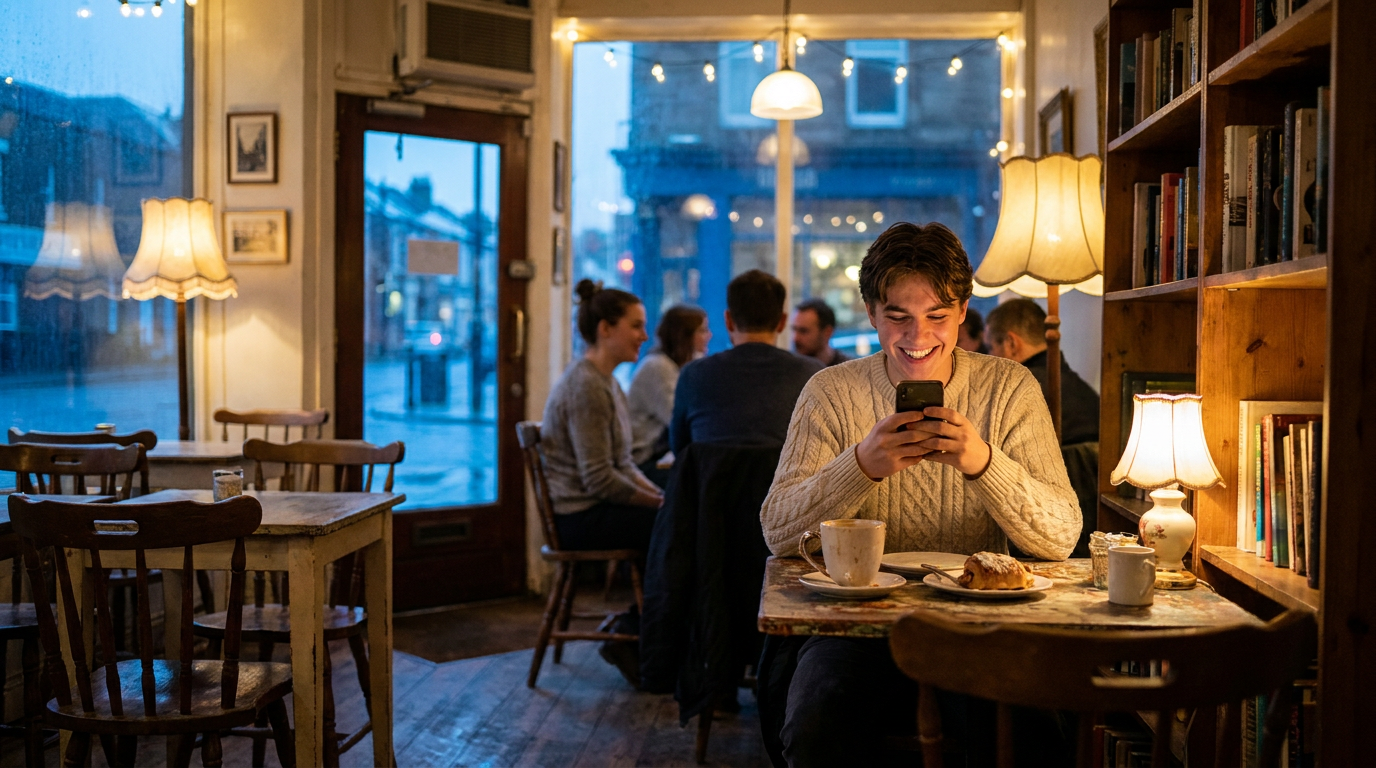
This digital migration is happening alongside a profound crisis in the physical world: the vanishing of the traditional 'third place.' Coined by American sociologist Ray Oldenburg in 1989, the third place refers to the informal public gathering spots outside of the home (the first place) and the workplace (the second place). Historically, these were the local cafes, pubs, public libraries, and neighborhood parks where communities formed organically. However, economic pressures, rising real estate costs, and the commercialization of public space have systematically eroded these vital physical environments over the past few decades.[3][5]
The disappearance of physical third places has contributed to a severe societal toll. In 2023, the U.S. Surgeon General issued a stark advisory declaring loneliness and isolation a public health epidemic, noting that a lack of social connection can increase the risk of premature death by 29%—a danger comparable to smoking. By 2024, reports indicated that 17% of Americans claimed to have zero close friends, a staggering increase from just 1% in 1990. As physical spaces for spontaneous connection vanish, the human need for a 'tribe' has not disappeared; it has simply been forced to find new avenues for fulfillment.[3]

The disappearance of physical third places has contributed to a severe societal toll.
To fill this void, the Cozy Web has evolved into a network of 'digital third places.' Platforms that began as niche utilities have transformed into virtual living rooms. Twitch, for example, is no longer just a site for passively watching video games; it functions as a highly interactive ecosystem where millions gather daily to participate, co-create, and belong. Similarly, Discord servers have become the modern equivalent of the neighborhood clubhouse, hosting communities centered around everything from music production to wildlife conservation.[4][7]
These digital third places offer distinct advantages over their physical predecessors. They transcend geographical boundaries, allowing individuals with highly specific or niche interests to find their exact tribe, regardless of where they live. For remote workers or those with unconventional schedules, digital communities provide a low barrier to entry for socialization, accessible at any hour of the day. This accessibility has transformed online interaction from a mere tool for information retrieval into a foundational destination for modern social life.[4][5]
However, the shift toward the Cozy Web has created a massive blind spot for the industries that rely on tracking human behavior. Because the Cozy Web is private and encrypted, it breaks traditional digital analytics. When a user copies a link from a website and pastes it into a WhatsApp group or a Discord channel, the referral data is stripped away. Analytics software misclassifies this traffic as 'Direct,' creating the illusion that users are manually typing URLs into their browsers, when in reality, they are following recommendations from their private networks.[2]
This phenomenon, often referred to as the 'Direct Traffic Illusion,' reveals a fundamental misunderstanding of modern cultural influence. Studies suggest that up to 84% of actual sentiment formation, word-of-mouth recommendations, and purchasing decisions happen in this untrackable 'dark social' layer. Marketers and cultural analysts who focus solely on the public metrics of likes and shares are optimizing for the tip of the iceberg, entirely missing the submerged, private conversations where true consensus is built and decisions are actually made.[2]

The urgency to retreat into the Cozy Web is being further accelerated by the rapid rise of generative AI. As large language models become ubiquitous, the public web is increasingly flooded with synthetic, AI-generated content. This deluge diminishes the possibility for authentic human connection in public spaces, making it difficult to distinguish between a genuine user and an automated bot. In response, private digital communities are becoming even more valuable, serving as verified sanctuaries where human culture can be maintained within the specific idioms and norms of a trusted group.[8]
Recognizing this shift, a new generation of protocol builders and decentralized technology advocates are actively designing infrastructure specifically for the Cozy Web. Rather than chasing the viral scale of Web 2.0 platforms, these developers are focusing on 'purpose-built apps' that prioritize social coherence, user safety, and data sovereignty. By creating secure containers where people feel safe to argue, collaborate, and share, they are laying the technical groundwork for a more resilient and human-centric internet.[6]
Despite the undeniable utility of digital third places, sociologists and health advocates warn that they are not a perfect substitute for physical community. The primary critique is that digital spaces lack 'somatic resonance'—the physical intimacy, spontaneous body language, and shared silence that primates biologically rely on for deep bonding. While a Discord server can provide intellectual stimulation and a sense of belonging, it cannot replicate the organic, serendipitous interactions that occur when sharing a physical space with neighbors.[3]

Because of this limitation, the most successful models of community moving forward may be 'hybrid spaces' that bridge the gap between the Cozy Web and the physical world. Increasingly, digital third places are being used as organizational tools to facilitate real-world meetups. A community that bonds online over a shared interest might coordinate local gatherings, using the digital space to maintain daily connection while relying on physical meetups to build deeper trust and somatic resonance.[5]
Ultimately, the rise of the Cozy Web represents a profound reclamation of agency by internet users. By rejecting the performative demands of the public square and moving conversations underground, people are prioritizing authenticity, privacy, and meaningful connection. While the digital dark forest remains a daunting landscape, the proliferation of these hidden, cozy burrows proves that the human desire for genuine community will always find a way to adapt and thrive.[1][2][8]
How we got here
1989
Sociologist Ray Oldenburg coins the term 'Third Place' to describe essential physical community spaces outside of home and work.
2019
Yancey Strickler popularizes the 'Dark Forest' theory of the internet, describing the public web as a hostile environment.
2020-2022
Pandemic lockdowns accelerate the mass adoption of Discord and virtual spaces as primary social hubs.
2023
The U.S. Surgeon General issues an advisory on the epidemic of loneliness and isolation.
2025-2026
The 'Cozy Web' solidifies as a dominant cultural force, with users actively abandoning public social media for gatekept communities.
Viewpoints in depth
Digital Community Builders
Advocates who see private digital spaces as essential refuges for authentic human connection.
This camp argues that the public internet is fundamentally broken by algorithmic incentives and context collapse. By retreating to the 'Cozy Web,' users can rebuild high-trust environments. They view platforms like Discord and decentralized protocols not as isolating, but as the necessary infrastructure for modern 'tribes' to form without the pressure of performative virality.
Societal Health Advocates
Observers concerned that digital spaces cannot fully replace the physical intimacy of traditional third places.
While acknowledging the utility of online communities, this perspective emphasizes the biological need for 'somatic resonance'—the physical presence, shared silence, and body language that digital avatars cannot replicate. They warn that relying solely on the Cozy Web could exacerbate the loneliness epidemic if it entirely replaces physical cafes, parks, and local clubs.
Tech & Culture Analysts
Researchers focused on how the Cozy Web disrupts traditional internet economics and information flow.
For this group, the migration underground is a structural earthquake. They highlight the 'Direct Traffic Illusion,' noting that the vast majority of cultural influence and word-of-mouth now happens in untrackable dark social channels. Furthermore, they predict that as AI floods the public web with synthetic content, the Cozy Web will become the only reliable space for verifiable human culture.
What we don't know
- Whether virtual and augmented reality can eventually replicate the 'somatic resonance' missing from current digital third places.
- How public platforms will adapt their business models as genuine human culture continues to migrate behind closed doors.
- The long-term psychological effects of replacing local, geographically-bound communities with global, interest-based digital tribes.
Key terms
- Cozy Web
- A network of private, gatekept digital spaces like group chats and Discord servers where users seek refuge from the public internet.
- Dark Forest Theory
- The concept that the public internet is a hostile environment where revealing oneself invites algorithmic or social attacks.
- Third Place
- A sociological term for informal public gathering spaces outside of the home (first place) and workplace (second place).
- Context Collapse
- When a message intended for a specific audience is viewed by a broader public that lacks the shared understanding to interpret it correctly.
- Dark Social
- Web traffic and cultural influence that occurs in private channels (like WhatsApp or Slack) and cannot be tracked by traditional analytics.
Frequently asked
What is the difference between the public web and the Cozy Web?
The public web (like X or public Instagram) is indexed, searchable, and algorithmically sorted for engagement. The Cozy Web consists of private, invite-only spaces that prioritize human interaction and shared context.
Can digital third places cure loneliness?
They offer valuable connection and a sense of belonging, especially for niche interests. However, experts warn they lack the physical 'somatic resonance' of in-person interactions, making them a supplement rather than a complete cure.
Why is the Cozy Web a problem for marketers?
Because interactions happen in private, encrypted, or closed platforms, analytics tools cannot track where users are coming from, leading to a massive underestimation of word-of-mouth influence.
Sources
Source coverage
8 outlets
3 viewpoints surfaced








[1]Factlen Editorial TeamTech & Culture Analysts
Synthesis by Factlen editorial team
Read on Factlen Editorial Team →[2]MediumTech & Culture Analysts
The Dark Forest and the Cozy Web: A Psychological Retreat
Read on Medium →[3]CofC ExplainedSocietal Health Advocates
The Vanishing Third Place and the Search for Connection
Read on CofC Explained →[4]Easy Reader NewsDigital Community Builders
The Future of Interactive Socialization
Read on Easy Reader News →[5]27genSocietal Health Advocates
Impact of Digital Third Places on Traditional Social Spaces
Read on 27gen →[6]Internet ArchiveDigital Community Builders
Building the Cozy Web and Decentralized Tech
Read on Internet Archive →[7]Cannes LionsDigital Community Builders
Digital Third Places: How Live Connections Shape Tomorrow's Trends
Read on Cannes Lions →[8]Rob KnightTech & Culture Analysts
The Cozyweb, AI, and the Dark Forest
Read on Rob Knight →

Every angle. Every day.
Get culture stories with full source coverage and perspective breakdowns delivered to your inbox.