
US-Iran Peace Talks Postponed as Israel and Hezbollah Renew Fragile Ceasefire
Technical negotiations between Washington and Tehran in Switzerland were abruptly delayed after a deadly flare-up in Lebanon threatened a broader regional peace agreement. Following U.S. intervention, Israel and Hezbollah agreed to halt hostilities, potentially clearing the way for talks to resume.
By Factlen Editorial Team
- U.S. Mediators
- Focused on salvaging the 14-point memorandum and stabilizing the global economy.
- Israeli Government
- Highly skeptical of the U.S.-Iran deal and insistent on maintaining a security buffer in Lebanon.
- Iranian Negotiators
- Demanding concrete guarantees that Israeli military operations will cease before proceeding with talks.
- Global Observers
- Highlighting the fragility of the peace process and the massive economic stakes involved.
What's not represented
- · Lebanese civilians displaced by the ongoing airstrikes and buffer zone occupation
- · European energy markets dependent on the reopening of the Strait of Hormuz
Why this matters
The delay underscores the fragility of the 14-point memorandum of understanding aimed at ending the U.S.-Iran war and reopening the Strait of Hormuz. A collapse of the agreement could reignite a conflict that has already severely disrupted global energy markets and threatened widespread economic chaos.
Key points
- U.S.-Iran technical talks in Switzerland were abruptly postponed due to renewed violence in Lebanon.
- Hezbollah killed four Israeli soldiers, prompting Israeli airstrikes that killed at least 18 people.
- Iran demanded guarantees that Israel would halt hostilities before proceeding with the peace negotiations.
- Following U.S. intervention, Israel and Hezbollah agreed to a renewed ceasefire at 4 p.m. local time.
- Israel maintains it will keep forces in a southern Lebanon buffer zone until Hezbollah is dismantled.
- The delay threatens a 14-point agreement aimed at ending the U.S.-Iran war and reopening the Strait of Hormuz.
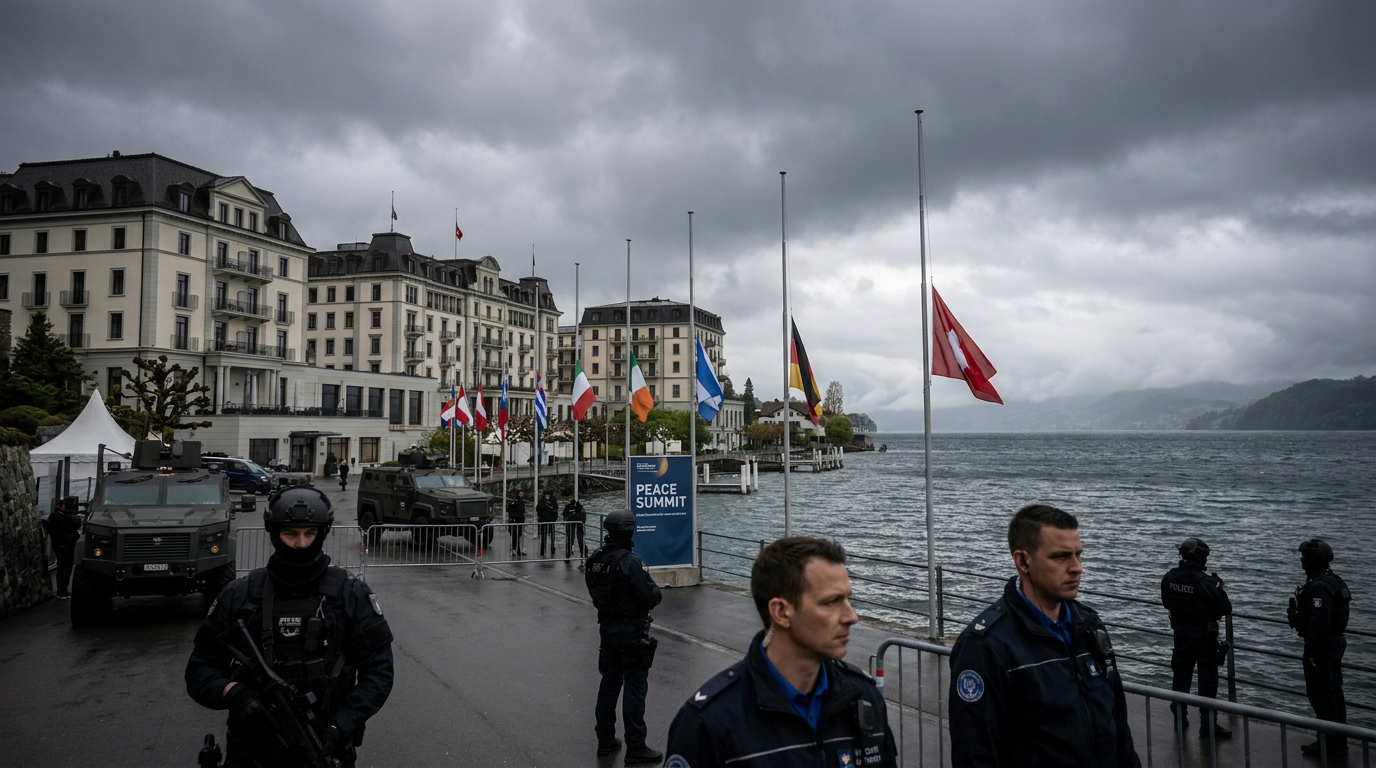
A highly anticipated round of technical negotiations between the United States and Iran was abruptly postponed on Friday, temporarily derailing international efforts to finalize a permanent end to their recent war. U.S. Vice President J.D. Vance, who was scheduled to lead the American diplomatic delegation, scrapped his travel plans to the Swiss resort of Obbürgen just as his team and a press pool had gathered at Joint Base Andrews. The Swiss Foreign Ministry officially confirmed the delay, citing a sudden and deadly explosion of violence in the Middle East that threatened to unravel the fragile 14-point memorandum of understanding signed by Washington and Tehran earlier in the week.[1][2][4]
The diplomatic crisis was triggered by a severe breakdown of the existing truce in Lebanon, which quickly spiraled into a deadly exchange of fire. According to the Israel Defense Forces, Hezbollah militants struck an Israeli military tank near the border, killing four soldiers. In immediate response, Israel launched a massive wave of retaliatory airstrikes across southern Lebanon and the Bekaa Valley, targeting what it identified as Hezbollah infrastructure. The Lebanese Health Ministry reported that the strikes killed at least 18 people, with some local estimates placing the death toll as high as 47, plunging the region back into active conflict and immediately halting the broader U.S.-Iran peace process.[1][2][3]
Iranian officials quickly conditioned their participation in the Swiss talks on an immediate cessation of Israeli military operations in Lebanon. Iranian negotiators demanded concrete guarantees that the hostilities would end, as explicitly outlined in the overarching U.S.-Iran agreement, which mandates a comprehensive ceasefire across all regional fronts. Iran's semi-official Tasnim news agency reported that Tehran's delegation would not travel to Geneva until they saw tangible signs that the interim agreement was being enforced by the United States and its allies. Iran's chief negotiator, Mohammad Bagher Ghalibaf, issued a stern public warning against any breach of the agreement, threatening a decisive response.[1][6]

The sudden flare-up prompted an urgent, high-level intervention from the White House to salvage the broader peace framework before it could collapse entirely. President Donald Trump told NBC News that he spoke directly with Israeli leadership on Friday, strongly urging them to agree to a halt in the fighting. 'You just gotta calm down sometimes and use your head,' Trump recounted telling Israeli officials during the tense phone call. Following intense back-channel mediation led by the U.S. and Qatar, with crucial assistance from Iran, a renewed ceasefire between Israel and Hezbollah officially went into effect at 4 p.m. local time.[3][5]
The sudden flare-up prompted an urgent, high-level intervention from the White House to salvage the broader peace framework before it could collapse entirely.
Israeli officials confirmed the halt in offensive operations but maintained a rigid, uncompromising stance on their long-term security requirements. A senior Israeli official stated that the military would strictly honor the ceasefire as long as Hezbollah refrained from attacking, but warned that any further aggression would be met with immediate and overwhelming force. Furthermore, Israel has vowed to keep its troops stationed in a designated security buffer zone in southern Lebanon until Hezbollah's military infrastructure is fully dismantled. This ongoing occupation remains a significant flashpoint, as Hezbollah and Iran view the presence of Israeli troops as a violation of sovereignty.[2][4][5]
The stakes of the delayed U.S.-Iran talks are monumental, with global economic stability and energy markets hanging in the balance. The 14-point memorandum of understanding is designed to permanently end the devastating conflict that began with the U.S.-Israeli bombing campaign in late February. A central pillar of the agreement is the reopening of the Strait of Hormuz, a critical global energy artery that Iran blockaded early in the war. The closure of the strait has sent international oil prices soaring, severely impacting global supply chains and threatening to trigger widespread economic chaos if a permanent resolution is not reached.[1][4][5]

The proposed peace deal has also generated intense political friction, particularly regarding its sweeping financial concessions to Tehran. Critics of the memorandum have highlighted controversial provisions that would provide significant sanctions relief, including the unfreezing of billions in Iranian assets and the establishment of a massive $300 billion reconstruction fund. In a White House briefing, Vice President Vance aggressively defended the framework, asserting that Iran would only reap these financial rewards if it strictly complied with the rigorous terms set to be hammered out during the current 60-day negotiation window.[4]
The crisis has exposed deepening rifts between the Trump administration and the Israeli government, which was notably excluded from the direct U.S.-Iran negotiations. Hardline Israeli ministers, including National Security Minister Itamar Ben-Gvir, have fiercely criticized the agreement, arguing it rewards Iranian aggression. This prompted a sharp public rebuke from Vance, who warned Israeli officials against attacking 'the only powerful ally that I have anywhere left in the entire world.' The exchange underscores the unprecedented strain on the U.S.-Israel relationship as Washington prioritizes a comprehensive regional settlement over Israel's immediate tactical preferences.[1][3]
Despite the temporary setback in Switzerland, diplomatic efforts are rapidly pivoting to solidify the renewed calm and get the broader negotiations back on track. The U.S. State Department announced that bilateral negotiations between Israel and Lebanon are scheduled to take place in Washington from June 23 to 25, aiming to address the border disputes directly. Meanwhile, international mediators are working urgently to resolve the standoff over the Lebanese buffer zone and officially reschedule the technical talks between Washington and Tehran, recognizing that the 60-day window to secure a permanent peace is already ticking down.[3][4]
How we got here
Feb 28, 2026
The U.S. and Israel launch a bombing campaign against Iran, killing Supreme Leader Ali Khamenei.
Apr 8, 2026
A truce is reached in the U.S.-Iran war, though the Strait of Hormuz remains heavily restricted.
Mid-June 2026
The U.S. and Iran sign a 14-point memorandum of understanding, opening a 60-day window for a permanent deal.
Jun 19, 2026
Hezbollah kills four Israeli soldiers; Israel retaliates with airstrikes, prompting the cancellation of Swiss peace talks.
Jun 19, 2026 (4 p.m.)
A renewed ceasefire between Israel and Hezbollah takes effect following urgent U.S. intervention.
Viewpoints in depth
The U.S. Administration's View
The White House views the U.S.-Iran agreement as a necessary step to stabilize the Middle East and global economy.
U.S. officials, led by Vice President J.D. Vance, argue that the 14-point memorandum is the only viable path to ending the broader regional war and securing the Strait of Hormuz. They emphasize that financial relief for Iran, including the $300 billion reconstruction fund, is strictly conditional on compliance. The administration has shown increasing frustration with Israeli officials who criticize the deal, viewing their actions as detrimental to a fragile but essential diplomatic process.
The Israeli Government's View
Israel remains highly skeptical of the U.S.-Iran deal and insists on maintaining its security buffer in Lebanon.
Israeli leadership, which was excluded from the U.S.-Iran negotiations, views the agreement as a dangerous concession that will ultimately strengthen Tehran. Officials argue that Hezbollah cannot be trusted to maintain a ceasefire and that Israeli forces must remain in southern Lebanon to dismantle the group's infrastructure and protect northern Israeli towns. They see the financial relief promised to Iran as a direct threat to Israel's long-term security.
The Iranian Perspective
Tehran demands concrete implementation of the interim agreement, particularly the cessation of Israeli military operations.
Iranian negotiators insist that the U.S. must prove its ability to enforce the terms of the memorandum, specifically by reining in Israeli strikes in Lebanon. Following the death of Ali Khamenei and the devastating U.S.-Israeli bombing campaign earlier in the year, Iran's new leadership under Mojtaba Khamenei is wary of proceeding with technical talks without guarantees. They view the withdrawal of Israeli troops from southern Lebanon as a non-negotiable prerequisite for regional peace.
What we don't know
- Whether Hezbollah will fully abide by the renewed ceasefire terms in southern Lebanon.
- When the postponed technical talks in Switzerland will be officially rescheduled.
- If the Israeli government will eventually agree to withdraw its troops from the Lebanese buffer zone.
Key terms
- Strait of Hormuz
- A highly strategic waterway between the Persian Gulf and the Gulf of Oman, through which a significant portion of the world's oil supply passes.
- Memorandum of Understanding (MoU)
- A formal agreement outlining the broad terms of a diplomatic settlement, serving as a framework for detailed technical negotiations.
- Buffer Zone
- A designated neutral or demilitarized area intended to separate hostile forces, currently maintained by Israel in southern Lebanon.
Frequently asked
Why were the U.S.-Iran talks in Switzerland cancelled?
The talks were postponed after renewed fighting between Israel and Hezbollah in Lebanon led Iran to demand guarantees that hostilities would cease before proceeding with negotiations.
What is in the U.S.-Iran memorandum of understanding?
The 14-point agreement includes a 60-day window to negotiate a permanent peace, the reopening of the Strait of Hormuz, and a conditional $300 billion reconstruction fund for Iran.
Is there a ceasefire in Lebanon now?
Yes, a renewed ceasefire between Israel and Hezbollah went into effect at 4 p.m. local time on Friday, following intervention by the U.S. and Qatar.
Will Israeli troops leave southern Lebanon?
Israel has stated it will keep its forces in a security buffer zone in southern Lebanon until Hezbollah's infrastructure is dismantled, a point of ongoing contention.
Sources
Source coverage
6 outlets
4 viewpoints surfaced






[1]The GuardianGlobal Observers
JD Vance pulls out of US-Iran meeting in Switzerland on implementation of peace deal after clashes in southern Lebanon
Read on The Guardian →[2]Fox NewsU.S. Mediators
US-Iran talks postponed in Switzerland amid Israel-Hezbollah tensions; Hormuz remains a key issue
Read on Fox News →[3]TIMEU.S. Mediators
Israel and Hezbollah Agree to Cease-Fire After Strikes Derail US-Iran Talks
Read on TIME →[4]The Times of IsraelIsraeli Government
Iran seeks 'guarantee' of Israel-Hezbollah truce, mediators working on issue
Read on The Times of Israel →[5]The Irish TimesGlobal Observers
Israel and Hizbullah agree to ceasefire, says US official
Read on The Irish Times →[6]Tasnim News AgencyIranian Negotiators
Iranian Negotiators Demand Implementation Signs Before Geneva Talks
Read on Tasnim News Agency →

Every angle. Every day.
Get news politics stories with full source coverage and perspective breakdowns delivered to your inbox.