
Britain's Rarest Native Timber Tree Gets a Lifeline Through 'Living Library' Revival Projects
Conservationists across the UK are racing to save the endangered black poplar by establishing clone banks and planting flood-tolerant saplings. With fewer than 7,000 remaining and a severe shortage of female trees, a coordinated effort aims to restore the species to the nation's wetlands.
By Factlen Editorial Team
- Conservation Ecologists
- Focused on preserving genetic diversity and restoring functional wetland ecosystems.
- Regional Park Authorities
- Focused on mapping local survivors and executing on-the-ground planting initiatives.
- Floodplain Managers
- View the flood-tolerant tree as a functional tool for natural flood defense and riverbank stabilization.
What's not represented
- · Commercial Timber Industry
- · Private Agricultural Landowners
Why this matters
The black poplar is a keystone species for wetland ecosystems, supporting rare moths and early-season pollinators. Its successful revival demonstrates how targeted genetic conservation can rescue a species from the brink of extinction while simultaneously restoring natural flood defenses.
Key points
- Fewer than 7,000 native black poplars remain in the UK, making it Britain's rarest native timber tree.
- Only about 600 of the surviving trees are female, severely limiting natural seed reproduction.
- The decline was driven by the historical culling of female trees, agricultural drainage, and the introduction of hybrids.
- Conservationists are creating 'living gene banks' by cloning the remaining trees via branch cuttings.
- Projects in Devon, Nottinghamshire, Yorkshire, and Wales are planting mixed-sex populations to restore natural cross-pollination.
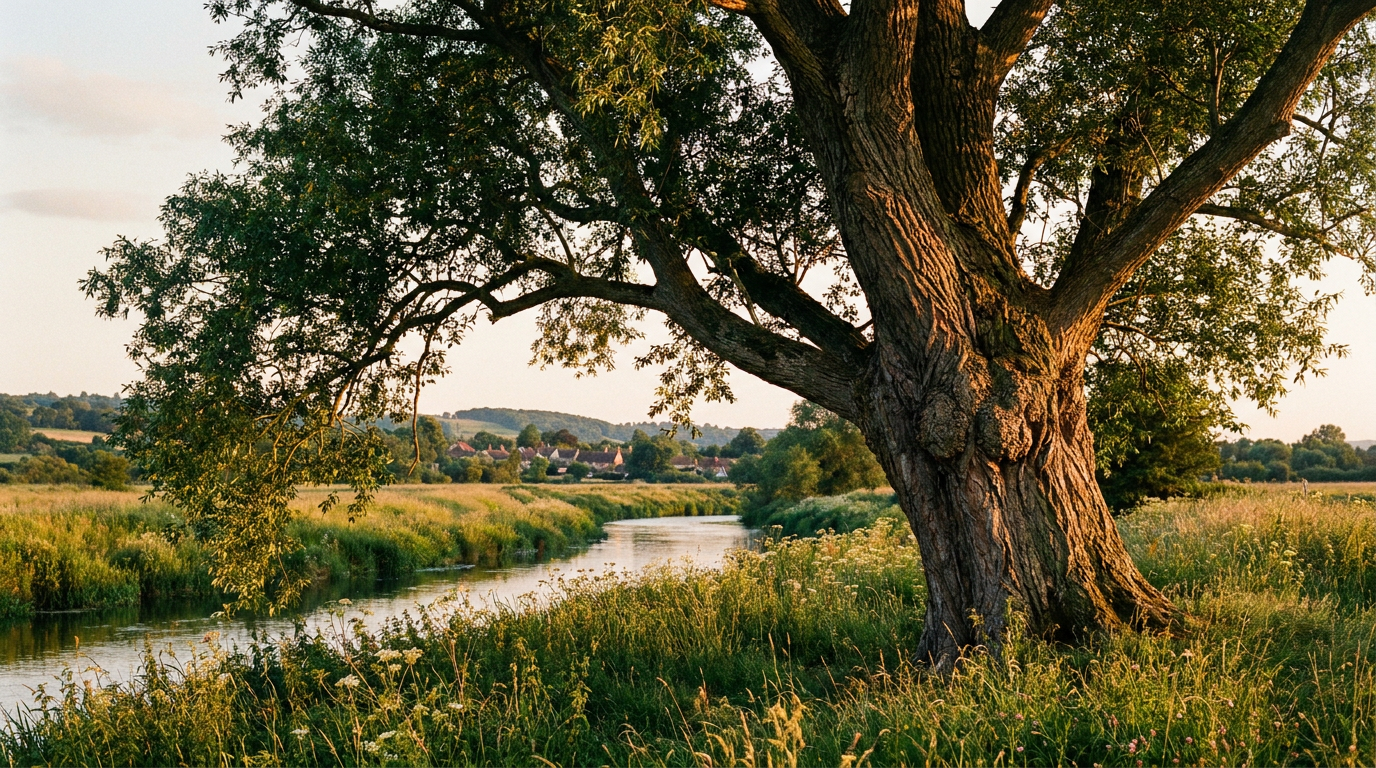
It is a tree woven into the cultural and ecological fabric of Britain, immortalized by John Constable in his 1821 masterpiece, The Hay Wain. Yet today, the native black poplar (Populus nigra subsp. betulifolia) is quietly vanishing from the landscape. Capable of living for over 250 years and reaching heights of 30 meters, the towering broadleaf has been pushed to the brink by centuries of habitat loss and human intervention.[2][3][5]
The scale of the decline is stark. Conservationists estimate that fewer than 7,000 native black poplars remain across the United Kingdom and Ireland, making it Britain's rarest and most endangered native timber tree. The surviving population is heavily fragmented, with isolated individuals scattered across river valleys in Cheshire, Somerset, East Anglia, and parts of Wales.[1][5][7][8]
The crisis is compounded by a severe gender imbalance. The black poplar is a dioecious species, meaning male and female flowers grow on separate trees. Of the roughly 7,000 remaining individuals, only about 600 are female. Because male and female trees must grow within 200 meters of each other to successfully cross-pollinate, natural reproduction in the wild has ground to a virtual halt.[1][2][3][4]

This demographic skew is not an accident of nature; it is the result of historical human preference. Female black poplars produce vast quantities of fluffy, cotton-like seeds in the early summer. For centuries, farmers and landowners considered this white fluff a nuisance that clogged agricultural machinery and smothered crops, leading to the systematic culling of female trees.[4][6][8]
Simultaneously, the tree's natural habitat was dismantled. Black poplars thrive in wet, boggy floodplains and along dynamic riverbanks. Their seeds require bare, moist mud to germinate—conditions that were once common after seasonal floods. However, widespread land drainage for agriculture and the rigid canalization of rivers over the past century have largely eliminated these essential nursery grounds.[2][5][7]

The introduction of fast-growing, straighter non-native poplars and hybrids in the 19th century further marginalized the native species. The black poplar's timber, once prized for its shock-absorbing qualities and used to make cartwheels and floorboards, was replaced by more commercially viable alternatives. Today, the surviving native trees also face compounding threats from fungal diseases, including poplar scab and leaf rusts.[2][5][7]
The introduction of fast-growing, straighter non-native poplars and hybrids in the 19th century further marginalized the native species.
In response to this ecological emergency, a coalition of conservation groups, universities, and national parks has launched a coordinated rescue effort. Because natural seed reproduction is currently unviable, these projects rely on the willow family's remarkable ability to clone itself. Conservationists are taking "truncheons"—long cuttings from the branches of mature trees—and rooting them in nurseries to create genetically identical saplings.[2][4][5]
The National Trust has pioneered this approach by establishing a "living gene bank" at the Killerton estate in Devon. Working with Forest Research, the charity planted a breeding population of 80 male and female trees on a newly restored stretch of the River Culm floodplain. The goal is to create a naturally reproducing hub where the trees are close enough to pollinate, eventually supplying cuttings to projects nationwide.[2]
Similar initiatives are taking root across the country. In Nottinghamshire, Nottingham Trent University and the Environment Agency have planted native whips at the Brackenhurst Campus. These saplings will be grown into "coppice stools"—living bases that regrow multiple shoots after being cut—providing a sustainable, long-term supply of verified native cuttings for regional floodplain restoration.[4]

In Yorkshire, the Howardian Hills National Landscape and the Forgotten Flora project are nurturing saplings in polytunnels. Propagated from the only two mature trees known to survive in the area—one of which is crucially female—these young trees will soon be planted across the North York Moors National Park to re-establish a local breeding population.[3]
Wales faces an even more critical situation, with an estimated 200 black poplars remaining, and only a handful of females. Bannau Brycheiniog National Park and Eryri National Park have launched public appeals, asking landowners to report sightings of the tree. By mapping the survivors and taking cuttings from healthy females, they hope to expand the genetic pool and revive the species across the Welsh landscape.[6][8]

The stakes extend far beyond the survival of a single botanical species. The black poplar is a keystone of healthy wetland ecosystems. Its deeply fissured bark and sprawling canopy provide crucial habitat for specialized insects, including the caterpillars of the hornet moth and the poplar hawk-moth. In early spring, its catkins offer a vital, early source of nectar for emerging bees and pollinators.[7][8]
Furthermore, the tree's revival is intimately tied to modern climate resilience strategies. As deep-rooted, flood-tolerant giants, black poplars are perfectly adapted to stabilize riverbanks and absorb excess water during extreme weather events. Reintegrating them into the landscape serves as a natural form of flood management.[4][5]
While the black poplar currently relies on intensive human intervention to reproduce, the ultimate vision is self-sufficiency. By strategically planting mixed-sex populations in restored wetlands, conservationists aim to bridge the 200-meter pollination gap. If successful, the fluffy white seeds of the black poplar will once again catch the wind, securing the future of Britain's rarest timber tree.[2][4]
How we got here
Pre-1850s
The black poplar is a common sight across British floodplains, widely used for shock-absorbing timber.
Late 19th Century
Fast-growing hybrid poplars are introduced, and native black poplars are cleared to make way for agriculture.
Mid-20th Century
Widespread agricultural drainage and river canalization destroy the bare, wet mud required for black poplar seeds to germinate.
2002
A national survey reveals the critical state of the species, estimating only 7,000 remain in the UK and Ireland.
March 2025
The National Trust establishes a 'living gene bank' of 80 trees at the Killerton estate in Devon.
June 2026
Multiple regional projects, including in Yorkshire and Nottinghamshire, announce successful propagation and planting efforts to supply future wetland restorations.
Viewpoints in depth
Conservation Ecologists
Focused on preserving genetic diversity and restoring functional wetland ecosystems.
Ecologists view the black poplar crisis as a symptom of broader habitat degradation. Their primary concern is the genetic bottleneck caused by the tiny number of surviving female trees. By establishing 'living gene banks' and clone nurseries, they aim to preserve the unique DNA of the remaining wild population. They argue that saving the tree is inseparable from restoring the floodplains and riverbanks that the species relies on, which in turn supports a wider web of endangered insects and birds.
Landscape Historians
Value the tree for its iconic place in British history, art, and traditional crafts.
For cultural advocates, the black poplar is a living monument. Immortalized in 19th-century landscape paintings, the tree's distinctive silhouette was once a defining feature of the English countryside. Historians emphasize its traditional uses—its shock-absorbing timber was essential for making cartwheels, floorboards, and even matches. To this group, allowing the black poplar to go extinct would be a profound loss of the nation's arboricultural and agricultural heritage.
Floodplain Managers
View the flood-tolerant tree as a functional tool for natural flood defense.
Hydrologists and environmental agencies look at the black poplar through the lens of climate resilience. Because the species is highly tolerant of waterlogged soils and seasonal inundation, it is an ideal candidate for planting along vulnerable riverbanks. Managers advocate for integrating these deep-rooted giants into modern flood alleviation schemes, using them to naturally stabilize soils, slow water flow during heavy rains, and protect downstream communities.
What we don't know
- Whether the newly planted 'living libraries' will successfully cross-pollinate and produce viable seeds in the wild without continued human intervention.
- How resilient the cloned populations will be to emerging fungal diseases like poplar scab and leaf rusts.
- The exact number of genetically unique individuals remaining, as many surviving trees may already be clones of one another.
Key terms
- Dioecious
- A plant species in which male and female reproductive organs occur on separate, individual trees.
- Truncheon
- A large, thick cutting taken from a tree branch, used to propagate a new, genetically identical tree by planting it directly into the ground.
- Coppice stool
- The living base of a tree that has been cut down to the ground, which then regrows multiple new shoots that can be harvested for planting.
- Whip
- A young, slender, unbranched tree sapling used for planting in conservation and forestry projects.
- Clone bank
- A living collection of plants propagated from cuttings to preserve the genetic diversity of a threatened species.
Frequently asked
Why are female black poplars so rare?
Historically, landowners systematically removed female trees because they produce vast amounts of fluffy, cotton-like seeds that were considered an agricultural nuisance.
How do black poplars reproduce naturally?
They require male and female trees to grow within 200 meters of each other, and their fertilized seeds must fall on bare, wet mud to successfully germinate.
Can I plant a black poplar in my garden?
Generally no. They grow up to 30 meters tall, have massive root systems, and require permanently wet, boggy soil, making them unsuitable for standard residential gardens.
How long do black poplars live?
When healthy and growing in suitable wetland conditions, a native black poplar can live for over 250 years.
Sources
Source coverage
8 outlets
3 viewpoints surfaced








[1]BBC NewsFloodplain Managers
Revival project for endangered native trees
Read on BBC News →[2]The GuardianConservation Ecologists
National Trust creates ‘living gene bank’ to save black poplar from extinction
Read on The Guardian →[3]Gazette & HeraldRegional Park Authorities
Rare black poplar trees given new hope in Howardian Hills
Read on Gazette & Herald →[4]Nottingham Trent UniversityFloodplain Managers
Creating sustainable supply of declining tree species will support floodplain habitat restoration
Read on Nottingham Trent University →[5]National TrustConservation Ecologists
The decline of the black poplar
Read on National Trust →[6]Bannau Brycheiniog National ParkRegional Park Authorities
The Search for Britain’s Most Endangered Tree
Read on Bannau Brycheiniog National Park →[7]Woodland TrustConservation Ecologists
Black Poplar (Populus nigra subsp. betulifolia)
Read on Woodland Trust →[8]Eryri National ParkRegional Park Authorities
Reviving the Black Poplar in Eryri
Read on Eryri National Park →

Every angle. Every day.
Get science stories with full source coverage and perspective breakdowns delivered to your inbox.