
The Password is Dead: How Passkeys Reached 5 Billion Users and Eliminated Phishing
Driven by cryptographic standards and major ecosystem providers, passkeys have reached critical mass in 2026, offering a mathematically phishing-resistant alternative to the password.
By Factlen Editorial Team
- Security Standard Bearers
- Argue that cryptographic origin binding is the only viable defense against modern phishing.
- Enterprise Implementers
- Focus on the operational friction of untangling legacy password systems and managing identity governance.
- End Users
- Value seamless login experiences but require reliable account recovery mechanisms when devices are lost.
What's not represented
- · Legacy System Administrators
- · Users without modern smartphones
Why this matters
Passwords are the leading cause of data breaches and identity theft. The global shift to passkeys fundamentally eliminates phishing, making your digital life significantly more secure and frictionless.
Key points
- An estimated 5 billion passkeys are in active use globally as of May 2026.
- Passkeys replace passwords with public-key cryptography, making them mathematically resistant to phishing.
- Consumer awareness has reached 90%, with 75% of users enabling passkeys on at least one account.
- Enterprise adoption lags behind consumer use, with only 13% of organizations deploying passkeys at full scale.
- Passkeys significantly improve login success rates and reduce IT helpdesk costs associated with password resets.
The password is dead, and the numbers finally prove it. For decades, cybersecurity experts have warned that memorized secrets are the weakest link in digital security. Yet, despite endless campaigns urging users to create complex strings of characters, the password persisted simply because there was no frictionless alternative. That era is now definitively closing. As of May 2026, an estimated 5 billion passkeys are in active use worldwide, marking a permanent architectural shift in how humanity accesses the internet. This transition represents one of the most successful global engineering efforts in the history of the web, quietly replacing phishable text fields with invisible cryptographic math.[1][8]
The fundamental flaw of the password is that it is a "knowledge factor"—a secret that a user must know and a server must store. Because it can be known, it can be stolen, guessed, or intercepted. According to industry analyses of data breaches, stolen credentials remain the primary vector for network compromise. Attackers no longer need to hack through firewalls; they simply log in using harvested secrets. This vulnerability birthed the multi-factor authentication (MFA) industry, which attempted to patch the problem by requiring a second piece of evidence, such as a code sent to a mobile phone.[4]
However, traditional MFA is failing under the weight of modern cybercrime. SMS one-time passwords (OTPs) are routinely intercepted via SIM-swapping attacks, where criminals trick telecom providers into porting a victim's phone number to a new device. Even authenticator apps and push notifications are proving vulnerable. Attackers increasingly utilize "MFA fatigue" or push-bombing—flooding a user's phone with login approval requests until the exhausted or confused victim finally taps "approve." Furthermore, real-time relay kits allow attackers to set up look-alike websites that instantly pass the user's entered OTP to the legitimate server, bypassing the second factor entirely.[4][8]

The solution to this escalating arms race is the passkey. Built on the open FIDO2 and WebAuthn standards, passkeys eliminate the concept of a shared secret entirely. Instead of a password, passkeys utilize public-key cryptography. When a user registers for a service, their device generates a unique, mathematically linked pair of keys. The public key is sent to the application's server, where it is stored like a padlock. The private key—the only thing capable of opening that padlock—never leaves the secure hardware enclave of the user's smartphone or computer.[1][7]
The primary claim driving the adoption of passkeys is that they are mathematically phishing-resistant. The core mechanism that makes this possible is a concept known as "cryptographic origin binding." Unlike a password or a six-digit code, a passkey is inextricably linked to the specific web domain where it was created. When a user attempts to log in, the server sends a cryptographic challenge to the device. The device will only sign that challenge with the private key if the domain exactly matches the original registration.[3]
This origin binding neutralizes the most common forms of credential theft. If a user is tricked into clicking a link in a phishing email and lands on a look-alike domain—such as `g00gle.com` instead of `google.com`—the attack fails instantly. The browser detects the domain mismatch and refuses to present the passkey to the fraudulent site. There is no secret for the user to accidentally type into a fake login box, and there is no OTP for a real-time relay kit to intercept. The cryptography removes human error from the equation entirely.[3][8]

This origin binding neutralizes the most common forms of credential theft.
The evidence of consumer acceptance is now overwhelming. The FIDO Alliance's "State of Passkeys 2026" report marks a clear inflection point, demonstrating that passwordless authentication has moved from an optional upgrade to an operational baseline. Consumer awareness of passkeys has surged to 90%, up significantly from previous years. More importantly, awareness has translated directly into behavioral change: 75% of surveyed consumers have enabled a passkey on at least one account, and nearly half report using them regularly whenever the option is presented.[1][6]
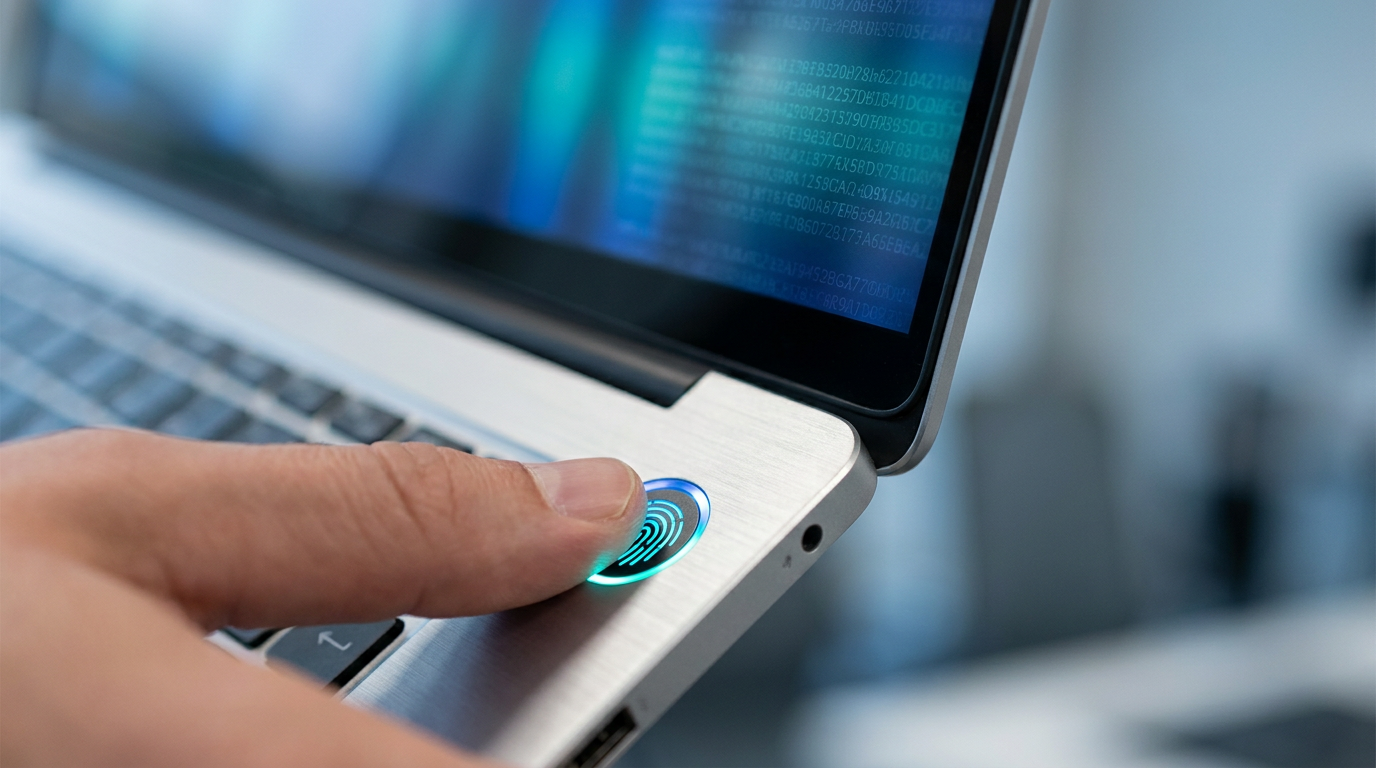
Major ecosystem providers are aggressively forcing this shift by baking passkeys into the default user experience. Microsoft, for example, has expanded passkey support across its Entra ID ecosystem and unmanaged Windows devices, making passwordless login the default prompt for hundreds of millions of daily users. By integrating passkey generation directly into Windows Hello and mobile operating systems, tech giants have transformed a complex cryptographic exchange into a simple biometric action—a fingerprint scan or a glance at a camera. This seamless integration ensures that users do not need to understand the underlying math to benefit from military-grade security.[2]
Beyond security, the business case for passkeys is rooted in concrete operational efficiency and user success. Traditional passwords and SMS OTPs introduce immense friction into the login process, leading to abandoned shopping carts, locked accounts, and frustrated users. Enterprise analyses reveal that passkeys drastically outperform legacy methods in real-world deployments. E-commerce platform Mercari, for instance, achieved an impressive 82.5% sign-in success rate after deploying passkeys, compared to a mere 67.7% success rate for users relying on SMS OTPs. This measurable increase in successful logins directly correlates to higher user engagement and sustained revenue generation.[3][7]
This reduction in friction translates directly to the bottom line for service providers. By eliminating the bulk of their SMS traffic, companies can slash the exorbitant telecommunications costs associated with sending millions of one-time passcodes every month. Furthermore, organizations deploying passkeys report a 35% reduction in helpdesk tickets related to password resets. When users no longer have to remember complex strings of characters, the IT department no longer has to spend expensive labor hours helping them regain access to their accounts, allowing security teams to focus on actual threat hunting rather than routine administrative tasks.[6][7]

Despite the overwhelming success in the consumer space, the transition is facing friction at the enterprise scale. A June 2026 joint study by HID and the FIDO Alliance reveals a stark gap between intent and execution in corporate environments. While 93% of organizations are somewhere on the passkey adoption path, only 13% have managed to deploy them at full scale across their entire workforce. The bottleneck is rarely user resistance; rather, it is the sheer complexity of legacy IT infrastructure.[5]
Identity security has evolved from a purely technical challenge into a massive governance problem. Organizations are struggling to untangle decades of password-dependent applications, fragmented directories, and disconnected physical and digital identity systems. Many enterprise applications still require phishable fallback methods, meaning the organization remains vulnerable even if passkeys are partially deployed. Until the entire authentication stack is modernized to support secure rollout, recovery, and fallback, the full security benefits of passkeys remain out of reach for many large employers.[5][6]
The most sensitive edge case in the passwordless future is account recovery. If a user's smartphone falls into a river, the private keys stored on that device are lost. The fallback mechanism used to restore access must be as secure as the passkey itself, lest it become a backdoor for attackers. To solve this, the industry has embraced synced passkeys, which securely back up encrypted credentials to cloud ecosystems like Apple's iCloud Keychain or Google Password Manager, ensuring users can survive device loss without reverting to phishable passwords.[2][8]

The era of the password is not ending with a sudden, dramatic switch-off, but rather through a steady, cryptographic obsolescence. As passkeys become the default across consumer applications and enterprise networks, the phishable text field is rapidly being relegated to legacy status. The transition requires careful governance, particularly in managing the lifecycle of digital identities and ensuring secure recovery paths. However, the evidence from 2026 is unequivocally clear: the most secure login is the one you never have to remember, and the global internet infrastructure is finally ready to leave the password behind for good.[1][8]
How we got here
2012
The FIDO Alliance is founded to develop open standards for passwordless authentication.
2019
WebAuthn becomes an official W3C web standard, laying the groundwork for passkeys in browsers.
2022
Apple, Google, and Microsoft commit to expanded support for the FIDO standard, accelerating consumer adoption.
May 2026
The FIDO Alliance reports that an estimated 5 billion passkeys are now in active use globally.
Viewpoints in depth
Security Standard Bearers
Argue that cryptographic origin binding is the only viable defense against modern phishing.
This camp, led by the FIDO Alliance and major tech platforms, views the password as an unfixable vulnerability. They argue that human behavior cannot be patched through security training, and that any authentication method relying on a shared secret—including SMS codes and authenticator apps—will eventually be intercepted. Their focus is on ubiquitous deployment of public-key cryptography, ensuring that the device itself mathematically proves the user's identity to the exact domain requesting access.
Enterprise Implementers
Focus on the operational friction of untangling legacy password systems and managing identity governance.
IT administrators and identity governance vendors acknowledge the security benefits of passkeys but emphasize the immense difficulty of enterprise migration. They point out that while consumer rollouts are straightforward, corporate environments are burdened by decades of legacy applications that do not support modern cryptographic standards. For this camp, the primary challenge is not convincing users to adopt passkeys, but rather building secure account recovery paths and unified governance systems that prevent fragmented identities from becoming new attack vectors.
End Users
Value seamless login experiences but require reliable account recovery mechanisms when devices are lost.
For the general public, the shift to passkeys is primarily a matter of convenience. Users are exhausted by the constant demand to create, remember, and rotate complex passwords. While they benefit invisibly from the enhanced security, their primary concern is usability—specifically, what happens when a device is lost or broken. This perspective demands seamless cross-device syncing and intuitive cloud recovery options, ensuring that a lost smartphone does not result in a permanent loss of digital identity.
What we don't know
- How quickly legacy enterprise software vendors will update their platforms to support passkey authentication.
- Whether the fragmented governance of physical and digital identities will lead to new types of administrative vulnerabilities.
Key terms
- Public-Key Cryptography
- A cryptographic system that uses pairs of keys: a public key stored on a server, and a private key kept secretly on the user's device.
- Origin Binding
- A security feature where a passkey is mathematically tied to a specific website, preventing it from being used on a fake or look-alike domain.
- Phishing-Resistant MFA
- Multi-factor authentication methods that cannot be intercepted or bypassed by attackers using fake websites or real-time relay kits.
- FIDO2 / WebAuthn
- The open, global technical standards that allow websites and devices to communicate securely to create and use passkeys.
- SIM-Swapping
- A cyberattack where a criminal tricks a telecom provider into transferring a victim's phone number to a new device, allowing them to intercept SMS security codes.
Frequently asked
What makes a passkey different from a password?
A password is a secret you memorize and type in, which can be stolen. A passkey uses a hidden cryptographic key stored securely on your device, unlocked by your fingerprint or face, and never shared with the website.
What happens if I lose the device that holds my passkey?
Most modern passkeys are 'synced,' meaning they are securely backed up to your cloud account (like Apple iCloud or Google Password Manager). If you lose your phone, you can recover your passkeys by signing into your cloud account on a new device.
Can a passkey be stolen in a data breach?
No. Websites only store your 'public key,' which is useless to hackers on its own. Your 'private key' never leaves your device, making passkeys immune to server-side data breaches.
Are passkeys tied to a specific tech ecosystem?
While Apple, Google, and Microsoft manage their own passkey ecosystems, the underlying FIDO2 standard is universal. You can use a passkey created on an iPhone to log into a website on a Windows computer, often by scanning a QR code.
Sources
Source coverage
8 outlets
3 viewpoints surfaced








[1]FIDO AllianceSecurity Standard Bearers
State of Passkeys 2026: Global Consumer and Workforce Report
Read on FIDO Alliance →[2]MicrosoftSecurity Standard Bearers
Accelerating passkey adoption across the Microsoft ecosystem
Read on Microsoft →[3]CorbadoEnterprise Implementers
Passkeys vs Passwordless vs Phishing-Resistant MFA
Read on Corbado →[4]IBMSecurity Standard Bearers
What is passwordless authentication?
Read on IBM →[5]Biometric UpdateEnterprise Implementers
Passkey adoption stalls at scale despite strong interest, new study shows
Read on Biometric Update →[6]DescopeEnterprise Implementers
Passkey adoption stats from the FIDO Alliance's 2026 report
Read on Descope →[7]WorldlineSecurity Standard Bearers
World Passkey Day: Embracing Passwordless, Phishing-Resistant Authentication
Read on Worldline →[8]Factlen Editorial TeamEnd Users
Synthesis by Factlen editorial team
Read on Factlen Editorial Team →
More in technology
See all 6 stories →Post-Quantum Crypto
The Internet's Quiet Upgrade: How Post-Quantum Cryptography is Securing the Web
9 sources

Mars Exploration
NASA Taps Eric Schmidt's Relativity Space for 2028 Mars Weather Mission
8 sources

Quantum Error Correction
How Quantum Error Correction Unlocked the Fault-Tolerant Era in 2026
8 sources

Mobility Tech
Japan's Top Taxi App Go Raises $553 Million in Year's Largest IPO to Fund Robotaxi Push
6 sources

Every angle. Every day.
Get technology stories with full source coverage and perspective breakdowns delivered to your inbox.