
The Rise of Calm Technology: How Design is Curing Digital Fatigue
Industrial designers and architects are embracing 'Calm Technology,' a movement that hides complex computing behind natural materials and peripheral interfaces to combat screen overload.
By Chen Wang

The era of the glowing rectangle is facing a quiet rebellion. For the past decade, industrial design has been dominated by screens that demand constant attention, engineered to capture eyeballs through infinite scrolls and dopamine-driven notification loops. But in 2026, a counter-movement known as "Calm Technology" has moved from a niche philosophy to a dominant force in consumer electronics and interior architecture. Driven by widespread digital fatigue, designers are actively stripping away visual hooks, replacing blaring alerts with ambient cues, and hiding complex computing behind natural materials.
The concept itself is not new, though its mass-market adoption is. The term was first coined in 1995 by researchers Mark Weiser and John Seely Brown at Xerox PARC, who defined it as technology that informs without demanding focus. The core mechanism relies on shifting interactions to the user's periphery.
Instead of a smartphone vibrating in the center of a user's visual field, a calm device might communicate a change in weather through a subtle shift in ambient lighting, or convey connectivity status through a physical, tactile switch. The goal is to increase the user's awareness of their physical surroundings without overburdening their cognitive load.[1]
To formalize this shift, the industry has begun standardizing what actually qualifies as "calm." The Calm Tech Institute recently introduced the "Calm Tech Certified" program, an 81-point evaluation standard that grades hardware across six categories: attention, periphery, durability, light, sound, and materials. Products that pass this rigorous vetting process must prove that they require the least amount of attention possible to function. This certification has become a coveted badge for hardware startups, signaling to consumers that a device is designed to respect their psychological boundaries rather than mine their engagement.[2]
The most visible battleground for this design philosophy is the smartphone market, where the "dumbphone" has evolved into a sophisticated, intentional tool. Devices like the Mudita Kompakt, which recently launched to widespread acclaim, utilize E-Ink displays to eliminate the blue light and visual stimulation of traditional OLED screens. Running on a custom, de-Googled operating system, the Kompakt strips away addictive applications while retaining modern essentials like offline maps and high-quality audio. Crucially, it introduces "intentional friction"—actions take a beat longer, forcing the user to be deliberate rather than reactive.[5]
Privacy and physical control are also central to the calm smartphone mechanism. The Mudita Kompakt features a physical "Offline+" switch that cuts power to the microphone and GSM modem at the hardware level. This tactile confirmation of disconnection allows users to mentally clock out, knowing they cannot be reached or tracked. By offering up to six days of battery life and a distraction-free interface, these devices cater to a growing demographic of digital minimalists who want to be reachable but not distractible.[5]
Beyond personal electronics, calm design is fundamentally altering domestic architecture and smart home integration. Interior design trends for 2026 emphasize "invisible intelligence," where complex IoT networks are flush-mounted and hidden within natural textures. The Kyoto-based startup mui Lab exemplifies this with the "mui Board 2nd Gen," a Matter-compatible smart home hub constructed entirely from natural wood.
When inactive, it looks like a simple wooden plank resting on a wall. Only when touched does it emit a soft, diffused light through the grain, allowing users to adjust thermostats or leave handwritten digital messages for family members.[3]
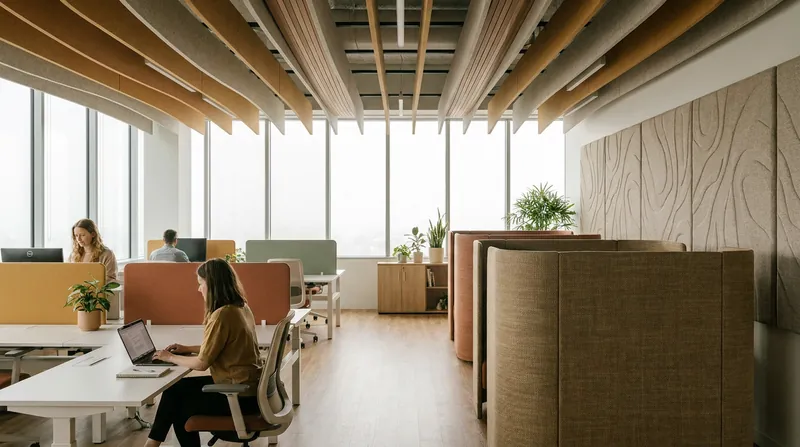
This architectural integration aligns with a broader aesthetic shift toward "spiritual minimalism" and neuroarchitecture. Designers are utilizing muted mineral colors, unsealed wood, and stone to lower cortisol levels and create sensory relief. Technology is no longer treated as a centerpiece to be displayed, but as a silent utility that follows the natural rhythm of the day. Automated systems now adjust window shades and lighting based on circadian rhythms, operating entirely in the background without requiring a screen tap or a voice command.
However, the rapid popularization of calm technology has sparked a fierce debate about authenticity versus marketing. As the aesthetic of emptiness becomes lucrative, major tech conglomerates have begun co-opting the language of calm design. Companies like Meta and OpenAI have promoted screenless wearables—such as AI-powered lapel pins and smart glasses—as solutions to smartphone addiction. They argue that by removing the screen, they are returning users to the physical world.[4]
Critics and design purists argue that this is a dangerous smokescreen. While an AI lapel badge or a pair of smart glasses may lack a traditional display, they are often tethered to the same attention-harvesting business models that caused digital fatigue in the first place. True calm technology, purists argue, must be ignorable and privacy-first. Devices that constantly record audio or visual data to feed large language models represent a form of invisible surveillance, concentrating power in the hands of a few corporations under the guise of "zen" minimalism.[4]
The tension between these two visions—technology that genuinely steps back versus technology that simply hides its constant presence—will define the next era of industrial design. What remains clear is that consumer appetite has permanently shifted. The era of the hyper-visible, aggressively demanding gadget is fading, replaced by a profound desire for tools that quietly support human life and then gracefully disappear.[4]
Key points
- Industrial design in 2026 is pivoting away from attention-demanding screens toward 'Calm Technology' that operates in the user's periphery.
- The Calm Tech Institute has established an 81-point certification standard to grade hardware on its ability to respect human attention.
- Minimalist devices like the Mudita Kompakt use e-ink displays and physical offline switches to combat digital fatigue.
- Interior architecture is embracing 'invisible intelligence,' hiding smart home controls within natural materials like wood and stone.
What we don’t know
- Whether mass-market consumers will fully abandon high-performance smartphones for intentional, single-purpose devices.
- How privacy regulations will adapt to screenless 'calm' wearables that constantly record ambient audio and video.
- If the Calm Tech Certified standard will be widely adopted by major tech conglomerates or remain a niche badge for independent startups.
How we got here
1995
Researchers at Xerox PARC coin the term 'Calm Technology' to describe peripheral computing.
Late 2024
The Calm Tech Institute introduces the first formal certification standard for attention-respecting hardware.
2025
A surge of minimalist devices, including the Mudita Kompakt e-ink phone, hit the consumer market.
Early 2026
Major tech companies face backlash for marketing data-heavy AI wearables under the guise of 'calm' design.
- Calm Tech Purists
- Argue that technology must be physically constrained, privacy-first, and operate strictly in the periphery to protect human attention.
- Design & Architecture Forecasters
- Focus on the aesthetic and spatial integration of technology, prioritizing natural materials and invisible intelligence.
- Tech Skeptics & Critics
- Warn that the 'calm' aesthetic is being co-opted by major corporations to mask pervasive data collection and surveillance.
Perspectives this story doesn't cover
- Accessibility Advocates (evaluating if screenless/calm tech serves disabled users)
- Major Tech Conglomerates (defending their AI wearables)
Sources
Source coverage
5 outlets
3 viewpoints surfaced





- [1]WikipediaDesign & Architecture Forecasters
Calm technology
Read on Wikipedia → - [2]Calm Tech InstituteCalm Tech Purists
Calm Tech Certified Standard
Read on Calm Tech Institute → - [3]mui LabCalm Tech Purists
mui Lab Unveils 'mui Board 2nd Gen' at CES
Read on mui Lab → - [4]DezeenTech Skeptics & Critics
'Big Tech is using design philosophy as a smokescreen'
Read on Dezeen → - [5]Geeking OutTech Skeptics & Critics
Mudita Kompakt Review: The Goldilocks of Dumb Phones
Read on Geeking Out →

More in Culture
See all →Architecture Laureate
Smiljan Radić Clarke Named 2026 Laureate of the Pritzker Architecture Prize
2 sources

AI Policy
Australian Creatives Demand AI Copyright Law Over Training Data, Citing Indigenous Rights
3 sources

Passive Cooling
How Architects Are Using Fluid Dynamics to Resurrect Ancient Cooling Tech
4 sources

Sensory Architecture
Beyond the Ramp: How Architects Are Redesigning Buildings for Neurodiversity
5 sources
Comments
Every angle. Every day.
Get Culture stories with full source coverage and perspective breakdowns, free every day.