
Fragile US-Iran Peace Deal Faces Early Test as Clashes in Lebanon Delay Swiss Talks
A newly signed US-Iran memorandum of understanding is under severe strain after deadly exchanges between Israel and Hezbollah temporarily derailed diplomatic negotiations in Switzerland.
By Factlen Editorial Team
- US Administration
- Prioritizes ending the regional war, reopening the Strait of Hormuz, and securing a 60-day diplomatic window.
- Israeli Leadership & Opposition
- Views the pact as a betrayal that empowers Tehran and leaves Israel to face Hezbollah alone.
- Iranian Government
- Demands immediate sanctions relief and the complete withdrawal of Israeli forces from Lebanon as non-negotiable preconditions.
- Regional Mediators
- Focused on pragmatic de-escalation and securing humanitarian and economic stability in the Persian Gulf.
What's not represented
- · Lebanese Civilians
- · European Energy Importers
Why this matters
The success or failure of this 60-day diplomatic window will determine whether the Middle East spirals back into a devastating regional war or achieves a lasting truce. It also directly dictates the flow of global energy markets, as the Strait of Hormuz handles roughly a fifth of the world's daily oil consumption.
Key points
- The US and Iran signed a 14-point MoU establishing a 60-day window for peace negotiations.
- The deal requires the US to lift its naval blockade and Iran to reopen the Strait of Hormuz.
- Talks in Switzerland were delayed after Israel and Hezbollah exchanged deadly fire in Lebanon.
- Israel is furious over the deal, feeling abandoned by the US administration.
- A renewed ceasefire in Lebanon allowed US envoys to travel to Switzerland to salvage the talks.
The fragile framework designed to end the 2026 Iran war is facing its first major stress test. Just days after the United States and Iran signed a landmark Memorandum of Understanding (MoU), a deadly flare-up between Israel and Hezbollah in southern Lebanon temporarily derailed the diplomatic timeline, forcing US envoys to scramble to salvage the agreement.[1][2]
The 14-point pact, signed separately by US President Donald Trump and Iranian President Masoud Pezeshkian earlier this week, established a 60-day window to negotiate a permanent end to the conflict that began in late February. The core trade-off requires Washington to lift its naval blockade and unfreeze billions in Iranian assets, while Tehran agreed to reopen the Strait of Hormuz for commercial shipping and freeze military operations across all fronts.[7]
However, the clause demanding an "immediate and permanent termination of military operations on all fronts, including in Lebanon" immediately collided with reality on the ground. On Thursday, Hezbollah militants killed four Israeli soldiers, including a battalion commander, in a tank ambush near the Lebanese village of Kfar Tebnit. Israel responded with a massive wave of retaliatory airstrikes across southern and eastern Lebanon, killing at least 47 people and injuring nearly 100 others.[1][4]

The sudden escalation prompted US Vice President JD Vance to abruptly cancel his planned trip to Geneva, where he was scheduled to lead the American delegation. Iranian officials, including Foreign Minister Abbas Araghchi, warned that the Lebanon ceasefire must hold for technical talks to proceed, framing the Israel Defense Forces' continued operations as a direct violation of the MoU.[1][5][8]
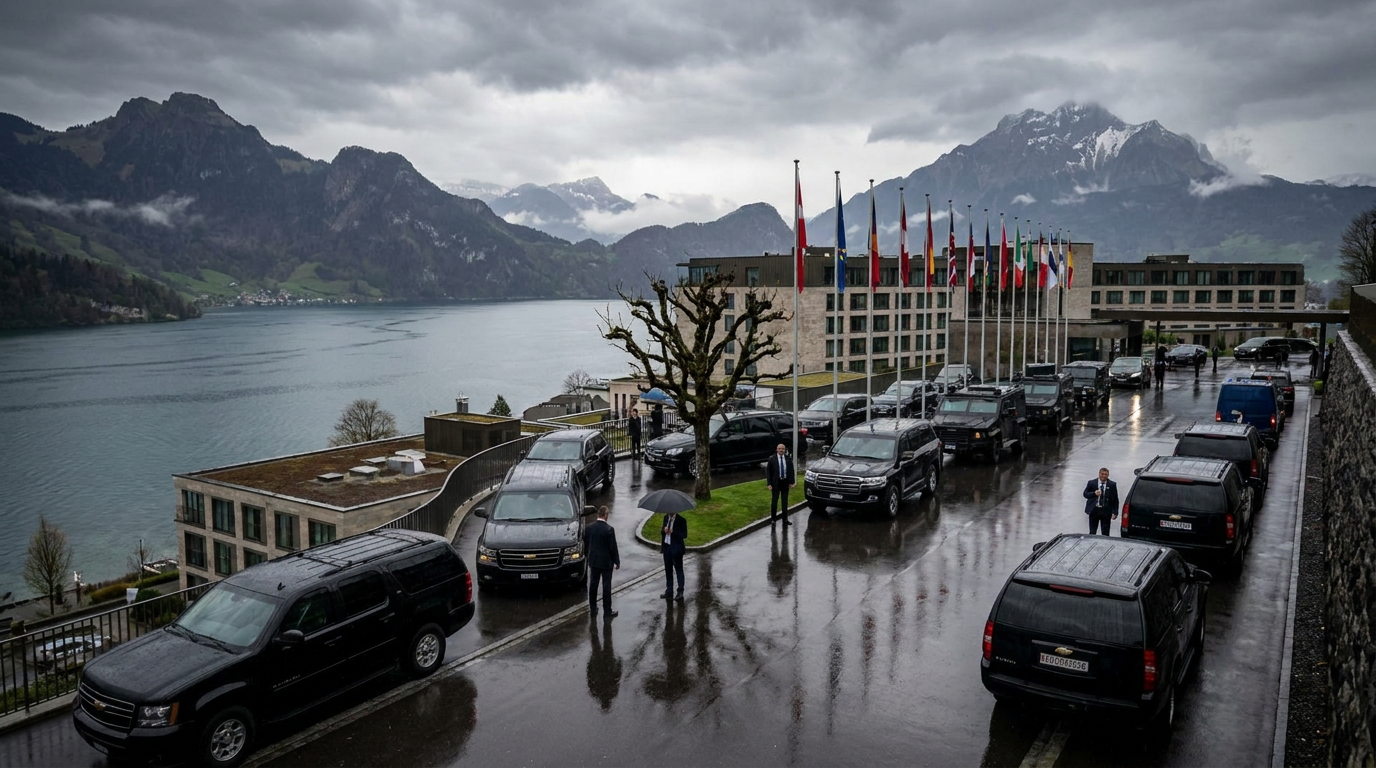
Following intense back-channel mediation by Qatar and the United States, a renewed ceasefire between Israel and Hezbollah took effect late Friday afternoon. With the guns temporarily silenced, US special envoys Steve Witkoff and Jared Kushner proceeded to the luxury Bürgenstock resort in Switzerland, hoping to get the technical negotiations back on track.[1][5][8]
Following intense back-channel mediation by Qatar and the United States, a renewed ceasefire between Israel and Hezbollah took effect late Friday afternoon.
The diplomatic maneuvering has ignited a political firestorm in Israel, where the US-Iran deal has been met with widespread anger and a profound sense of betrayal. Many Israelis feel the Trump administration prematurely lifted economic and military pressure on Tehran, leaving Jerusalem to face Hezbollah alone.[3]

Israeli Prime Minister Benjamin Netanyahu has openly defied pressure from Washington to withdraw from Lebanese territory. He vowed that the IDF would exact a "very heavy price" from Hezbollah and maintain its buffer zone along the border "for as long as required." Israeli officials insist they are not bound by the US-Iran MoU, though they remain committed to a separate, conditional truce with Beirut.[1][4]
President Trump publicly demanded compliance from all parties, writing on Truth Social that the US expects a "complete ceasefire on all fronts, including Lebanon, Hezbollah and Israel." In a subsequent interview, Trump called the renewed Lebanon truce "a positive" and described it as "little icing on the cake" for the broader peace effort.[2][4]
Domestically, the rift has provided ammunition for Netanyahu's rivals. Israeli Opposition Leader Yair Lapid accused the Prime Minister of promising a historic victory but delivering a crisis with the Americans, an open Strait of Hormuz for Iran, and an isolated Israel. Former intelligence officials echoed these concerns, warning that the deal leaves the country more vulnerable than before the war began.[3]

Global markets are watching the diplomatic tightrope walk closely. The initial signing of the MoU saw oil prices drop as tankers began exiting the US blockade zone in the Persian Gulf. Yet, the long-term status of the Strait of Hormuz—a vital artery for roughly 20 percent of the world's oil—remains entirely contingent on the next 60 days of fraught negotiations.[7]
As Qatari and Swiss mediators prepare the groundwork in the Alps, the success of the talks hinges on whether the fragile calm in Lebanon can hold. The coming weeks will test whether Washington can simultaneously appease Tehran's demands for sanctions relief while managing the deep alienation of its closest Middle Eastern ally.[1][5][6]
How we got here
Late February 2026
The Iran war begins following joint US-Israeli airstrikes.
June 17, 2026
The US and Iran remotely sign a 14-point Memorandum of Understanding to halt hostilities.
June 18, 2026
Hezbollah kills four Israeli soldiers; Israel retaliates with massive airstrikes in Lebanon.
June 19, 2026
US Vice President JD Vance cancels his trip to Switzerland amid the escalating violence.
June 19, 2026 (Late)
A renewed ceasefire takes effect in Lebanon, allowing US envoys to head to Switzerland.
Viewpoints in depth
US Administration's View
Washington views the deal as a necessary step to end a devastating regional war and stabilize global energy markets.
The US administration is heavily focused on the macroeconomic and geopolitical benefits of ending the active conflict. By securing a 60-day window and reopening the Strait of Hormuz, officials believe they have averted a worst-case scenario for global oil prices. They view the Lebanon ceasefire as a critical, albeit fragile, component that must be maintained to keep Iran at the negotiating table for broader discussions regarding its nuclear program.
Israeli Leadership's View
Israel feels betrayed by the agreement, arguing it prematurely lifts pressure on Tehran while leaving Jerusalem vulnerable.
Across the Israeli political spectrum, the MoU is largely seen as a strategic disaster. Leaders argue that by lifting the naval blockade and unfreezing assets without securing the total dismantling of Hezbollah or Iran's nuclear infrastructure, the US has rewarded aggression. Prime Minister Netanyahu's government insists that Israel is not bound by the US-Iran pact and retains the right to maintain a security buffer in southern Lebanon to protect its northern communities.
Iranian Government's View
Tehran demands immediate economic relief and the cessation of all Israeli military operations as prerequisites for diplomacy.
Iran's leadership views the MoU as a validation of its regional leverage. They have made it clear that technical negotiations in Switzerland cannot proceed if Israel continues to strike Hezbollah or occupy Lebanese territory, citing the "all fronts" clause of the agreement. For Tehran, the primary goal of the 60-day window is to secure permanent sanctions waivers and the release of billions in frozen funds, using the flow of oil through the Strait of Hormuz as their primary bargaining chip.
What we don't know
- Whether the renewed ceasefire between Israel and Hezbollah will hold long enough for technical talks to conclude.
- If Iran will permanently commit to keeping the Strait of Hormuz toll-free after the 60-day window expires.
- How the US plans to enforce the Lebanon ceasefire if either Israel or Hezbollah resumes major hostilities.
Key terms
- Memorandum of Understanding (MoU)
- A formal agreement between two or more parties outlining the terms and details of an understanding, often serving as the foundation for a binding treaty.
- Strait of Hormuz
- A narrow, strategically vital waterway between the Persian Gulf and the Gulf of Oman through which roughly 20 percent of the world's oil passes.
- Buffer Zone
- A neutral area serving to separate hostile forces or nations; in this context, the territory in southern Lebanon occupied by the IDF to prevent Hezbollah attacks.
Frequently asked
What does the US-Iran peace deal actually do?
It establishes a 60-day window for negotiations, requires the US to lift its naval blockade on Iran, and mandates that Iran reopen the Strait of Hormuz for commercial shipping.
Why is Israel angry about the agreement?
Israeli leaders feel the deal prematurely lifts economic and military pressure on Iran without neutralizing the threat posed by Hezbollah or dismantling Iran's nuclear program.
Why were the talks in Switzerland delayed?
The talks were postponed after Hezbollah killed four Israeli soldiers and Israel retaliated with heavy airstrikes in Lebanon, violating the agreement's mandate for a ceasefire on all fronts.
Sources
Source coverage
8 outlets
4 viewpoints surfaced








[1]The Washington PostRegional Mediators
Clashes in Lebanon seemed to imperil the U.S.-Iran peace deal
Read on The Washington Post →[2]CBS NewsUS Administration
Israel and Hezbollah agree to a ceasefire, diplomat briefed on the deal says
Read on CBS News →[3]The GuardianIsraeli Leadership & Opposition
‘It’s a big mistake’: Israelis feel betrayed and angry after Iran peace deal
Read on The Guardian →[4]The Times of IsraelIsraeli Leadership & Opposition
Netanyahu vows IDF to stay in Lebanon amid US and Iranian pressure
Read on The Times of Israel →[5]AxiosUS Administration
Trump envoys head to Switzerland for potential Iran talks
Read on Axios →[6]Al JazeeraIranian Government
Iran war day 113: Tehran presses US over Lebanon ceasefire
Read on Al Jazeera →[7]Middle East EyeRegional Mediators
US-Iran peace deal: Six things we learned from the Islamabad Memorandum of Understanding
Read on Middle East Eye →[8]The Jerusalem PostRegional Mediators
Witkoff, Araghchi traveling to Switzerland to begin US-Iran nuclear talks - report
Read on The Jerusalem Post →


Every angle. Every day.
Get news politics stories with full source coverage and perspective breakdowns delivered to your inbox.