
Sudan's U-17 Women's Soccer Team Makes Historic Return to International Play Amidst Civil War
Composed of teenage schoolgirls and refugees, Sudan's U-17 women's national team competed in Olympic qualifiers in Morocco, marking the country's first international appearance since conflict erupted in 2023.
By Factlen Editorial Team
- Players and Coaches
- For the team, simply stepping onto the pitch is a victory that supersedes any scoreboard deficit.
- Federation Officials
- Officials view the team's debut as a crucial step in keeping the sport alive amidst national collapse.
- Women's Rights Advocates
- Activists stress that the team's existence must be backed by genuine reform, not just used for progressive optics.
What's not represented
- · Senior Sudanese women's national team players whose careers were halted by the 2023 civil war.
- · The Comoros national team players who competed against the inexperienced Sudanese squad.
Why this matters
While the world focuses on the Men's World Cup, this story highlights the profound power of sports to provide hope and visibility in the wake of conflict. The young Sudanese team's return to the pitch represents a hard-fought victory for women's rights and athletic participation in a nation devastated by civil war.
Key points
- Sudan's U-17 women's national team played in the 2028 Olympic qualifiers in Morocco, marking the country's first international appearance since the 2023 civil war.
- The team, composed mostly of teenage schoolgirls and refugees, was assembled just weeks before the matches.
- Sudan fielded the youth squad to avoid forfeiting their tournament spot after the war prevented the assembly of a senior team.
- Despite conceding 30 goals across two matches against Comoros, the team's presence is being hailed as a triumph of resilience.
- Women's soccer was banned in Sudan until 2019, and the newly formed domestic league collapsed when the current conflict began.
- Advocates are calling for genuine federation reform and financial investment to support the young athletes long-term.
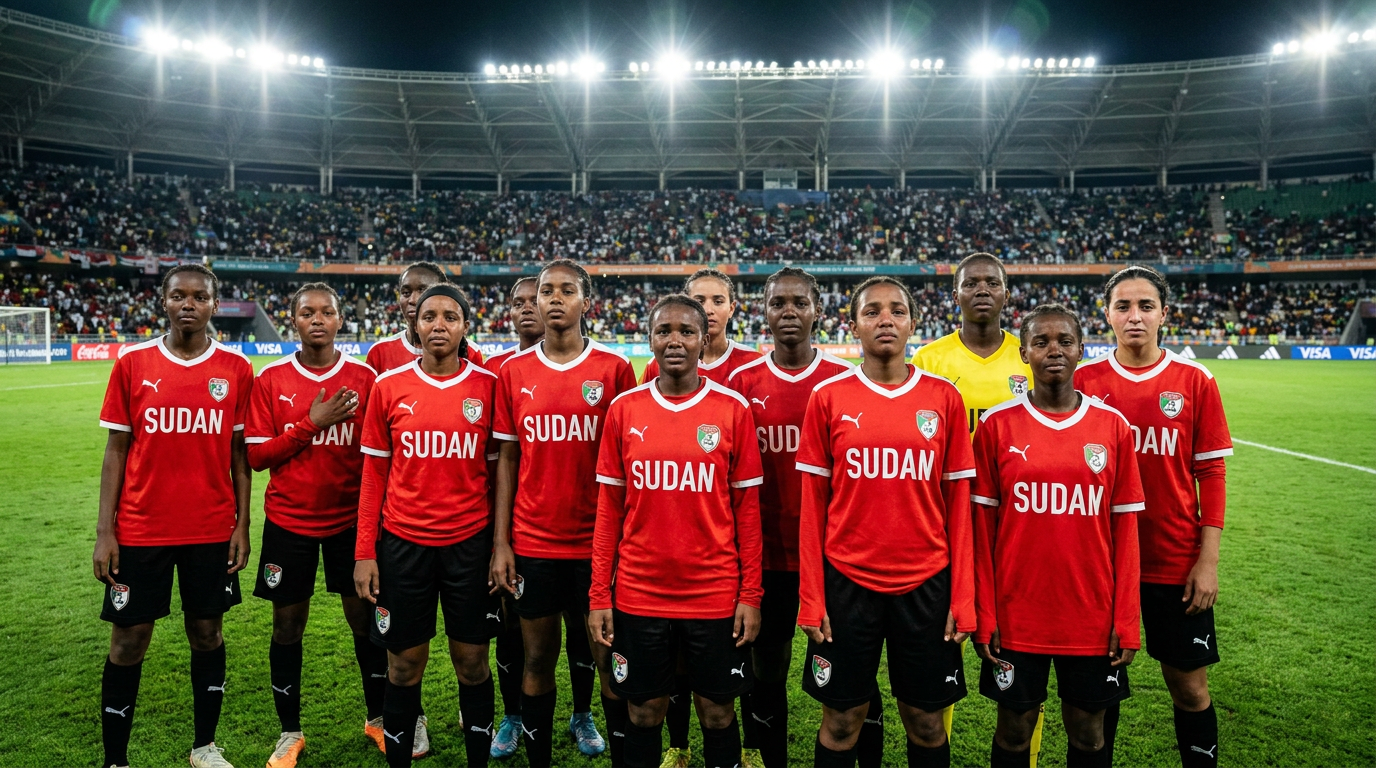
The visual contrast at Larbi Zaouli Stadium in Casablanca was striking. Against the bright green pitch, a squad of teenage girls in red jerseys stepped into the stadium lights. While the global sports world focused its attention on the Men's World Cup in North America, a different kind of soccer history was quietly unfolding in Morocco. Sudan's Under-17 women's national team took the field for a 2028 Los Angeles Olympics qualifying match, marking the country's first international women's soccer appearance since a devastating civil war erupted in 2023.[1][2]
The scoreboard at the end of the two-leg tie against Comoros was unforgiving. The inexperienced Sudanese squad conceded 30 goals across the two matches, suffering heavy 17-0 and 13-0 defeats. Yet, as the final whistle blew and players broke down in tears in front of a small crowd of cheering fans, the numerical result felt entirely secondary to the triumph of their presence on the international stage.[1][4]
"My goal is to lift up soccer in my country," said seventeen-year-old team captain Nura Mohamed. For Mohamed and her teammates, simply playing the game represents a profound victory over the circumstances they left behind. "It's a beautiful, unique feeling because, at the end of the day, I just love playing."[1][3]

The roster itself is a testament to resilience. The team is primarily composed of teenage schoolgirls, some of whom have fled the ongoing conflict in their home country. Many had never played in an organized league or set foot in a major stadium before arriving in Morocco. They were assembled and began training only weeks prior to the qualifiers, facing an older, fitter Comoros squad that featured players competing in European leagues.[1][5]
Sudan's soccer federation made the unconventional choice to enter a youth squad into the Olympic qualifiers because they were unable to safely assemble a senior women's team in time. Rather than forfeit their place in the tournament, they sent the U-17 squad. Head coach Burhan Tia acknowledged the massive disparity in experience, noting that his team could not yet compete at the highest level, but stressed that the matches were a necessary foundational step.[2][4]
Rather than forfeit their place in the tournament, they sent the U-17 squad.
The context of women's soccer in Sudan makes the team's existence even more remarkable. For decades, women's participation in sports was heavily restricted under strict public order laws. It was not until the Sudanese revolution of 2018 and 2019 that these bans were abolished, leading to the creation of a 21-team women's domestic league and the eventual recognition of the national team by the Confederation of African Football.[7]

That nascent progress was shattered when civil war broke out in April 2023, collapsing the newly formed sporting infrastructure. Manal Ali Bushra, head of the women's soccer committee, highlighted the extraordinary sacrifices made to revive the program. She noted that players traveled immense distances to attend training camps, often separated from their families, driven purely by their dedication to the sport.[3][5]
Despite the heavy defeats in Morocco, the young team has already begun finding the back of the net elsewhere. At the recent CECAFA U17 Women's Championship in Tanzania, the squad celebrated historic milestones when forwards Fatin Fadol and Naswa Abbas scored the team's first international goals, proving that the groundwork for a competitive future is slowly being laid.[6]

Still, prominent voices caution against viewing the team solely through a romanticized lens. Sudanese women's rights activist Hala Al-Karib has dismissed critics who claim the team is merely a progressive public relations tool for the state, but she stressed that the federation must commit to genuine reform. Without transparent financial investment and long-term structural support, advocates warn that women's soccer will struggle to survive in Sudan.[4][5]
For now, the politics and the war fade into the background when the referee blows the whistle. The tears shed on the pitch in Casablanca were a complex mix of athletic frustration, overwhelming relief, and the heavy emotional toll of representing a fractured nation. For these teenagers, chasing a ball across the grass is the first step in rebuilding a dream.[1][2]
How we got here
2018–2019
Sudanese revolution abolishes restrictive public order laws, lifting the ban on women's sports.
September 2019
Sudan establishes its first official women's soccer league, featuring 21 teams.
August 2021
The senior women's national team receives official CAF recognition and competes in the Arab Women's Cup.
April 2023
Civil war erupts in Sudan, collapsing the country's sporting infrastructure and halting the women's league.
June 2026
The U-17 women's team makes Sudan's first international appearance since the war began, playing in Olympic qualifiers.
Viewpoints in depth
Players and Coaching Staff
For the team, simply stepping onto the pitch is a victory that supersedes any scoreboard deficit.
Captain Nura Mohamed and head coach Burhan Tia emphasize that the squad is composed primarily of schoolgirls who have only been training for a few weeks. Their focus is not on immediate competitive parity with European-based opponents, but on laying the groundwork for the future. For the players, many of whom have been displaced by conflict, the opportunity to play organized soccer on an international stage is a profound personal and athletic milestone.
Sudanese Soccer Federation
Officials view the team's debut as a crucial step in keeping the sport alive amidst national collapse.
Federation leaders, including women's soccer committee head Manal Ali Bushra, point to the logistical miracles required just to assemble the team. Unable to safely gather a senior squad, the federation opted to send the U-17 team to avoid forfeiting their Olympic qualifying spot. They are currently planning infrastructure projects in safer regions of the country to ensure these young athletes have a place to develop once they return home.
Women's Rights Advocates
Activists stress that the team's existence must be backed by genuine reform, not just used for progressive optics.
While celebrating the girls' resilience, advocates like Hala Al-Karib warn against allowing the state to use the team as a public relations shield. They argue that true progress requires the federation to commit to systemic reform and transparent financial investment in women's sports. Without long-term structural support, they caution, the burden of keeping women's soccer alive will unfairly remain on the shoulders of displaced teenagers.
What we don't know
- Whether the Sudanese soccer federation has secured the necessary funding to maintain the U-17 team's training camps moving forward.
- When the senior women's national team will be able to safely reconvene for international competition.
- How the ongoing civil war will impact the federation's plans to build new sporting infrastructure in safer regions.
Key terms
- CECAFA
- The Council for East and Central Africa Football Associations, a regional governing body that organizes tournaments for nations in East and Central Africa.
- Public Order Laws
- A set of restrictive laws formerly enforced in Sudan that severely limited women's participation in public life, including a ban on organized sports, until their repeal in 2019.
- Larbi Zaouli Stadium
- A multi-purpose stadium located in Casablanca, Morocco, which served as the neutral venue for Sudan's Olympic qualifying matches.
Frequently asked
Why did Sudan send a youth team to the Olympic qualifiers?
The Sudanese soccer federation was unable to safely assemble a senior women's squad in time due to the ongoing civil war. To avoid forfeiting their place in the tournament, they entered the U-17 team.
When were women legally allowed to play soccer in Sudan?
Women were banned from participating in official sports under strict public order laws until those laws were abolished following the Sudanese revolution in 2018 and 2019.
Did the team win any matches in Morocco?
No. The inexperienced squad faced a much older and European-based Comoros team, suffering heavy 17-0 and 13-0 defeats, but their presence was widely celebrated as a victory for the sport.
Sources
Source coverage
7 outlets
3 viewpoints surfaced




[1]AP NewsPlayers and Coaches
Sudan's young women return to international soccer as war and taboos linger
Read on AP News →[2]Arab NewsFederation Officials
Far from the World Cup, a girls team tries to revive soccer dreams for war-ravaged Sudan
Read on Arab News →[3]The New Indian ExpressWomen's Rights Advocates
Sudan's young women return to international soccer as war and taboos linger
Read on The New Indian Express →[4]WFTVFederation Officials
Sudan's young women return to international soccer as war and taboos linger
Read on WFTV →[5]Boston 25 NewsWomen's Rights Advocates
Sudan's young women return to international soccer as war and taboos linger
Read on Boston 25 News →[6]CECAFA OnlinePlayers and Coaches
A First Step into History: Sudan & Somalia at CECAFA U17 Women's Championship 2026
Read on CECAFA Online →[7]Wikipedia
Sudan women's national football team
Read on Wikipedia →

Every angle. Every day.
Get sports stories with full source coverage and perspective breakdowns delivered to your inbox.