
The Complete Guide to Induction Cooking: How It Works and Why It's Replacing Gas
Induction cooktops are rapidly replacing traditional gas stoves as consumers prioritize faster cooking speeds, superior energy efficiency, and cleaner indoor air. By using electromagnetic fields to heat pots directly, this technology fundamentally changes the physics—and the safety—of the modern kitchen.
By Factlen Editorial Team
- Public Health & Environmental Advocates
- Argue that phasing out gas stoves is a critical intervention to reduce childhood asthma and cut residential carbon emissions.
- Efficiency & Tech Enthusiasts
- Champion induction for its superior physics, faster cooking speeds, and precise digital temperature control.
- Consumer & Culinary Reviewers
- Weigh the performance benefits against the practical hurdles of high upfront costs and cookware replacement.
What's not represented
- · Natural gas industry representatives defending the safety and reliability of traditional combustion stoves.
- · Professional restaurant chefs who still prefer the visual feedback and aggressive heat distribution of open gas flames for specific techniques.
Why this matters
As governments phase out fossil fuels and health experts sound the alarm on indoor air pollution, choosing your next kitchen stove is no longer just a culinary preference—it is a major decision impacting your family's respiratory health, your home's carbon footprint, and your long-term utility bills.
Key points
- Induction cooktops use electromagnetic fields to heat cookware directly, rather than heating the surrounding air.
- The technology is up to three times more energy-efficient than traditional gas stoves.
- Gas stoves emit nitrogen dioxide and other pollutants, which are linked to 12.7% of childhood asthma cases.
- Induction surfaces remain cool to the touch, drastically reducing the risk of accidental burns and kitchen fires.
- Consumers must use magnetic cookware, such as cast iron or magnetic stainless steel, for the stove to function.
For decades, the blue flame of a gas stove was universally recognized as the gold standard for serious home cooks and culinary professionals alike. But in 2026, a quiet revolution is rapidly replacing those heavy iron grates with sleek, digital black glass. The global induction cooktop market has experienced a massive surge in adoption, with industry valuations crossing the $31.7 billion mark this year. Driven by a potent combination of stringent energy efficiency mandates, growing awareness of indoor air quality, and steadily dropping appliance costs, consumers are abandoning traditional combustion cooking at unprecedented rates. In major urban centers, the penetration of induction technology has jumped significantly, supported by government incentives aimed at electrifying homes and reducing reliance on fossil fuels.[3][8]
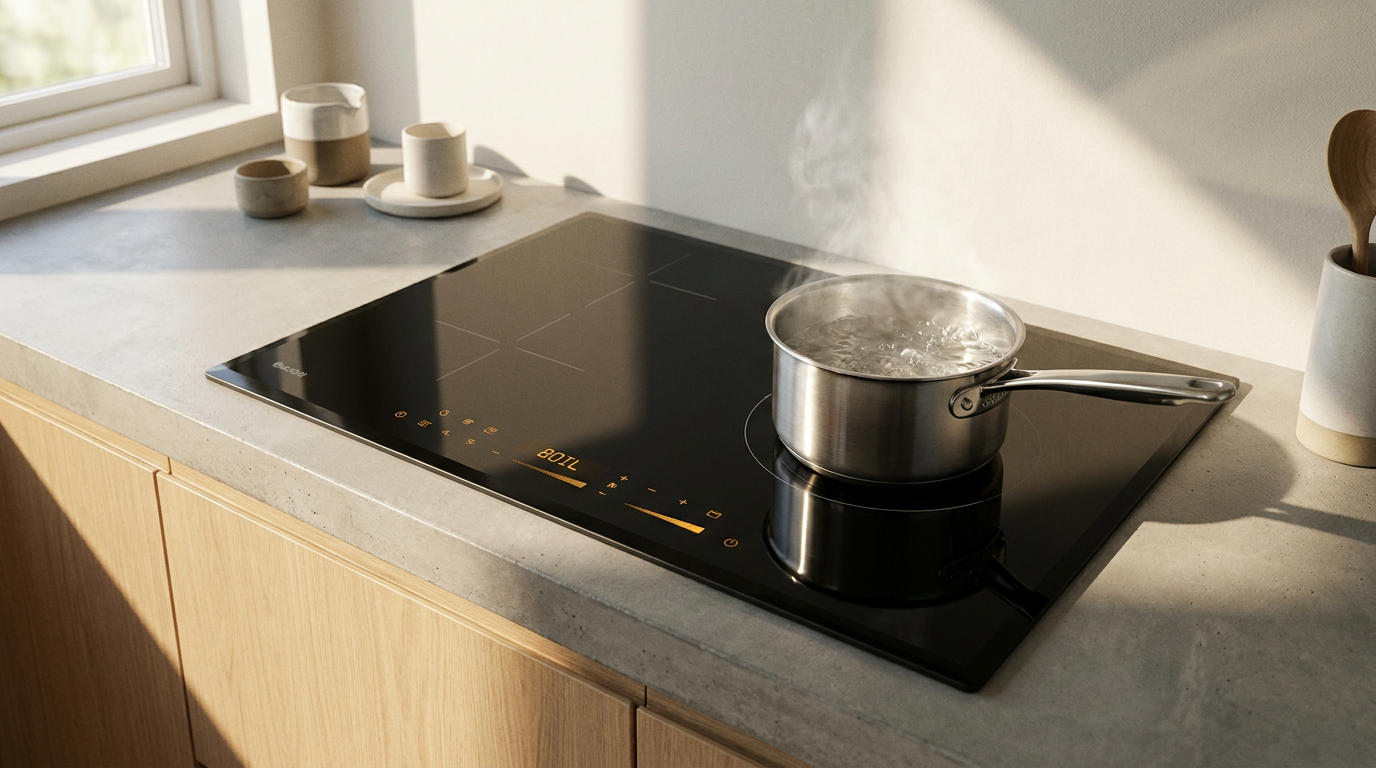
To understand why this shift is happening, one must look at the fundamental physics of how induction technology operates. Unlike gas or traditional radiant electric stoves that rely on thermal conduction—heating a burner element or creating a flame that subsequently heats the bottom of a pot—induction utilizes electromagnetism. Beneath the smooth ceramic-glass surface of the cooktop lies a tightly wound coil of copper wire. When the appliance is turned on, an alternating electrical current flows through this coil, generating a dynamic, high-frequency electromagnetic field that extends just above the surface of the glass.[1][8]
When a compatible pot or pan is placed within this electromagnetic field, the magnetic energy penetrates the metal of the cookware. This interaction induces localized electrical currents, known as eddy currents, to swirl rapidly inside the base of the pan. The natural electrical resistance of the iron in the cookware converts these swirling currents directly into thermal energy. In essence, the cooktop itself does not get hot; instead, the pot becomes its own internal heat source. As soon as the pan is lifted away from the magnetic field, the energy transfer ceases instantly, halting the cooking process with a level of precision that even the most finely tuned gas burners struggle to match.[1][7]

This direct-to-cookware energy transfer unlocks the appliance's most significant advantage: unparalleled efficiency. The U.S. Department of Energy estimates that induction cooktops are up to three times more efficient than their gas counterparts. When cooking with an open gas flame, a massive amount of thermal energy escapes around the sides of the pan, heating the ambient air in the kitchen rather than the food. Gas ranges typically operate at a dismal 40% to 55% efficiency rate. In stark contrast, induction technology successfully transfers between 85% and 90% of its electromagnetic energy directly into the ingredients being cooked, drastically reducing overall household energy consumption and easing the workload on kitchen air conditioning systems.[1][7]
For the everyday home cook, this targeted energy transfer translates into blistering speeds and highly responsive performance. Consumer testing laboratories consistently demonstrate that high-powered induction zones can bring a large pot of water to a rolling boil 20% to 40% faster than equivalent gas or radiant electric burners. Beyond raw speed, the digital controls allow for exact temperature management. Whether a recipe requires a violent sear for a steak or a delicate, sustained simmer for a fragile hollandaise sauce, induction provides immediate thermal feedback. When a cook lowers the heat setting, the temperature drops instantaneously, mirroring the visual responsiveness that chefs have traditionally loved about gas flames.[1][5]
For the everyday home cook, this targeted energy transfer translates into blistering speeds and highly responsive performance.
Beyond culinary performance, the mass migration toward induction is being heavily accelerated by alarming new data regarding indoor air quality and public health. Gas stoves operate by combusting fossil fuels directly inside the home, which releases a toxic cocktail of invisible pollutants into the kitchen environment. These emissions include carbon monoxide, formaldehyde, and high levels of nitrogen dioxide (NO2). A landmark study conducted by researchers at Stanford University revealed that NO2 concentrations in residential bedrooms can easily exceed outdoor safety standards within just one hour of a gas stove being used, and these pollutants can linger in the air for hours after the burners are turned off.[2]

The medical community has grown increasingly vocal about the long-term respiratory consequences of these indoor emissions, particularly for vulnerable populations. Peer-reviewed research now attributes approximately 12.7% of all current childhood asthma cases in the United States directly to the use of gas stoves in the home. This domestic data is bolstered by international public health initiatives; for example, a 2024 trial conducted in Nairobi, Kenya, found that replacing traditional combustion stoves with high-efficiency alternatives led to a significant drop in respiratory symptoms, such as chronic coughing and severe headaches, among local residents. By eliminating combustion entirely, induction cooktops remove this localized source of toxic emissions.[1][4][6]
In addition to protecting respiratory health, induction technology fundamentally alters the physical safety profile of the kitchen. Because the cooktop relies on magnetic fields rather than thermal conduction, the glass surface remains remarkably cool to the touch during operation. The only heat present on the glass is the residual warmth transferred back down from the hot pan. This absence of open flames and red-hot electric coils drastically reduces the risk of accidental burns and eliminates the most common ignition sources for catastrophic house fires. Furthermore, most modern units feature auto-shutoff sensors that immediately cut power if a pot boils over or if the cookware is removed from the zone.[2][4]
Despite the overwhelming benefits, the transition to magnetic cooking is not entirely without friction for consumers. The most immediate and tangible hurdle is cookware compatibility. Because the underlying technology relies entirely on magnetic fields to generate heat, pots and pans must contain a sufficient amount of ferrous metal—such as cast iron, carbon steel, or magnetic stainless steel. Traditional aluminum, pure copper, and glass cookware are completely invisible to the electromagnetic field and will not heat up at all unless they are manufactured with a specialized magnetic base plate. For many households, upgrading to an induction range also necessitates a costly overhaul of their existing kitchen arsenals.[4][8]

Upfront financial costs also remain a significant barrier to universal adoption, although the pricing gap is steadily closing as manufacturing scales up. While entry-level gas and traditional electric ranges can still be procured for relatively low prices, full-size induction models typically demand a premium, often starting around the $1,000 mark and scaling rapidly for premium built-in units. However, market analysts and energy advocates point out that the long-term operational savings on monthly utility bills—frequently subsidized by local government rebates and federal electrification incentives—can often offset this initial purchase premium within the first few years of heavy household use.[1][3][7]
There are also highly specific medical considerations that prospective buyers must navigate. Because induction cooktops function by emitting intermediate-frequency electromagnetic fields (EMFs), there have been ongoing discussions regarding their potential to interfere with sensitive implanted medical devices. While the EMFs are non-ionizing and pose no risk of cellular damage or cancer, individuals who rely on pacemakers or automated insulin pumps are generally advised by health organizations to consult their device manufacturers or primary care physicians before operating an induction range. While clinical studies on actual device interference have yielded mixed results, maintaining a safe distance from the active coils is a standard precautionary recommendation.[4]
Ultimately, the momentum behind the induction revolution appears unstoppable. Appliance manufacturers are pouring research and development budgets into the technology, resulting in a wave of smart, IoT-connected cooktops that feature automated temperature control, pan-size detection, and flexible multi-zone cooking surfaces that can accommodate oversized griddles. As the global electrical grid becomes cleaner and consumers increasingly prioritize both environmental sustainability and personal health, the traditional gas stove is being rapidly relegated to the past. Induction is no longer viewed as a futuristic novelty or a niche luxury item; it is cementing its status as the definitive standard for the modern, high-performance kitchen.[3][8]
How we got here
Early 1900s
First patents for electromagnetic induction cooking are filed, though the technology remains too expensive for home use.
1970s
Westinghouse introduces the first modern induction range for the US market, but high costs limit its commercial success.
2022
A landmark Stanford study links gas stove usage to high indoor nitrogen dioxide levels, sparking widespread public health debates.
2023
The US Department of Energy highlights induction's superiority over traditional gas and electric models in new efficiency guidelines.
2026
Global induction cooktop sales surge past $31 billion as smart features and government electrification rebates drive mass adoption.
Viewpoints in depth
Public Health & Environmental Advocates
Argue that phasing out gas stoves is a critical intervention to reduce childhood asthma and cut residential carbon emissions.
For environmental and public health organizations, the transition to induction is viewed as an urgent necessity rather than a mere appliance upgrade. They point to mounting peer-reviewed evidence—such as the Stanford University study on nitrogen dioxide—demonstrating that gas stoves are a significant source of toxic indoor air pollution. By eliminating combustion inside the home, advocates argue that induction cooktops can drastically reduce the 12.7% of childhood asthma cases currently linked to gas ranges. Furthermore, as electrical grids increasingly rely on renewable energy, moving away from residential methane use is seen as a vital step in combating broader climate change.
Efficiency & Tech Enthusiasts
Champion induction for its superior physics, faster cooking speeds, and precise digital temperature control.
Technology reviewers and energy efficiency experts focus on the sheer physical superiority of electromagnetic heating. They highlight that transferring 85% to 90% of energy directly into the food makes gas—which loses more than half its heat to the ambient air—look like an obsolete technology. For this camp, the appeal lies in the blistering boil times, the instantaneous temperature adjustments, and the integration of smart-home features like automated pan-size detection. They argue that once a cook experiences the precision of induction, the traditional visual cues of a gas flame become unnecessary.
Consumer & Culinary Reviewers
Weigh the performance benefits against the practical hurdles of high upfront costs and cookware replacement.
While generally praising the safety and speed of induction, consumer advocates and traditional culinary reviewers emphasize the practical friction of making the switch. They note that the upfront cost of an induction range remains significantly higher than a basic gas or electric model, which can price out lower-income households despite long-term utility savings. Additionally, they highlight the frustration many home cooks face when discovering their favorite aluminum or copper pans are incompatible with the magnetic field, necessitating a costly cookware overhaul. For some traditionalists, the lack of a visible flame also requires a frustrating learning curve to master temperature control.
What we don't know
- Whether the long-term cost of electricity in all regions will remain lower than natural gas, affecting the lifetime financial savings of switching.
- The exact threshold at which intermediate-frequency EMFs from induction coils might interfere with newer generations of implanted medical devices.
- How quickly the commercial restaurant industry will adopt induction at scale, given the deep-rooted culinary preference for visual gas flames.
Key terms
- Electromagnetic Induction
- The process of using a magnetic field to generate electrical currents inside a conductive material, which in this case creates heat directly within the cookware.
- Eddy Currents
- Loops of electrical current induced within the base of a magnetic pan by the cooktop's alternating magnetic field, generating the heat used for cooking.
- Ferrous Metal
- Metals that contain iron and are therefore magnetic, which is a strict requirement for cookware to function on an induction stove.
- Thermal Conduction
- The traditional method of cooking where heat is transferred from a hot burner or flame to the bottom of a pot through direct physical contact.
- Nitrogen Dioxide (NO2)
- A toxic gas produced by combusting fossil fuels, such as natural gas in traditional stoves, which is strongly linked to respiratory issues like asthma.
Frequently asked
Do I need to buy all new pots and pans for an induction stove?
Only if your current cookware isn't magnetic. Cast iron, carbon steel, and most stainless steel work perfectly. If a magnet sticks firmly to the bottom of your pan, it will work on induction.
Is an induction cooktop safer than an electric glass-top stove?
Yes. Because induction heats the pan directly rather than heating the glass surface, the cooktop itself stays much cooler, significantly reducing the risk of accidental burns.
Can induction stoves interfere with pacemakers?
Induction cooktops emit intermediate-frequency electromagnetic fields. While generally safe, health organizations recommend that individuals with pacemakers or insulin pumps consult their doctor before use.
Does induction cooking actually save money?
While the upfront cost of the appliance is typically higher, induction is up to three times more energy-efficient than gas. Over the lifespan of the appliance, this efficiency often translates to noticeable savings on utility bills.
Sources
Source coverage
8 outlets
3 viewpoints surfaced








[1]U.S. Department of EnergyEfficiency & Tech Enthusiasts
Induction Stoves: Are They Right for You?
Read on U.S. Department of Energy →[2]Natural Resources Defense CouncilPublic Health & Environmental Advocates
Induction Cooking: Better for You and the Environment
Read on Natural Resources Defense Council →[3]360 Research ReportsEfficiency & Tech Enthusiasts
Global Induction Cooktops Market Size, Share, and Trends 2026
Read on 360 Research Reports →[4]Greater Boston Physicians for Social ResponsibilityPublic Health & Environmental Advocates
The Health Benefits of Switching to Induction Cooking
Read on Greater Boston Physicians for Social Responsibility →[5]ReviewedConsumer & Culinary Reviewers
The Best Induction Ranges of 2026
Read on Reviewed →[6]The Cool DownPublic Health & Environmental Advocates
New study makes a compelling case for why you should switch to an induction stove
Read on The Cool Down →[7]Oregon Citizens' Utility BoardEfficiency & Tech Enthusiasts
Induction Stoves Are the More Efficient Options
Read on Oregon Citizens' Utility Board →[8]Factlen Editorial TeamConsumer & Culinary Reviewers
Synthesis by Factlen editorial team
Read on Factlen Editorial Team →

Every angle. Every day.
Get shopping stories with full source coverage and perspective breakdowns delivered to your inbox.