
State Department Memo Approves ICE Detention of Colombian Activist Over Criticism of Trump Ally
U.S. immigration authorities detained prominent Colombian influencer Beto Coral in Arizona. While DHS cited a decade-long visa overstay, a State Department memo reveals the arrest was approved because Coral's activism against a U.S.-aligned foreign politician allegedly undermined American foreign policy.
By Javier Cruz
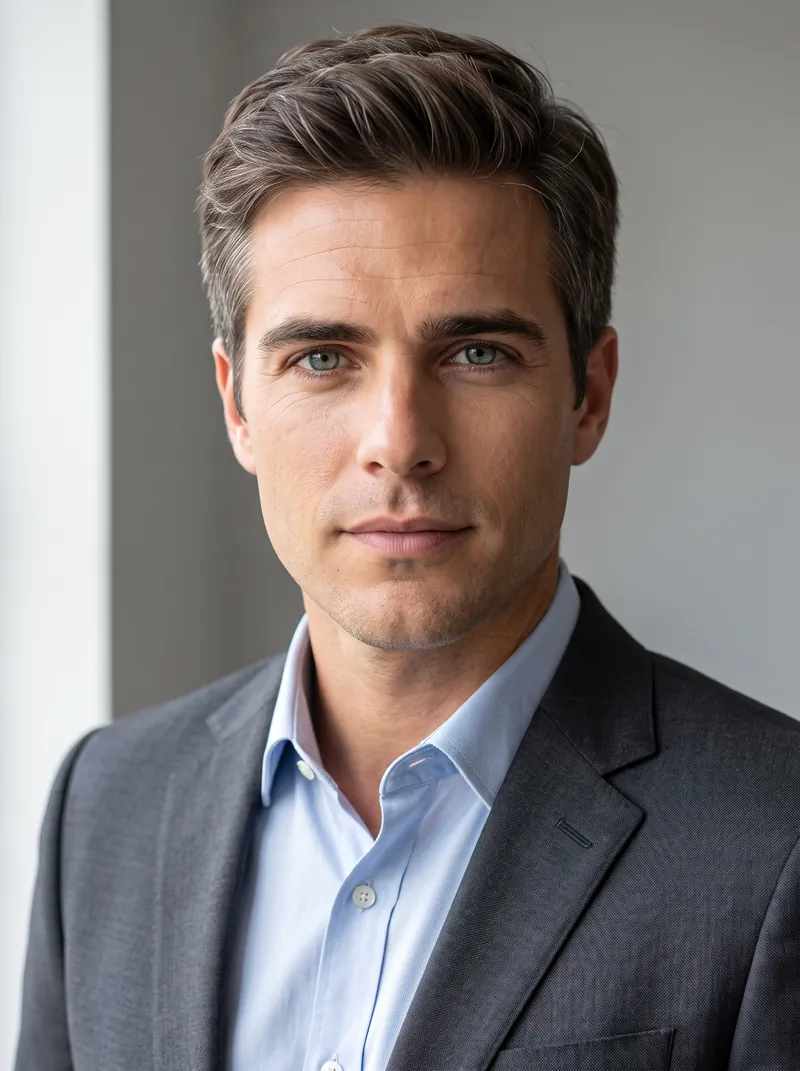
ICE agents detained prominent Colombian political activist Beto Coral outside his home in Arizona this week, sparking an immediate international diplomatic clash between Washington and Bogota. While the Department of Homeland Security publicly cited a decade-long visa overstay as the sole reason for the arrest, a newly revealed internal memo indicates the operation was directly approved by Secretary of State Marco Rubio.
The revelation transforms what was initially presented as a routine immigration enforcement action into a major foreign policy dispute, raising profound questions about the intersection of deportation powers and political speech.[1][2]
The State Department memo justifies Coral's detention by arguing that his vocal activism undermines U.S. foreign policy objectives in Latin America. Specifically, the document cites Coral's intense criticism of Abelardo de la Espriella, a far-right Colombian presidential candidate who has been publicly endorsed by Donald Trump.
Coral had recently traveled to Miami to lead protests against de la Espriella and to file a formal lawsuit against the politician, accusing him of recording Coral without consent. By classifying these domestic protests as a threat to international diplomacy, the administration has explicitly linked Coral's immigration status to his political opposition of a U.S.-backed foreign candidate.[1]
Coral, who has lived in the United States since 2015 and has a pending political asylum application, managed to record a brief video during his arrest. In the footage, he embraces his minor son while telling supporters that federal agents explicitly mentioned Rubio's orders as they took him into custody.
Coral originally fled Colombia after receiving severe death threats related to his family's history; his father, a police captain, was assassinated by the Medellín Cartel in 1993 after providing the intelligence that allowed authorities to locate drug lord Pablo Escobar. Coral has maintained that returning to Colombia would put his life in immediate danger.
The legal mechanism facilitating the arrest relies on a rarely invoked provision of the 1952 Immigration and Nationality Act. This specific clause grants the Secretary of State the unilateral authority to deport foreign nationals if their presence or activities are deemed contrary to American foreign policy interests. Crucially, the Trump administration has consistently argued that determinations made under this foreign policy provision are entirely exempt from federal court review, effectively stripping detainees of the ability to challenge the underlying justification for their removal before an immigration judge.[3]
Rubio has increasingly utilized this sweeping power during his tenure, previously applying the same foreign policy designation to detain Haitian businessmen and pro-Palestinian student activists studying at American universities. Immigration lawyers and civil rights advocates warn that expanding this authority to cover social media criticism of foreign politicians represents a dangerous escalation. Legal experts argue that weaponizing deportation to silence dissent effectively strips immigrants and asylum seekers of their First Amendment protections, creating a chilling effect where foreign nationals are terrified to participate in any political discourse.[1][3]
Despite the geopolitical implications outlined in the memo, the Department of Homeland Security has maintained a strict law-and-order framing in all of its public statements regarding the case. A DHS spokesperson confirmed that Coral originally entered the United States on a B1/B2 tourist and business visa in December 2015, an authorization that permitted a maximum stay of six months.
The agency emphasized that Coral blatantly violated the nation's immigration laws by remaining in the country for approximately ten years after that initial permit expired, rendering him an undocumented immigrant subject to standard removal proceedings.[2]
The agency confirmed that Coral will remain in ICE custody pending his formal removal, though officials noted he could avoid prolonged detention by utilizing the CBP Home App to arrange his own departure. Under a newly implemented program, the U.S. government is offering undocumented immigrants a $2,600 stipend and a free flight if they agree to voluntarily 'self-deport.' Conservative commentators and political opponents of Coral in Colombia have echoed the DHS stance, arguing that clear visa violations warrant immediate deportation regardless of an individual's political profile or social media influence.[2]
The arrest has severely strained the already fragile diplomatic relationship between the United States and Colombia. Colombian President Gustavo Petro, a leftist leader who frequently clashes with Washington's regional agenda, immediately condemned the detention as an act of blatant 'political persecution.' Petro ordered his Foreign Ministry to intervene on Coral's behalf, arguing that the United States is actively interfering in Colombia's upcoming presidential election by utilizing federal law enforcement to silence one of de la Espriella's most prominent and effective critics.[2]
Domestic political pushback is also mounting rapidly in Washington. Representative Jesus 'Chuy' Garcia led a coalition of ten other congressional Democrats in sending a formal letter of protest to Rubio, Treasury Secretary Scott Bessent, and Acting Attorney General Todd Blanche.
The lawmakers raised severe alarms over the administration's overt interference in South American democratic elections and condemned the weaponization of ICE against political dissidents, warning that the U.S. is abandoning its historical commitment to protecting political refugees. The letter, which was endorsed by several prominent human rights organizations and faith-based groups, demanded immediate transparency regarding the specific criteria used to justify Coral's detention.[2]
As Coral awaits his fate inside an immigration detention center, the broader implications of his case are setting a stark and immediate precedent. If the State Department can successfully classify domestic political speech and peaceful protests as deportable foreign policy offenses, the landscape for non-citizens in the U.S. will fundamentally change. Millions of foreign nationals, students, and asylum seekers residing in the United States may now face the threat of summary removal simply for participating in the political discourse of their home countries or criticizing U.S.-aligned politicians abroad.[1][3]
Key points
- ICE detained Colombian activist Beto Coral in Arizona, with DHS publicly citing a 10-year visa overstay.
- A newly revealed memo shows Secretary of State Marco Rubio approved the detention on foreign policy grounds.
- The administration argues Coral's criticism of a Trump-aligned Colombian presidential candidate undermines U.S. interests.
- Colombian President Gustavo Petro condemned the arrest as political persecution and election interference.
What we don’t know
- Whether federal courts will agree to review the Secretary of State's use of the foreign policy deportation authority.
- If Coral will choose to accept the $2,600 self-deportation offer or remain in ICE custody to fight the removal.
- How the detention will impact the diplomatic relationship between the U.S. and the Petro administration in Colombia.
How we got here
Dec 1993
Coral's father, a police captain, is assassinated by the Medellín Cartel after helping locate Pablo Escobar.
Dec 2015
Coral enters the U.S. on a B1/B2 tourist visa and subsequently applies for political asylum due to threats.
Early June 2026
Coral travels to Miami to protest and file a lawsuit against Colombian presidential candidate Abelardo de la Espriella.
June 16, 2026
ICE agents detain Coral in Arizona; DHS cites a 10-year visa overstay.
June 17, 2026
Colombian President Gustavo Petro publicly condemns the arrest as political persecution.
June 19, 2026
Reports emerge of a State Department memo approving the detention on foreign policy grounds.
- Colombian Government & Supporters
- Views the detention as blatant political persecution and censorship, orchestrated to protect a far-right presidential candidate in Colombia from criticism.
- Civil Rights & Immigration Advocates
- Warns that using a 1952 foreign policy clause to deport immigrants for political speech violates First Amendment protections and weaponizes ICE against asylum seekers.
- U.S. Administration & Allies
- Argues Coral is an undocumented immigrant who violated visa laws for a decade, and that his activism against U.S.-backed foreign candidates actively undermines American diplomatic interests.
Perspectives this story doesn't cover
- Colombian diaspora voters in the U.S.
- First Amendment constitutional scholars
Sources
Source coverage
3 outlets
3 viewpoints surfaced



- [1]NYTCivil Rights & Immigration Advocates
Memo by Rubio Approved Detention of Immigrant Who Criticized Trump Ally
Read on NYT → - [2]NewsweekU.S. Administration & Allies
Trump Administration Defends Arrest of Colombian Activist Beto Coral
Read on Newsweek → - [3]Miami HeraldCivil Rights & Immigration Advocates
Federal courts flooded as Rubio uses foreign policy authority for deportations
Read on Miami Herald →
More in News & Politics
See all →Michigan Senate
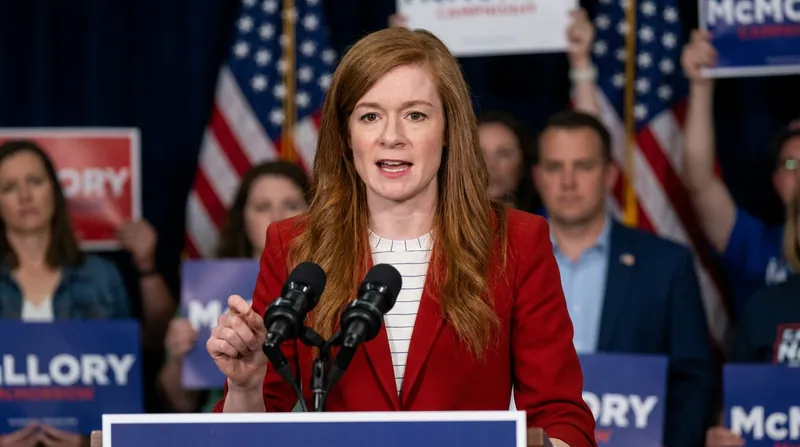
Michigan State Senator Mallory McMorrow Suspends U.S. Senate Campaign
5 sources
Democratic Primaries
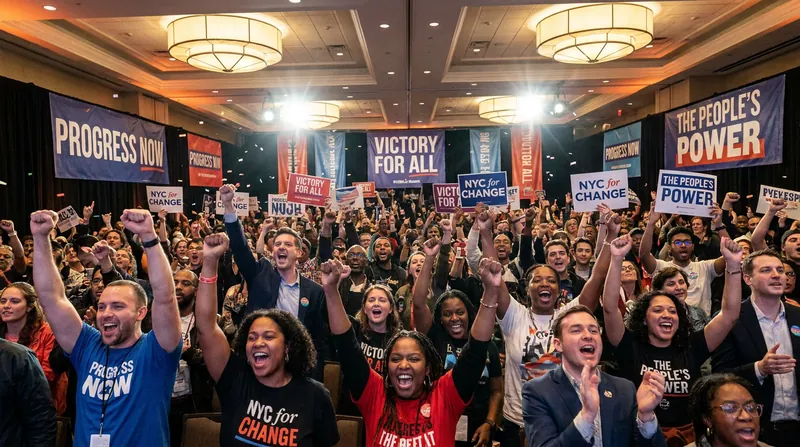
Democratic Socialists Sweep New York Primaries, Unseating Key Incumbents
5 sources
Reproductive Rights
Virginia Enacts Landmark Right to Contraception and Equity Laws
4 sources
Redistricting Fight
Georgia Republicans Decline to Redraw Election Maps in Special Session Following Supreme Court Ruling
6 sources
Comments
Every angle. Every day.
Get News & Politics stories with full source coverage and perspective breakdowns, free every day.