
How the Aging Gut Drives Memory Loss—and How Science is Reversing It
A landmark study reveals that age-related cognitive decline is heavily driven by the gut microbiome dampening signals to the brain. By targeting specific bacteria or stimulating the vagus nerve, researchers have successfully restored youthful memory and neuroplasticity in older mice.
By Sofia Matos

In short
- Age-related memory loss is heavily influenced by the gut microbiome, not just intrinsic brain decay.
- An overgrowth of specific gut bacteria in older age triggers inflammation that blunts the vagus nerve.
- Weakened interoceptive signals from the gut to the brain reduce hippocampal neurogenesis and plasticity.
For centuries, the slow fade of memory and cognitive agility has been viewed as an inevitable consequence of the brain's intrinsic wear and tear. But a paradigm-shifting body of evidence is rewriting the fundamental biology of aging, suggesting that the brain's decline is not an isolated, localized event.
Instead, it is heavily orchestrated by the trillions of microbes residing in the gastrointestinal tract. We are increasingly learning that the gut microbiome acts as a master regulator of systemic health, and its gradual deterioration over time sends a cascade of disruptive, inflammatory signals directly to the brain's memory centers, fundamentally altering how we age.[1][3]
To truly understand this connection, we must first look at a hidden, often-overlooked sense called interoception. While exteroception encompasses our outward-facing senses like sight, hearing, and touch, interoception is the brain's continuous ability to perceive the internal state of the body—monitoring everything from heart rate and respiratory rhythm to digestion and immune activity.
Just as our vision dims and our hearing fades with advancing age, our interoceptive senses also begin to dull. This critical loss of internal communication, researchers are now discovering, is not just a symptom of aging, but a primary, active driver of age-associated cognitive decline.[1]
A landmark investigation published in the journal Nature by an interdisciplinary team of researchers at Stanford University, the Arc Institute, and the University of Pennsylvania provides the most detailed, high-resolution map to date of this gut-brain aging axis.
The research team sought to answer a profound, long-standing question in neurobiology: if the microbiome predictably changes as we age, does that microbial shift actively cause memory loss, or is it merely a passive byproduct of getting older? To find out, they designed an elegant, highly controlled experiment to completely uncouple the age of the microbiome from the biological age of the host animal.[1]
The scientists accelerated the microbiome aging of young, healthy mice by co-housing them with 18-month-old mice, a process that allowed the young animals to naturally acquire an "old" microbial ecosystem through shared environments. The results were startlingly rapid.
Within just one month of exposure, the young mice began failing short-term memory tests, specifically the novel object recognition task, performing as poorly and demonstrating the same cognitive deficits as their elderly counterparts. The transfer of aged gut bacteria was entirely sufficient to induce severe cognitive decline in a physically young, neurologically healthy brain, proving the gut's immense power over cognition.[1][2]
Crucially, this gut-driven cognitive decline proved to be entirely reversible, shattering the notion that memory loss is permanent. When the researchers treated these young mice with a targeted regimen of antibiotics to deplete the newly acquired aged microbiome, their youthful cognitive function and memory retention were fully restored.
Furthermore, in a parallel experiment, when older mice received a fecal microbiome transplant from younger animals, their aging brains exhibited a massive resurgence in neuroplasticity. This renewed adaptability allowed them to overcome severe neurological deficits that typically only respond to therapeutic intervention during early childhood development. This established a clear, causal link: the state of the microbiome dictates the plasticity of the brain.[2][3]
But what exactly is the aged microbiome doing on a molecular level to actively sabotage memory formation? The research team meticulously traced the dysfunction to a specific bacterial culprit that steadily accumulates as the gut ecosystem ages: a microbe known as Parabacteroides goldsteinii.
While this is likely not the only microbe involved in the complex aging process, its overgrowth represents a critical, measurable tipping point in the gut's metabolic output. As P. goldsteinii proliferates and dominates the microbiome, it churns out abnormally high levels of specific metabolic byproducts known as medium-chain fatty acids (MCFAs).[1]
These medium-chain fatty acids do not stay quietly confined within the digestive tract. Instead, they trigger a potent, localized immune response, actively engaging and activating gut-resident myeloid cells. These specialized immune cells, sensing the abnormal and rising accumulation of fatty acids as a threat, begin producing a wave of inflammatory signaling molecules, most notably a cytokine called Interleukin-1 beta (IL-1β). This localized, chronic inflammation serves as the biological wedge that effectively severs the clear, vital line of communication between the gastrointestinal system and the central nervous system.[1]
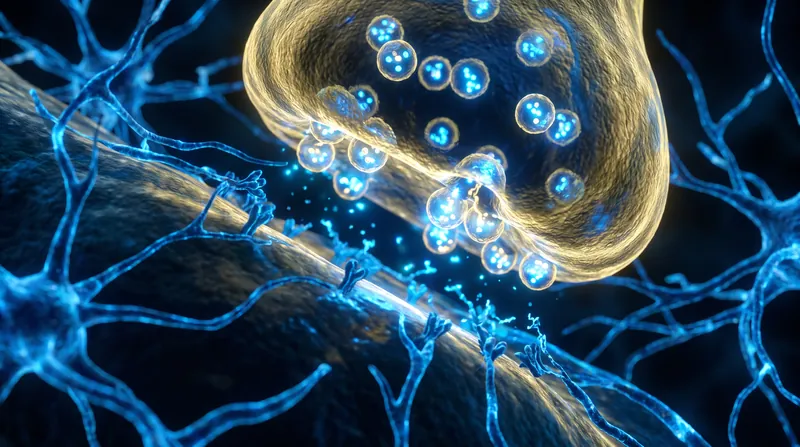
The primary conduit for this essential communication is the vagus nerve, a massive, complex neural superhighway that continuously transmits interoceptive data from the visceral organs directly to the brainstem. The researchers discovered that the inflammatory IL-1β molecules directly bind to and blunt the activity of the sensory neurons feeding into the vagus nerve. The nerve essentially becomes numbed and desensitized, severely weakening the vital interoceptive signals that the brain relies on to maintain its structural integrity, regulate mood, and support continuous cognitive function.[1]
When the brain is chronically deprived of this robust, continuous sensory input from the gut, the neurological consequences are profound and far-reaching. The weakened interoceptive signal eventually reaches the hippocampus, the brain's primary engine for memory encoding, spatial navigation, and learning. Without the necessary stimulation from the vagus nerve, hippocampal neurogenesis—the critical biological process responsible for the birth of new neurons—dramatically slows down. The existing neural networks simultaneously lose their inherent plasticity, making it increasingly difficult for the brain to form, organize, and retain new memories.[1][4]
The immense strength of this evidence pack lies in the unprecedented precision with which the researchers were able to manipulate each individual step of the signaling pathway. By mapping the exact molecular chain of events—from bacterial overgrowth to fatty acid production, to immune inflammation, to vagal nerve dampening—science has suddenly gained multiple, distinct therapeutic targets to intervene in the aging process. Rather than treating the brain as a black box, researchers can now approach cognitive decline as a mechanical, step-by-step systemic failure that can be intercepted at various points.[1][3]
One of the most promising and immediate interventions tested by the team was the direct, artificial stimulation of the vagus nerve. By utilizing advanced techniques to artificially activate the specific gut sensory neurons that feed into the vagus, the researchers were able to bypass the microbiome's inflammatory blockade entirely. This targeted neural stimulation successfully restored youthful cognitive function and robust memory formation in old mice, definitively proving that the brain's capacity for memory was not permanently destroyed, but merely dormant and waiting for the right interoceptive signal to awaken it.
Another highly innovative approach focused on eliminating the source of the inflammation before it could even begin. The team utilized targeted phage therapy—a treatment deploying specialized viruses that exclusively infect and destroy specific strains of bacteria—to selectively eradicate Parabacteroides goldsteinii from the aged gut ecosystem. By precisely removing the bacteria responsible for the excess medium-chain fatty acids, they successfully halted the inflammatory cascade at its absolute origin, allowing the vagus nerve to naturally resume its normal signaling and organically restoring hippocampal function.[1]
Another highly innovative approach focused on eliminating the source of the inflammation before it could even begin.
Pharmacological interventions targeting the immune response also demonstrated remarkable promise in the trials. By administering specialized drugs designed to inhibit GPR84—the specific receptor on myeloid immune cells that detects the medium-chain fatty acids—researchers successfully prevented the release of the inflammatory IL-1β cytokine. This receptor-blocking strategy effectively shielded the vagus nerve from the microbiome's toxic metabolic output, offering a highly viable potential blueprint for future oral medications designed to protect the aging brain from systemic inflammation.[1][3]
Despite these extraordinary, paradigm-shifting breakthroughs, transparent uncertainty remains regarding exactly how seamlessly these findings will translate from highly controlled murine models to complex human patients. The human microbiome is vastly more intricate than that of a laboratory mouse, heavily influenced by decades of diverse diets, environmental exposures, antibiotic use, and genetic variables. Furthermore, human cognitive decline, particularly in devastating conditions like Alzheimer's disease, involves intricate, compounding pathologies like amyloid plaques and tau tangles that may not be fully resolved by gut-brain interventions alone.[3][4]
Nevertheless, the broader implications for human health and longevity are absolutely staggering. To put the scale of the microbiome into perspective, the human gut contains roughly 150 times more unique genes than the human genome itself, representing a massive, highly modifiable ecosystem that we are only just beginning to fully understand and harness. If interoceptive dysfunction proves to be a generalizable, foundational principle of human aging, it could completely revolutionize the field of preventative neurology and change how we approach elder care.[1][4]
Instead of passively waiting for severe cognitive symptoms to appear and attempting to treat the brain directly—a reactive strategy that has yielded decades of frustrating clinical trial failures—modern medicine could shift toward proactively maintaining the youthfulness of the gut.
This preventative paradigm might involve personalized prebiotics, advanced postbiotics, or highly targeted dietary interventions specifically designed to suppress the growth of detrimental, inflammation-causing bacteria while promoting a healthy, robust microbial balance. By treating the gut as the primary shield for the brain, we could delay the onset of cognitive symptoms by years, or even decades, fundamentally altering the trajectory of aging.[2][3]
We are rapidly entering an era where cognitive longevity may be primarily managed through the lens of gastroenterology rather than traditional neurology. The emerging concept of "interoceptomimetics"—specialized drugs or therapies engineered to simulate healthy, youthful gut-brain communication—represents a completely novel and highly lucrative frontier in the global fight against neurodegeneration. By ensuring the brain continues to receive strong, clear, and uninterrupted signals from the body, we may be able to sustain vital neuroplasticity far into our later years, preserving our core identities.[1]
Ultimately, this groundbreaking research offers a profoundly uplifting and empowering perspective on the aging process. It thoroughly dismantles the fatalistic, long-held view of memory loss as an unstoppable, one-way street of neurological decay. The brain's hardware may not be irreparably broken; it might simply be receiving the wrong software updates from an aging, dysbiotic gut.
By learning to precisely tune the microbiome and amplify the body's internal interoceptive dialogue, science is actively paving the way for a future where our minds can remain as vibrant, sharp, and adaptable as they were in our youth.[3]
Key terms
- Interoception
- The brain's ability to perceive and monitor the internal state of the body, such as digestion, heart rate, and inflammation.
- Vagus Nerve
- A major neural superhighway that transmits sensory information from the body's internal organs directly to the brainstem.
- Neuroplasticity
- The brain's ability to reorganize itself by forming new neural connections throughout life, crucial for learning and memory.
- Myeloid Cells
- A type of immune cell in the gut that can trigger inflammation when it detects abnormal bacterial byproducts.
- Phage Therapy
- A medical treatment that uses specific viruses (bacteriophages) to target and destroy harmful bacteria without affecting the rest of the microbiome.
Frequently asked
Can taking probiotics prevent memory loss?
While general probiotics promote gut health, current commercial strains are not specifically designed to target the pathways linked to memory. Future 'interoceptomimetic' therapies will likely require highly specific, engineered bacterial interventions.
What is the vagus nerve's role in memory?
The vagus nerve acts as a sensory conduit, sending constant updates from the gut to the brain. When this signal is strong, it stimulates the hippocampus to generate new neurons and encode memories.
Why do researchers use mice for these studies?
Mice have a relatively short lifespan and a microbiome that can be strictly controlled in a laboratory setting, allowing scientists to isolate specific variables and prove direct cause-and-effect relationships.
Is cognitive decline reversible in humans?
It is not yet proven in humans, but the success of reversing memory loss in older mice suggests that the brain retains the capacity to heal if the underlying inflammatory signals are corrected.
Viewpoints in depth
The Microbiome-First View
Viewing the gut as the master clock of biological aging.
Researchers in this camp argue that cognitive decline should not be treated as an isolated neurological event, but rather as a downstream symptom of gastrointestinal aging. By pointing to the fact that fecal transplants can transfer cognitive states between animals, they suggest that maintaining a 'young' microbiome is the most effective way to preserve systemic health. Their focus is on identifying specific bacterial strains, like Parabacteroides goldsteinii, whose metabolic byproducts actively sabotage the body's internal communication networks.
The Neural Plasticity View
Focusing on the brain's dormant capacity to heal itself when given the right signals.
Neuroscientists emphasize that the brain's hardware is often still intact even in old age; it is simply lacking the necessary sensory input to trigger memory formation. This perspective highlights the success of vagal nerve stimulation, which bypasses the gut entirely to deliver synthetic interoceptive signals to the brain. By proving that the hippocampus can resume neurogenesis when properly stimulated, this camp offers a highly optimistic view of the brain's resilience and its latent ability to overcome age-related deficits.
The Translational Skeptics
Highlighting the massive leap between mouse models and human clinical reality.
While acknowledging the elegance of the gut-brain pathway discovered in mice, methodologists warn against premature optimism. The human microbiome is exponentially more complex, shaped by decades of varied diets, antibiotics, and environmental factors that laboratory mice never experience. Furthermore, human cognitive decline often involves structural pathologies—such as the amyloid plaques seen in Alzheimer's disease—that cannot be fully modeled in rodents. This camp insists on rigorous human trials before declaring the microbiome the key to curing dementia.
- Microbiome Researchers
- Argue that the gut microbiome is the primary upstream driver of systemic aging and cognitive decline.
- Neuroscientists
- Focus on the brain's inherent plasticity and view the vagus nerve as the critical intervention point to restore memory.
- Translational Medicine Advocates
- Emphasize the potential to rapidly convert these findings into non-invasive human therapies like prebiotics and phage treatments.
- Skeptics & Methodologists
- Caution that murine models of aging often fail to capture the complexity of human neurodegenerative diseases like Alzheimer's.
Perspectives this story doesn't cover
- Geriatricians treating human patients with advanced dementia
- Dietitians focusing on long-term nutritional impacts on the aging microbiome
Sources
Source coverage
4 outlets
4 viewpoints surfaced




- [1]NatureMicrobiome Researchers
Intestinal interoceptive dysfunction drives age-associated cognitive decline
Read on Nature → - [2]New ScientistTranslational Medicine Advocates
Faecal transplant makes the brains of old mice act young again
Read on New Scientist → - [3]Factlen Editorial TeamTranslational Medicine Advocates
Synthesis by Factlen editorial team
Read on Factlen Editorial Team → - [4]National Institutes of Health (NIH)Skeptics & Methodologists
The gut microbiome and adult hippocampal neurogenesis
Read on National Institutes of Health (NIH) →
More in Science
See all →Genomic Medicine
Ultra-Rapid Genomic Test Cuts Brain Tumor Diagnosis Time From Weeks to Hours
3 sources
Neural Mechanics
How Saltatory Conduction and Myelin Sheaths Propagate the Action Potential at 100 Times the Speed
9 sources
Brain Mapping
Largest Single-Cell Molecular Atlas Maps Shared Mechanisms Across Alzheimer's, Parkinson's, and Schizophrenia
5 sources
Synaptic Transmission
The Synaptotagmin-SNARE Complex: How a Calcium Signal Triggers Millisecond-Fast Synaptic Vesicle Fusion
9 sources
Comments
Every angle. Every day.
Get Science stories with full source coverage and perspective breakdowns, free every day.