
How Assumable Mortgages Work: The Strategy Buyers Are Using to Secure 3% Rates
As average mortgage rates remain elevated, homebuyers are increasingly utilizing assumable FHA and VA loans to inherit a seller's historically low interest rate. Here is how the mechanism works, the math behind the 'equity gap,' and what buyers need to know.
By Factlen Editorial Team
- Homebuyers
- View assumable mortgages as a vital affordability hack to bypass high current interest rates.
- Home Sellers & Agents
- Leverage low-rate assumable loans as a premium marketing asset to justify higher asking prices.
- Mortgage Servicers
- Face administrative burdens processing assumptions, prompting federal agencies to allow higher processing fees.
What's not represented
- · Secondary market investors
- · Homebuilders competing with existing homes
Why this matters
With average mortgage rates hovering near 6.5%, securing a 3% rate can save a homebuyer hundreds of thousands of dollars in interest over the life of a loan. Understanding how to navigate the assumption process opens up a powerful path to homeownership that many buyers overlook.
Key points
- Assumable mortgages allow buyers to inherit a seller's existing interest rate and loan balance.
- Only government-backed loans (FHA, VA, USDA) are legally assumable; conventional loans are not.
- Buyers must cover the 'equity gap' between the home's purchase price and the remaining loan balance.
- Sellers are increasingly using their low-rate assumable loans as a premium marketing tool.
- HUD recently updated guidelines to allow servicers to charge higher fees, aiming to speed up processing times.
The 2026 housing market remains locked in a standoff. With the Federal Reserve signaling a hawkish stance under Chair Kevin Warsh, average 30-year fixed mortgage rates have settled stubbornly around 6.5%.[1][6]
This environment has created the widely discussed "lock-in effect," where homeowners are reluctant to sell and abandon the sub-4% rates they secured prior to 2022.[6]
However, a growing cohort of savvy homebuyers has discovered a legal, federally backed workaround: the assumable mortgage.[2]
An assumable mortgage allows a buyer to take over a seller's existing loan, inheriting their exact interest rate, current principal balance, and remaining repayment term.[5]
If a seller locked in a 3% rate in 2021, a qualified buyer can step into their shoes and continue making the exact same monthly payments at that 3% rate, bypassing today's higher borrowing costs entirely.[2]
The savings can be staggering. On a $400,000 loan, the difference between a 3% rate and a 6.5% rate equates to roughly $850 per month, or more than $300,000 in interest savings over a 30-year term.[6]

But there is a significant catch that buyers must navigate, known in the real estate industry as the "equity gap."[2]
When you assume a mortgage, you are only taking over the remaining balance of the loan, not the current market price of the home.[5]
For example, if a home is selling for $500,000 and the seller's remaining mortgage balance is $300,000, the buyer must make up the $200,000 difference.[6]
For example, if a home is selling for $500,000 and the seller's remaining mortgage balance is $300,000, the buyer must make up the $200,000 difference.
Buyers typically bridge this gap by bringing cash to the closing table or by taking out a second mortgage, though finding lenders willing to write secondary financing behind an assumed first mortgage can require diligent searching.[1]

Not all mortgages are eligible for this maneuver. Conventional loans, which make up the majority of the U.S. market, almost universally contain a "due-on-sale" clause that requires the loan to be paid off completely when the property changes hands.[5]
By law, however, government-backed loans—specifically those insured by the Federal Housing Administration (FHA), the Department of Veterans Affairs (VA), and the Department of Agriculture (USDA)—are assumable.[3]
These government-backed loans account for roughly 20% of all active mortgages in the United States, meaning millions of homes currently possess this hidden, highly valuable feature.[6]
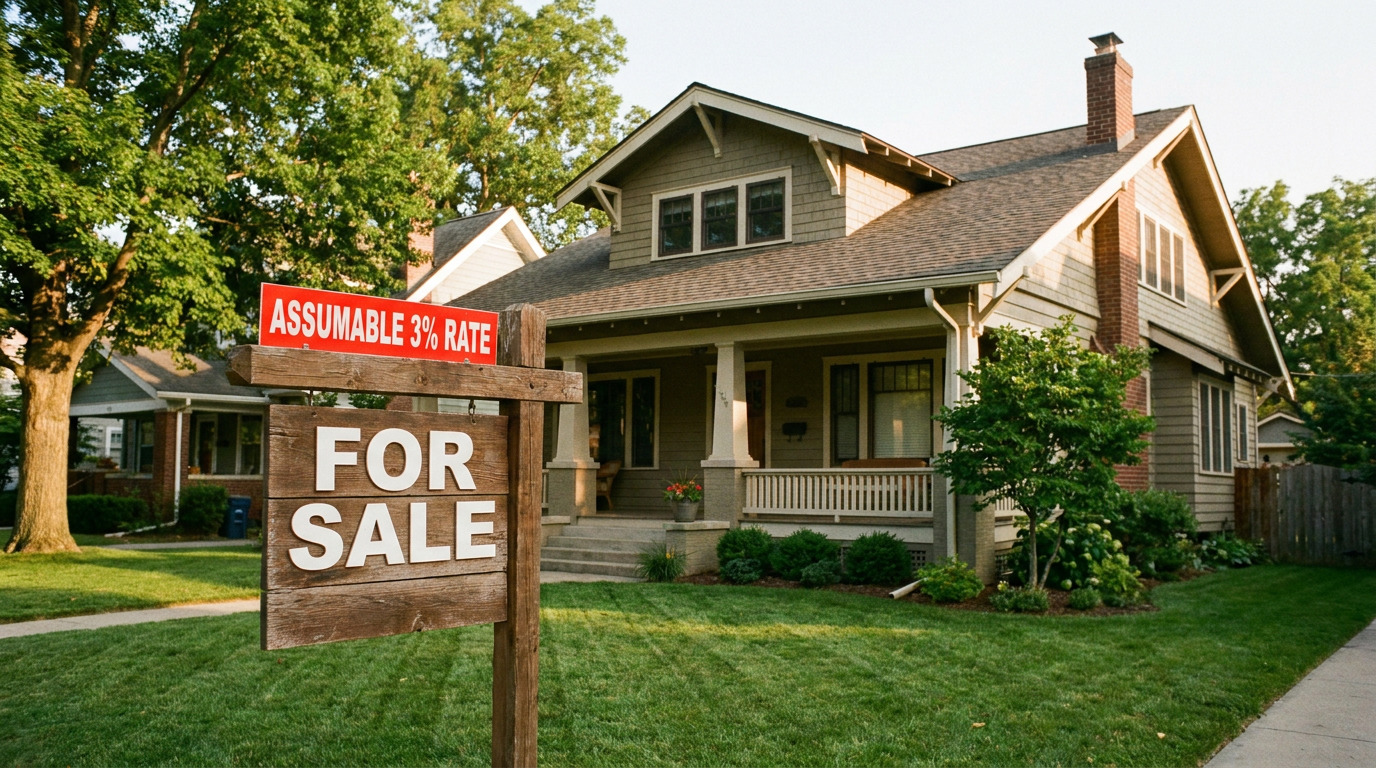
For sellers, having an assumable FHA or VA loan at a low rate has become a premium marketing tool. Real estate agents are increasingly highlighting "Assumable 2.75% Rate!" in listing descriptions to justify higher asking prices and attract bidding wars.[1]

The actual process of assuming a loan, however, requires patience. Buyers must still qualify for the mortgage based on their credit score and debt-to-income ratio, just as they would for a brand-new loan.[3]
Historically, mortgage servicers—the companies that manage the daily administration of the loan—have been slow to process assumptions because federal regulations capped the fees they could charge, making the labor-intensive paperwork unprofitable.[1]
Recognizing this bottleneck, the Department of Housing and Urban Development (HUD) recently updated its guidelines, allowing servicers to charge higher processing fees to properly staff their assumption departments and speed up closing times.[3]
For VA loans, there is an additional nuance: while anyone can assume a VA loan (not just veterans), the original veteran seller's VA entitlement remains tied up in the property until the loan is paid off, unless the buyer is also a qualified veteran who substitutes their own entitlement.[4]
Despite the administrative friction and the need to cover the equity gap, the financial mathematics of mortgage assumption are simply too compelling for many buyers to ignore.[6]
As the real estate industry adapts to a prolonged period of elevated rates, the assumable mortgage has transitioned from an obscure piece of mortgage trivia into one of the most powerful wealth-building strategies available to today's homebuyers.[6]
How we got here
2020–2021
Millions of homeowners lock in historically low mortgage rates below 4%.
2022–2024
Interest rates rise sharply, creating a 'lock-in effect' that freezes the housing market.
2025–2026
Federal agencies like HUD update servicer compensation rules to alleviate bottlenecks in the assumption process.
Viewpoints in depth
Homebuyers' View
Assumable mortgages represent a rare loophole to achieve affordability in a high-rate environment.
For buyers priced out of the market by 6.5% interest rates, finding an assumable 3% loan is the equivalent of turning back the clock. While the process requires significant upfront cash to bridge the equity gap, the long-term savings on monthly payments and total interest make it one of the most financially advantageous moves a buyer can make. Many are willing to endure 90-day closing times and strict underwriting just to secure the lower rate.
Sellers' View
A low-rate assumable loan is a highly valuable asset that can command a premium purchase price.
Sellers who hold FHA or VA loans are realizing that their mortgage is just as valuable as an upgraded kitchen or a new roof. By advertising an assumable sub-4% rate, sellers can attract a larger pool of buyers who would otherwise be unable to afford the home at current market rates. This unique leverage often allows sellers to hold firm on their asking price and avoid offering concessions.
Mortgage Servicers' View
Processing assumptions is a labor-intensive task that has historically been unprofitable.
From the perspective of loan servicers, assumptions have long been an administrative headache. Unlike originating a new loan, which generates significant fees, processing an assumption requires the same rigorous underwriting but was historically capped at a few hundred dollars in allowable fees. Recent regulatory changes by HUD have increased these fee limits, giving servicers the financial incentive to properly staff their assumption departments and clear backlogs.
What we don't know
- Whether secondary lenders will begin offering standardized 'equity gap' loan products to make assumptions easier for cash-strapped buyers.
- How long the Federal Reserve will maintain current interest rates, which dictates the ongoing demand for assumable loans.
Key terms
- Due-on-Sale Clause
- A provision in most conventional mortgages requiring the borrower to repay the loan in full if the property is sold, preventing the loan from being assumed.
- Equity Gap
- The financial difference between the home's agreed-upon purchase price and the remaining balance of the assumed mortgage, which the buyer must cover.
- Loan Servicer
- The company that handles the daily administration of a mortgage, including collecting payments and processing assumption applications.
- VA Entitlement
- The specific dollar amount the Department of Veterans Affairs guarantees on a veteran's mortgage, which remains locked into an assumed property unless the buyer is also a veteran.
Frequently asked
Can I assume a conventional mortgage?
Generally, no. Most conventional loans contain a 'due-on-sale' clause that requires the loan to be paid in full when the property is sold. Assumptions are primarily limited to FHA, VA, and USDA loans.
Do I need to be a veteran to assume a VA loan?
No, non-veterans can assume a VA loan if they meet the financial qualifications. However, the original veteran seller's VA entitlement remains tied to the property until the loan is fully paid off, which may prevent them from taking out another VA loan.
How long does a mortgage assumption take?
Assumptions typically take longer than standard mortgage originations, often ranging from 60 to 90 days, because the servicer must manually underwrite the buyer's financial profile.
Sources
Source coverage
6 outlets
3 viewpoints surfaced






[1]The Wall Street JournalHome Sellers & Agents
Home Buyers Are Flocking to Assumable Mortgages to Beat High Rates
Read on The Wall Street Journal →[2]BankrateHomebuyers
What is an assumable mortgage and how does it work?
Read on Bankrate →[3]U.S. Department of Housing and Urban DevelopmentMortgage Servicers
FHA Assumable Mortgage Guidelines and Servicer Requirements
Read on U.S. Department of Housing and Urban Development →[4]U.S. Department of Veterans Affairs
Transferring your VA home loan to a buyer
Read on U.S. Department of Veterans Affairs →[5]Consumer Financial Protection BureauMortgage Servicers
Understanding Mortgage Assumptions and Due-on-Sale Clauses
Read on Consumer Financial Protection Bureau →[6]Factlen Editorial Team
Synthesis by Factlen editorial team
Read on Factlen Editorial Team →


Every angle. Every day.
Get finance stories with full source coverage and perspective breakdowns delivered to your inbox.