
How Solid-State Batteries Actually Work (And Why They Are Replacing Lithium-Ion)
By replacing flammable liquid electrolytes with stable solid materials, next-generation batteries promise to double EV range, charge in 10 minutes, and eliminate fire risks.
By Factlen Editorial Team
- Legacy Automakers
- Focused on scaling the technology reliably and integrating it into premium vehicle lineups to offset initial manufacturing costs.
- Battery Innovators
- Focused on rapid iteration, licensing proprietary chemical platforms, and disrupting the traditional battery supply chain.
- Pragmatic Analysts
- Emphasize that traditional lithium-ion is still getting cheaper, meaning solid-state must overcome massive cost hurdles to reach the mass market.
What's not represented
- · Lithium mining communities
- · Independent repair shops
Why this matters
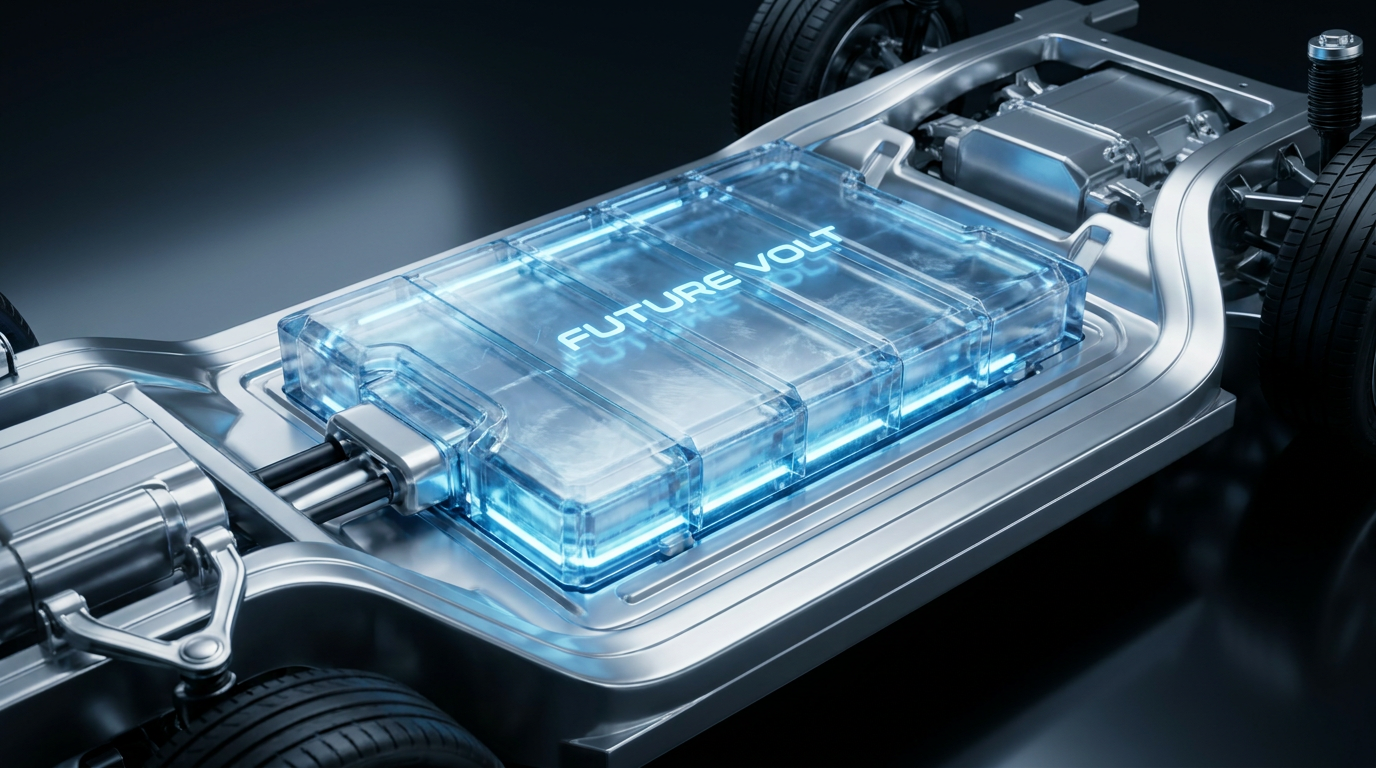
Solid-state batteries are the key to making electric vehicles lighter, safer, and capable of driving over 600 miles on a single 10-minute charge. As the technology moves from the lab to the factory floor in 2026, it marks the biggest shift in consumer energy storage in decades.
Key points
- Solid-state batteries replace flammable liquid electrolytes with a solid ceramic or sulfide material.
- This allows the use of a lithium-metal anode, massively increasing the battery's energy density.
- EVs equipped with the technology could exceed 1,000 kilometers of range and charge in 10 minutes.
- The technology eliminates the fire risks associated with traditional lithium-ion batteries.
- Automakers are moving from lab research to pilot manufacturing, targeting a 2027-2028 commercial launch.
The electric vehicle revolution has a ceiling, and it is made of liquid. For decades, lithium-ion batteries have powered everything from smartphones to electric SUVs, fundamentally changing the global energy landscape. But traditional lithium-ion technology is approaching its physical and chemical limits, forcing engineers to look for a radical new architecture.[6]
The next major leap is the solid-state battery. Promising to double driving ranges, slash charging times to a mere 10 minutes, and virtually eliminate the risk of battery fires, solid-state technology is widely considered the holy grail of energy storage.[3][5]
For years, the technology was dismissed by skeptics as being perpetually "five years away." But in 2026, the industry is finally crossing the threshold from laboratory research to mass industrialization. As major automakers lock in manufacturing partnerships and pilot lines spin up, the solid-state era is officially beginning.[2][6]
To understand why solid-state is so revolutionary, you have to look at how a standard lithium-ion battery works. Current batteries consist of a positive electrode (cathode), a negative electrode (anode, usually made of graphite), and a liquid electrolyte that shuttles lithium ions back and forth between them to create an electrical current.[4]

That liquid electrolyte is the system's Achilles' heel. It is highly flammable, requiring heavy protective casing and complex cooling systems to prevent thermal runaway—the chain reaction that causes battery fires. Furthermore, the liquid limits how much energy can be safely packed into a single cell without risking instability.[4][5]
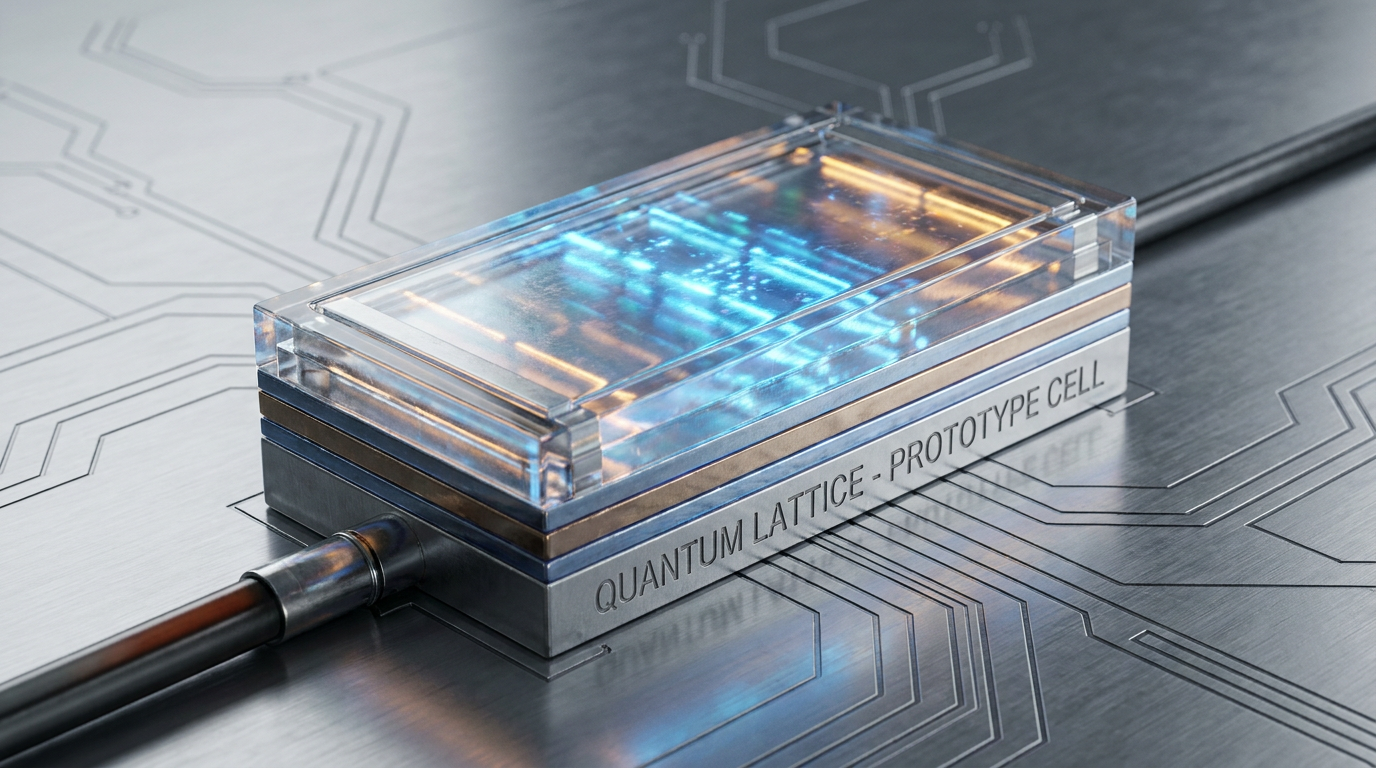
A solid-state battery solves this by replacing the liquid with a solid material—typically a specialized ceramic, glass, or sulfide compound. This solid layer acts as both the highway for the lithium ions and an impenetrable physical separator between the positive and negative electrodes.[4]
This single substitution unlocks a cascade of engineering advantages. The most significant is the ability to ditch the bulky graphite anode. Because the solid separator is so robust, it prevents the growth of "dendrites"—microscopic, needle-like spikes of lithium that can pierce a liquid separator and cause a catastrophic short circuit.[5]
Without the fear of dendrites, engineers can use a pure lithium-metal anode. Lithium metal stores drastically more energy than graphite, meaning a battery of the exact same physical size and weight can hold significantly more power.[4][5]
Without the fear of dendrites, engineers can use a pure lithium-metal anode.
The numbers represent a generational leap. Traditional lithium-ion batteries generally max out at an energy density of around 250 to 300 watt-hours per kilogram (Wh/kg). Solid-state prototypes are currently achieving 450 Wh/kg, with theoretical limits stretching well beyond 800 Wh/kg.[1][5]

For the average driver, this translates to the end of range anxiety. A solid-state battery pack could push an electric vehicle well past 1,000 kilometers (about 620 miles) on a single charge, all without adding extra weight or bulk to the vehicle's chassis.[3]
Charging speeds also see a dramatic improvement. Liquid electrolytes become unstable and degrade when subjected to ultra-fast charging currents. Solid electrolytes, however, can handle immense power loads safely. Companies like QuantumScape and Toyota have demonstrated cells capable of charging from 10% to 80% in just 10 to 15 minutes—approaching the convenience of a traditional gas station.[1][3]
Then there is the safety profile. You can puncture a solid-state cell, crush it, or expose it to extreme heat, and it will not burst into flames. This intrinsic safety means automakers can strip out the heavy armor and cooling systems currently required in EVs, making the vehicles lighter and even more efficient.[4][5]
If the physics are so superior, why aren't these batteries in driveways today? The answer lies in the brutal difficulty of manufacturing. Building a perfect solid-state cell in a pristine laboratory is one thing; manufacturing millions of them flawlessly at high speeds is an entirely different challenge.[6]
One of the primary hurdles has been "interfacial resistance." Unlike liquids, which naturally conform to the shape of the electrodes, solid materials are rigid. Maintaining perfect microscopic contact between the solid electrolyte and the electrodes as the battery naturally swells and shrinks during charging has required immense engineering precision.[5][6]

However, the industry is rapidly solving these bottlenecks. In June 2026, Honda announced a major partnership with QuantumScape, explicitly stating that the "research phase is over" and the focus is now on mass production. QuantumScape's new "Eagle Line" is already demonstrating that these cells can be manufactured at gigawatt-hour scales.[1][2]
Toyota, which holds thousands of patents in sulfide-based solid-state technology, has also solidified its roadmap. The automaker is targeting 2027 to 2028 for the commercial launch of its first solid-state EVs, likely debuting the technology in premium Lexus models where higher price tags can absorb the initial manufacturing costs.[3]

The transition will not be instantaneous. Traditional lithium-ion batteries, particularly cheaper Lithium Iron Phosphate (LFP) variants, are still improving and will dominate the budget and mid-range markets for years to come. Solid-state will start at the top of the market and slowly trickle down as economies of scale take hold.[3][6]
But the trajectory is now locked in. By solving the fundamental chemical limitations of liquid electrolytes, solid-state batteries are poised to redefine what electric vehicles, consumer electronics, and renewable energy grids are capable of. The next era of energy storage is finally taking shape.[6]
How we got here
2020
Toyota demonstrates an early, functional solid-state battery prototype on a test track.
2024
Battery startups begin shipping 'B-samples' to automakers for rigorous real-world testing.
2026
Companies like QuantumScape and Honda launch pilot manufacturing lines to prove the technology can scale.
2027–2028
Targeted commercial launch of the first mass-produced solid-state electric vehicles.
Viewpoints in depth
Automakers & OEMs
Focused on scaling the technology reliably and integrating it into premium vehicle lineups.
For legacy automakers like Toyota, Honda, and Volkswagen, solid-state technology is the key to unlocking the next generation of electric mobility. Their primary focus is no longer on basic chemistry, but on industrialization—proving that these highly sensitive cells can be manufactured at a rate of thousands per hour without defects. Because early production runs will be expensive, automakers plan to introduce the technology in high-margin luxury vehicles, such as Lexus models or premium motorcycles, where buyers are willing to pay a premium for extreme range and 10-minute charging.
Battery Innovators
Focused on rapid iteration, licensing proprietary chemical platforms, and disrupting the traditional supply chain.
Pure-play battery technology companies like QuantumScape view themselves as the architects of the new energy economy. Rather than building massive, capital-intensive car factories, their strategy is to perfect the core technology—specifically the solid separator and lithium-metal anode—and license it to existing manufacturers. They argue that their proprietary breakthroughs in materials science are the only way to overcome the interfacial resistance and dendrite problems that have plagued solid-state research for decades.
Pragmatic Analysts
Emphasize that traditional lithium-ion is still getting cheaper, meaning solid-state must overcome massive cost hurdles.
Industry skeptics and market pragmatists caution against viewing solid-state as an immediate market conqueror. They point out that traditional lithium-ion technology is a moving target. Specifically, Lithium Iron Phosphate (LFP) batteries have become incredibly cheap, durable, and safe, dominating the mass market. Pragmatists argue that while solid-state will undoubtedly win the performance crown, it may remain a niche, expensive option for sports cars and heavy-duty applications for a decade before it can compete on price with standard lithium-ion.
What we don't know
- Exactly how much a solid-state battery pack will cost consumers when it first hits the market.
- How well the solid electrolytes will hold up to a decade of extreme winter and summer temperature fluctuations in real-world driving.
- Whether the supply chain for specialized solid-state materials (like sulfides) can scale fast enough to meet global demand.
Key terms
- Electrolyte
- The medium inside a battery that allows ions to flow between the positive and negative electrodes to create an electrical current.
- Anode
- The negative electrode of a battery. In traditional batteries, it is made of graphite; in solid-state batteries, it can be made of pure lithium metal.
- Dendrites
- Microscopic, needle-like formations of lithium metal that can grow inside a battery, potentially piercing the separator and causing a short circuit.
- Energy Density
- A measure of how much energy a battery can hold relative to its weight or volume, typically expressed in watt-hours per kilogram (Wh/kg).
Frequently asked
When can I buy a car with a solid-state battery?
Major automakers like Toyota and Honda are targeting 2027 to 2028 for their first commercial solid-state vehicles, which will likely debut in premium or luxury models.
Will solid-state batteries be more expensive?
Initially, yes. The manufacturing processes are entirely new and lack the massive economies of scale that currently make traditional lithium-ion batteries cheap. Prices are expected to drop as production scales up into the 2030s.
Do solid-state batteries catch fire?
They are vastly safer than current batteries. Because they do not contain a flammable liquid electrolyte, they are highly resistant to thermal runaway, even if punctured, crushed, or overheated.
Sources
Source coverage
6 outlets
3 viewpoints surfaced






[1]QuantumScapeBattery Innovators
QS Blueprint for the Future of Energy Storage
Read on QuantumScape →[2]ElectrekLegacy Automakers
Honda and QuantumScape announce new partnership to commercialize solid-state batteries
Read on Electrek →[3]Toyota GlobalLegacy Automakers
Toyota sets out advanced battery technology roadmap
Read on Toyota Global →[4]Flash BatteryBattery Innovators
What are solid-state batteries and how do they work
Read on Flash Battery →[5]WikipediaPragmatic Analysts
Solid-state battery
Read on Wikipedia →[6]Factlen Editorial TeamPragmatic Analysts
Synthesis by Factlen editorial team
Read on Factlen Editorial Team →

Every angle. Every day.
Get guides stories with full source coverage and perspective breakdowns delivered to your inbox.