
Electric Vehicles vs. Plug-in Hybrids: The 2026 Buyer's Guide
As battery ranges expand and charging networks grow, the choice between a fully electric vehicle and a plug-in hybrid comes down to daily driving habits, maintenance costs, and long-distance flexibility.
By Factlen Editorial Team
- Full EV Advocates
- Argue that the mechanical simplicity, zero emissions, and lower running costs make pure electric vehicles the superior long-term investment.
- PHEV Pragmatists
- Value the safety net of a gas engine for road trips, eliminating range anxiety while still allowing for electric daily commutes.
- Total Cost Analysts
- Focus on the math, weighing upfront purchase prices against long-term maintenance, tax incentives, and fuel savings.
What's not represented
- · Apartment dwellers without access to home charging infrastructure
- · Rural drivers in areas with underdeveloped fast-charging networks
Why this matters
Purchasing a vehicle is one of the largest household expenses. Choosing the right powertrain in 2026 dictates not only upfront costs but thousands of dollars in long-term maintenance, fuel savings, and resale value.
Key points
- EVs offer the lowest running costs, saving drivers roughly 70% per kilometer compared to gas.
- PHEVs provide 50 to 80 kilometers of electric range, backed by a gas engine for unlimited road-trip flexibility.
- Because they house two powertrains, PHEVs are mechanically complex and require traditional engine maintenance.
- EVs have only about 20 moving parts in their drivetrain, eliminating the need for oil changes and spark plugs.
- To realize the financial and environmental benefits of a PHEV, owners must plug it in daily.
- EVs are holding their resale value better as cities globally implement zero-emission zones.
The automotive landscape in 2026 has fundamentally shifted. As the traditional internal combustion engine begins its slow phase-out across global markets, buyers are increasingly presented with two primary electrified paths: the Battery Electric Vehicle (EV) and the Plug-in Hybrid Electric Vehicle (PHEV).[6]
For years, the PHEV was viewed as the ultimate stepping stone—a way to dip a toe into electric driving without fully abandoning the familiarity and convenience of the gas pump. But as EV battery technology matures and public charging infrastructure expands exponentially, the calculus for the average driver has changed.[2][6]
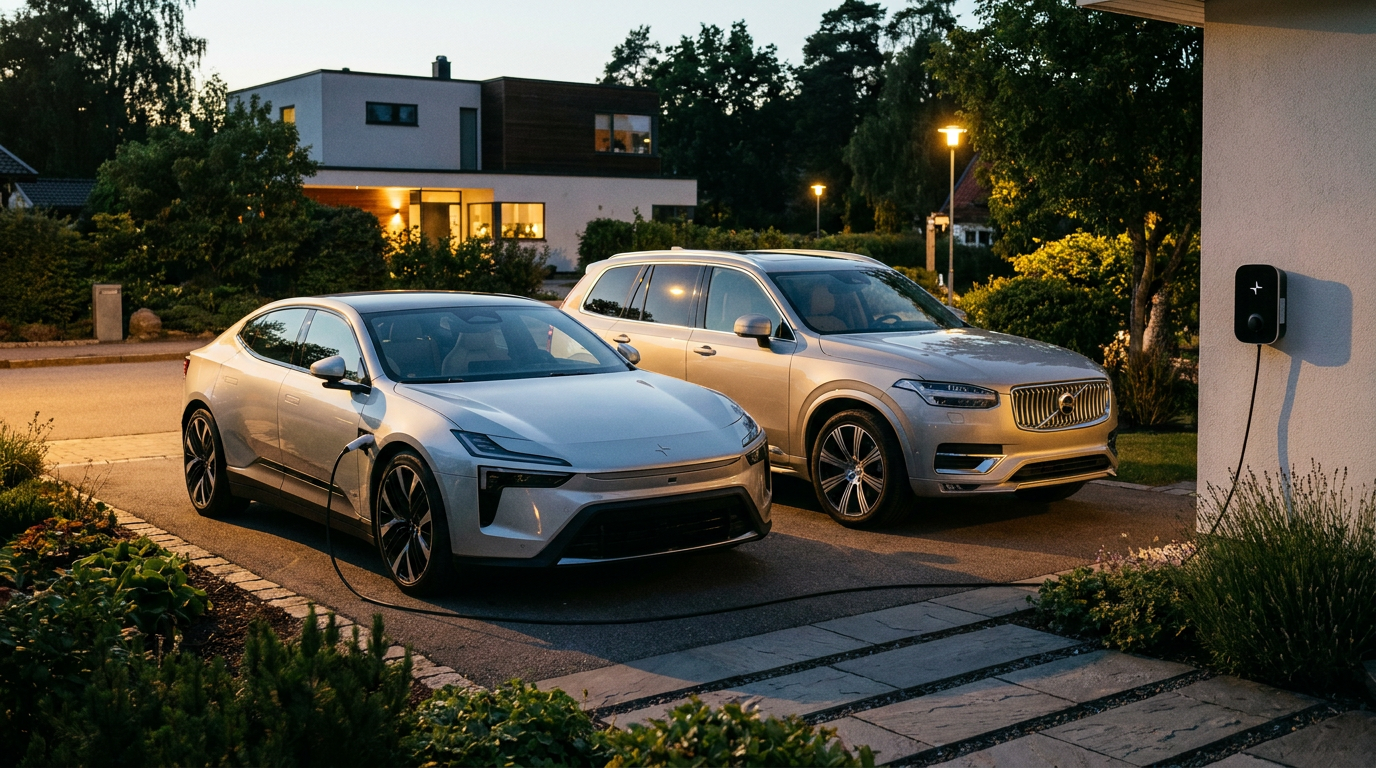
At the core of the decision is a mechanical divergence. An EV relies entirely on a large battery pack and electric motors, producing zero tailpipe emissions. A PHEV, by contrast, houses two complete powertrains: a smaller battery designed for short electric trips and a traditional gas engine that seamlessly takes over when the battery depletes.[1][2]
This dual-nature makes the PHEV highly versatile, but it introduces a significant hidden cost: maintenance complexity. Because it houses both an electric system and an internal combustion engine, a PHEV is arguably the most mechanically complex vehicle on the road today.[3][4]
Owners of PHEVs must still pay for traditional engine upkeep. This includes regular oil changes, spark plug replacements, fluid flushes, and transmission servicing, all while simultaneously managing a high-voltage electrical system. Over the lifespan of the vehicle, this dual maintenance requirement can become a financial burden.[4][5]
Conversely, pure EVs offer remarkable mechanical simplicity. With roughly 20 moving parts in their drivetrain, they completely eliminate the need for traditional engine maintenance. There are no mufflers to rust, no timing belts to snap, and thanks to regenerative braking, even the brake pads last significantly longer than those on a standard car.[3][5]

The financial divergence continues at the "pump." In 2026, charging an EV at home—particularly on off-peak overnight electricity tariffs—costs roughly 70% less per kilometer than fueling a comparable gas car.[5]
PHEVs can match these incredibly low daily running costs, but only under strict behavioral conditions. If a driver commutes within the PHEV's typical 50 to 80-kilometer electric range and plugs the vehicle in every single night, they will rarely burn a drop of gasoline during the workweek.[3][5]
PHEVs can match these incredibly low daily running costs, but only under strict behavioral conditions.
However, real-world data reveals a behavioral catch: many PHEV owners simply forget—or choose not—to plug in. When driven with a depleted battery, a PHEV becomes a heavy gas car, carrying the dead weight of its electric system and often consuming more fuel than a standard, non-plug-in hybrid.[1][5]
From an environmental standpoint, the lifecycle emissions of both vehicles heavily favor the pure EV over the long term. While EVs carry a higher initial carbon footprint due to the energy-intensive process of battery manufacturing, they typically reach a carbon "break-even" point within two to three years of driving.[1][6]
Over a 15-year lifespan, an average EV produces roughly 30 tons of carbon, compared to the PHEV's higher output, which fluctuates wildly based on how often the owner utilizes the electric-only mode and avoids the gas engine.[6]

Despite the maintenance and emissions advantages of pure EVs, the PHEV remains a powerful psychological and practical tool for one specific scenario: the long-distance road trip.[2][4]
While 2026 EVs comfortably boast ranges of 400 to 600 kilometers, long journeys still require strategic planning around fast-charging networks. For drivers in rural areas, or those who frequently embark on cross-country trips, the PHEV eliminates "range anxiety" entirely.[3][5]
The ability to pull into any gas station and refuel in three minutes provides a safety net that many families still prioritize, especially if the household only owns one vehicle.[2][6]

Yet, buyers must also consider the future-proofing of their investment. Global cities are increasingly implementing "Zero-Emission Zones" that penalize or ban vehicles with tailpipes, including PHEVs running on gas.[5]
Consequently, pure EVs are beginning to hold their resale value more robustly in the secondary market, as government incentives and tax structures heavily favor 100% electric adoption and begin phasing out PHEV subsidies.[2][4][5]
Ultimately, the choice requires an honest audit of daily habits. An EV fits perfectly for drivers with home charging access, predictable daily commutes, and a desire for minimal maintenance and maximum long-term savings.[3][6]

Viewpoints in depth
Full EV Advocates
Argue that the mechanical simplicity, zero emissions, and lower running costs make pure electric vehicles the superior long-term investment.
Proponents of pure electric vehicles emphasize the long-term financial and environmental math. By eliminating the internal combustion engine entirely, EVs remove the most failure-prone and maintenance-heavy components of a vehicle. Advocates point out that while the upfront cost of an EV might be higher, the total cost of ownership quickly tips in its favor due to electricity being significantly cheaper than gasoline, alongside the elimination of oil changes and transmission services. Furthermore, as global cities increasingly adopt zero-emission zones, EV advocates argue that buying a vehicle with a tailpipe in 2026 is a poor investment that will suffer in resale value.
PHEV Pragmatists
Value the safety net of a gas engine for road trips, eliminating range anxiety while still allowing for electric daily commutes.
PHEV pragmatists argue that the technology offers the perfect bridge for the modern driver, particularly in one-car households. While acknowledging the higher maintenance complexity, they highlight that a PHEV's 50 to 80-kilometer electric range covers the vast majority of daily commutes, allowing owners to drive electrically 90% of the time. However, when it comes to holiday road trips, rural driving, or emergencies, the gas engine provides an unbeatable safety net. For these drivers, the ability to refuel at any gas station in three minutes outweighs the maintenance savings of a pure EV, completely eliminating the 'range anxiety' associated with public charging infrastructure.
Total Cost Analysts
Focus on the math, weighing upfront purchase prices against long-term maintenance, tax incentives, and fuel savings.
Financial analysts and fleet managers look strictly at the numbers, noting that the 'winner' depends entirely on driver behavior. They point out that a PHEV is only cost-effective if the owner is disciplined enough to plug it in every night; otherwise, they are paying a premium for a heavy vehicle with poor fuel economy. Analysts also closely track shifting government policies. With many regions actively phasing out tax incentives and salary sacrifice benefits for PHEVs by 2026, the financial scale is tipping heavily toward pure EVs, which continue to enjoy subsidies, lower taxation, and exemption from urban emission charges.
What we don't know
- How quickly secondary markets will devalue PHEVs as zero-emission zones become more common globally.
- Whether solid-state battery technology will arrive soon enough to make current EV ranges obsolete.
- The exact timeline for when public fast-charging infrastructure will reach parity with gas stations in rural areas.
Key terms
- BEV (Battery Electric Vehicle)
- A vehicle powered entirely by electricity stored in a large battery pack, producing zero tailpipe emissions.
- PHEV (Plug-in Hybrid Electric Vehicle)
- A vehicle with both a battery-powered electric motor and a traditional gas engine, capable of short electric-only trips before switching to gas.
- Regenerative Braking
- A system in electrified vehicles that captures kinetic energy during deceleration and uses it to recharge the battery.
- Zero-Emission Zone
- Urban areas where vehicles producing tailpipe emissions are either charged a fee to enter or banned entirely.
Frequently asked
Can I drive a PHEV without ever plugging it in?
Yes, but it will operate as a heavy gas hybrid. This results in poor fuel economy and negates the environmental and financial benefits of the electric battery.
Do EVs really cost less to maintain?
Yes. Because EVs lack an internal combustion engine, they do not require oil changes, spark plugs, or transmission fluid, saving hundreds of dollars annually.
How long do EV batteries last in 2026?
Modern EV batteries are designed to last the lifetime of the vehicle, typically retaining over 80% of their capacity after 150,000 to 200,000 miles of driving.
Are there tax benefits for buying a PHEV?
Incentives are shifting. While PHEVs previously enjoyed the same tax breaks as EVs, many regions are phasing out PHEV subsidies by 2026 to favor zero-emission vehicles.
Sources
Source coverage
6 outlets
3 viewpoints surfaced






[1]NRMATotal Cost Analysts
EV vs Hybrid vs PHEV: What's the difference?
Read on NRMA →[2]ZenithTotal Cost Analysts
EV vs PHEV: Which should you choose?
Read on Zenith →[3]ElectraFull EV Advocates
Electric Car or Plug-in Hybrid: Which One Should You Choose?
Read on Electra →[4]Cars.co.zaPHEV Pragmatists
EV vs PHEV vs REEV: Which is best?
Read on Cars.co.za →[5]Mobile Studio 24hFull EV Advocates
EV vs PHEV: 2026 Comparison at a Glance
Read on Mobile Studio 24h →[6]Factlen Editorial TeamTotal Cost Analysts
Synthesis by Factlen editorial team
Read on Factlen Editorial Team →

Every angle. Every day.
Get guides stories with full source coverage and perspective breakdowns delivered to your inbox.