
Boy George Reclaims 'Karma Chameleon' With AI-Assisted Re-Recording, Launching Artist-First Startup
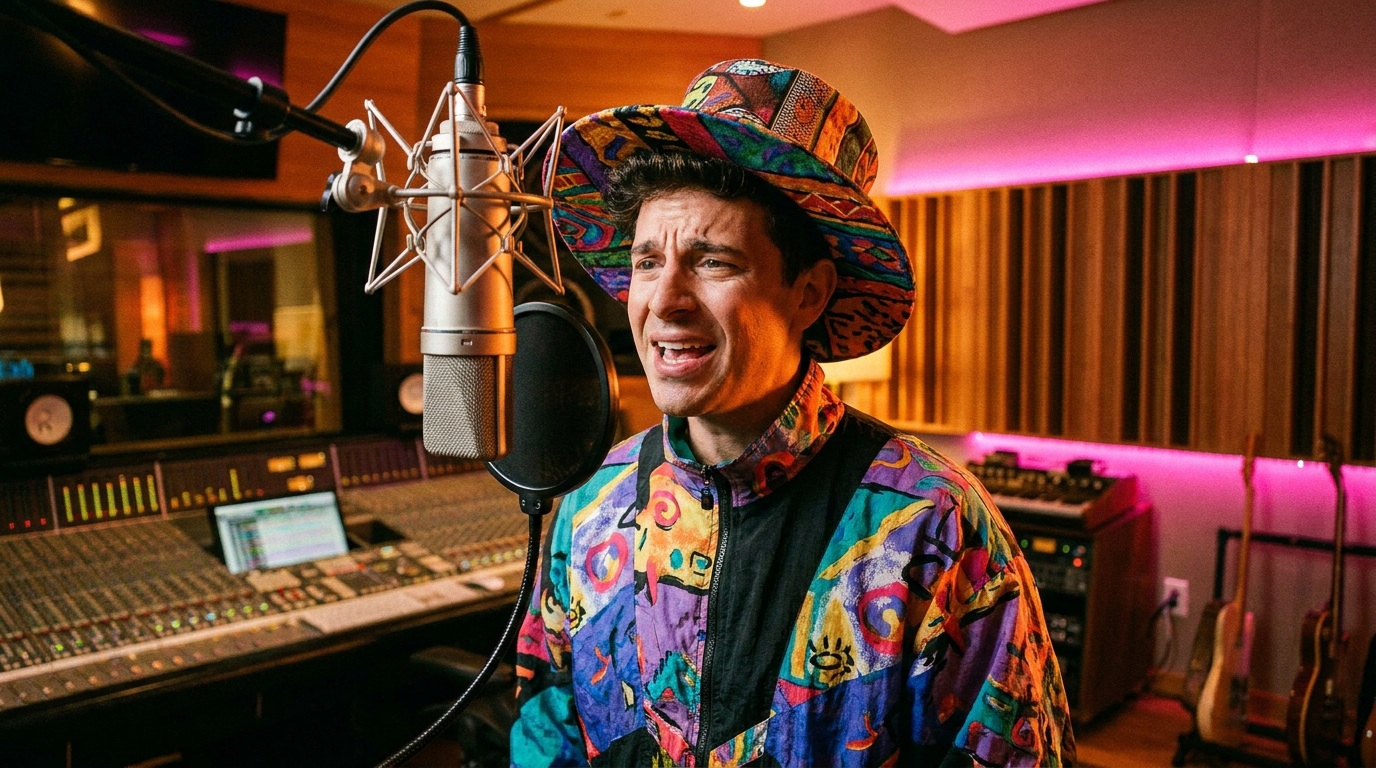
Boy George has released a newly recorded version of Culture Club's 1983 hit 'Karma Chameleon,' utilizing ethical AI to match his original vocal tone. The release marks the launch of Artist Included, a startup designed to help legacy musicians create new, artist-owned masters.
By Factlen Editorial Team
- Legacy Artists & Management
- Heritage acts view AI as a tool for financial liberation and catalog control.
- Music Technology Advocates
- Technologists emphasize the ethical, consent-based application of AI in music.
- Traditional Rights Holders
- Original record labels face new competition for their most valuable assets.
What's not represented
- · Original Record Labels
- · Music Purists
Why this matters
As the music industry grapples with the threat of unauthorized AI voice cloning, this venture offers a counter-narrative: AI as a tool for legacy artists to regain control over their master recordings and participate in lucrative licensing deals they were previously locked out of.
Key points
- Boy George released a new version of 'Karma Chameleon' for his 65th birthday.
- The track uses AI to match the vocal timbre of his 22-year-old self.
- The release launches Artist Included, a startup helping legacy acts create new masters.
- The project was triggered by a $4 million sync deal that primarily benefited original rights holders.
- Unlike unauthorized AI deepfakes, the process relies on explicit artist consent and a new studio performance.
Boy George has celebrated his 65th birthday by releasing a new version of Culture Club's 1983 global smash "Karma Chameleon." But unlike standard remasters, this rendition utilizes artificial intelligence to bridge a four-decade gap. The release serves as the inaugural project for Artist Included, a newly launched Los Angeles-based music technology startup aiming to help legacy musicians reclaim ownership of their catalogs through ethical, artist-approved AI.[1][2][4]
The catalyst for the venture was a lucrative commercial sync license. When Richard Branson's Virgin Voyages licensed the original "Karma Chameleon" for an advertising campaign, the deal was reportedly worth an estimated $4 million. However, because Boy George does not own the master rights to his early Virgin Records catalog, approximately half of that sum went to the master rights holders. The singer walked away with only an appearance fee.[1][3]
"Karma's a bitch," Boy George remarked regarding the licensing disparity. The experience pushed the artist and his manager, Paul "PK" Kemsley, to seek a solution. Alongside entertainment attorney Jeremy Rosen, Kemsley co-founded Artist Included to create a new model for heritage acts. The goal is to allow artists from the 1960s through the 2000s to re-record their classic hits, generating brand-new, artist-owned master recordings that can compete for modern commercial opportunities.[2][3][5]

The technological hurdle for many older artists attempting to re-record their early work—a strategy famously popularized by Taylor Swift—is the natural aging of the human voice. To solve this, Artist Included partnered with Syntiant, an AI technology firm. The process for the new "Karma Chameleon" did not involve generating a synthetic voice from scratch; instead, Boy George performed a brand-new vocal take in the studio.[2][5][6]
Syntiant's machine learning models were trained on archival studio demos provided by the song's original producer, Steve Levine. The AI was then applied to Boy George's modern vocal performance, adjusting the timbre and tonal qualities to closely match the sound of his 22-year-old self. The technology preserved the phrasing, emotion, and creative intent of the new performance while restoring the recognizable sonic signature of the 1983 hit.[3][6]
Syntiant's machine learning models were trained on archival studio demos provided by the song's original producer, Steve Levine.
"You listen to where you put the voice: in your nose or your throat or chest," Boy George explained, noting the difficulty of instinctively replicating the physical vocal techniques of his youth. "What you do instinctively as a 22-year-old, you don't do as a 40-year-old or a 65-year-old." He described the process of revisiting the track as both emotional and creatively inspiring, emphasizing that the goal was to celebrate the original, not erase it.[3][4]

The instrumental backing for the new track was also entirely re-recorded. Culture Club guitarist Roy Hay and bassist Mikey Craig returned to the studio to lay down fresh instrumentation, ensuring the new master was a genuine, modern performance from the ground up. The resulting track is described as slightly warmer and lower in the mix, functioning as a faithful recreation that feels like a carefully handled remaster.[3]
For Artist Included, the "Karma Chameleon" release is a proof of concept for a broader business model. By owning these new masters, artists can directly license their music for film, television, video games, and advertising, bypassing the traditional rights holders who control their original recordings. The startup also plans to leverage these new masters for Dolby Atmos mixes, foreign-language adaptations, and exclusive vinyl releases.[2][5]
"For decades, artists created the soundtrack to our lives while much of the long-term value moved away from the original creators," said Kemsley, who serves as the startup's CEO. He argued that when used responsibly and ethically, artificial intelligence can become one of the most powerful creative tools the music industry has ever seen, shifting the narrative from piracy and unauthorized deepfakes to genuine partnership.[1][2]

The launch arrives at a pivotal moment for the music industry, which has been grappling with the unauthorized use of AI to clone artist voices. Unlike the viral, unsanctioned AI tracks that have prompted lawsuits from major record labels, Artist Included operates strictly on a consent-based model. The company emphasizes transparency, rights clearance, and direct creator participation, ensuring that the artists themselves are the primary financial beneficiaries.[2][5]
With backing from seed investors including Structure Capital's Mike Walsh and Red Light Management, Artist Included is already planning its next slate of releases. As the technology proves its viability, the music industry may see a wave of legacy acts utilizing AI not as a threat to their livelihoods, but as a digital fountain of youth that restores both their classic sound and their financial autonomy.[2]
How we got here
1983
Culture Club releases 'Karma Chameleon,' which becomes a massive global hit and the defining song of the band's career.
2023
Virgin Voyages licenses the original track for an estimated $4 million, highlighting the financial disparity for artists who do not own their master recordings.
June 2026
Boy George celebrates his 65th birthday by releasing the AI-assisted re-recording of the track, officially launching the Artist Included startup.
Viewpoints in depth
Legacy Artists & Management
Heritage acts view AI as a tool for financial liberation and catalog control.
For decades, artists who signed standard industry contracts in the 20th century surrendered the master rights to their recordings. This meant that when their classic hits were licensed for lucrative commercials, films, or video games, the record labels reaped the vast majority of the profits. By utilizing AI to overcome the natural aging of their voices, these artists can now create near-identical, newly recorded masters that they own outright, allowing them to directly compete for sync placements and reclaim the financial value of their life's work.
Music Technology Advocates
Technologists emphasize the ethical, consent-based application of AI in music.
While the music industry has largely reacted to artificial intelligence with fear—driven by unauthorized deepfakes and voice cloning—tech advocates argue that the technology itself is neutral. Companies like Syntiant and Artist Included are attempting to prove that when AI is deployed ethically, with explicit artist consent and participation, it becomes a powerful collaborative tool. This perspective champions AI as a mechanism for preserving musical legacies and enhancing human creativity, rather than replacing the human element entirely.
Traditional Rights Holders
Original record labels face new competition for their most valuable assets.
The entities that currently own the original master recordings of 20th-century hits rely heavily on sync licensing and streaming royalties for revenue. The emergence of identical, artist-owned re-recordings presents a direct competitive threat to this business model. If music supervisors for film and advertising choose to license the new, AI-assisted versions directly from the artists—often for better rates or out of a desire to support the creators—the traditional rights holders could see a significant devaluation of their legacy catalogs.
What we don't know
- How traditional record labels will respond to the potential devaluation of their original master recordings if music supervisors prefer licensing the new artist-owned versions.
- Whether audiences will embrace AI-assisted re-recordings with the same enthusiasm they have shown for purely acoustic re-records like Taylor Swift's 'Taylor's Versions'.
Key terms
- Master Recording
- The original, final recording of a song from which all subsequent copies and streams are derived. Owning the master rights dictates who profits from licensing the track.
- Sync License
- A music license granting permission to synchronize a piece of music with visual media, such as a film, television show, video game, or commercial.
- Timbre
- The perceived sound quality or 'color' of a musical note or voice that distinguishes it from others, even when they have the same pitch and loudness.
- Generative AI
- Artificial intelligence capable of generating text, images, or other media. In this context, it refers to AI models trained on audio data to replicate specific vocal characteristics.
Frequently asked
Is the new version of 'Karma Chameleon' entirely generated by AI?
No. Boy George recorded a brand-new vocal performance in the studio, and original band members re-recorded the instruments. AI was only used to adjust the tonal qualities of his modern voice to match how he sounded in 1983.
Why did Boy George re-record the song?
He does not own the master recording of the original 1983 track. By re-recording it, he creates a new, artist-owned master that allows him to directly profit from commercial licensing deals.
What is Artist Included?
It is a new music technology startup designed to help legacy musicians use ethical, artist-approved AI to re-record their classic hits and regain financial control over their music.
Sources
Source coverage
6 outlets
3 viewpoints surfaced





[1]ForbesLegacy Artists & Management
Boy George Isn’t Afraid Of AI; A Reborn ‘Karma Chameleon’ Proves Why
Read on Forbes →[2]Music Business WorldwideMusic Technology Advocates
Tech startup Artist Included launches with plan to re-record classic songs using AI
Read on Music Business Worldwide →[3]Rombo MagazineLegacy Artists & Management
Boy George Uses AI to Reclaim 'Karma Chameleon' — and Some Control
Read on Rombo Magazine →[4]ABC AudioTraditional Rights Holders
Boy George releases AI-assisted new version of 'Karma Chameleon'
Read on ABC Audio →[5]Business WireMusic Technology Advocates
Artist Included Launches with Boy George's New “Karma Chameleon” Recording
Read on Business Wire →[6]SyntiantMusic Technology Advocates
Syntiant Powers Artist Included's AI Music Platform Behind Reimagined Boy George Recording
Read on Syntiant →


Every angle. Every day.
Get business stories with full source coverage and perspective breakdowns delivered to your inbox.