
The Science of Induction: How Magnets Are Reshaping the Modern Kitchen
As health concerns over gas stoves mount, induction cooking is rapidly gaining market share. Here is the science behind how electromagnetic fields are making kitchens faster, safer, and more efficient.
By Factlen Editorial Team

- Public Health Advocates
- Argue that transitioning away from gas cooking is an urgent necessity to reduce childhood asthma and eliminate indoor exposure to nitrogen dioxide and benzene.
- Energy & Climate Analysts
- Focus on the grid-level benefits of induction, viewing the 84% thermal efficiency as a critical tool for residential decarbonization.
- Technology Educators
- Emphasize the underlying physics of electromagnetism, aiming to demystify how induction works so consumers can make informed appliance choices.
What's not represented
- · Real estate developers managing electrical upgrade costs
- · Renters who cannot choose their kitchen appliances
Why this matters
As municipalities phase out gas hookups and health experts warn about indoor air pollution, understanding how induction technology works is essential for homeowners planning their next kitchen upgrade.
Key points
- The global induction cooktop market is projected to reach nearly $40 billion by 2035.
- Induction stoves use electromagnetic fields to heat the cookware directly, rather than heating the glass surface.
- This direct energy transfer results in 84% to 90% thermal efficiency, compared to roughly 40% for gas stoves.
- Switching to induction can reduce indoor nitrogen dioxide (NO2) pollution by 56%, significantly lowering respiratory risks.
- The technology requires ferromagnetic cookware, meaning aluminum, copper, and glass pots will not work.
For decades, the open blue flame of a gas stove was considered the undisputed gold standard of the American kitchen, a symbol of serious culinary intent. However, a quiet but profound revolution is currently taking over residential cooking spaces across the globe. Driven by a powerful combination of evolving climate policy, alarming new health research, and a desire for unmatched culinary precision, induction cooking is rapidly moving from a niche European luxury to a mainstream household necessity. Homeowners, builders, and chefs are increasingly reevaluating how they apply heat to their food, sparking one of the most significant shifts in appliance technology in a generation.[6]
The underlying market data reflects a massive, structural shift in consumer behavior and building practices. According to recent industry analyses, the global induction cooktop market, which was valued at roughly $24.7 billion in 2025, is projected to surge to nearly $40 billion by the year 2035. This steady compound annual growth rate is being fueled by a rising demand for energy-efficient appliances, the integration of smart-home technology, and a broader cultural push toward residential decarbonization. As manufacturing scales up and prices inevitably drop, everyday homeowners are increasingly abandoning the familiar gas flame in favor of sleek, glass-topped electric alternatives.[2]
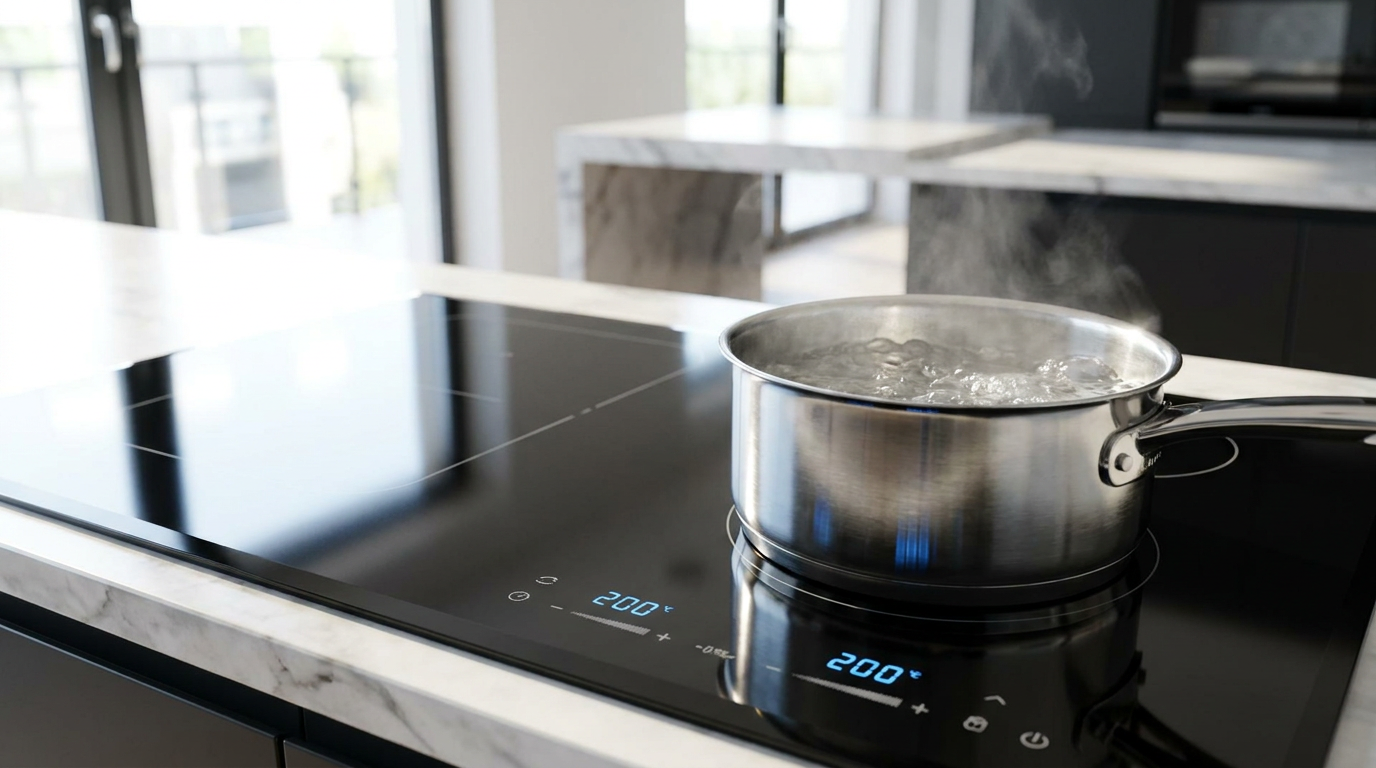
Yet, despite its rapidly growing popularity and increasing presence in big-box hardware stores, the actual mechanics of induction remain a mystery to a large portion of the cooking public. To the untrained eye, an induction range looks nearly identical to a standard, radiant flat-top electric stove—a flat sheet of black ceramic glass with painted circles denoting the burners. However, the underlying physics powering the appliance are entirely different. While traditional electric stoves rely on simple thermal conduction, transferring heat from a glowing red coil through the glass and into the pot, induction relies on the complex principles of electromagnetism.[6]
To understand how this technology works, one must look beneath the sleek ceramic glass surface of the cooktop, where a tightly wound coil of copper wire sits waiting. When the stove is turned on and a power level is selected, an alternating electrical current begins to flow rapidly through this copper coil. This flow of electricity creates a dynamic, high-frequency oscillating magnetic field that extends just a few millimeters above the glass surface. It is a direct application of the electromagnetic principles first discovered by physicist Hans Christian Ørsted in the early nineteenth century, now harnessed to cook dinner.[5]

Crucially, the ceramic glass surface of the cooktop itself is completely unaffected by this powerful magnetic field. Because glass is an insulator and lacks the magnetic properties required to interact with the field, the surface does not generate any of its own heat. Consequently, an induction cooktop remains remarkably cool to the touch, even when the burner is turned on to its absolute highest setting. The only reason the glass eventually becomes warm during the cooking process is due to residual heat transferring backward from the hot pan resting on top of it, making it vastly safer for households with curious children.[3][6]
The true scientific magic of the appliance happens only when a ferromagnetic pan—such as a heavy cast iron skillet or a pot made of magnetic stainless steel—is placed directly onto the active cooking zone. The oscillating magnetic field instantly penetrates the metal base of the cookware. As the magnetic field rapidly fluctuates, it induces swirling, localized electrical currents, known in physics as "eddy currents," deep inside the atomic structure of the pan's base. The cookware essentially becomes an active participant in the electrical circuit, capturing the invisible energy radiating from the copper coil below.[3][5]
Because the metal of the pan has natural electrical resistance, these induced eddy currents struggle to flow freely through the material. As the electrons push against this resistance, the friction converts the electrical energy directly into intense thermal energy. In short, the induction stove does not actually heat the pan in the traditional sense; rather, the magnetic field forces the pan to become its own internal heater. This instantaneous generation of heat allows the cookware to reach cooking temperatures in a fraction of the time required by traditional gas or radiant electric burners.[5]
Because the metal of the pan has natural electrical resistance, these induced eddy currents struggle to flow freely through the material.
This direct, localized energy transfer is the primary reason why induction technology is staggeringly efficient compared to legacy cooking methods. Because the heat is generated directly inside the metal of the cookware, there is virtually no energy lost to the surrounding environment. Engineering analyses demonstrate that induction cooktops successfully convert roughly 84% to 90% of their consumed electrical energy directly into useful cooking heat. This incredible efficiency translates to boiling a large pot of water in just a few minutes, while also offering chefs the ability to drop the temperature to a delicate simmer with instantaneous precision.[4]
In stark contrast, traditional gas stoves are notoriously inefficient, typically hovering around a mere 32% to 40% thermal efficiency. When a gas burner is ignited, a significant majority of the heat generated by the open flame simply escapes around the curved sides of the pot, radiating outward and warming the ambient air in the kitchen rather than the food inside the cookware. This massive loss of thermal energy not only wastes fossil fuels but also forces home air conditioning systems to work significantly harder during the summer months to counteract the excess heat generated by the stove.[4]

Beyond the undeniable benefits of sheer thermal efficiency and cooking speed, the modern shift toward induction is being heavily accelerated by alarming new health data regarding indoor air quality. For years, environmental scientists and public health officials have warned that cooking with combustible natural gas introduces a host of harmful, invisible pollutants directly into poorly ventilated living spaces. As the medical community increasingly scrutinizes the air inside our homes, the gas stove has emerged as a primary culprit in degrading indoor air quality, prompting a wave of new research into the respiratory impacts of daily cooking.[6]
A recent landmark study conducted by researchers at Columbia University's Mailman School of Public Health provided stark, quantifiable evidence of this indoor pollution crisis. The research team replaced traditional gas stoves with modern induction models in a sample of public housing units located in the Bronx. By continuously monitoring the air, the researchers recorded a staggering 56% reduction in daily indoor nitrogen dioxide (NO2) concentrations in the homes that made the switch. Furthermore, the residents unanimously reported high satisfaction with the new appliances, noting improved peace of mind regarding fire safety and gas leaks.[1]
The combustion of natural gas in a residential kitchen also releases carbon monoxide, fine particulate matter (PM2.5), and benzene—a well-documented carcinogen linked to leukemia. A comprehensive report by the National Institutes of Health has explicitly linked residential gas stove usage to a 42% increased risk of developing childhood asthma, comparing the severe respiratory impact to the dangers of secondhand smoke exposure. For vulnerable populations, including young children and the elderly, the simple act of boiling water or frying an egg on a gas range can introduce significant, long-term respiratory hazards into their daily environment.[4]

Despite the overwhelming scientific evidence and clear health advantages, the transition to induction cooking does come with notable friction for the average consumer. The most immediate and frustrating hurdle for home cooks is the strict requirement for cookware compatibility. Because the entire heating system relies fundamentally on electromagnetism, pots and pans made from aluminum, copper, or glass will simply not work on an induction surface. For families who have invested heavily in high-end copper cookware or non-stick aluminum sets, the prospect of replacing their entire kitchen arsenal can be a significant financial deterrent.[6]
Fortunately, determining whether existing cookware is compatible with an induction range is a remarkably simple process that does not require specialized equipment. The industry standard "magnet test"—which involves simply taking a standard refrigerator magnet and seeing if it sticks firmly to the flat bottom of a pan—remains the easiest and most reliable way for consumers to check their pots. If the magnet clings tightly to the metal, the pan contains enough ferrous material to interact with the stove's magnetic field. Many modern cookware brands now also stamp an induction-compatible coil symbol on the base of their products.[3]

Finally, there is the substantial hurdle of residential electrical infrastructure. Upgrading from a traditional gas range to a high-powered induction cooktop almost always requires installing a dedicated 240-volt electrical circuit, which can add hundreds or even thousands of dollars to the total installation cost, depending on the age of the home's electrical panel. Yet, as municipal building codes increasingly mandate "all-electric ready" construction and public awareness of indoor air quality grows, these initial barriers are slowly eroding. For a growing number of households, the magnetic pull of a faster, safer, and healthier kitchen is proving impossible to resist.[6]
How we got here
1820
Physicist Hans Christian Ørsted discovers the relationship between electricity and magnetism, laying the groundwork for electromagnetism.
Early 1900s
The first patents for induction heating are filed, though the technology is primarily used for industrial metal melting.
1970s
Westinghouse introduces the first consumer induction range in the United States, though high costs limit its adoption.
2022
California adopts building codes pushing for 'all-electric ready' homes, accelerating the shift away from residential gas lines.
2024
Columbia University publishes a landmark study demonstrating a 56% drop in indoor NO2 when public housing units switch to induction.
Viewpoints in depth
Public Health Advocates
Viewing gas stoves as an urgent indoor air quality crisis.
Medical professionals and environmental health researchers argue that the conversation around cooking must shift from culinary preference to respiratory health. Citing data that links gas stove usage to a 42% increased risk of childhood asthma, this camp emphasizes that gas combustion releases nitrogen dioxide, carbon monoxide, and benzene directly into living spaces. For these advocates, replacing gas with induction is a critical public health intervention, particularly in poorly ventilated apartments and low-income housing where asthma rates are disproportionately high.
Energy & Climate Analysts
Focusing on the grid-level efficiency of electromagnetic cooking.
For energy experts, the appeal of induction lies in its staggering 84% thermal efficiency. Because gas stoves waste more than half of their energy heating the ambient air, analysts view the transition to induction as a vital component of residential decarbonization. As the electrical grid increasingly relies on renewable energy sources like wind and solar, this camp argues that electrifying the kitchen is a necessary step to reduce overall household carbon footprints and decrease reliance on fossil fuel infrastructure.
Culinary Traditionalists
Defending the tactile and visual experience of the open flame.
Despite the scientific and environmental data, a significant contingent of professional chefs and home cooks remains hesitant to abandon gas. This camp values the immediate visual feedback of a physical flame and the ability to use specialized techniques, such as charring peppers directly on the grate or tossing food in a wok lifted off the burner. While acknowledging the speed of induction, traditionalists often express frustration with the learning curve of digital touch controls and the requirement to abandon beloved copper or aluminum cookware.
What we don't know
- How quickly the electrical grid in various regions will decarbonize to maximize the environmental benefits of electric cooking.
- Whether the cost of induction technology will drop fast enough to make it accessible to lower-income households without heavy subsidies.
Key terms
- Electromagnetism
- The physical interaction between electric currents and magnetic fields, which induction stoves use to generate heat.
- Eddy Currents
- Swirling loops of electrical current induced within the metal of a pan by the stove's fluctuating magnetic field.
- Thermal Efficiency
- The percentage of energy consumed by an appliance that is actually converted into useful cooking heat rather than wasted.
- Ferromagnetic
- Materials, such as iron or certain steel alloys, that are highly susceptible to magnetization and are required for induction cooking.
- Nitrogen Dioxide (NO2)
- A toxic gas produced by the combustion of fossil fuels, including gas stoves, which is linked to respiratory issues.
Frequently asked
Do I need to buy all new pots and pans for an induction stove?
Not necessarily. Any cookware made of cast iron or magnetic stainless steel will work. You can test your current pans by seeing if a refrigerator magnet sticks to the bottom.
Does the glass surface of an induction cooktop get hot?
The cooktop itself does not generate heat. However, the glass will become warm to the touch because heat transfers backward from the hot pan resting on it.
Why do induction stoves boil water so much faster than gas?
Because the pan itself becomes the heater, energy is transferred directly to the water with minimal heat loss to the surrounding air, resulting in significantly faster boiling times.
Can an induction stove interfere with a pacemaker?
Because induction cooktops generate electromagnetic fields, manufacturers generally advise individuals with pacemakers to consult their cardiologist, though the risk is considered low at normal cooking distances.
Sources
Source coverage
6 outlets
3 viewpoints surfaced






[1]Columbia University Mailman School of Public HealthPublic Health Advocates
Study Finds Switching From Gas to Electric Stoves Cuts Indoor Air Pollution
Read on Columbia University Mailman School of Public Health →[2]House DigestEnergy & Climate Analysts
Why Induction Stoves Are Becoming A Major Kitchen Trend
Read on House Digest →[3]CHOICETechnology Educators
How induction cooktops work
Read on CHOICE →[4]Energy SolutionsEnergy & Climate Analysts
Comprehensive technical comparison of induction and gas cooking
Read on Energy Solutions →[5]Explain That StuffTechnology Educators
How induction cooktops work
Read on Explain That Stuff →[6]Factlen Editorial TeamTechnology Educators
Synthesis by Factlen editorial team
Read on Factlen Editorial Team →

Every angle. Every day.
Get home stories with full source coverage and perspective breakdowns delivered to your inbox.