
The Science of Sleep Tourism: How Hotels Are Engineering the Perfect Night
The hospitality industry is pivoting from packed itineraries to deep rest, integrating AI beds and circadian lighting to capture the booming $75 billion sleep tourism market.
By Factlen Editorial Team
- Hospitality Innovators
- View sleep as the ultimate luxury metric, justifying heavy investments in AI and room architecture to drive guest satisfaction.
- Sleep Scientists
- Emphasize that while technology helps, the biological fundamentals of temperature and light matter most, warning against sleep-tracking anxiety.
- Wellness Equity Advocates
- Argue that restorative rest is becoming a gated luxury, highlighting the growing divide between high-end sleep suites and everyday environments.
What's not represented
- · Budget hotel operators
- · Housekeeping and maintenance staff managing the new tech
Why this matters
As digital fatigue and burnout reach all-time highs, the ability to achieve restorative sleep is becoming a critical component of personal health. The technologies being pioneered in luxury hotels today—from biometric temperature control to automated light cycles—are setting the standard for how we will design our own bedrooms in the future.
Key points
- The global sleep tourism market has reached $75.7 billion as travelers prioritize rest over packed itineraries.
- Hotels are installing circadian lighting systems that mimic the sun's arc to naturally regulate guest melatonin levels.
- AI-equipped smart beds now track biometrics in real-time, adjusting temperature and firmness to prevent nighttime waking.
- Major hospitality brands are partnering with neuroscientists to develop dedicated 'sleep labs' and jet-lag reset protocols.
- Experts warn that the gamification of sleep tracking can sometimes cause 'orthosomnia,' an anxiety that makes sleep harder to achieve.
- The trend highlights a growing 'sleep divide,' as the most advanced restorative technologies remain gated behind luxury price tags.
The old travel paradigm of "I'll sleep when I'm dead" has been replaced by a radically different imperative: traveling specifically to achieve restorative rest. For decades, vacations were defined by packed itineraries, early-morning excursions, and late-night dining. Today, a growing cohort of travelers is booking trips where the primary objective is simply to sleep.[3][4]
This phenomenon, dubbed "sleep tourism," has rapidly evolved from a niche wellness trend into a massive economic force. Valued at $75.7 billion globally, the sector is expanding at over 8 percent annually as consumers increasingly prioritize physical recovery over traditional sightseeing.[1][4]
The demand is driven by a profound societal exhaustion. With nearly half of adults failing to get adequate rest, chronic sleep deprivation costs the U.S. economy an estimated $411 billion annually in lost productivity. In response, people are looking to the hospitality industry for an intervention.[4]
To meet this demand, hotels are fundamentally rethinking the architecture of the guest room. It is no longer sufficient to offer a high-thread-count sheet or a pillow menu; properties are now engineering environments where rest is treated as a precise, measurable science.[1][6]

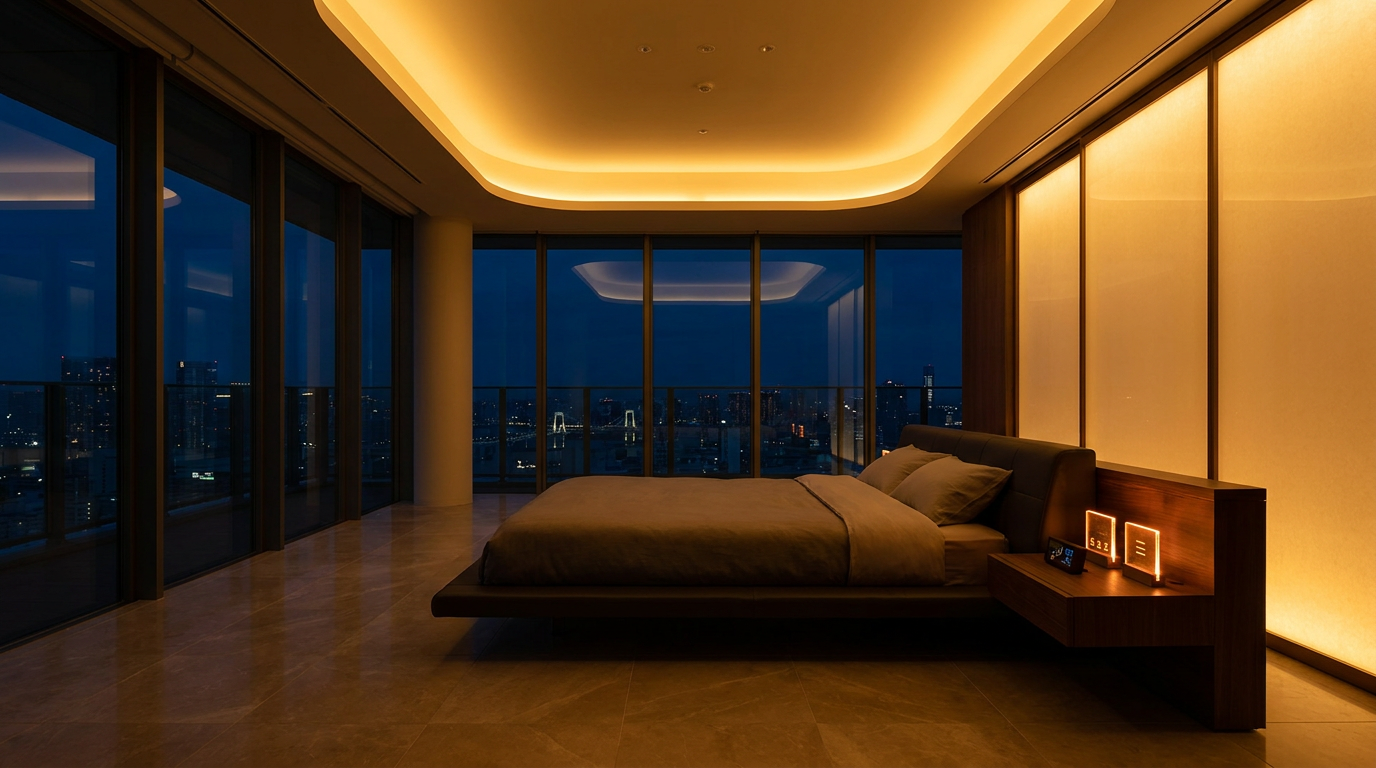
The mechanism begins with light. Circadian lighting systems are increasingly being integrated directly into room designs to automate the guest's biological needs, requiring zero manual input from the traveler.[6]
These automated systems mimic the sun's natural arc. In the morning, the room is bathed in cool, bright light—around 5000 Kelvin—to stimulate wakefulness and halt the brain's melatonin production. As evening approaches, the spectrum automatically shifts to warm, amber tones under 2000 Kelvin, preparing the nervous system for sleep.[1][6]
Beyond light, acoustic engineering plays a critical role. Architects are utilizing sound-sculpting materials, triple-pane windows, and integrated white-noise systems to completely isolate the sleep environment from the chaos of the outside world.[6]
The centerpiece of this revolution, however, is the bed itself. Artificial intelligence has transformed the mattress from a passive cushion into an active, biometric-tracking machine designed to prevent nighttime waking.[3]

The centerpiece of this revolution, however, is the bed itself.
Companies like Bryte and Eight Sleep have developed smart beds that continuously monitor a sleeper's heart rate, respiration, and micro-movements throughout the night. These data points are processed in real-time to adjust the physical environment.[3][5]
If the system detects a pressure imbalance or a shift in sleep stages, it automatically adjusts the bed's firmness. Dual-zone climate control ensures that the mattress remains cool during deep sleep phases, which scientists identify as the most crucial period for physical and cognitive recovery.[5]
To validate these technologies, hospitality brands are partnering directly with the scientific community. Equinox Hotels, for example, collaborated with Dr. Matthew Walker, a prominent neuroscientist and sleep expert, to develop an experimental "Sleep Lab" concept in their properties.[5]
These specialized suites incorporate neuroscience-based rituals alongside the hardware. Guests are provided with guided PM soundscapes designed to down-regulate the nervous system, as well as specialized room-service menus featuring adaptogens and sleep-promoting herbs.[5]
Some advanced programs even offer jet-lag reset protocols, utilizing targeted light therapy and biometric data to help international travelers rapidly align their internal biological clocks with their destination's time zone.[5]

Yet, the rapid commercialization of sleep science introduces a degree of uncertainty. Sleep experts warn of a phenomenon known as "orthosomnia"—an unhealthy and counterproductive obsession with achieving perfect sleep metrics.[1][7]
When a hotel room is packed with trackers, sensors, and gamified sleep scores, the pressure to perform can paradoxically trigger anxiety, making it harder for the guest to actually fall asleep and undermining the room's entire purpose.[7]
Furthermore, the rise of sleep tourism highlights a growing "sleep divide." Currently, the most advanced restorative environments are gated behind luxury price tags, with some AI-equipped suites commanding upwards of $1,000 per night.[1][3]

While mid-tier hotels are beginning to adopt basic principles like better blackout curtains and improved soundproofing, the full suite of biometric and circadian technologies remains largely inaccessible to the average traveler.[1][7]
Ultimately, the sleep tourism boom reflects a broader cultural realization: rest is not a luxury, but a biological necessity. As the science of sleep continues to merge with hospitality design, the hotel room of the future will likely function less as a place to crash, and more as a sophisticated machine engineered for human recovery.[1][2][7]
How we got here
2019
Equinox Hotels opens its first property with a strict focus on high-performance rest and recovery.
2023
The term 'sleep tourism' gains mainstream traction as post-pandemic travelers prioritize wellness over packed itineraries.
2024
The global sleep tourism market surpasses $75 billion, driven by a surge in dedicated sleep retreats.
2025
Major hospitality brands like Hilton integrate sleep-enhancing amenities as a core pillar of their global strategy.
2026
AI-driven mattresses and automated circadian lighting become standard expectations in luxury and upper-upscale hotel tiers.
Viewpoints in depth
Hospitality Innovators
View sleep as the ultimate luxury metric, justifying heavy investments in AI and room architecture to drive guest satisfaction.
For hotel executives and designers, sleep is no longer a passive byproduct of a stay—it is the central product being sold. By integrating AI beds, circadian lighting, and acoustic engineering, they argue that hotels can offer a level of restorative rest that guests cannot achieve at home. This measurable improvement in well-being drives brand loyalty and justifies the premium pricing of wellness-focused suites.
Sleep Scientists
Emphasize that while technology helps, the biological fundamentals of temperature and light matter most, warning against sleep-tracking anxiety.
Neuroscientists and sleep researchers acknowledge the benefits of environmental control, particularly temperature regulation and total darkness. However, they caution against the over-gamification of rest. When guests are surrounded by biometric sensors and sleep scores, they can develop 'orthosomnia'—a performance anxiety that actively inhibits the brain's ability to relax and transition into deep sleep.
Wellness Equity Advocates
Argue that restorative rest is becoming a gated luxury, highlighting the growing divide between high-end sleep suites and everyday environments.
Public health advocates point out that while the technology is impressive, it is currently concentrated in properties charging upwards of $1,000 a night. They argue that if sleep is a fundamental pillar of human health, the innovations driving the sleep tourism boom—such as better soundproofing and circadian-aligned lighting—must eventually be democratized and integrated into budget accommodations and everyday residential housing.
What we don't know
- Whether the intense gamification and tracking of sleep metrics will ultimately cause more anxiety than relaxation for the average guest.
- How quickly advanced circadian lighting and biometric bed technologies will scale down from luxury properties to mid-tier and budget hotel chains.
- The long-term durability and maintenance costs of integrating complex AI sensors directly into hotel furniture and mattresses.
Key terms
- Circadian Lighting
- Automated lighting systems that change color temperature and brightness throughout the day to align with human biological rhythms.
- Orthosomnia
- An unhealthy obsession with achieving perfect sleep, often triggered or exacerbated by the use of sleep-tracking devices.
- Biophilic Design
- An architectural approach that connects building occupants more closely to nature, often using natural light, plants, and organic materials to reduce stress.
- Sleep Architecture
- The structural organization of normal sleep, including the cycles of REM and non-REM stages throughout the night.
Frequently asked
What makes a sleep suite different from a regular hotel room?
Sleep suites integrate active technologies like AI-controlled mattresses, automated circadian lighting, and advanced acoustic soundproofing, rather than just offering premium linens and a quiet location.
Do AI beds actually improve sleep?
For many users, yes. They continuously adjust firmness and temperature based on biometric feedback to prevent waking, though scientists note that basic temperature control is often the most effective feature.
Is sleep tourism only for luxury travelers?
Currently, the most advanced biometric tech is concentrated in luxury properties charging premium rates, but mid-tier hotels are beginning to adopt baseline features like blackout curtains and better acoustic insulation.
Sources
Source coverage
7 outlets
3 viewpoints surfaced







[1]Global Wellness InstituteSleep Scientists
Sleep Tourism and the Growing Sleep Divide
Read on Global Wellness Institute →[2]HiltonHospitality Innovators
Hilton 2025 Trends Report: The Rise of Sleep Tourism
Read on Hilton →[3]Business InsiderWellness Equity Advocates
AI beds and sleep labs: Some luxury hotels are charging more than $1,000 a night for good sleep
Read on Business Insider →[4]Hotel DiveHospitality Innovators
Hotels capitalize on 'sleep tourism' trend
Read on Hotel Dive →[5]Athletech NewsSleep Scientists
Inside The Sleep Lab by Equinox Hotels
Read on Athletech News →[6]Hospitality NetHospitality Innovators
The Invisible Architect: How Technology in Hospitality Design is Redefining Spaces
Read on Hospitality Net →[7]Factlen Editorial TeamWellness Equity Advocates
Synthesis by Factlen editorial team
Read on Factlen Editorial Team →
Every angle. Every day.
Get travel stories with full source coverage and perspective breakdowns delivered to your inbox.