
How the Gut-Brain Axis is Reshaping Mental Health Treatment
An emerging body of clinical evidence suggests that dietary interventions and gut microbiome health can significantly impact anxiety and depression. Nutritional psychiatry is rapidly moving from a fringe concept to a mainstream medical tool.
By Factlen Editorial Team
- Clinical Mainstream
- Views dietary intervention as a powerful, evidence-based adjunctive tool that should be used alongside traditional therapy and medication.
- Nutritional Optimists
- Emphasize the transformative potential of food as medicine, framing diet as a primary driver of mental health outcomes.
- Evidence Skeptics
- Warn against overhyping commercial probiotics and note the difficulty of proving strict causation in self-reported dietary studies.
What's not represented
- · Food Access Advocates
- · Gastroenterologists
Why this matters
Understanding the link between food and mood gives patients an actionable, accessible tool to supplement traditional mental health treatments. It empowers individuals to use daily dietary choices to actively support their cognitive and emotional resilience.
Key points
- Nutritional psychiatry uses dietary interventions to treat mental health conditions like anxiety and depression.
- The gut-brain axis allows the digestive system to communicate directly with the central nervous system.
- Clinical trials show that a Mediterranean-style diet can significantly reduce symptoms of major depressive disorder.
- Nutrient-dense foods reduce systemic inflammation, a known biological contributor to depression.
- While whole foods show strong clinical results, evidence for commercial probiotic supplements remains weak.
- Dietary changes are recommended as a supplement to, not a replacement for, traditional psychiatric care.
For decades, the standard psychiatric model for treating depression and anxiety has relied heavily on two primary pillars: psychotherapy and neurochemical modulation via medication. But in recent years, a third pillar has emerged from the research fringes to the clinical mainstream, offering patients a highly accessible tool for mental resilience. [7][7]
Nutritional psychiatry—the study of how diet and gut health impact mental well-being—is fundamentally changing how researchers understand the brain. Rather than viewing mental health as an isolated function of the central nervous system, scientists now recognize a profound, bidirectional communication network known as the gut-brain axis. [4][4]
The biological foundation of this connection is staggering in its scale. The human gastrointestinal tract houses roughly 100 trillion microorganisms, collectively known as the gut microbiome. [6] These microbes do far more than simply digest food; they act as an active chemical factory that manufactures neuroactive compounds essential for brain function.[6]
Most notably, an estimated 90% of the body's serotonin—a neurotransmitter heavily implicated in mood regulation, sleep, and appetite—is produced in the digestive tract, not the brain. [4][6] This physiological reality has forced a paradigm shift in medicine: treating the brain often requires treating the gut first.[4][6]

The evidence base for dietary intervention took a massive leap forward with the publication of the SMILES trial, a landmark randomized controlled study that fundamentally altered the field. [3] Researchers sought to answer a simple but profound question: If a patient improves their diet, will their clinical depression improve?[3]
The results were striking. Participants with major depressive disorder who were assigned to a modified Mediterranean diet for 12 weeks saw significant clinical improvements compared to a control group receiving only social support. [3] Remarkably, 32% of the dietary intervention group achieved full remission of their depression, compared to just 8% in the control group.[3]

[3] Remarkably, 32% of the dietary intervention group achieved full remission of their depression, compared to just 8% in the control group.
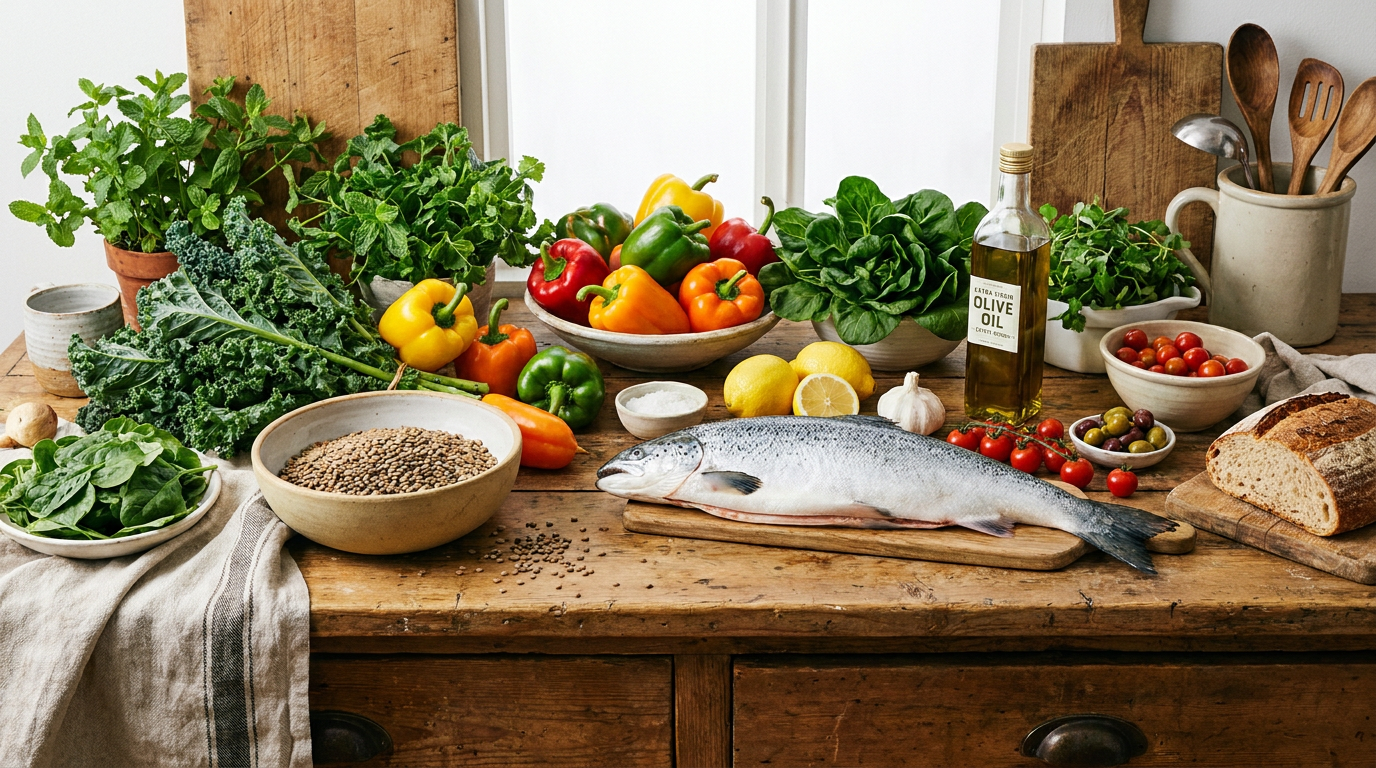
The dietary protocol used in these successful trials is rarely about restriction or calorie counting. Instead, it focuses on abundance: increasing the intake of whole grains, vegetables, fruits, legumes, unsweetened dairy, and raw nuts, while prioritizing olive oil and fish. [2][3] Conversely, the protocol strictly minimizes ultra-processed foods, refined sugars, and fried items.[2][3]
How exactly does a bowl of lentils and spinach translate to a better mood? Researchers point to systemic inflammation as the primary mechanism. [5] Ultra-processed diets high in refined sugars promote chronic inflammation throughout the body, which is increasingly recognized by immunologists as a root physiological cause of depressive symptoms.[5]
A nutrient-dense diet, on the other hand, actively lowers inflammatory markers and promotes the production of Brain-Derived Neurotrophic Factor (BDNF). [1][5] BDNF is a crucial protein that supports the survival of existing neurons and encourages the growth of new synapses, essentially helping the brain adapt, heal, and form new positive pathways.[1][5]
However, while the evidence for whole-food dietary patterns is robust, the data surrounding specific probiotic supplements remains murky and highly contested. [7] The supplement industry has aggressively marketed "psychobiotics"—probiotic pills claiming to cure anxiety and depression with a single daily dose.[7]
Clinical psychiatrists urge extreme caution regarding these claims. While the microbiome is undeniably linked to mental health, simply swallowing a generic capsule of bacteria does not guarantee psychological relief. [1][6] The gut ecosystem is highly individualized, and researchers do not yet know exactly which strains, in what dosages, reliably benefit specific psychiatric conditions.[1][6]

Furthermore, the gut-brain relationship is inherently bidirectional, complicating both research and treatment. While a poor diet can exacerbate depression, depression itself often drives intense cravings for high-sugar, high-fat comfort foods and depletes the physical energy required to cook nutritious meals. [2][7] This creates a challenging feedback loop for patients that requires compassionate, multi-tiered intervention.[2][7]
Because of these complexities, nutritional psychiatry is not positioned by serious medical professionals as a replacement for antidepressants or cognitive behavioral therapy. [5] Instead, it is viewed as a vital adjunctive treatment—a foundational layer of metabolic health that actually makes other psychiatric interventions more effective.[5]
For the general public, the actionable takeaway from this emerging science is deeply empowering. Mental health maintenance extends beyond the therapist's office and into the grocery store. By feeding the microbiome with diverse fibers and fermented foods, individuals can actively cultivate a biological environment that supports long-term emotional resilience. [1][4][1][4]
How we got here
Early 2000s
Initial animal models begin to conclusively link changes in gut bacteria to behavioral and mood alterations.
2017
The SMILES trial is published, providing the first major randomized controlled human data showing diet can treat clinical depression.
2020s
Nutritional psychiatry becomes a recognized sub-specialty, with major medical schools incorporating the gut-brain axis into curricula.
Viewpoints in depth
Clinical Psychiatrists' View
Focuses on integrating diet into standard care without abandoning proven medical treatments.
Mainstream psychiatric organizations view nutritional interventions as a massive step forward, primarily because they give patients an active role in their own healing. However, they are careful to frame diet as an adjunctive therapy. They warn that severe clinical depression often robs patients of the executive function required to meal-prep and cook, meaning medication or therapy is often required first just to get a patient to a baseline where dietary changes are possible.
Microbiome Researchers' View
Focuses on the biological complexity of the gut flora and the future of personalized medicine.
Scientists studying the microbiome emphasize that we are only scratching the surface of the gut-brain connection. They argue that the current 'Mediterranean diet' recommendation is a blunt instrument. In the future, they believe psychiatric treatment will involve sequencing a patient's specific gut flora and prescribing highly targeted, individualized dietary protocols or specific, lab-grown bacterial strains to correct unique metabolic imbalances.
Public Health Advocates' View
Highlights the systemic barriers to nutritional psychiatry, focusing on food access and affordability.
Public health experts point out a glaring flaw in the nutritional psychiatry movement: it assumes patients have access to fresh, whole foods. They argue that prescribing a Mediterranean diet is useless for individuals living in food deserts where ultra-processed foods are the only affordable, accessible calories. From this perspective, the mental health crisis cannot be solved in the clinic until systemic agricultural and economic policies make nutrient-dense food accessible to lower-income populations.
What we don't know
- The exact optimal composition of a 'healthy' human microbiome for mental resilience.
- Which specific probiotic strains reliably treat specific psychiatric conditions in humans.
- How much of the dietary benefit is purely biological versus the psychological benefit of engaging in self-care.
Key terms
- Gut-Brain Axis
- The bidirectional biochemical signaling that takes place between the gastrointestinal tract and the central nervous system.
- Microbiome
- The community of trillions of microorganisms, including bacteria and fungi, that live in the human digestive tract and aid in bodily functions.
- BDNF (Brain-Derived Neurotrophic Factor)
- A protein that promotes the survival of nerve cells and the growth of new neural connections, crucial for learning and memory.
- Psychobiotics
- A term used to describe live bacterial supplements (probiotics) that are marketed to confer mental health benefits, though clinical evidence remains limited.
- Vagus Nerve
- The longest cranial nerve in the body, acting as the primary biological highway connecting the brain to the digestive system.
Frequently asked
Can changing my diet replace my antidepressants?
No. Medical professionals view nutritional psychiatry as an adjunctive (supplementary) treatment. A healthy diet creates a better biological foundation, which can make medications and therapy more effective, but it is not recommended as a standalone replacement for prescribed psychiatric care.
What is the best diet for mental health?
Clinical trials, including the landmark SMILES study, show the strongest evidence for a modified Mediterranean diet. This prioritizes whole grains, vegetables, legumes, olive oil, and fish, while strictly limiting ultra-processed foods and refined sugars.
Do probiotic supplements cure anxiety?
Current evidence is weak. While the gut microbiome heavily influences anxiety, researchers do not yet know which specific bacterial strains or dosages reliably treat psychiatric conditions. Whole foods with natural fiber and fermentation are currently recommended over generic supplements.
How does the gut communicate with the brain?
They communicate through the gut-brain axis, primarily via the vagus nerve. The gut microbiome also produces vital neuroactive compounds, including an estimated 90% of the body's serotonin, which directly impacts mood and emotion.
Sources
Source coverage
7 outlets
3 viewpoints surfaced







[1]NPRNutritional Optimists
How food affects your mood: The emerging field of nutritional psychiatry
Read on NPR →[2]The Washington PostNutritional Optimists
Can a Mediterranean diet help cure depression?
Read on The Washington Post →[3]National Center for Biotechnology InformationNutritional Optimists
A randomised controlled trial of dietary improvement for adults with major depression (the 'SMILES' trial)
Read on National Center for Biotechnology Information →[4]Harvard Health PublishingClinical Mainstream
Nutritional psychiatry: Your brain on food
Read on Harvard Health Publishing →[5]The Lancet PsychiatryClinical Mainstream
Nutritional medicine as mainstream in psychiatry
Read on The Lancet Psychiatry →[6]American Psychiatric AssociationClinical Mainstream
The Gut Microbiome and Mental Health: What We Know
Read on American Psychiatric Association →[7]Factlen Editorial TeamEvidence Skeptics
Synthesis by Factlen editorial team
Read on Factlen Editorial Team →

More in health
See all 8 stories →Metabolic Health
The 'Exercise Pill' Moves Closer to Reality as AMPK Activators Show Promise in Human Trials
7 sources
Longevity Tech
The Science of the 'Exercise Pill': How New Longevity Drugs Mimic the Benefits of a Workout
7 sources

Neuroscience
How Acupuncture Actually Works: The Neuroanatomy of an Ancient Practice
6 sources
Gut-Brain Axis
How the Gut-Brain Axis is Rewriting the Science of Depression
6 sources

Every angle. Every day.
Get health stories with full source coverage and perspective breakdowns delivered to your inbox.