
Restaurants Nationwide Roll Out 'Sensory-Friendly' Dining Hours to Welcome Neurodivergent Guests
A growing number of independent eateries and major restaurant chains are introducing dedicated sensory-friendly hours in 2026, featuring dimmed lights, lowered music, and specialized staff training to accommodate guests with autism and sensory processing disorders.
By Factlen Editorial Team
- Neurodivergent Diners & Families
- Advocates for the expansion of inclusive spaces that allow them to participate in everyday social activities without stress or judgment.
- Restaurant Operators
- Views the initiative as both a moral imperative and a smart business move to attract a deeply loyal, underserved customer base.
- Advocacy Organizations
- Focuses on standardizing training and ensuring that 'autism-friendly' claims are backed by genuine, informed accommodations rather than just marketing.
What's not represented
- · Front-of-house staff executing the programs
- · Architects designing future accessible restaurants
Why this matters
For millions of families with neurodivergent members, dining out has historically been an overwhelming or impossible task due to sensory overload. This industry-wide shift not only makes public spaces more inclusive but also provides a blueprint for how businesses can adapt to better serve marginalized communities.
Key points
- Major restaurant chains and independent eateries are rapidly adopting sensory-friendly dining hours in 2026.
- Modifications include dimmed lighting, silenced music, and spaced-out reservations to prevent crowding.
- Many venues now provide 'sensory bags' equipped with noise-canceling headphones and fidget toys.
- Staff undergo specialized training to communicate effectively and accommodate off-menu requests without judgment.
- The initiative provides a safe, stress-free environment for families who previously avoided dining out.
- Advocacy groups are pushing for standardized 'Autism-Friendly' certifications to ensure consistent quality.
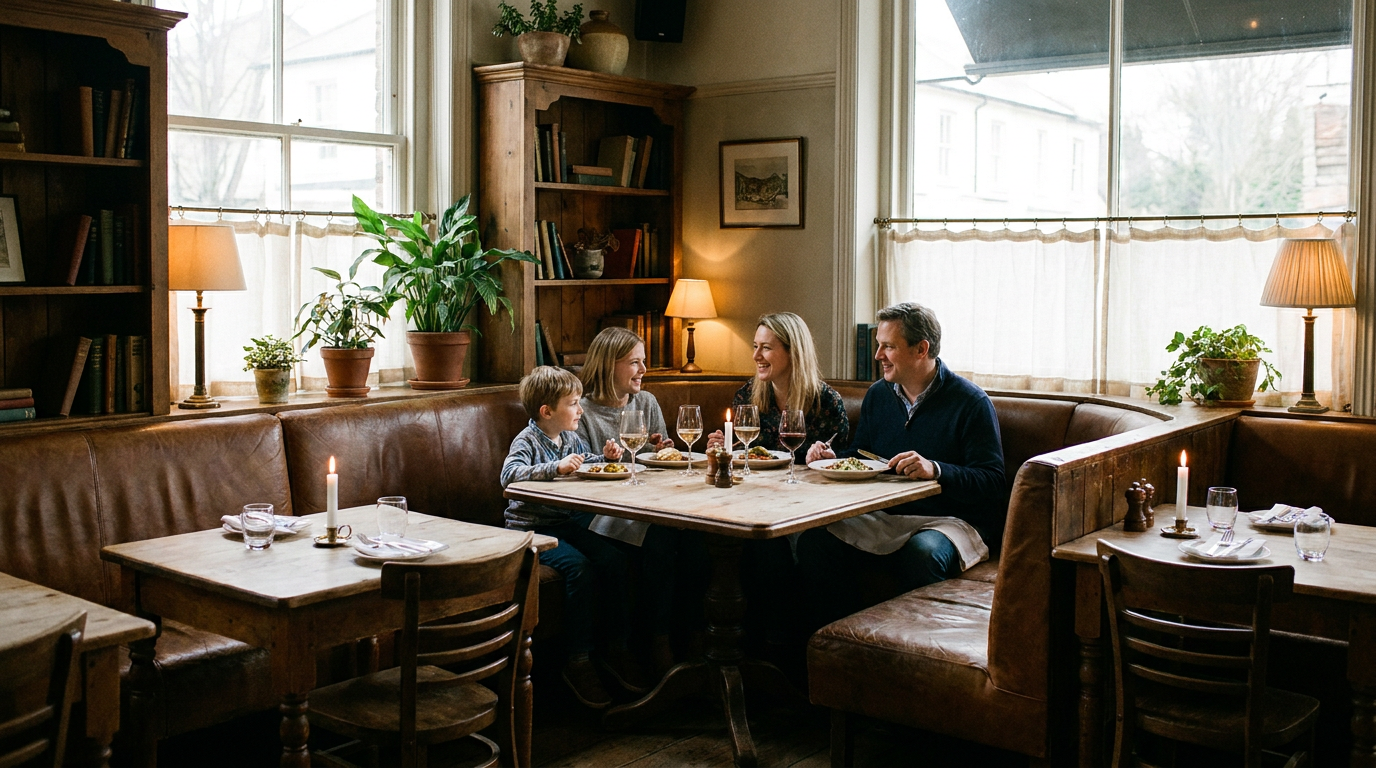
The clattering of silverware, the thumping bass of background music, the harsh glare of overhead pendant lights, and the unpredictable hum of overlapping conversations—for most diners, these are simply the hallmarks of a bustling, successful restaurant. But for individuals with autism, ADHD, or sensory processing disorders, this standard hospitality environment is a minefield of overwhelming stimuli. Sensory overload can quickly turn a celebratory family dinner into a deeply stressful ordeal, leading many neurodivergent individuals and their families to abandon the idea of dining out altogether. In 2026, however, the hospitality industry is finally turning down the volume. A rapidly growing movement of "sensory-friendly" dining is sweeping across independent eateries and major restaurant chains, fundamentally transforming how the industry welcomes its guests.[3]
This shift represents a major evolution in how restaurants define accessibility. While the industry has spent decades focusing on physical accommodations like wheelchair ramps and accessible restrooms, cognitive and sensory accessibility has historically been ignored. Now, driven by a combination of grassroots advocacy and a recognition of changing consumer demographics, operators are realizing that true hospitality means adapting the environment to the guest, rather than forcing the guest to endure the environment. Major 2026 hospitality trend reports have officially highlighted "inclusive eating" and "accessible dining" as key growth areas, signaling that sensory-friendly accommodations are moving from a niche experiment to a mainstream operational standard.[6][7]
The physical and environmental modifications required to host a sensory-friendly dining hour are often remarkably simple, yet they yield profoundly impactful results. During these designated windows—which are typically scheduled for weekend afternoons or early weekday evenings before the dinner rush peaks—restaurants intentionally alter their atmosphere. Management dims the overhead lighting to soften visual glare, completely silences the front-of-house sound systems, and strictly prohibits any noisy kitchen prep, such as blending or ice-crushing, that might bleed into the dining room. The goal is to create a predictable, low-arousal environment where guests can focus on their food and their families without constantly fighting off environmental distractions.[1][4]
Beyond the ambient adjustments, operational tweaks are equally crucial to the success of these programs. Participating restaurants intentionally cap their capacity and space out reservations to prevent crowding, ensuring that guests have plenty of physical space and do not feel boxed in by neighboring tables. Wait times, which are a notorious trigger for anxiety and sensory overload, are virtually eliminated. Furthermore, menus are often simplified to reduce decision fatigue, and the pacing of the meal is entirely dictated by the guest's comfort level, allowing families to eat quickly and leave if necessary, or linger without feeling rushed by the staff.[1]

One of the most visible innovations in this space is the introduction of "sensory bags," which are now frequently available at the host stand upon request. Developed in consultation with occupational therapists and autism advocacy groups, these kits provide immediate, on-site support for guests who might begin to feel overwhelmed. A typical sensory bag includes noise-canceling headphones to block out sudden sounds, tinted glasses to further soften the lighting, and a variety of tactile fidget toys that help guests self-regulate their nervous systems. By providing these tools proactively, restaurants send a clear message of understanding and preparedness.[2]
Technology is also playing a vital, supportive role in reducing the friction of the dining experience. Digital menus and table-side ordering systems, which surged in popularity for operational efficiency, are now being leveraged for their accessibility benefits. For guests with social anxiety, selective mutism, or other communication barriers, the ability to browse menu options, customize their order, and pay the bill without the social pressure of interacting with a server is a massive relief. Some digital platforms now even feature highly visual, picture-based menus to assist non-speaking guests in ordering with complete autonomy.[3]
Technology is also playing a vital, supportive role in reducing the friction of the dining experience.
Independent restaurants have undeniably been the vanguard of this inclusive movement. Establishments like Prairie Grass Cafe in suburban Chicago and Peninsula Prime in North Carolina began piloting these programs by closing their doors to the general public for 90 minutes to host dedicated, judgment-free dining sessions. By taking the financial risk to dedicate prime operating hours to an underserved community, these independent operators proved the concept's viability. They demonstrated that with a little flexibility, a traditional dining room could be temporarily transformed into a safe haven for neurodivergent guests.[1][2]
For the families who utilize these sensory-friendly hours, the emotional impact cannot be overstated. Parents of autistic children frequently report that they had actively avoided sit-down restaurants for years, fearing the judgment, stares, or unsolicited comments of other patrons if their child experienced a meltdown triggered by the chaotic environment. The constant vigilance required to manage a neurodivergent child in a standard restaurant often meant that parents could never actually relax and enjoy their own meals, rendering the experience more exhausting than enjoyable.[2][4]
The introduction of dedicated, judgment-free dining hours has effectively ended this long exile for thousands of families. As one advocate noted, having a sit-down restaurant explicitly invite families in and promise to meet their unique needs is an "absolute gift." It provides a rare, deeply cherished opportunity for families to share a meal outside the home in an environment where all behaviors are welcome, understood, and accommodated without a second glance. For many children, these programs offer their very first successful experience in a public restaurant.[2]

Crucially, the success of these sensory-friendly initiatives relies on much more than just turning off the music; it requires specialized, empathetic staff training. Waitstaff and front-of-house employees undergo training sessions—often led by local autism advocacy organizations—to understand the realities of sensory processing disorders. Staff are taught how to interact respectfully with non-speaking guests, how to minimize unnecessary table touches to avoid startling diners, and how to remain entirely flexible and non-judgmental when faced with off-menu requests for specific "safe foods."[1][5]
As the movement scales up in 2026, operators are discovering that inclusivity is not just a moral imperative, but a remarkably smart business strategy. The neurodivergent community and their extended families represent a massive demographic that has historically been ignored by the hospitality sector. When a restaurant proves that it can safely and respectfully accommodate this community, it earns a level of fierce customer loyalty that traditional marketing simply cannot buy. Families will drive past dozens of other restaurants, and return repeatedly, to support a business that actively supports them.[6][8]
Interestingly, restaurants are also finding that their sensory-friendly hours appeal to a much broader audience than initially anticipated. The low-stimulation environment has proven highly attractive to elderly diners who struggle to hear conversations in loud rooms, individuals suffering from migraines or concussions, and even busy professionals simply seeking a quiet, peaceful space to decompress after a chaotic workday. By designing for the margins, restaurants are inadvertently creating a more pleasant dining experience for a wide swath of the general public.[4][7]
With the trend gaining national momentum, autism advocacy organizations are now working to standardize these efforts to protect the integrity of the movement. Groups are rolling out formal "Autism-Friendly" certification programs for the hospitality industry. These certifications ensure that restaurants claiming to offer sensory-friendly experiences actually meet specific, rigorous criteria for lighting, acoustics, and staff preparedness, preventing the rise of "autism-washing" where venues use the label merely as a marketing tactic without doing the necessary operational work.[2][5]

Looking ahead, the core principles of sensory-friendly dining are beginning to influence permanent restaurant design and architecture. Rather than relying solely on temporary modifications during specific hours, architects in 2026 are increasingly incorporating acoustic dampening materials, adjustable lighting zones, and designated quiet alcoves into the blueprints of new restaurant builds. Ultimately, this industry-wide shift reflects a broader cultural movement toward empathy in public spaces, proving that the fundamental joy of sharing a meal can—and should—be accessible to everyone.[6][8]
How we got here
2017-2018
Supermarkets and retail stores begin piloting 'quiet hours' for shoppers.
2023-2024
Independent restaurants start experimenting with sensory-friendly weekend afternoons.
2025
Autism advocacy groups launch formal hospitality training programs for restaurant staff.
2026
Sensory-friendly dining becomes a mainstream trend, adopted by major chains and highlighted in industry forecasts.
Viewpoints in depth
Neurodivergent Diners & Families
Advocates for the expansion of inclusive spaces that allow them to participate in everyday social activities without stress.
For families with neurodivergent members, the expansion of sensory-friendly dining is nothing short of life-changing. Advocates emphasize that the primary barrier to dining out has never been the food, but rather the unpredictable, high-stress environment and the fear of public judgment during a sensory meltdown. By explicitly inviting these families into a space where their needs are anticipated and accommodated, restaurants are restoring a sense of normalcy and belonging. The community's primary goal now is to see these accommodations become a standard offering across all neighborhoods, rather than a rare novelty requiring a long drive.
Restaurant Operators
Views the initiative as both a moral imperative and a smart business move to attract a deeply loyal customer base.
From an operational standpoint, restaurant owners are discovering that sensory-friendly hours offer an incredible return on a minimal investment. The physical changes—dimming lights and turning off music—cost nothing, while the price of sensory bags and staff training is easily offset by the influx of a deeply loyal, previously untapped demographic. Operators note that families who feel supported during these hours often become lifelong customers, returning frequently and generating highly positive word-of-mouth marketing within local community groups.
Advocacy Organizations
Focuses on standardizing training and ensuring that 'autism-friendly' claims are backed by genuine accommodations.
While thrilled by the industry's sudden enthusiasm for accessibility, autism advocacy groups are focused on quality control. They warn against the dangers of 'autism-washing'—instances where a venue might advertise a sensory-friendly hour but fail to properly train its staff or adjust its kitchen operations, ultimately leading to a stressful experience for the guest. To combat this, organizations are pushing for rigorous, standardized certification programs that require venues to prove their commitment to true inclusivity before they can market themselves as autism-friendly.
What we don't know
- Whether formal 'Autism-Friendly' certifications will become a standardized, industry-wide requirement or remain voluntary.
- How the integration of permanent sensory-friendly architecture will impact the construction costs of new restaurant builds.
Key terms
- Neurodivergent
- An umbrella term for individuals whose brain functions, learns, and processes information differently than what is considered typical, including autism and ADHD.
- Sensory Overload
- A condition where one or more of the body's senses experiences over-stimulation from the environment, common in bustling restaurants.
- Sensory Bag
- A kit provided by venues containing items like noise-canceling headphones, sunglasses, and fidget toys to help guests self-regulate.
Frequently asked
What happens during a sensory-friendly dining hour?
Restaurants typically dim the lights, turn off background music, space out reservations to reduce crowding, and provide sensory support items like noise-canceling headphones.
Are these hours only for children with autism?
No. While designed with autistic individuals in mind, these hours are open to anyone who benefits from a quieter, low-stimulation environment, including adults with sensory processing disorders or anxiety.
How are restaurant staff trained for this?
Staff undergo training from autism advocacy groups to understand sensory needs, communicate effectively without causing pressure, and accommodate special requests like off-menu safe foods.
Sources
Source coverage
8 outlets
3 viewpoints surfaced








[1]FoodService DirectorRestaurant Operators
Sensory-friendly dining hour promotes inclusivity at Prairie Grass Cafe
Read on FoodService Director →[2]Good Good GoodAdvocacy Organizations
NC restaurant becomes town's first 'autism-friendly' eatery
Read on Good Good Good →[3]HeyASDNeurodivergent Diners & Families
Dining Out with Autism: Sensory-Friendly Tips
Read on HeyASD →[4]CT BitesNeurodivergent Diners & Families
Guide To Neurodivergent-Friendly Restaurants
Read on CT Bites →[5]The GrocerAdvocacy Organizations
Retailers and restaurants kick off autism-friendly trials
Read on The Grocer →[6]TryKitchenHubRestaurant Operators
Food Trends 2026: Inclusive Food & Conscious Eating
Read on TryKitchenHub →[7]MediumRestaurant Operators
Restaurant Trends in 2026 That Will Shape Profits, People, and Performance
Read on Medium →[8]The Staff CanteenRestaurant Operators
Hospitality trends for 2026: The return of the human touch
Read on The Staff Canteen →


Every angle. Every day.
Get food drink stories with full source coverage and perspective breakdowns delivered to your inbox.