
Shingles Vaccine Linked to 24% Lower Dementia Risk in Major Nursing Home Study
A new analysis of 500,000 Medicare beneficiaries finds that the recombinant shingles vaccine is associated with a significantly reduced risk of dementia, adding to growing evidence of the shot's neuroprotective benefits.
By Factlen Editorial Team
- Epidemiologists & Researchers
- Focus on the population-level data and the strength of the statistical association.
- Clinical Medicine
- Focus on patient care, preventative health guidelines, and vaccine uptake.
- Immunologists
- Focus on the biological mechanisms connecting viral suppression, adjuvants, and brain health.
- Synthesis
- Contextualizing the findings within the broader landscape of dementia research.
What's not represented
- · Unvaccinated patients who experienced shingles
- · Neurologists treating advanced dementia
Why this matters
Dementia is a devastating condition with few effective treatments. If a widely available, standard vaccine can prevent even a fraction of cases by reducing neuroinflammation, it represents a massive breakthrough in preserving cognitive health for aging populations.
Key points
- Older adults in skilled nursing facilities who received the Shingrix vaccine had a 24% lower relative risk of developing dementia over four years.
- The absolute risk of dementia dropped from 24.6% in unvaccinated residents to 18.8% in vaccinated residents.
- Researchers estimate that one in 17 dementia cases in this high-risk population could potentially be prevented by the vaccine.
- The study utilized a 'target trial emulation' to adjust for healthy vaccinee bias, though clinical trials are still needed to prove direct causation.
- Scientists theorize the vaccine protects the brain either by preventing viral neuroinflammation or by boosting the immune system to clear toxic proteins.
The search for a dementia preventative has cost billions and yielded only modest pharmaceutical victories. But a growing body of epidemiological evidence suggests a powerful, widely available tool might already be sitting in local pharmacy refrigerators. Routine adult immunizations—particularly the shingles vaccine—are increasingly linked to profound neuroprotective benefits. The latest data point, published this week in the Annals of Internal Medicine, offers some of the most compelling evidence yet that protecting the body from a common viral reactivation might simultaneously shield the brain from cognitive decline.[1][2]
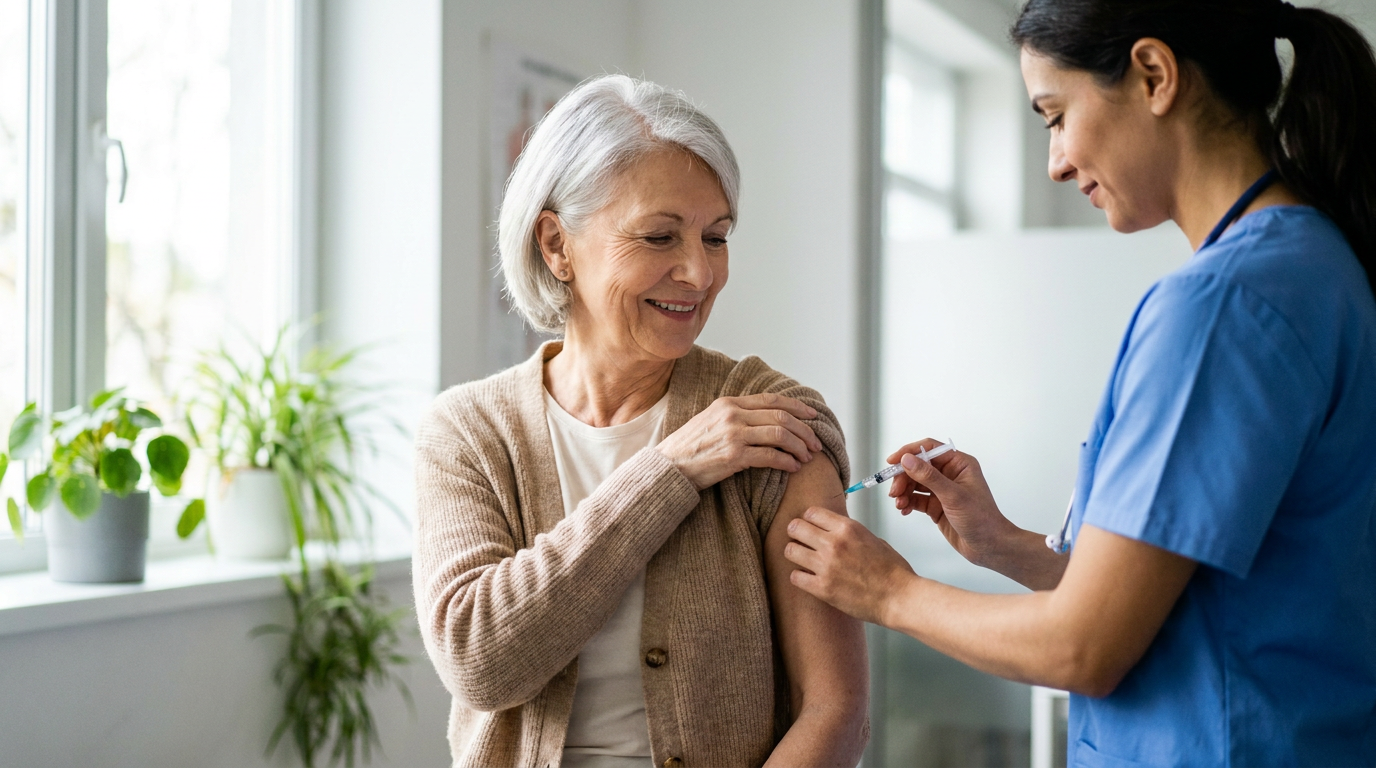
The new research, led by epidemiologists at the Brown University School of Public Health, focused on a highly vulnerable and historically understudied population: older adults residing in skilled nursing facilities. Researchers analyzed the electronic health records and Medicare claims of more than 500,000 patients aged 66 and older who were admitted for short- or long-term care between 2017 and 2022. By focusing on this demographic, the team aimed to determine if the cognitive benefits observed in healthier, community-dwelling seniors extended to those at the highest risk for both shingles and dementia.[2][3][5]
The core finding is striking. Patients who received the recombinant zoster vaccine (RZV)—marketed as Shingrix—had a 24 percent lower relative risk of being diagnosed with dementia over the subsequent four years compared to their unvaccinated peers. The divergence in cognitive outcomes between the two groups was both statistically significant and clinically meaningful, adding robust weight to the hypothesis that viral suppression plays a critical role in long-term neurological health.[2][4][8]
When translated into absolute numbers, the protective effect becomes even more tangible. Over the four-year follow-up period, 24.6 percent of the unvaccinated residents developed dementia. Among those who received at least one dose of the Shingrix vaccine, that figure dropped to 18.8 percent. Lead study author Dr. Kaley Hayes noted that this 5.8 percentage-point absolute risk reduction translates to approximately one in 17 dementia cases potentially being prevented through vaccination in this high-risk cohort.[3][4][6]

To achieve these results without a traditional clinical trial, the researchers utilized a sophisticated methodology known as "target trial emulation." This approach applies rigorous statistical controls to observational data, mimicking the strict parameters of a randomized controlled trial as closely as possible. The team carefully excluded patients who already had a dementia diagnosis at baseline and matched vaccinated and unvaccinated individuals across a wide array of demographic and health variables to isolate the vaccine's specific impact.[2][5][8]
A primary challenge in this type of epidemiological research is the "healthy vaccinee bias"—the well-documented phenomenon where individuals who proactively seek out vaccinations also tend to have better diets, exercise more, and possess greater healthcare access. While the Brown University team acknowledged that vaccinated residents were slightly younger and healthier on average, their statistical adjustments confirmed that these baseline differences could not fully account for the massive 24 percent reduction in dementia risk.[3][5][7]
This new data builds upon a foundation of prior research that has consistently pointed in the same direction. Earlier studies, including large-scale analyses in Wales and Australia, found that the older, live-attenuated shingles vaccine (Zostavax) reduced dementia risk by roughly 20 percent. However, Zostavax was discontinued in the United States in 2020 in favor of Shingrix, leaving an open question about whether the newer, more effective recombinant formulation would offer the same, or better, cognitive protection.[4][6]
This new data builds upon a foundation of prior research that has consistently pointed in the same direction.
The answer appears to be a resounding yes. A landmark 2024 study published in Nature Medicine first established that Shingrix was associated with a significantly lower risk of dementia than the older Zostavax vaccine, providing 17 percent more time lived diagnosis-free. The 2026 Annals of Internal Medicine study effectively stress-tests that finding, proving that the recombinant vaccine's neuroprotective association holds up even in a frail, nursing-home population where baseline cognitive risks are exceptionally high.[2][3][7]

The exact biological mechanism driving this protection remains one of the most intensely debated topics in neuroimmunology. The most straightforward theory centers on the prevention of neuroinflammation. The varicella-zoster virus, which causes chickenpox in childhood, lies dormant in the nervous system for decades before reactivating as shingles. This reactivation causes severe systemic inflammation and has been independently linked to an increased risk of strokes and microvascular damage in the brain—known precursors to vascular dementia.[4][6][7]
By preventing the virus from reactivating, the vaccine may simply be cutting off a major source of neurological trauma. "When you think of a shingles case, there may be higher risks of strokes," Hayes explained, noting that protecting patients from these acute vascular events likely preserves their long-term cognitive function. In this model, the dementia reduction is a secondary benefit of preventing the primary viral damage.[6][8]
A second, more provocative theory focuses not on the virus, but on the vaccine itself. Shingrix contains a powerful adjuvant called AS01, a chemical compound designed to hyper-stimulate the immune system to ensure a robust antibody response. Some immunologists hypothesize that this systemic immune boost might inadvertently activate the brain's microglial cells—the central nervous system's primary immune defenders—prompting them to clear out the toxic amyloid plaques and tau tangles that characterize Alzheimer's disease.[6][7]

While the observational data is overwhelmingly positive, researchers emphasize the necessity of transparent uncertainty. Observational studies, no matter how rigorously designed, can only prove correlation, not causation. The scientific consensus is that a large-scale, randomized controlled trial is the mandatory next step to definitively prove that the shingles vaccine directly prevents dementia, rather than merely being associated with patients who are less likely to develop it.[1][3][5]
Despite the remaining questions, the public health implications of the current data are staggering. Dementia is one of the most expensive and devastating health crises globally, with virtually no highly effective, low-cost treatments available. If a standard, two-dose vaccine already stocked in thousands of pharmacies can reliably prevent even a fraction of future cases, it represents a paradigm shift in how healthcare systems approach cognitive decline.[4][8]
The immediate hurdle, however, is utilization. The Brown University study highlighted a glaring gap in preventative care: uptake of the shingles vaccine remains remarkably low, even among older adults in skilled nursing facilities who are at the highest risk for both the painful rash and cognitive decline. In the study's cohort, only a tiny fraction of eligible residents had received the vaccine within a year of their facility admission.[2][5][6]
As the medical community pushes for definitive clinical trials, the current evidence strongly reinforces the value of existing adult immunization guidelines. The Centers for Disease Control and Prevention already recommends the Shingrix vaccine for healthy adults aged 50 and older to prevent shingles and its debilitating nerve pain. The mounting evidence that those same two shots might also safeguard the mind offers a compelling new argument for patients and physicians to prioritize the vaccine.[3][5][8]
How we got here
2017
The FDA approves Shingrix (recombinant zoster vaccine), which eventually replaces the older live-attenuated vaccine in the U.S.
2024
A major study in Nature Medicine links the newer Shingrix vaccine to a significantly lower risk of dementia compared to the older formulation.
June 2026
The Annals of Internal Medicine publishes data showing a 24% dementia risk reduction among highly vulnerable nursing home residents.
Viewpoints in depth
Epidemiologists & Researchers
Focus on the population-level data and the strength of the statistical association.
Public health researchers emphasize the massive scale of the data—over 500,000 patient records—and the rigorous 'target trial emulation' methodology used to filter out biases. For epidemiologists, the consistent replication of these findings across different countries and different vaccine formulations (both the older live-attenuated and the newer recombinant versions) strongly suggests a real biological effect rather than a statistical anomaly.
Clinical Medicine
Focus on patient care, preventative health guidelines, and vaccine uptake.
For practicing physicians and geriatricians, the immediate takeaway is the urgent need to improve vaccine uptake. Clinicians note that nursing home residents are highly vulnerable to both shingles and dementia, yet vaccination rates remain stubbornly low. While doctors await definitive clinical trials before officially prescribing the vaccine for dementia prevention, they view the cognitive data as a powerful new tool to encourage hesitant patients to get their recommended shingles shots.
Immunologists & Virologists
Focus on the biological mechanisms connecting viral suppression, adjuvants, and brain health.
The immunology community is divided on exactly how the vaccine protects the brain. One camp argues that preventing the varicella-zoster virus from reactivating simply spares the brain from severe vascular inflammation and micro-strokes. Another camp is intensely interested in the vaccine's AS01 adjuvant, theorizing that this chemical immune-booster might cross the blood-brain barrier or stimulate peripheral immune cells to clear out the amyloid plaques associated with Alzheimer's disease.
What we don't know
- Whether the vaccine directly causes the reduction in dementia risk, or if it is merely associated with other unmeasured healthy behaviors.
- Which biological mechanism is responsible for the neuroprotection—preventing viral damage or the immune-boosting effects of the vaccine's adjuvant.
- How long the cognitive protective effects of the vaccine last beyond the four-year follow-up period observed in the study.
Key terms
- Recombinant Zoster Vaccine (RZV)
- A non-live vaccine (marketed as Shingrix) that uses a piece of the virus combined with an adjuvant to trigger an immune response against shingles.
- Target Trial Emulation
- An advanced statistical method that uses observational data to mimic the design and rigorous conditions of a randomized controlled trial.
- Adjuvant
- An ingredient used in some vaccines that helps create a stronger immune response in people receiving the vaccine.
- Healthy Vaccinee Bias
- A statistical phenomenon where people who choose to get vaccinated also tend to have healthier lifestyles overall, which can skew study results.
- Varicella-Zoster Virus
- The virus that causes chickenpox in childhood and can reactivate decades later to cause shingles.
Frequently asked
Does the shingles vaccine cure dementia?
No. The vaccine is associated with a lower risk of developing dementia in the future, but it is not a treatment or cure for those who already have cognitive decline.
Which shingles vaccine was studied?
The study focused on the recombinant zoster vaccine (RZV), commonly known as Shingrix, which has been the standard shingles vaccine in the U.S. since 2017.
How does a vaccine protect the brain?
Researchers believe it may prevent shingles-related strokes and neuroinflammation, or the vaccine's immune-boosting ingredients might help the body clear dementia-related proteins.
Should I get the vaccine just to prevent dementia?
The CDC currently recommends the shingles vaccine to prevent shingles and its painful complications in adults 50 and older. The potential dementia protection is an added benefit, though clinical trials are still needed to prove it directly causes the risk reduction.
Sources
Source coverage
8 outlets
4 viewpoints surfaced






[1]STAT NewsClinical Medicine
Shingles vaccine may lower dementia risk, new study finds
Read on STAT News →[2]Annals of Internal MedicineEpidemiologists & Researchers
Dementia risk after recombinant herpes zoster vaccination in older adults with a recent skilled-nursing facility stay: a target trial emulation
Read on Annals of Internal Medicine →[3]Brown UniversityEpidemiologists & Researchers
Shingles vaccine may reduce dementia risk by 24%, study finds
Read on Brown University →[4]Medical News TodayClinical Medicine
Shingles vaccine linked to 24% lower dementia risk in older adults
Read on Medical News Today →[5]MedPage TodayClinical Medicine
Study Looks at Risk for Dementia After Shingles Vaccine in High-Risk Group
Read on MedPage Today →[6]CIDRAPImmunologists
Shingles vaccine may protect against dementia
Read on CIDRAP →[7]Gavi, the Vaccine AllianceImmunologists
How vaccines might protect against dementia
Read on Gavi, the Vaccine Alliance →[8]Factlen Editorial TeamSynthesis
Synthesis by Factlen editorial team
Read on Factlen Editorial Team →

Every angle. Every day.
Get health stories with full source coverage and perspective breakdowns delivered to your inbox.