
The Step-In Renaissance: How Hands-Free Bindings Are Saving Snowboarding's Demographics
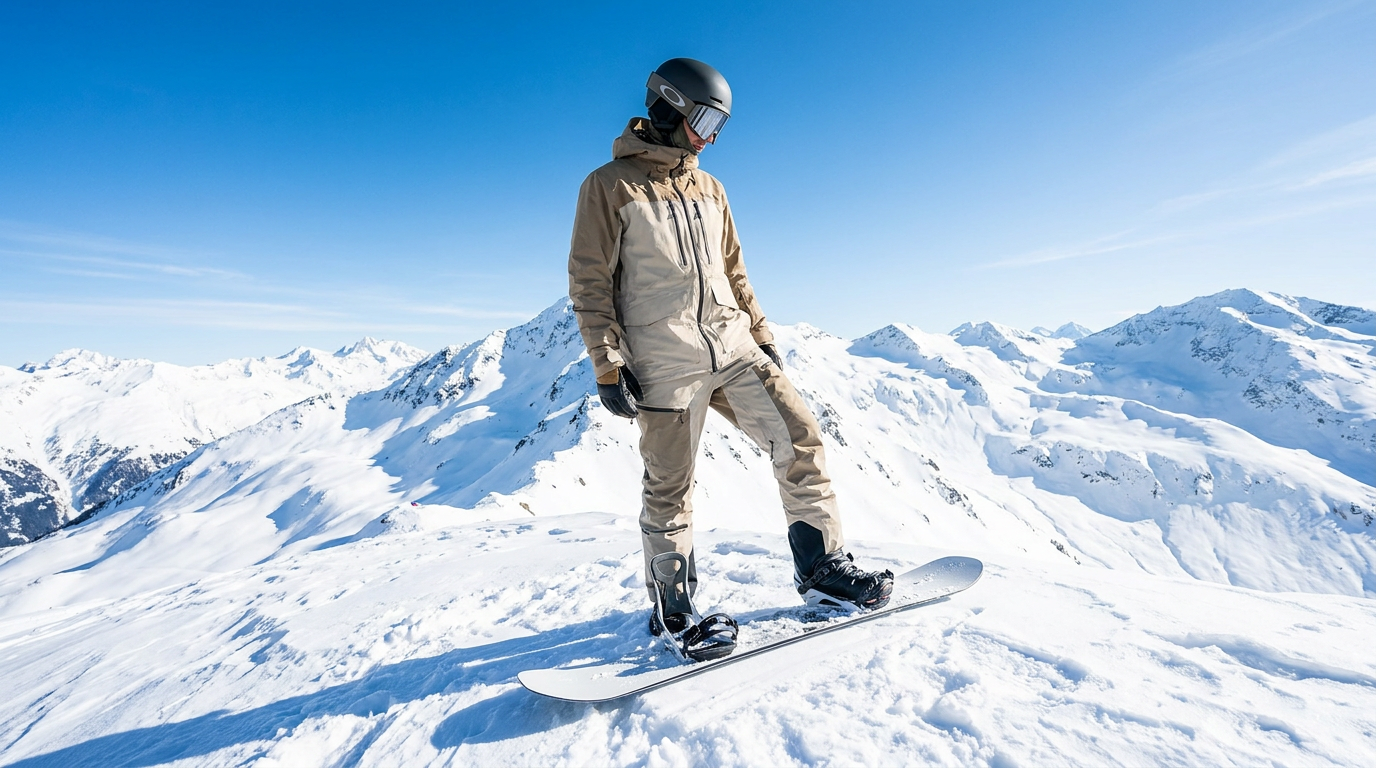
Once dismissed as a flawed 1990s gimmick, modern step-in snowboard bindings have seen a 300% surge in sales since 2017. The technology is lowering the barrier to entry for beginners and keeping an aging generation of riders on the mountain.
By Factlen Editorial Team
- Accessibility Advocates
- Argue that fast-entry systems are essential for growing the sport and keeping aging riders on the mountain.
- Gear Purists
- Value the micro-adjustability, lighter weight, and deep-snow reliability of traditional strap bindings.
- Industry Analysts
- Focus on the demographic shifts and sales data driving the hardware evolution across the winter sports market.
What's not represented
- · Ski resort operators managing lift-line flow
- · Snowboard rental fleet managers
Why this matters
For decades, the physical hassle of strapping into a snowboard drove beginners toward skiing and forced older riders off the mountain. The perfection of hands-free binding technology is fundamentally changing who can participate in the sport, ensuring its growth as the core demographic ages.
Key points
- Sales of step-in snowboard bindings have grown 300% since 2017.
- The technology eliminates the need to sit down and manually strap in.
- Fast-entry systems are helping retain older riders with back pain or reduced flexibility.
- Burton's system requires specific boots, while Nidecker's works with any boot.
- Rival brands like Union are now licensing the technology to standardize the market.
It is the classic snowboarder struggle: sitting in the cold snow at the top of the lift, manually ratcheting tight plastic straps over your boots while your skier friends wait impatiently. For decades, this ritual was considered a required rite of passage, but it also served as a quiet, persistent barrier to entry for the sport.[9]
Over the last few years, a quiet revolution has taken over the lift lines. Step-in bindings, once a 1990s punchline plagued by jammed mechanisms, heavy hardware, and poor board feel, have returned with modern engineering to solve the sport's most annoying problem.[4]
The numbers reflect a massive shift in consumer behavior. Sales of step-on bindings have jumped 300% since 2017. In 2024 alone, approximately 1.3 million bindings featuring fast-entry mechanisms were sold globally, signaling that the technology has moved from a niche luxury to a mainstream standard.[5][7]
For Burton, the pioneer of the modern iteration, the adoption rate has been staggering. Their proprietary Step On system now accounts for roughly 50% of all boot and binding sales through their direct channels, fundamentally altering the company's hardware revenue model.[8]

The driving force behind this hardware shift isn't just convenience—it's demographics. The snowboarding and skiing population is aging. The median age of winter sports participants in North America has been steadily climbing, shifting from the early 20s decades ago to the mid-30s today.[2]
For older riders, bending over to strap in dozens of times a day takes a significant toll on the lower back and knees. Fast-entry systems are literally keeping an aging generation of snowboarders on the mountain longer, extending their riding careers by removing the physical friction of the lift-line transition.[9]
The technology also drastically lowers the learning curve for beginners. By eliminating the time-consuming ritual of strapping in, new riders spend more time actually riding and balancing, which helps the snowboard industry compete against skiing for first-timers.[1][3]

The market is currently dominated by two competing engineering philosophies. The first is Burton's Step On system, which relies on a proprietary boot-to-binding connection that eliminates the need for traditional straps entirely.[1]
The market is currently dominated by two competing engineering philosophies.
Burton's design uses two toe cleats and one heel cleat built directly into the boot, which snap securely into corresponding hooks on the binding. It is incredibly fast and lightweight, but it requires the rider to buy into a closed ecosystem of compatible boots.[1][4]
The second philosophy is the mechanical hybrid, championed by Nidecker's Supermatic. Instead of requiring special boots, the Supermatic uses a drop-down highback and a hinged heel bar that works with any standard snowboard boot on the market.[6]
Riders simply slide their boot into the back of the binding and stomp their heel down, which automatically triggers the highback to snap up and lock the ankle straps into place over the foot.[6]

This "set it and forget it" approach offers universal compatibility, but it comes with a trade-off: weight. The Supermatic is noticeably heavier than traditional bindings—weighing in around 2.8 pounds—due to the complex internal mechanics required to automate the closure.[4][6]
Despite the convenience, gear purists and aggressive freeriders note that quick-entry systems still have limitations. Traditional ratchets allow for on-the-fly micro-adjustments to strap pressure that automatic systems struggle to replicate, which is crucial for riders who want a looser feel in the terrain park and a tighter lock on steep descents.[4]
Furthermore, engaging a step-in system in deep, untracked powder or on a steep incline remains a challenge. When the binding tray is packed with snow, clearing it out to achieve a secure lock can be more frustrating than simply ratcheting a traditional strap over a snow-covered boot.[6]
Yet, the industry consensus is that the benefits outweigh the drawbacks for the vast majority of recreational riders. Recognizing that "rising tides raise all ships," fierce competitors are now collaborating to standardize the technology and grow the sport as a whole.[3]

In a landmark move for the 2025/2026 season, Union Binding Co.—one of Burton's biggest rivals in the hardware space—licensed Burton's technology to release the Union Atlas Step On, bridging the gap between competing brand loyalties.[3]
By sharing the technology across brands like Union, DC, and Nitro, the industry is pushing step-in systems toward a projected 20% total market share penetration, ensuring that riders have options regardless of their brand preference.[3]
What began as an attempt to solve a minor annoyance has evolved into a strategic imperative. By making the sport more accessible, comfortable, and unified, modern bindings are ensuring snowboarding's growth for the next generation.[9]
How we got here
1990s
Early step-in binding systems are introduced but largely abandoned due to jamming issues and poor board feel.
2017
Burton officially launches the modern Step On system after five years of research and development.
2022
Nidecker introduces the Supermatic, the first automatic binding that works with any standard snowboard boot.
January 2025
Rival manufacturer Union Binding Co. releases the Union Atlas Step On, signaling cross-brand standardization.
Viewpoints in depth
Accessibility Advocates
Fast-entry systems are essential for growing the sport and keeping aging riders on the mountain.
For brands and retailers, the primary goal is reducing the friction that drives beginners toward skiing. By eliminating the need to sit in the snow and manually ratchet straps, step-in systems drastically lower the learning curve. Furthermore, as the core snowboarding demographic ages, the physical toll of bending over dozens of times a day becomes a limiting factor. Advocates argue that this technology is a strategic imperative to retain older riders who might otherwise abandon the sport due to back pain or reduced flexibility.
Gear Purists
Traditional strap bindings remain superior for micro-adjustability, lighter weight, and deep-snow reliability.
Despite the massive commercial success of step-in systems, many core riders and freestyle purists remain skeptical. They point out that mechanical systems like the Supermatic add significant weight to the board, which can affect aerial maneuvers. Additionally, traditional ratchets allow riders to make on-the-fly micro-adjustments to strap pressure—tightening for steep descents or loosening for playful park laps. Purists also note that in deep, untracked powder, clearing snow from a step-in footbed to achieve a secure lock can be far more frustrating than simply strapping in.
Industry Analysts
Demographic shifts and sales data are driving the hardware evolution across the winter sports market.
Market analysts view the rise of step-in bindings as a direct response to changing consumer demographics and the economic need to boost participation. With the median age of winter sports participants climbing, the market for convenience-driven gear has exploded. Analysts point to the 300% growth in step-on sales since 2017 and the unprecedented cross-brand collaborations—such as Union licensing Burton's technology—as evidence that the industry is prioritizing market expansion and standardization over fierce brand rivalries.
What we don't know
- Whether step-in systems will eventually replace traditional strap bindings entirely in the rental market.
- How the added weight of mechanical bindings will affect the progression of high-level freestyle snowboarding.
Key terms
- Highback
- The vertical plate at the rear of a snowboard binding that supports the rider's lower calf and transfers power to the heel edge.
- Cleat
- A small, hardened protrusion on a specialized snowboard boot that locks directly into a corresponding mechanism on the binding.
- Ratchet
- The traditional mechanical buckle used to manually tighten the ankle and toe straps on standard snowboard bindings.
- Splitboard
- A snowboard that can be separated into two ski-like halves for climbing uphill in the backcountry, then reassembled for the downhill descent.
Frequently asked
Do I need special boots for step-in bindings?
It depends on the system. Burton's Step On requires compatible boots with built-in cleats, while Nidecker's Supermatic works with any standard snowboard boot.
Are step-in bindings heavier than traditional ones?
Yes, mechanical systems like the Supermatic are noticeably heavier due to the internal locking parts, though Burton's cleat system remains relatively lightweight.
Can you use step-in bindings in deep powder?
It can be challenging. Snow packed into the binding footbed must be cleared out before the boot can securely lock into the mechanism.
Are traditional strap bindings going away?
No. Many advanced riders and park snowboarders still prefer traditional straps for their micro-adjustability and predictable flex.
Sources
Source coverage
9 outlets
3 viewpoints surfaced









[1]BurtonAccessibility Advocates
Burton Step On Bindings: Everything You Need to Know
Read on Burton →[2]SnowBrainsIndustry Analysts
The Aging of the American Skier and Snowboarder
Read on SnowBrains →[3]Shop Eat SurfAccessibility Advocates
Union and Burton Collaborate on Step On Binding to Grow Snowboarding
Read on Shop Eat Surf →[4]WhitelinesGear Purists
Burton Step On vs Nidecker Supermatic: The 2025/2026 Review
Read on Whitelines →[5]Market Growth ReportsIndustry Analysts
Global Snowboard Equipment Market Size and Growth Trends 2026
Read on Market Growth Reports →[6]Mountain Weekly NewsGear Purists
Nidecker Supermatic Bindings Review: Hybrid Snowboard Binding for the 21st Century
Read on Mountain Weekly News →[7]WiFi TalentsIndustry Analysts
Snowboard Industry Statistics 2026
Read on WiFi Talents →[8]ForbesAccessibility Advocates
Step-On Bindings: Disrupting a Market (Again)
Read on Forbes →[9]Factlen Editorial TeamAccessibility Advocates
Synthesis by Factlen editorial team
Read on Factlen Editorial Team →
More in sports
See all 13 stories →Hockey Safety
NHL and IIHF Mandate Neck Guards for New Players Starting in 2026
6 sources

NBA Finals
New York Knicks Capture 2026 NBA Championship, Ending 53-Year Drought
6 sources

Injury
Global Volleyball Injury Report: Triumphant Returns and Backups Stepping Up on the World Stage
7 sources
NWSL Growth
NWSL Hits Record 138 International Call-Ups, Launches 'Summer of Soccer' Tour During World Cup Break
6 sources

Every angle. Every day.
Get sports stories with full source coverage and perspective breakdowns delivered to your inbox.