
Smart Rings vs. Smartwatches: How to Choose the Right Health Tracker in 2026
As wearable technology advances, the choice between a smart ring and a smartwatch comes down to a trade-off between passive sleep tracking and active workout monitoring.
By Factlen Editorial Team
- Passive Tracking Advocates
- Users and analysts who prioritize unobtrusive, continuous health monitoring.
- Active Fitness Enthusiasts
- Athletes and users who rely on real-time data to guide their physical training.
- Dual-Ecosystem Adopters
- Consumers who utilize both devices to capture a complete 24-hour health picture.
What's not represented
- · Traditional Watch Enthusiasts
- · Medical Professionals
Why this matters
Choosing the right wearable dictates whether you actually stick to your health goals. A mismatched device often ends up abandoned in a drawer, while the right form factor can provide life-changing insights into your sleep, recovery, and fitness.
Key points
- Smart rings excel at passive sleep and recovery tracking due to their comfortable, screenless design and highly accurate finger sensors.
- Smartwatches remain the superior choice for active workout tracking, offering built-in GPS, real-time pacing, and glanceable heart rate zones.
- Battery life is a major differentiator, with rings lasting up to a week compared to the daily charging requirement of most feature-rich smartwatches.
- A growing number of consumers are adopting a dual-device strategy, wearing a watch during the day and a ring at night for complete 24-hour data.
The wearable health technology market in 2026 has officially bifurcated into two distinct form factors: the traditional smartwatch and the minimalist smart ring. While both devices promise to decode your biometric data and improve your daily habits, they represent fundamentally different approaches to health tracking. Choosing between them is no longer just a question of budget, but a decision about how you want technology to integrate into your life.[1][2]
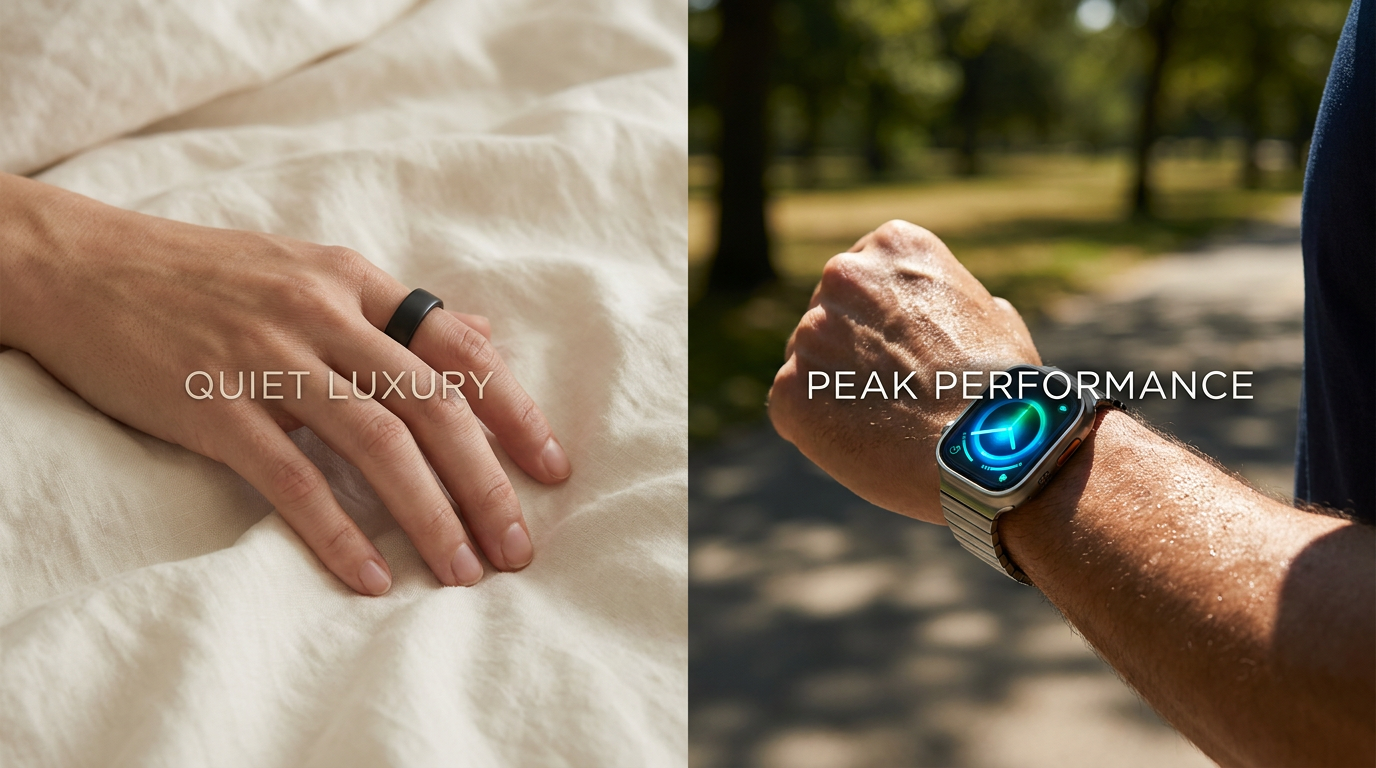
At the core of this comparison is the philosophy of the device. A smartwatch operates as an active companion, delivering real-time data, notifications, and interactive applications directly to your wrist. In contrast, a smart ring acts as a passive observer. It sits quietly on your finger, collecting biometric data around the clock without a screen, and sends that information to a smartphone app for later review.[5][6]
When evaluating sleep and recovery tracking, the smart ring emerges as the clear winner, largely due to physiological advantages and user compliance. The finger contains a dense capillary network close to the skin's surface, which provides photoplethysmography sensors with a remarkably clean signal. Because the finger experiences less dramatic movement during sleep than the wrist, rings suffer from fewer motion artifacts, resulting in highly accurate nocturnal heart rate and heart rate variability readings.[5][7]

Furthermore, the physical design of a ring naturally lends itself to nighttime wear. Weighing between four and eight grams, a smart ring is unobtrusive, whereas a smartwatch is relatively bulky and features a screen that can cause sleep-disturbing distractions. Industry data shows that user compliance for overnight wear is significantly higher for rings, which is critical because sleep data only becomes actionable when it is collected consistently over time.[2][6]
Conversely, for active workout tracking and real-time fitness feedback, the smartwatch remains unmatched. During exercise, users often need immediate access to their heart rate zones, pacing, and distance. A smartwatch provides this glanceable data, along with built-in GPS for outdoor runs and dedicated sport modes. The processing power and display of a watch allow it to guide users through interval training and alert them to high or low heart rates in the moment.[1][5]
Conversely, for active workout tracking and real-time fitness feedback, the smartwatch remains unmatched.
Smartwatches also bypass a major physical limitation of rings during strength training. Gripping dumbbells or barbells can scratch a smart ring, and the pressure of the grip temporarily alters blood flow in the finger, which degrades the accuracy of the heart rate sensor. For athletes who lift weights, play racket sports, or require on-wrist workout controls, the smartwatch is the far more practical and accurate choice.[4][7]
Battery life represents another stark trade-off between the two categories. Most premium smart rings can operate for five to eight days on a single charge, allowing users to wear them continuously with minimal friction. In contrast, feature-rich smartwatches typically require charging every one to two days. This frequent charging cycle often creates gaps in health data, usually during the morning or evening when the user takes the watch off to power it up.[1][6]

The financial models for these devices also differ significantly, which impacts the long-term cost of ownership. While smartwatches generally demand a higher upfront purchase price, they rarely require ongoing fees to access your basic health data. Many leading smart rings, however, lock their most valuable insights—such as detailed sleep staging and daily readiness scores—behind a monthly subscription fee, which can add hundreds of dollars to the total cost over a few years.[2][7]
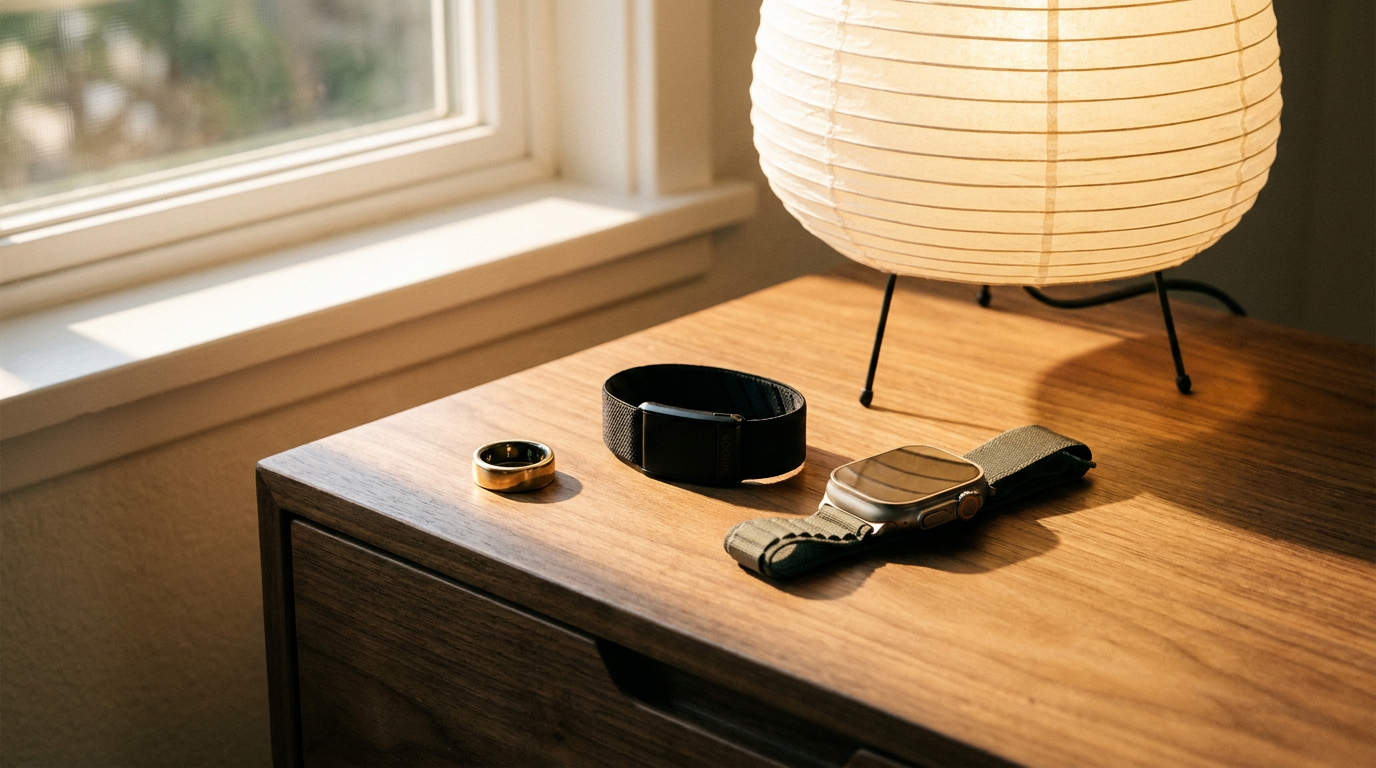
Because the strengths of these devices are so complementary, a growing trend in 2026 is the dual-wearable approach. Many users are opting to wear a smartwatch during the day for notifications and workout tracking, while switching to a smart ring at night for comfortable, highly accurate sleep monitoring. The two ecosystems can often sync their data through central health applications, providing a comprehensive, 24-hour picture of the user's well-being.[3][6]

Ultimately, a smart ring fits perfectly when your primary goals are sleep optimization, recovery tracking, and continuous health awareness without the distraction of another screen. It is the ideal choice for users who want their technology to disappear into the background and who value long battery life over interactive features. It does not fit well if you need real-time pacing during a run, rely on wrist-based notifications, or regularly engage in heavy weightlifting.[5][7]
On the other hand, a smartwatch fits perfectly when you treat your wearable as a dynamic training tool. It is the best option for runners, cyclists, and fitness enthusiasts who need built-in GPS, on-device music, and instant visibility into their workout metrics. It does not fit well if you find wearing a watch to bed uncomfortable, if you are prone to forgetting to charge your devices daily, or if you are actively trying to reduce your daily screen time.[1][4]
How we got here
2015
The first generation of the Apple Watch launches, establishing the modern standard for wrist-based health tracking.
2018
Oura releases its Gen 2 ring, proving that comprehensive sleep and recovery tracking can be accurately miniaturized into a finger-worn device.
2022
Independent clinical studies validate that finger-based PPG sensors can match or exceed wrist-based sensors for resting heart rate accuracy.
2024
Major tech companies like Samsung announce their entry into the smart ring market, validating the form factor as a mainstream category.
2026
The wearable market sees a surge in 'dual-wearers' who use both a watch and a ring to cover all aspects of active and resting health.
Viewpoints in depth
Passive Tracking Advocates
Users and analysts who prioritize unobtrusive, continuous health monitoring.
This camp argues that the best wearable is the one you forget you are wearing. They emphasize that sleep and recovery are the foundation of health, and that rings provide superior data in these areas due to higher overnight compliance and cleaner capillary signals. They also point out that reducing screen time is a health benefit in itself, making the screenless nature of a ring a feature rather than a bug.
Active Fitness Enthusiasts
Athletes and users who rely on real-time data to guide their physical training.
For this group, a health tracker must be an active participant in their workouts. They argue that passive data reviewed after the fact cannot replace the utility of glancing at your wrist to check a heart rate zone or GPS pace during a run. They view the daily charging requirement of a smartwatch as a minor inconvenience compared to the vast array of features, apps, and on-the-go connectivity it provides.
Dual-Ecosystem Adopters
Consumers who utilize both devices to capture a complete 24-hour health picture.
Rather than choosing a side, this perspective views rings and watches as complementary tools. They advocate for wearing a smartwatch during the day to capture workout metrics and manage notifications, then switching to a smart ring at night for frictionless sleep tracking. While acknowledging the higher financial cost, they argue this is the only way to get best-in-class data across both active and resting states.
What we don't know
- Whether health insurance companies will eventually subsidize smart rings at the same rate they currently subsidize fitness-focused smartwatches.
- How quickly miniaturization technology will allow smart rings to incorporate haptic feedback for real-time alerts without sacrificing battery life.
Key terms
- Photoplethysmography (PPG)
- An optical measurement technique used by wearables that shines a light into the skin to detect blood volume changes and calculate heart rate.
- Heart Rate Variability (HRV)
- The measure of the time variation between consecutive heartbeats, used as a key indicator of physical recovery and stress levels.
- Sleep Staging
- The process of categorizing sleep into different phases, such as REM, light, and deep sleep, based on movement and biometric data.
- Form Factor
- The physical size, shape, and design style of a hardware device, such as a ring versus a watch.
Frequently asked
Can a smart ring track my heart rate during a run?
Yes, most smart rings can track active heart rate, but they lack a screen to show you that data in real time, and they do not have built-in GPS for route tracking.
Do all smart rings require a monthly subscription?
No. While popular options like the Oura Ring require a monthly fee for full data access, others like the RingConn and Samsung Galaxy Ring offer subscription-free models.
Is a smart ring or smartwatch better for sleep tracking?
Smart rings are generally considered better for sleep tracking because they are more comfortable to wear overnight, leading to higher consistency, and the finger provides a very clear signal for resting heart rate.
Can I wear a smart ring while lifting weights?
It is generally not recommended. Gripping heavy metal bars can scratch or damage the ring, and the pressure on your finger can temporarily disrupt the sensor's accuracy.
Sources
Source coverage
7 outlets
3 viewpoints surfaced







[1]ForbesActive Fitness Enthusiasts
Oura Ring Vs. Apple Watch: Which Is The Better Health Tracker?
Read on Forbes →[2]BGRPassive Tracking Advocates
Smart rings vs smartwatches for sleep tracking
Read on BGR →[3]MashableDual-Ecosystem Adopters
Oura Ring vs Apple Watch: Which fitness tracker is right for you?
Read on Mashable →[4]PreventionActive Fitness Enthusiasts
Oura Ring vs. Apple Watch: Which Health Tracker Is Better?
Read on Prevention →[5]AskVoraPassive Tracking Advocates
Smart ring vs smartwatch comparison health tracking 2026
Read on AskVora →[6]SmartRingHQDual-Ecosystem Adopters
Smart Ring vs Smartwatch: The 2026 Comparison Guide
Read on SmartRingHQ →[7]RingConnPassive Tracking Advocates
Smart Ring vs Smartwatch: Which Should You Buy?
Read on RingConn →


Every angle. Every day.
Get shopping stories with full source coverage and perspective breakdowns delivered to your inbox.