
How Cold-Climate Heat Pumps Conquered the Winter
A new generation of variable-speed heat pumps is successfully heating homes in sub-zero temperatures, overcoming the technology's historical weakness and accelerating the transition away from fossil-fuel furnaces.
By Factlen Editorial Team
- Energy Transition Advocates
- Focus on the environmental benefits and high efficiency of electrifying home heating.
- HVAC Installers & Engineers
- Emphasize the technical realities, proper sizing, and upfront costs of cold-climate installations.
- Grid & Policy Analysts
- Analyze the macroeconomic and infrastructural impacts of mass heat pump adoption.
- Factlen Editorial Team
- Synthesizing the technological mechanisms and market data.
What's not represented
- · Fossil Fuel Industry Representatives
- · Low-Income Homeowners
Why this matters
Space heating accounts for a massive portion of residential energy use and carbon emissions. The ability to efficiently electrify home heating in cold climates removes one of the final technological barriers to decarbonizing the American home, while offering homeowners a buffer against volatile natural gas prices.
Key points
- Cold-climate heat pumps can extract heat from outdoor air even at temperatures below -15°F.
- Variable-speed compressors allow modern units to modulate output, drastically improving efficiency.
- Field tests show a median Coefficient of Performance (COP) of 1.9 in 0°F to 5°F weather.
- Federal incentives and state rebates can offset up to 60% of the higher upfront installation costs.
For decades, conventional wisdom in the residential heating, ventilation, and air conditioning industry held a strict geographic boundary: heat pumps were designed for the Sun Belt, and gas furnaces were an absolute necessity for the Frost Belt. Early generations of air-source heat pumps were notorious for blowing lukewarm air and racking up astronomical electricity bills the moment outdoor temperatures dropped below freezing. Because they relied on single-speed compressors and older refrigerants, these legacy systems simply lacked the thermodynamic muscle to extract meaningful thermal energy from a freezing winter day. As a result, homeowners in the Midwest, New England, and Canada viewed heat pumps with deep skepticism, treating them as little more than air conditioners that could occasionally take the chill off a mild autumn evening.[5]
That conventional wisdom is now entirely obsolete. Over the past few years, a quiet but profound revolution in thermodynamics, materials science, and compressor engineering has produced the modern cold-climate air source heat pump (ccASHP). These advanced systems are fundamentally different machines from their predecessors, engineered from the ground up to operate in the harshest winter environments. By 2026, the technology has matured to the point where heat pumps are outselling traditional gas furnaces on a national level. This shift is being driven by a combination of aggressive federal incentives, rising natural gas prices, and a proven ability to maintain comfortable indoor temperatures even when the thermometer outside plunges to -15°F (-26°C) or lower.[6][7]
To understand how a machine can possibly extract heat from freezing air, it helps to rethink what the word "cold" actually means in a scientific context. In physics, absolute zero—the point at which all molecular motion stops—is -459°F. Any temperature above that theoretical floor contains usable thermal energy. Even at a bitter 5°F, the outdoor air is brimming with heat; the engineering challenge is simply capturing that dispersed energy, concentrating it, and moving it indoors. A cold-climate heat pump does not create heat by burning fuel or running electricity through a glowing red coil; it simply acts as a thermal sponge, soaking up the heat that already exists in the winter air.[8]
Heat pumps achieve this remarkable feat using a specialized chemical refrigerant. In a cold-climate system, the refrigerant is formulated to have an extremely low boiling point. When the liquid refrigerant is pumped through the copper coils of the outdoor unit, it is significantly colder than the ambient winter air. Because heat naturally flows from warmer areas to colder areas, the 5°F outdoor air warms the sub-zero refrigerant. This causes the liquid to absorb the ambient heat and evaporate into a gas. A large fan pulls massive volumes of outdoor air across these coils to ensure a continuous transfer of thermal energy into the system.[4]
Once the refrigerant has evaporated into a gas, the system's compressor takes over. The compressor physically squeezes this gas, packing the molecules tightly together. According to the laws of thermodynamics, as the pressure of a gas increases, its temperature skyrockets. This superheated, high-pressure gas is then pumped through insulated copper lines into the indoor air handler unit. As the indoor fan blows the home's cooler air over these hot indoor coils, the refrigerant condenses back into a liquid, releasing its massive payload of concentrated heat into the home's ductwork or wall-mounted units.[4][8]

The true secret weapon of the modern cold-climate heat pump is the variable-speed, inverter-driven compressor. Older heat pumps functioned exactly like a simple light switch—they were either running at 100% maximum capacity or they were completely turned off. This led to inefficient short-cycling and an inability to adapt to changing weather conditions. An inverter-driven compressor, by contrast, acts much like the accelerator pedal in a modern automobile. It can smoothly and continuously modulate its operating speed from as low as 20% up to 100% capacity, matching the exact heating load required by the house at any given moment.[7]
When a sudden polar vortex hits and the temperature drops rapidly, the inverter compressor ramps up its speed to extract more heat and keep the home comfortable. Once the house reaches the target temperature set on the thermostat, the compressor dials back to a low, ultra-efficient cruising speed to maintain that warmth without wasting electricity. Furthermore, many premium cold-climate models utilize an advanced technique known as "vapor injection." This technology acts as a turbocharger for the heating cycle. By injecting a portion of vaporized refrigerant directly into the compressor mid-cycle, the system artificially boosts the internal pressure and temperature, allowing it to deliver high-heat output even in extreme sub-zero conditions where traditional compressors would fail.[5][7]
When a sudden polar vortex hits and the temperature drops rapidly, the inverter compressor ramps up its speed to extract more heat and keep the home comfortable.
The efficiency of these heating systems is measured by a metric known as the Coefficient of Performance (COP). A traditional electric space heater or baseboard radiator has a COP of exactly 1.0—it outputs exactly one unit of heat energy for every one unit of electrical energy it consumes. A high-efficiency natural gas furnace, accounting for the heat lost through the exhaust flue, peaks at a COP of around 0.95. Because heat pumps are moving heat rather than generating it from scratch, they can achieve efficiencies well over 100%, fundamentally breaking the 1-to-1 ratio that limits traditional heating methods.[5]
To rigorously test these claims and push the industry forward, the U.S. Department of Energy recently concluded its Cold Climate Heat Pump Challenge. This multi-year initiative partnered with major HVAC manufacturers to develop next-generation prototypes and field-test them in real, occupied homes across the northern United States and Canada. The goal was to prove that these systems could provide reliable, high-efficiency heating in regions that historically relied entirely on heating oil, propane, or natural gas. The field tests subjected the units to brutal winter conditions, monitoring their electrical draw and heat output minute by minute.[1]
The results of the challenge, which were independently validated by researchers at the Pacific Northwest National Laboratory, definitively proved the technology's viability. In outdoor temperatures between 0°F and 5°F, the field-tested units maintained a median COP of 1.9. This means that even in the bitter cold, a modern cold-climate heat pump produces nearly twice as much heat energy as the electrical energy it consumes. At milder winter temperatures, such as 30°F or 40°F, that efficiency multiplier jumps to 3.0 or higher, delivering massive energy savings compared to any combustion-based alternative.[2]

However, the transition to cold-climate heat pumps is not without friction, and the primary hurdle for most homeowners remains the upfront capital cost. A full cold-climate heat pump installation in 2026 typically ranges from $6,000 to $18,000. This wide price range depends heavily on the size of the home, the complexity of the installation, whether existing ductwork needs to be modified or replaced, and the specific tier of equipment chosen. For many families, this represents a significant premium over simply swapping out an old gas furnace for a new one.[5]
To bridge this financial gap and accelerate the decarbonization of the residential sector, the federal government and various state agencies have deployed aggressive financial incentives. Under the provisions of the Inflation Reduction Act, homeowners can claim a federal tax credit of up to $2,000 annually for qualifying high-efficiency heat pumps. When this federal credit is stacked with state-level rebates and utility company incentives, property owners can often offset 30% to 60% of the total project cost, making the lifetime economics of the heat pump highly competitive with fossil fuels.[6]

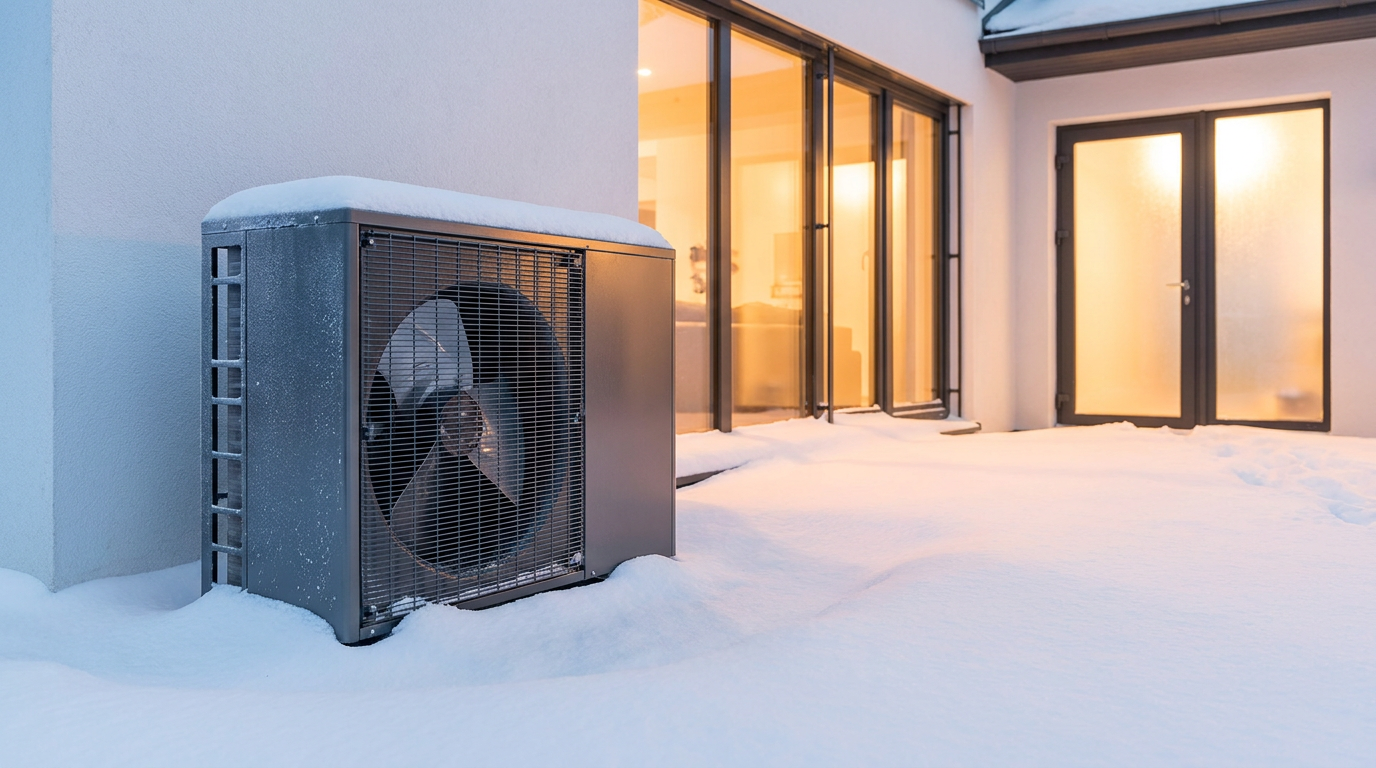
HVAC engineers also caution that cold-climate heat pumps have specific operational quirks that homeowners must understand. When operating in freezing, humid conditions, frost naturally accumulates on the outdoor unit's aluminum coils. If left unchecked, this ice would eventually block airflow and cripple the system. To clear this frost, the heat pump must periodically enter a "defrost cycle." During this cycle, the system temporarily reverses its operation, pulling a small amount of heat from the inside of the house to melt the outdoor ice.[3]
During a defrost cycle, the system's Coefficient of Performance drops near zero, as energy is being used to melt ice rather than heat the home. Modern units manage this process seamlessly, usually completing the defrost in just a few minutes without dropping the indoor temperature noticeably. However, it requires careful system sizing by the installer to ensure the unit has enough capacity to recover quickly. Installers must also elevate the outdoor unit on a stand to ensure that the melting ice can drain away properly and that the unit isn't buried by accumulating snowfall.[3][4]
For homes located in the most extreme climate zones—such as northern Minnesota, Maine, or the Canadian Prairies—installers often recommend a "dual-fuel" or hybrid heating setup. In these configurations, the electric heat pump handles the heating load for 90% to 95% of the winter. However, a backup natural gas furnace or an electric resistance heat strip is integrated into the system, automatically kicking in to assist the heat pump during severe polar vortex events when temperatures drop below -20°F. This provides homeowners with peace of mind and ensures uninterrupted comfort during the coldest nights of the decade.[3][5]

As adoption accelerates across North America, the widespread deployment of cold-climate heat pumps is fundamentally altering the dynamics of the electrical grid. Utility companies that historically experienced their peak power demand during the sweltering summer air-conditioning season are now preparing for massive winter peaks. This shift requires significant new investments in grid resilience, upgraded local transformers, and the expansion of smart-thermostat demand response programs that can slightly shift heating loads away from peak hours without sacrificing customer comfort.[4]
Despite these infrastructural and economic challenges, the maturation of the cold-climate heat pump represents a monumental victory for energy efficiency and climate policy. Space heating accounts for a massive portion of residential energy use and greenhouse gas emissions. By proving that electrification can work reliably and affordably in the harshest winter environments, this technology has cleared the path for millions of homes to permanently sever their reliance on fossil fuels, offering a cleaner, more efficient future for residential comfort.[1][8]
How we got here
Pre-2010s
Air-source heat pumps are largely restricted to mild climates due to severe efficiency drops in freezing weather.
2021
The U.S. Department of Energy launches the Cold Climate Heat Pump Challenge to spur manufacturer innovation.
2022
The Inflation Reduction Act passes, introducing significant federal tax credits for high-efficiency heat pump installations.
2024–2025
Field validation of DOE Challenge prototypes proves units can maintain high efficiency (COP 1.9) in 0°F to 5°F conditions.
2026
Cold-climate heat pumps outsell traditional gas furnaces nationally as adoption accelerates across northern states.
Viewpoints in depth
Energy Transition Advocates
Focus on the environmental benefits and high efficiency of electrifying home heating.
This camp, which includes the Department of Energy and climate policy groups, views the cold-climate heat pump as the silver bullet for residential decarbonization. They emphasize that because the grid is becoming greener every year, replacing a gas furnace with a heat pump yields compounding emissions reductions. They point to the DOE Challenge data as definitive proof that the technology is ready for mass deployment, arguing that the remaining barriers are entirely financial and educational, rather than technological.
HVAC Installers & Engineers
Emphasize the technical realities, proper sizing, and upfront costs of cold-climate installations.
Contractors and mechanical engineers take a more pragmatic view. While they acknowledge the massive improvements in inverter and vapor-injection technology, they caution against treating heat pumps as a simple drop-in replacement for a furnace. They stress that improper sizing, poor ductwork, or failing to account for defrost cycles can lead to cold homes and angry customers. This group strongly advocates for hybrid dual-fuel systems in extreme northern climates, ensuring a combustion backup is available when temperatures drop below -20°F.
Grid Operators
Analyze the macroeconomic and infrastructural impacts of mass heat pump adoption.
Utility companies and grid analysts are focused on the systemic impact of millions of homes switching to electric heat. They warn that mass adoption will shift the grid's peak demand from summer afternoons to freezing winter mornings, placing unprecedented strain on local transformers and transmission lines. This camp advocates for coupling heat pump installations with smart thermostats and demand-response programs, allowing utilities to manage the load dynamically during polar vortex events.
What we don't know
- How local electrical grids will handle the massive surge in winter peak demand as adoption scales.
- Whether the upfront costs of premium cold-climate units will drop significantly as manufacturing scales up.
Key terms
- Coefficient of Performance (COP)
- A metric of heating efficiency that measures how many units of heat a system produces for every one unit of electricity it consumes.
- Inverter-Driven Compressor
- A compressor that can smoothly adjust its speed to match the exact heating needs of the home, rather than just turning completely on or off.
- Vapor Injection
- A technology that injects extra refrigerant vapor into the compressor mid-cycle, acting like a turbocharger to boost heat output in extreme cold.
- Dual-Fuel System
- A hybrid heating setup that uses an electric heat pump for most of the winter but switches to a gas furnace during the most extreme cold snaps.
Frequently asked
Do heat pumps actually work in freezing weather?
Yes. Modern cold-climate heat pumps use advanced refrigerants and variable-speed compressors to extract heat from the air even when temperatures drop to -15°F or lower.
Do I still need a backup gas furnace?
It depends on your climate and home insulation. In extreme northern zones, installers often recommend a hybrid system with a backup furnace, but many homes can rely entirely on a properly sized heat pump.
Are heat pumps more expensive to install than gas furnaces?
Yes, the upfront equipment and installation costs are generally higher. However, federal tax credits and state rebates can offset a significant portion of this premium.
What is a defrost cycle?
When frost builds up on the outdoor unit in cold, humid weather, the heat pump temporarily reverses itself to melt the ice. This is a normal function that keeps the system running efficiently.
Sources
Source coverage
8 outlets
4 viewpoints surfaced








[1]U.S. Department of EnergyEnergy Transition Advocates
Residential Cold Climate Heat Pump Challenge
Read on U.S. Department of Energy →[2]Pacific Northwest National LaboratoryGrid & Policy Analysts
Performance Results from DOE Cold Climate Heat Pump Challenge Field Validation
Read on Pacific Northwest National Laboratory →[3]Minnesota Department of CommerceHVAC Installers & Engineers
Cold Climate Air Source Heat Pump: Field Assessment
Read on Minnesota Department of Commerce →[4]MacDonald LabHVAC Installers & Engineers
Cold climate air source heat pumps: Industry progress and thermodynamic analysis
Read on MacDonald Lab →[5]AC DirectHVAC Installers & Engineers
Heat Pumps in the Midwest and Northeast: What Works When It Gets Truly Cold
Read on AC Direct →[6]iFactory AIEnergy Transition Advocates
Heat Pump Adoption 2026: Why Electrification Is Reshaping HVAC
Read on iFactory AI →[7]A1 SolarStoreEnergy Transition Advocates
Heat Pumps in Cold Climates: Winter Performance Guide 2026
Read on A1 SolarStore →[8]Factlen Editorial TeamFactlen Editorial Team
Synthesis by Factlen editorial team
Read on Factlen Editorial Team →

Every angle. Every day.
Get home stories with full source coverage and perspective breakdowns delivered to your inbox.