
The Science and Practice of No-Dig Gardening
By putting away the spade and layering compost directly onto the earth, gardeners are preserving vital fungal networks, locking carbon in the ground, and drastically reducing their workload.
By Factlen Editorial Team
- Regenerative Gardeners
- Advocates for no-till methods prioritize long-term soil health and working in harmony with natural ecosystems.
- Soil Microbiologists
- Scientists focus on the invisible, microscopic mechanisms that govern soil fertility and carbon storage.
- Traditional Horticulturists
- Proponents of conventional digging value the immediate mechanical benefits of turning the soil.
What's not represented
- · Commercial Fertilizer Manufacturers
- · Large-Scale Industrial Farmers
Why this matters
Healthy soil is the foundation of our food system and a critical tool for carbon sequestration. Understanding how to cultivate without destroying microscopic ecosystems allows anyone to grow more resilient, productive plants with significantly less physical labor.
Key points
- No-dig gardening involves layering compost on the soil surface rather than turning it with a spade.
- The method preserves delicate mycorrhizal fungal networks that help plants absorb water and nutrients.
- Leaving soil undisturbed locks carbon underground, whereas tilling releases it as carbon dioxide.
- Sheet mulching uses cardboard to smother existing weeds and grass, creating a blank canvas for new beds.
- No-dig beds drastically reduce weeding labor because dormant weed seeds are never brought to the surface.
- The primary challenge is sourcing enough high-quality, weed-free compost to establish the beds initially.
For generations, the arrival of autumn signaled a grueling ritual for gardeners and allotment holders: the annual dig. Armed with spades and forks, growers would systematically invert the topsoil, often employing a labor-intensive technique known as "double digging" to loosen the earth to a depth of 45 to 60 centimeters. The goal was to aerate the soil, bury weeds, and create a fine, fluffy seedbed for the spring. But a quiet revolution has taken root in backyards and market farms alike, challenging this centuries-old orthodoxy. It is called "no-dig" or "no-till" gardening, and it asks growers to do something profoundly counterintuitive: put the spade away and leave the soil alone.[1][3][8]
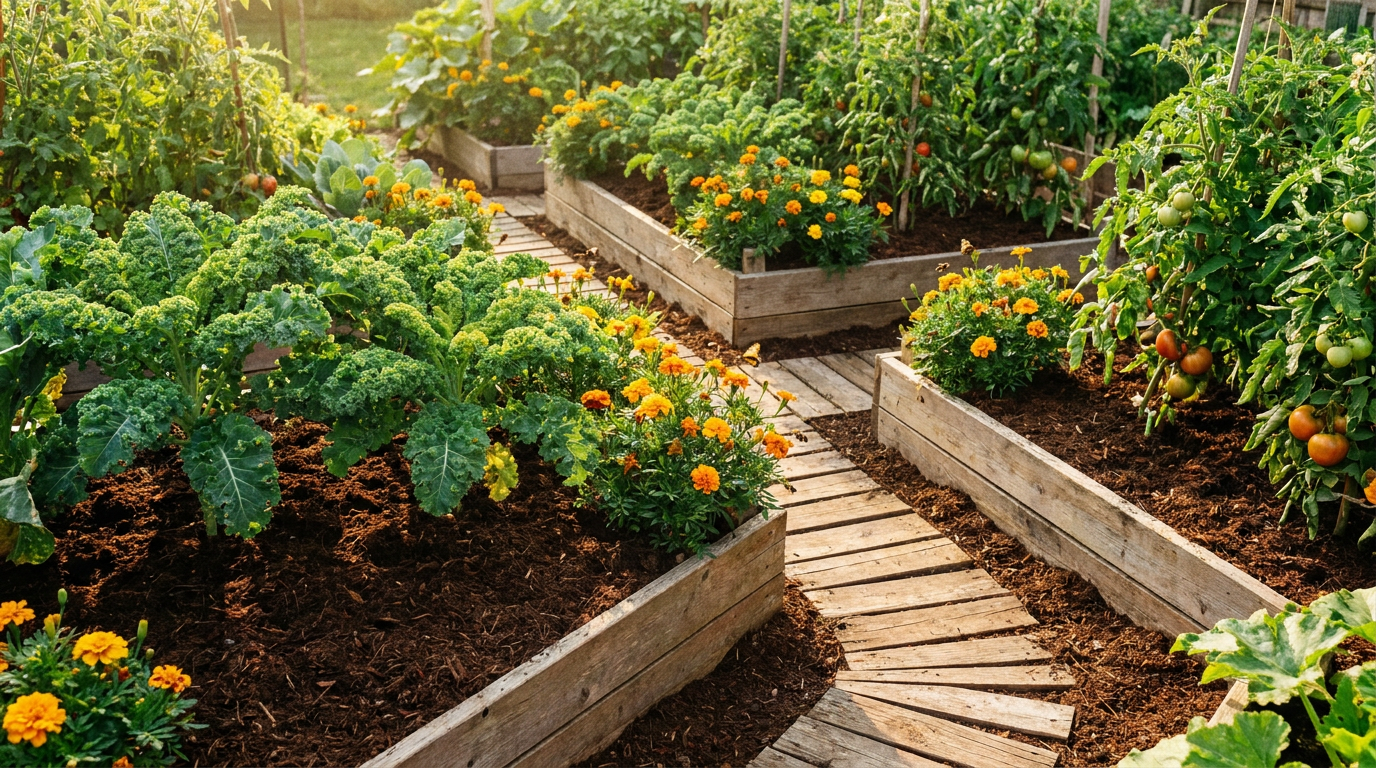
The premise of no-dig gardening is elegantly simple: soil functions best when its physical structure and biological ecosystems are left undisturbed. Instead of turning the earth, gardeners layer organic matter—such as compost, well-rotted manure, or leaf mold—directly onto the surface. This mimics the natural processes of a forest floor, where falling leaves and dying plants decompose from the top down, gradually incorporating into the earth without mechanical intervention. Over time, this surface mulch breaks down, creating a rich, fertile layer of humus that plants root into effortlessly.[1][2][3][5]
To understand why this method is gaining such fervent traction, one must look beneath the surface. Soil is not merely an inert medium for holding roots; it is a complex, living matrix. A single teaspoon of healthy soil contains more microorganisms than there are humans on Earth. Chief among these are mycorrhizal fungi, microscopic organisms that form symbiotic relationships with the roots of over 90 percent of all plant species. These fungi extend vast, thread-like networks called hyphae deep into the soil, effectively acting as a secondary root system for the plant.[2][6][7]
The mechanics of this symbiosis are a marvel of biological trade. Plants, through the magic of photosynthesis, produce carbon-rich sugars. They exude a portion of these sugars into the soil specifically to feed the mycorrhizal fungi. In return, the fungal network acts as a highly efficient foraging system, seeking out water and essential minerals—particularly phosphorus, zinc, and copper—and transporting them back to the host plant. Because fungal hyphae are significantly finer than plant roots, they can penetrate microscopic soil crevices that roots cannot reach, unlocking latent fertility.[2][6][7]

This is where the traditional spade becomes an instrument of destruction. When soil is dug, rototilled, or aggressively forked, these delicate fungal networks are violently severed. The physical structure of the soil, carefully built by earthworms and microbial glues into stable aggregates, is pulverized. According to agricultural researchers, repeated high-intensity tillage not only destroys the mycelial network but also leads to irreversible declines in overall soil health. By adopting no-dig practices, gardeners preserve these vital fungal highways, allowing plants to access moisture and nutrients far beyond their immediate root zones.[1][2][6]
Beyond fungal health, the no-dig method plays a crucial role in carbon sequestration and climate resilience. Intact soil aggregates act as microscopic vaults, locking away carbon. When soil is tilled, it is suddenly flooded with oxygen. This oxygen spike hyper-stimulates aerobic bacteria, which rapidly consume the exposed organic matter. As they feast, they break down the sequestered carbon, releasing it into the atmosphere as carbon dioxide. By leaving the soil unturned, no-dig gardeners keep carbon in the ground where it belongs, mitigating climate change while maintaining soil fertility.[8]
Beyond fungal health, the no-dig method plays a crucial role in carbon sequestration and climate resilience.
For those looking to convert a weedy patch or an existing lawn into a no-dig bed, the most popular technique is known as "sheet mulching" or "lasagna gardening." This process begins by slashing down existing vegetation—there is no need to pull the roots, as leaving them in place provides organic matter as they decay. Next, the area is smothered with a biodegradable weed barrier, typically overlapping sheets of plain brown cardboard or thick layers of newspaper. This barrier blocks sunlight, effectively starving the weeds and grass below.[1][5]

Once the cardboard is laid, it is thoroughly soaked with water to jumpstart the decomposition process. Then, the "lasagna" layers are built on top. Gardeners typically apply a thick layer of compost—anywhere from two to six inches, depending on material availability—followed by a top dressing of mulch, such as straw, wood chips, or leaf mold, to protect the compost from drying out. Over a few months, earthworms and soil microbes rise to the surface, consuming the decaying weeds, digesting the cardboard, and pulling the nutrient-rich compost down into the native soil.[5]
The practical benefits of this system are profound, fundamentally altering the labor economics of gardening. The most immediate advantage is a drastic reduction in weeds. Digging inevitably brings dormant weed seeds to the surface, exposing them to the light they need to germinate. By capping the soil with compost, those seeds remain buried and dormant. The few weeds that do blow in and sprout in the loose surface compost are easily plucked by hand, as their roots have nothing solid to anchor into.[1][4][5][7]
Furthermore, no-dig beds exhibit remarkable water retention. The undisturbed soil structure maintains natural capillary channels created by decayed roots and earthworm tunnels, allowing heavy rains to infiltrate deeply rather than running off the surface. Simultaneously, the thick surface mulch acts as an insulating blanket, drastically reducing evaporation during hot summer months. In an era of increasingly erratic weather and prolonged droughts, this built-in resilience is becoming a necessity rather than a luxury.[1][3][5][8]

The results speak for themselves in the harvest. Market gardeners and home growers utilizing no-dig methods consistently report higher yields, earlier harvests, and plants that are significantly more resilient to pests and diseases. Because the soil is never compacted by heavy machinery or repetitive foot traffic on wet, dug earth, the beds remain light and aerated. Gardeners can walk on the paths and reach into the beds without ever compressing the growing zone, and the soil never sticks to their boots.[4][7]
However, the transition to no-dig is not without its challenges. The National Allotment Society notes that the primary hurdle is the sheer volume of organic matter required to establish the beds initially. Sourcing enough high-quality, weed-free compost to cover an entire allotment or large garden can be expensive and logistically demanding. If the compost used is contaminated with persistent herbicides or invasive jumping worms, it can devastate a growing season before it even begins.[3][5]
Additionally, no-dig is not an instant panacea for all garden woes. Certain aggressive perennial weeds, such as bindweed or creeping thistle, possess deep taproots and extensive energy reserves. These persistent invaders can sometimes push their way through cardboard and compost layers, requiring vigilant hand-pulling over several seasons to fully exhaust their root systems. Furthermore, in cooler, wetter climates, the thick layer of surface mulch can insulate the soil too well in the spring, slowing down the warming process and slightly delaying the planting out of heat-loving crops.[3][5]
Despite these logistical hurdles, the scientific consensus and the lived experience of thousands of growers point in the same direction. We are learning that the soil is not a blank canvas to be scrubbed and reset each year, but a complex, living organism that thrives on stability. By laying down the spade and embracing the principles of sheet mulching and no-dig cultivation, gardeners are not just saving their backs; they are actively regenerating the earth, one undisturbed layer at a time.[5][8]

How we got here
Pre-20th Century
Double-digging and intensive soil cultivation become the standard for European and American horticulture.
1970s-1980s
Pioneers like Ruth Stout and Masanobu Fukuoka begin popularizing 'do-nothing' and heavy mulching techniques.
Late 1990s
The concept of 'lasagna gardening' (sheet mulching) gains mainstream traction among home gardeners.
2010s-Present
Scientific understanding of mycorrhizal fungi and soil microbiomes validates the no-dig approach, leading to widespread adoption.
Viewpoints in depth
Regenerative Gardeners
Advocates for no-till methods prioritize long-term soil health and working in harmony with natural ecosystems.
This camp argues that the traditional approach to gardening fights against nature rather than working with it. By adopting no-dig methods, they emphasize the dramatic reduction in physical labor, the near-elimination of weeding, and the creation of highly resilient, moisture-retentive beds. They view the initial investment in compost as a one-time down payment on a self-sustaining ecosystem that yields healthier, more productive crops year after year.
Traditional Horticulturists
Proponents of conventional digging value the immediate mechanical benefits of turning the soil.
While acknowledging the benefits of organic matter, this perspective maintains that digging remains a highly effective, practical tool for many situations. They point out that single or double digging rapidly aerates heavily compacted clay, buries surface weed seeds deep underground, and creates the fine, fluffy tilth necessary for directly sowing tiny seeds like carrots. For many in this camp, the annual dig is also a cherished, physically engaging ritual of the gardening calendar.
Soil Microbiologists
Scientists focus on the invisible, microscopic mechanisms that govern soil fertility and carbon storage.
From a biological standpoint, this camp views soil not as dirt, but as a complex living matrix. Their research highlights how mechanical tillage physically shatters the delicate hyphae of mycorrhizal fungi and disrupts the glues that hold soil aggregates together. They emphasize that undisturbed soil acts as a vital carbon sink, whereas tilling introduces oxygen that hyper-stimulates bacteria, causing them to rapidly consume organic matter and release stored carbon back into the atmosphere as CO2.
What we don't know
- The exact timeline for full mycorrhizal network recovery after decades of intensive tilling.
- How different compost compositions specifically alter the microbial balance of newly established no-dig beds.
Key terms
- Mycorrhizal fungi
- Microscopic fungi that form a mutually beneficial relationship with plant roots, exchanging water and nutrients for plant sugars.
- Sheet mulching
- A no-dig gardening technique that involves smothering weeds with cardboard and layering compost and mulch on top to build new soil.
- Humus
- The dark, organic material in soil that forms when plant and animal matter fully decays, crucial for moisture retention and fertility.
- Hyphae
- The fine, branching filaments that make up the mycelium of a fungus, acting as a microscopic nutrient-gathering network.
- Tillage
- The agricultural preparation of soil by mechanical agitation of various types, such as digging, stirring, and overturning.
Frequently asked
Can I start a no-dig garden over an existing lawn?
Yes. By laying cardboard directly over the grass and adding compost on top, the grass is smothered and breaks down into organic matter, feeding the new bed.
How does the soil get aerated if I don't dig it?
Earthworms, decaying plant roots, and soil microbes naturally create and maintain air channels in undisturbed soil, preventing compaction.
Do I need to remove weeds before sheet mulching?
Most weeds can be slashed down and left in place to decompose under the cardboard, though highly aggressive perennials like bindweed may require hand-pulling.
Doesn't this require a massive amount of compost?
The initial setup requires a significant volume of compost to build the beds, but subsequent years only require a thin top-up layer of about an inch to maintain fertility.
Sources
Source coverage
8 outlets
3 viewpoints surfaced








[1]Royal Horticultural SocietySoil Microbiologists
No-dig gardening
Read on Royal Horticultural Society →[2]Soil AssociationSoil Microbiologists
What is no-dig gardening?
Read on Soil Association →[3]The National Allotment SocietyTraditional Horticulturists
To Dig or Not to Dig? That is the Question
Read on The National Allotment Society →[4]University of VermontSoil Microbiologists
The Benefits of No-Dig Gardening
Read on University of Vermont →[5]Permaculture MagazineRegenerative Gardeners
9 Steps to Sheet Mulching
Read on Permaculture Magazine →[6]MDPI AgricultureSoil Microbiologists
Effects of Tillage Practices on Arbuscular Mycorrhizal Fungi
Read on MDPI Agriculture →[7]Charles DowdingRegenerative Gardeners
Master the Art & Science of No Dig Gardening
Read on Charles Dowding →[8]Factlen Editorial TeamRegenerative Gardeners
Synthesis by Factlen editorial team
Read on Factlen Editorial Team →
Every angle. Every day.
Get home stories with full source coverage and perspective breakdowns delivered to your inbox.