
How Beanless Coffee and Precision Fermentation Are Reengineering the Morning Ritual
As climate change threatens traditional coffee farming, food-tech startups are using upcycled ingredients and microbial fermentation to brew a sustainable alternative.
By Factlen Editorial Team
- Food Tech Innovators
- Startups and investors who believe biotech is the only way to save the coffee ritual from climate collapse.
- Traditional Coffee Advocates
- Agronomists and sustainability experts who prioritize protecting rural livelihoods and improving existing farming methods.
- Pragmatic Roasters
- Large coffee brands and cafes looking for immediate solutions to supply chain shocks and price volatility.
What's not represented
- · Smallholder Coffee Farmers
- · Everyday Consumers
Why this matters
Coffee is a daily necessity for billions, but its cultivation is highly vulnerable to climate change and price volatility. The successful commercialization of beanless coffee offers a viable way to stabilize prices and drastically reduce the environmental footprint of our morning routine.
Key points
- Climate change threatens to eliminate 50% of the world's coffee-growing land by 2050.
- Food-tech startups are reverse-engineering coffee using upcycled ingredients and microbial fermentation.
- Beanless coffee claims to use up to 94% less water and emit 83% less carbon than traditional beans.
- Major roasters are adopting 50:50 hybrid blends to stabilize prices and stretch supply.
- Critics argue investments should focus on protecting smallholder farmers and regenerative agriculture.
Coffee is the fuel of the modern world, a daily ritual for billions. But that morning cup carries a hidden, heavy toll. Producing a single cup of conventional coffee requires roughly 140 liters of water, and the industry is responsible for a significant portion of agriculture-driven deforestation in biodiversity hotspots.[4][7]
The crisis is poised to worsen due to what industry insiders call the "2050 Problem." Climate models project that by the year 2050, rising temperatures and unpredictable weather patterns will render half of the world's currently arable land unsuitable for growing Arabica beans. As global demand continues to surge, the math of traditional coffee cultivation simply no longer adds up.[4][5]
Enter a new wave of food technology startups attempting to decouple the world’s favorite beverage from the coffee plant entirely. Companies like Seattle-based Atomo, Belgium’s Koppie, and Singapore’s Prefer are pioneering "beanless coffee"—a category that uses precision fermentation and upcycled agricultural waste to reverse-engineer the exact chemical profile of a roasted coffee bean.[1][2][6]

To understand how beanless coffee works, scientists first had to deconstruct the traditional brew. A standard cup of coffee contains roughly 28 key chemical compounds responsible for its signature aroma, acidity, and mouthfeel. By isolating these compounds, researchers realized they could source them from other, more climate-resilient plants.[5]
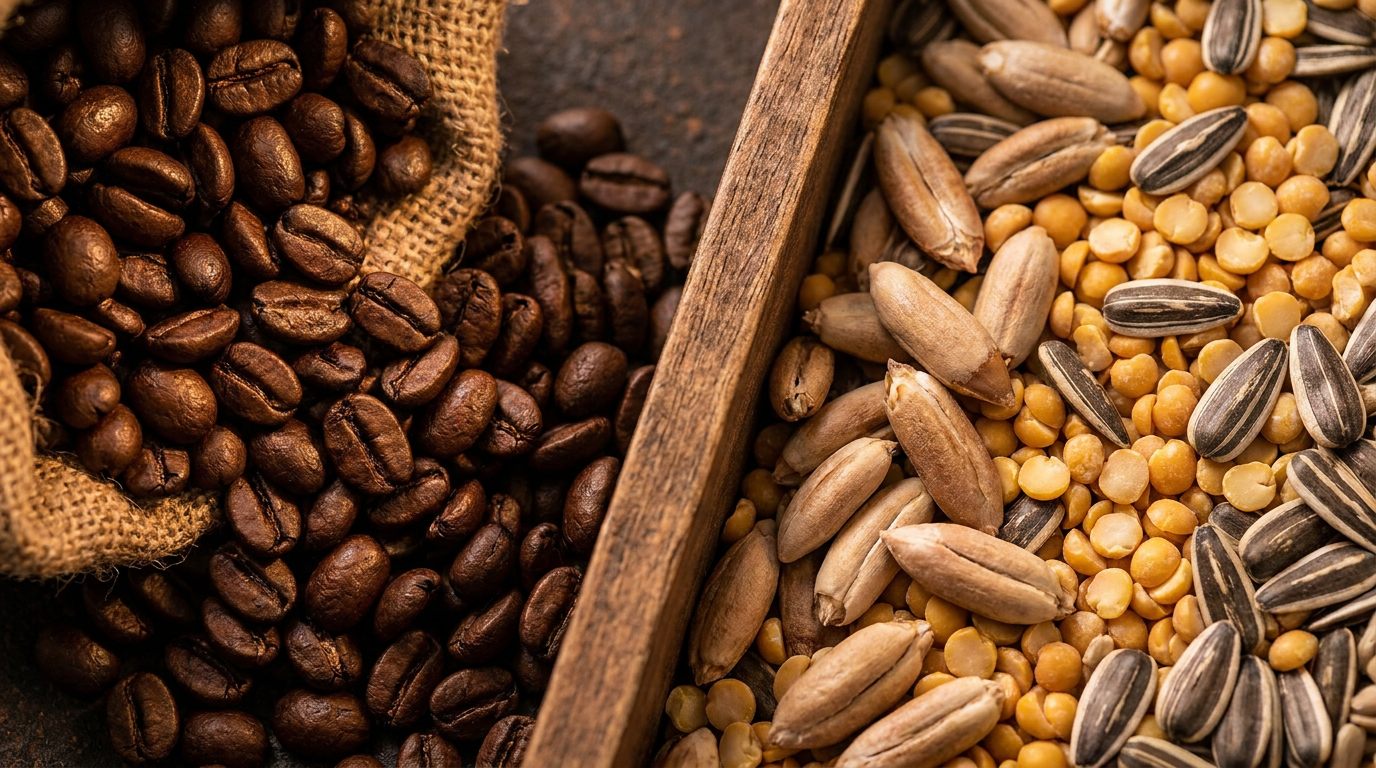
The ingredient lists for these alternative brews read like a botanical inventory. Atomo relies heavily on date pits—an agricultural byproduct upcycled from farms in California’s Coachella Valley—alongside ramon seeds, sunflower extract, and green tea for caffeine. Other startups, like Northern Wonder and Koppie, utilize locally abundant legumes such as yellow peas, chickpeas, and lupine beans.[1][2][5]
But raw ingredients alone do not taste like a morning roast. The magic happens through microbial fermentation. In traditional coffee production, beans are fermented after harvesting to strip away the fruit and develop complex flavor notes. Beanless coffee companies replicate this exact biological process in bioreactors, using specific microbial strains to transform the raw plant matter into a compound that mimics green coffee.[2][7]
Once fermented and dried, this bio-material behaves exactly like traditional coffee. It can be run through standard industrial roasters, where it undergoes the Maillard reaction—the chemical browning process that unlocks deep, chocolatey, and bitter flavor profiles. The resulting grounds can be brewed in a French press, pulled as a crema-rich espresso shot, or steeped for cold brew, requiring zero new equipment for cafes or consumers.[1][5]
Once fermented and dried, this bio-material behaves exactly like traditional coffee.
The environmental math behind this process is striking. Life Cycle Assessments (LCAs)—standardized methodologies for evaluating the environmental impact of a product—show massive reductions in resource use. Atomo claims its beanless grounds generate 83 percent fewer carbon emissions and require 70 percent less farmland than conventional coffee.[1][5]

Water conservation is equally dramatic. Startups utilizing upcycled ingredients and efficient annual crops report using up to 94 percent less water than the 140 liters demanded by a traditional cup. Because these ingredients can be grown or sourced outside of vulnerable tropical zones, the supply chain is vastly shorter and immune to the frosts and droughts currently devastating South American and African coffee yields.[3][7]
Despite these impressive metrics, the beanless coffee industry is not attempting to eradicate traditional coffee farms overnight. Instead, the most viable commercial strategy in 2026 is the "hybrid" approach. Startups are actively pitching 50:50 blends—mixing half conventional Arabica with half beanless grounds—to major roasters and global cafe chains.[1][4][6]
This blended strategy solves an immediate pain point for the coffee industry: price volatility. With green coffee prices doubling in recent years due to supply shocks, a 50:50 blend allows roasters to stabilize their costs, stretch their limited supply of high-grade Arabica, and instantly improve their corporate sustainability metrics without shocking the consumer's palate.[1][4]

The market is responding enthusiastically to this pragmatic approach. In early 2026, Koppie secured fresh venture funding to build a 1,000-ton capacity production line specifically to supply launch partners with hybrid blends. Meanwhile, Atomo recently expanded its footprint into the United Kingdom, debuting its espresso at specialty cafes in London while operating a massive Seattle roastery capable of producing four million pounds of grounds annually.[1][2][6]
Yet, the rise of lab-grown and fermented coffee alternatives is not without its critics. Agronomists and sustainability advocates point out a glaring human element: millions of smallholder farmers in the Global South rely entirely on coffee cultivation for their economic survival. Shifting consumption to tech-owned bioreactors in the West could devastate these fragile rural economies.[3][4]
Some agricultural engineers argue that capital currently flowing into Silicon Valley food-tech would be better spent making traditional coffee more resilient. Investments in regenerative agriculture, shade-grown farming techniques, and the cultivation of hardier, drought-resistant coffee species like Coffea liberica could preserve both the environment and the farmers' livelihoods.[3]

Furthermore, the sustainability claims of beanless coffee are nuanced. While upcycling date pits is highly efficient, some startups rely on high-yield annual crops that require intensive, fossil-fuel-based fertilizers to grow at scale. If the industry scales to billions of pounds, the carbon footprint of those agricultural inputs could offset some of the promised climate gains.[3]
Ultimately, the future of the morning ritual is unlikely to be a zero-sum game. As the 2050 Problem looms closer, the world will likely need every available tool to keep coffee cups full. Precision fermentation and beanless blends offer a vital pressure release valve for an overburdened supply chain, ensuring that even as the climate changes, the daily caffeine fix remains within reach.[1][4]
How we got here
2019
Atomo Coffee is founded in Seattle, beginning the push to reverse-engineer the coffee bean.
2021-2022
A wave of alternative coffee startups, including Compound Foods and Minus Coffee, emerge using fermentation technology.
2024
Green coffee prices double due to supply chain shocks and extreme weather, accelerating commercial interest in alternatives.
2025
Atomo opens a massive 40,000-square-foot roastery capable of producing four million pounds of beanless grounds annually.
Early 2026
Beanless brands expand globally, with Atomo debuting in the UK and Koppie securing funding for industrial-scale production of hybrid blends.
Viewpoints in depth
Food Tech Innovators
Startups and investors who believe biotech is the only way to save the coffee ritual from climate collapse.
This camp argues that traditional agriculture simply cannot scale to meet rising global demand on a warming planet. By decoupling coffee from the vulnerable Arabica plant, they believe they can drastically reduce deforestation and water usage while stabilizing prices for the entire industry. They view their product not as an enemy to farmers, but as a necessary pressure release valve for an overburdened system.
Traditional Coffee Advocates
Agronomists and sustainability experts who prioritize protecting rural livelihoods and improving existing farming methods.
This perspective warns against abandoning the millions of smallholder farmers in the Global South who rely on coffee for their economic survival. Instead of moving production into tech-owned bioreactors, they advocate for investing capital into regenerative agriculture, shade-grown farming, and the cultivation of climate-resilient coffee species like Coffea liberica.
Pragmatic Roasters
Large coffee brands and cafes looking for immediate solutions to supply chain shocks.
For commercial roasters, the appeal of beanless coffee is largely economic. Facing volatile green coffee prices and unpredictable harvests, they view 50:50 hybrid blends as a highly effective tool to stretch their supply, lower ingredient costs, and hit corporate sustainability targets without alienating consumers who expect a traditional flavor profile.
What we don't know
- Whether mass-market consumers will fully embrace the taste and concept of lab-fermented coffee alternatives.
- The exact long-term economic impact a shift toward beanless coffee will have on smallholder farmers in the Global South.
- How the carbon footprint of alternative high-yield crops will scale if beanless coffee production reaches billions of pounds.
Key terms
- Precision Fermentation
- A biotechnology process that uses specific microbial strains to produce complex organic molecules, often used to recreate animal or plant proteins without the original source.
- The 2050 Problem
- An industry term referring to climate models projecting that 50 percent of the world's coffee-growing land will become unsuitable for cultivation by the year 2050.
- Life Cycle Assessment (LCA)
- A standardized methodology used to calculate the total environmental impact of a product, from raw material extraction through production and disposal.
- Maillard Reaction
- A chemical reaction between amino acids and reducing sugars that gives browned food—including roasted coffee—its distinctive flavor.
- Upcycling
- The process of transforming agricultural byproducts or waste materials, such as discarded date pits, into new products of higher value or quality.
Frequently asked
Does beanless coffee contain caffeine?
Yes. Most beanless coffee brands add natural caffeine extracted from other sources, such as green tea leaves, allowing them to match or even customize the caffeine content of a traditional cup.
How is beanless coffee made?
Startups use microbial fermentation to process alternative ingredients—like upcycled date pits or legumes—developing the same complex flavor compounds found in coffee. The resulting material is then dried and roasted in standard coffee roasters.
Can I brew it in my regular coffee maker?
Absolutely. Beanless coffee is designed to behave exactly like traditional grounds and can be brewed using a French press, drip machine, or commercial espresso maker.
Why is traditional coffee threatened by climate change?
Coffee plants, particularly the popular Arabica species, require highly specific temperature and moisture conditions. Climate models predict that by 2050, half of the land currently suitable for growing coffee will become unviable due to rising heat and unpredictable weather.
Sources
Source coverage
7 outlets
3 viewpoints surfaced







[1]AgFunderNewsFood Tech Innovators
Atomo beanless coffee makes UK debut, but firm will 'not be profitable on the back of small coffee shops'
Read on AgFunderNews →[2]Green QueenFood Tech Innovators
Legume Lattes: Koppie Brews Up New Funding to Launch Beanless Coffee By Year-End
Read on Green Queen →[3]GristTraditional Coffee Advocates
Can beanless coffee save your morning brew from climate change?
Read on Grist →[4]Perfect Daily GrindFood Tech Innovators
Why is beanless coffee attracting so much investment?
Read on Perfect Daily Grind →[5]Global Coffee ReportPragmatic Roasters
Atomo Coffee reinvents the bean
Read on Global Coffee Report →[6]Just DrinksPragmatic Roasters
Atomo eyes global expansion for beanless coffee through production, sales tie-ups
Read on Just Drinks →[7]FoodNavigator-USAPragmatic Roasters
Minus Coffee recreates the coffee experience without the beans
Read on FoodNavigator-USA →
Every angle. Every day.
Get lifestyle stories with full source coverage and perspective breakdowns delivered to your inbox.